
Last updated November 17, 2026
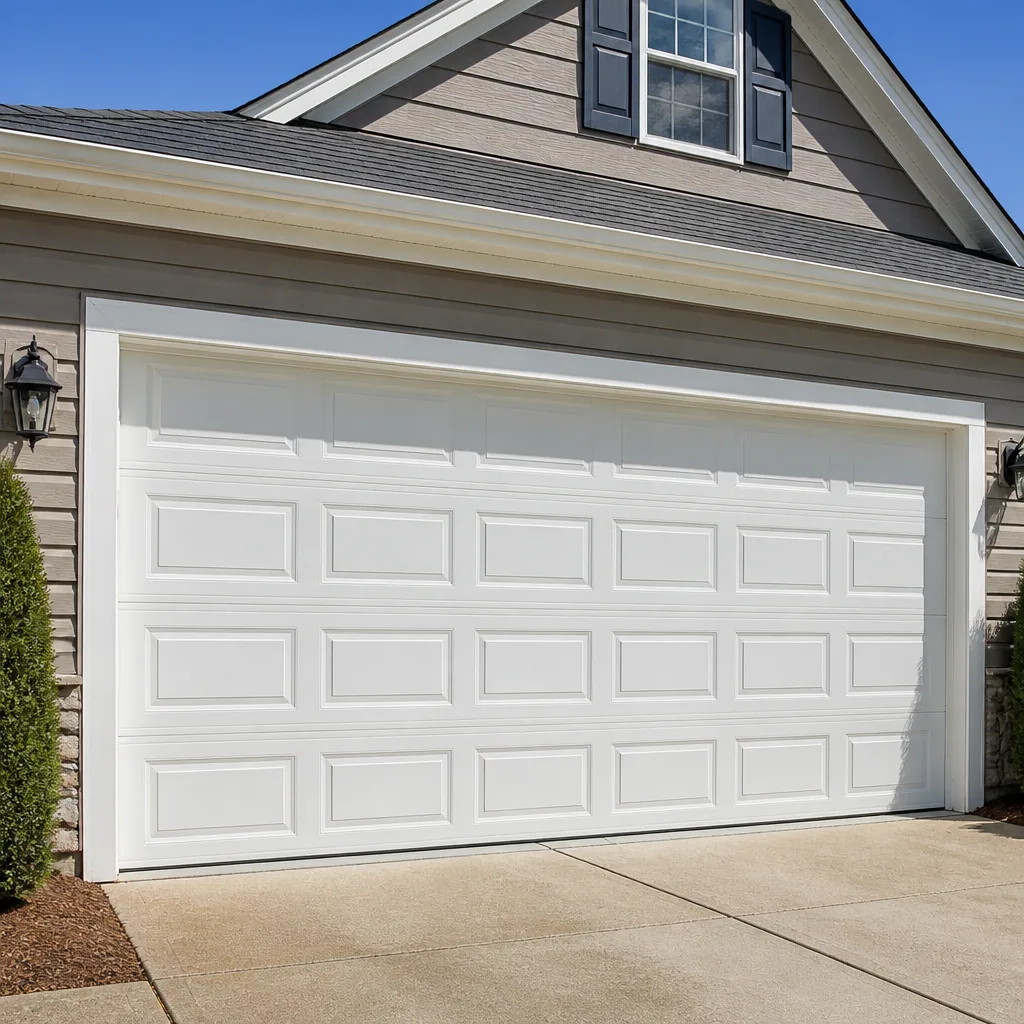 Raised-panel steel
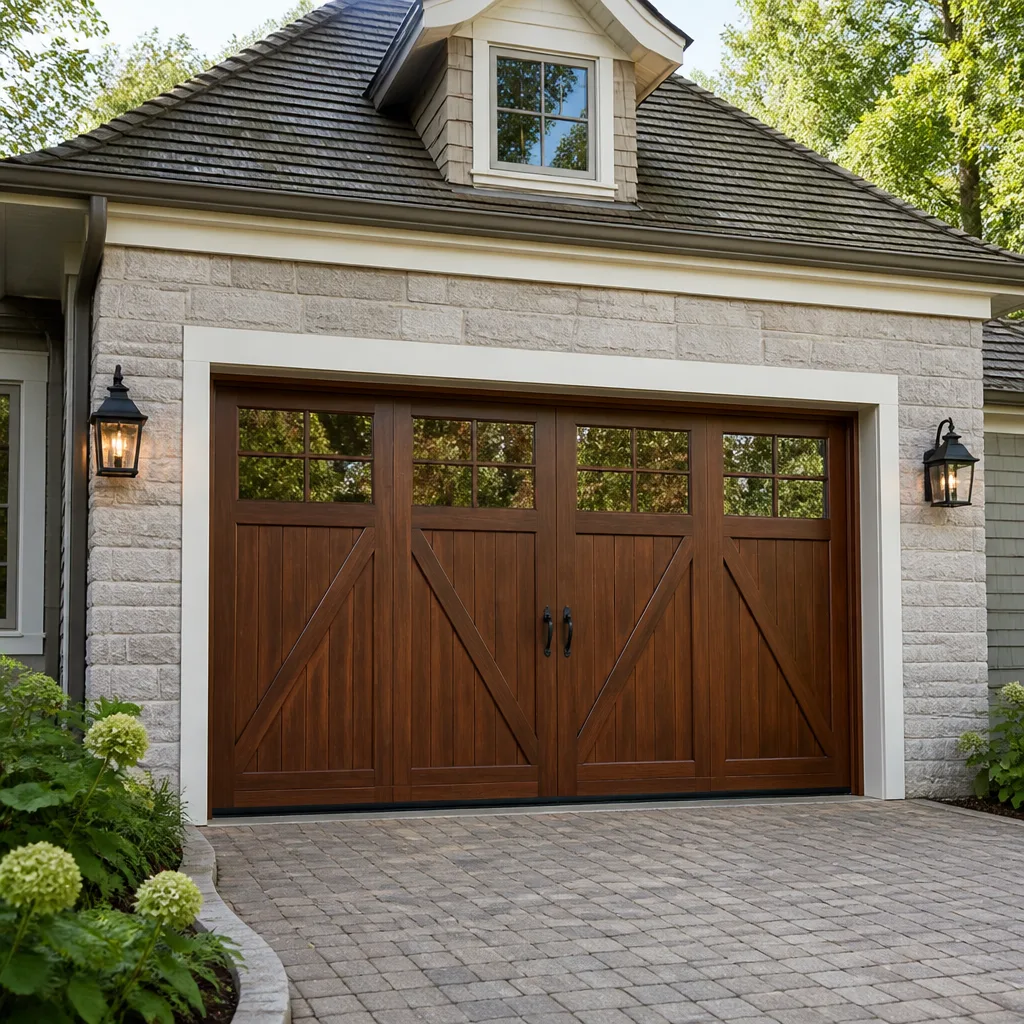 Carriage house
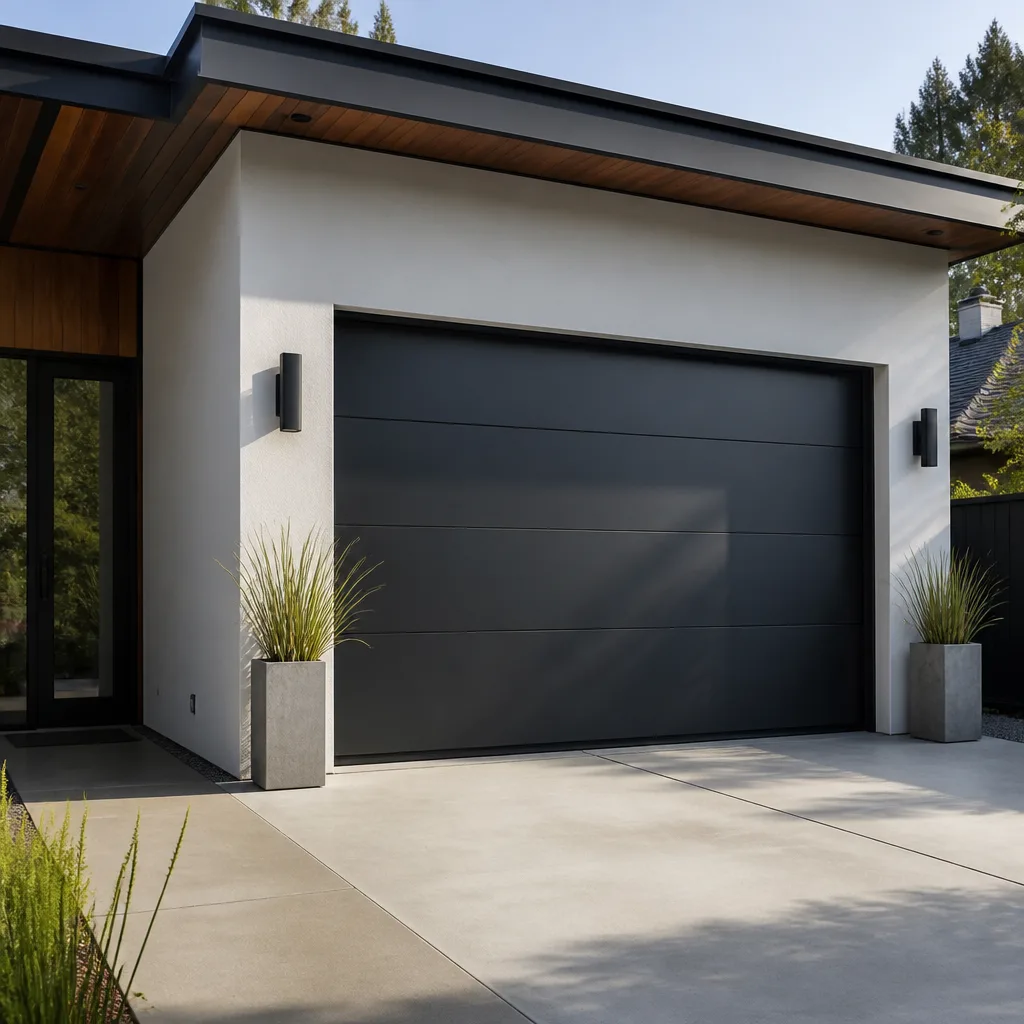 Modern flush
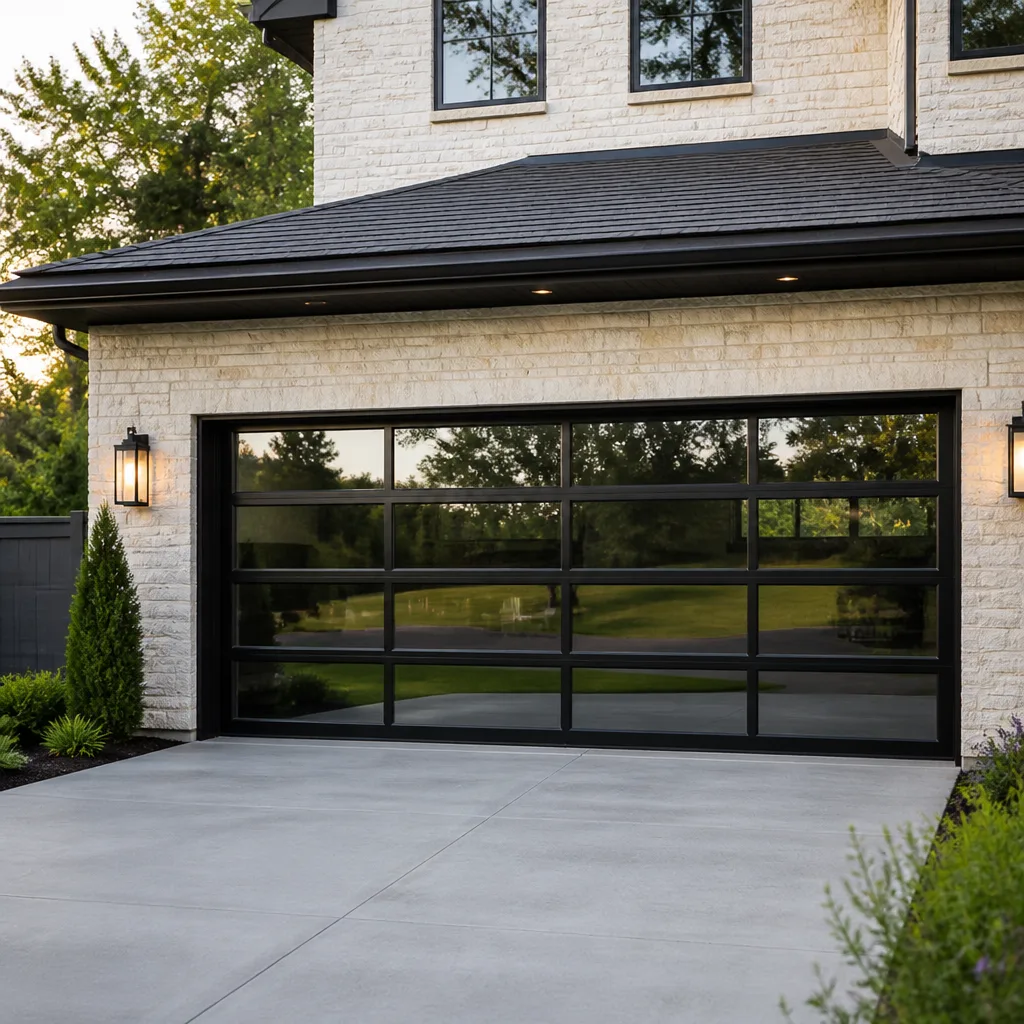 Full-view glass
 LiftMaster openers
 Chamberlain openers
Full 25-point door and opener safety check with every visit - springs, cables, rollers, tracks, and your LiftMaster or Chamberlain opener included
You get a price before we start. It does not change when the pro arrives.
Get your free estimateGarage Door Warning Signs: A Summerlin Homeowner’s Reference Guide
A rhythmic clicking sound on descent is almost always a roller with a flat spot on the nylon wheel, a $45 to $80 fix. A grinding sound on descent from a door that’s eight years or older is frequently a worn bearing plate on the torsion shaft, a $120 to $180 fix. They sound similar. The difference matters before you authorize anything. In Summerlin, where the sun loads the south-facing side of a garage for six months straight, the same symptom can also point to a heat-stressed spring that’s weeks from failing. This guide maps each symptom to the part most likely causing it, its urgency tier, and its realistic repair cost range, so you can walk to the phone already knowing what you’re probably dealing with.
Quick Answer
Most garage door warning signs fall into three categories: sound (clicking, grinding, popping), movement (jerky travel, slow start, reversed direction), and visual cues (sagging panels, gaps, fraying cables). A clicking noise on descent usually means a flattened roller ($45 to $80); a grinding noise on an older door often means a worn bearing plate ($120 to $180); a loud pop followed by a door that won’t lift points to a broken torsion spring, which is a stop-using-the-door-now situation. In Summerlin’s extreme heat, springs and nylon components degrade faster than in milder climates, so symptoms that would be “monitor and log” elsewhere can be urgent here.
Styles & brands we work with
- Raised-panel steel
- Carriage house
- Modern flush
- Full-view glass
- LiftMaster openers
- Chamberlain openers
Table of Contents
- The Symptom-to-Component Map
- Three Urgency Tiers, and the Mechanical Reason for Each
- Why Summerlin Heat Changes the Diagnosis
- What Intermittent Symptoms Actually Mean
- How to Film a Symptom Before You Call
- What You Can Safely Check Yourself
- Where the DIY Line Is (and Why Springs Are Past It)
- Realistic Summerlin Repair Cost Ranges
 Before
 After
The Symptom-to-Component Map
Homeowners research before they call, and that’s the right instinct. The trouble with most warning-signs lists is that they describe a sound and stop there. “Loud noise” could mean a $45 roller, a $180 bearing plate, or a $400 spring job. The table below connects what you’re hearing or seeing to the part that’s most probably failing, so you’re not walking in blind.
Read the left column the way you’d read a symptom checker. Match what you notice. The middle column tells you which component to suspect first. The right column gives a realistic Summerlin repair range.
- Rhythmic clicking on descent – Flattened nylon roller wheel. The flat spot slaps the track once per revolution. $45 to $80 per roller, often replaced in sets.
- Grinding on descent, door 8+ years old – Worn bearing plate on the torsion shaft. The bearing loses its grease and the race scores. $120 to $180.
- Loud pop, then the door won’t lift – Broken torsion spring. The spring’s coil has separated at a stress point. $250 to $450 depending on spring count and door weight.
- Jerky, uneven travel – Track out of alignment or a roller jumped the track. Track work runs $80 to $200; a jumped roller can be reseated for less.
- Door reverses before touching the floor – Misaligned safety sensor or a limit switch on the opener. Sensor realignment is often under $100; a limit switch adjustment similar.
- Squealing or squeaking on the way up – Dry hinges, rollers, or torsion shaft bearings. Lubrication service and inspection typically $80 to $150.
- Visible fraying on the cable – Cable is failing at the drum. Cable replacement $150 to $280 per side; do not operate the door.
- Sagging or bowed panels – Panel or structural failure. Panel replacement $200 to $600+ depending on the door; sometimes a track and hinge issue.
We photograph the failed component before anyone quotes a replacement. That’s Clause 4 of The Haven Standard, and it exists precisely because a clicking roller and a grinding bearing plate live one ear-training away from each other. When the technician shows you the flat spot on the nylon wheel, the diagnosis stops being a matter of trust.
Three Urgency Tiers, and the Mechanical Reason for Each
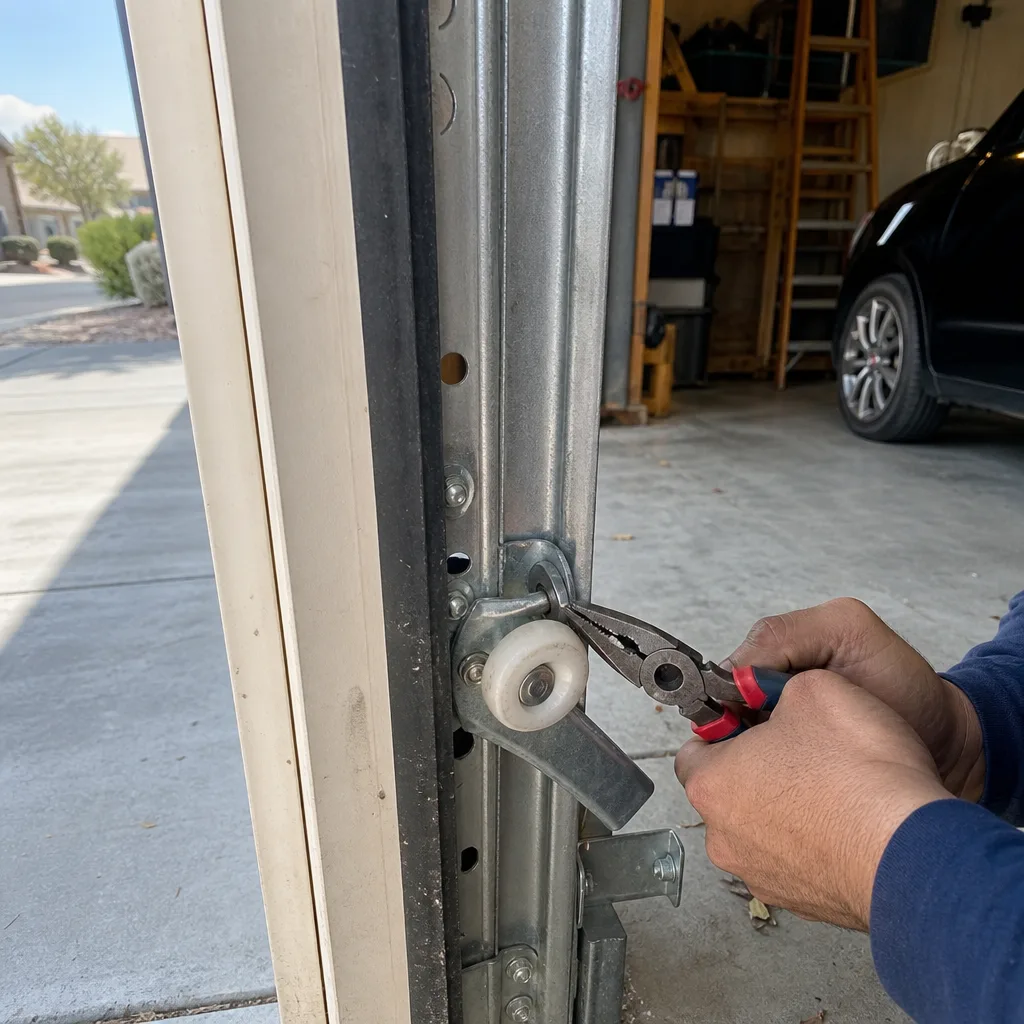
Every symptom on the map above lands in one of three buckets. The classification isn’t about how annoying the noise is. It’s about what the failing part does if it lets go. Use the mechanical reasoning, not the volume, to decide.
Tier 1: Stop Using the Door Now
These are the conditions where continued operation can turn a repair into an injury or a much larger bill.
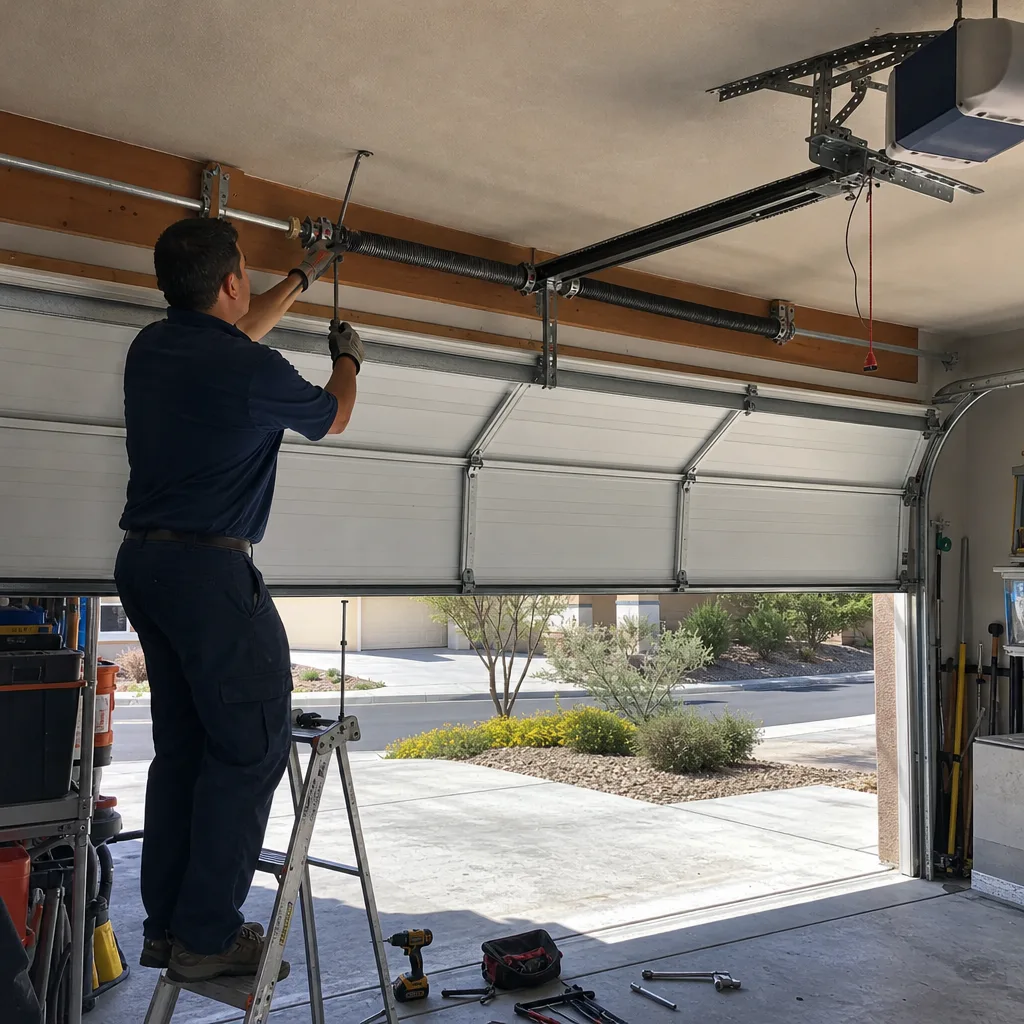
- Broken torsion spring (audible pop, door won’t lift). The spring stores the energy that lifts the door. With the coil broken, the opener alone is pulling the full door weight, which will burn out a LiftMaster or Chamberlain motor within a few cycles and can drop the door.
- Fraying or visibly damaged cable. Cables are under tension. A failed cable can snap and whip. We won’t operate a door with a failing cable, and neither should you.
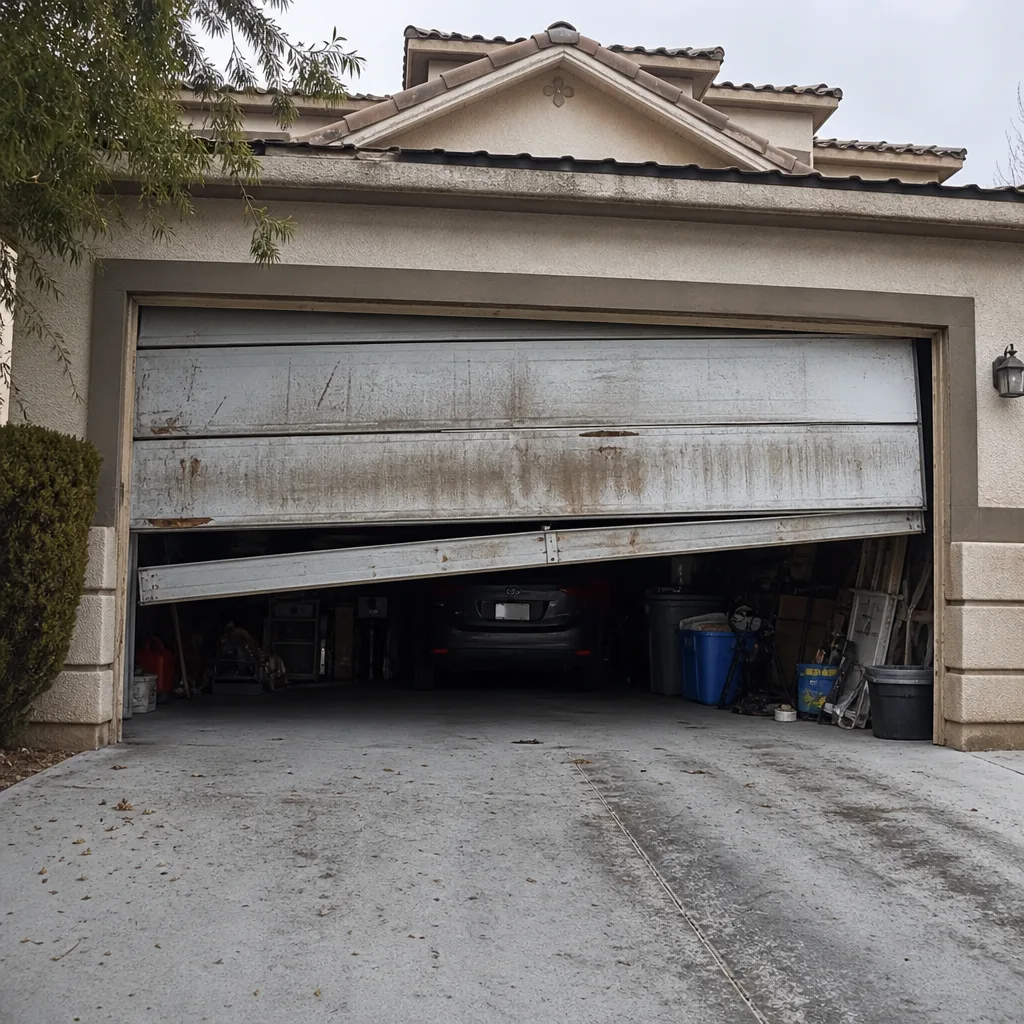
- Door off track or badly misaligned. A door that’s riding off its track can come down uncontrolled. Stop, disconnect the opener if you can safely reach the release, and call.
- Door that closes on an obstruction (safety reverse fails). This is a safety system failure. Don’t let kids or pets near it until it’s repaired.
Tier 2: Schedule Within Two Weeks
These degrade but don’t fail catastrophically in the near term. Book a service window before they migrate to Tier 1.
- Grinding on descent (bearing plate) – the bearing will keep scoring until the shaft runs rough and the whole torsion assembly is in question.
- Jerky travel, sticking rollers – the extra load wears the opener’s gears and the spring coil faster.
- Squealing, dry components – lack of lubrication accelerates wear on everything the grease was protecting.
- Opener reversing intermittently – usually a sensor or limit switch, but intermittent means “sometimes,” and “sometimes” on a safety reverse is a Tier 1 risk waiting to happen.
Tier 3: Monitor and Log
These are the cosmetic or minor-operational symptoms that don’t threaten the mechanism yet. Keep a simple log: date, what you heard or saw, whether it recurred.
- Occasional single click on one part of the travel (a single flat spot, not yet a full set of worn rollers).
- Minor squeak that appears only in cold snaps (Summerlin mornings can dip below freezing in January).
- Slight cosmetic panel dent with no effect on travel.
If a Tier 3 symptom changes frequency or volume, it moves. Log it so you can tell us exactly when it started. That detail is diagnostic gold.
Why Summerlin Heat Changes the Diagnosis
Summerlin sits at the western edge of the Las Vegas Valley, where summer highs routinely cross 110°F and the sun bakes south- and west-facing garage doors for hours each day. That heat is not a footnote. It’s a mechanical variable, and it changes how you should read a symptom that would be benign in a milder climate.
Galvanized torsion springs are rated by cycle life, and heat accelerates the metal fatigue that ends it. A spring that would last through a certain number of cycles in a coastal climate reaches the end of its fatigue life sooner here. That means coil separation risk is higher, not lower, and a spring that’s nearing its limit gives less warning. The “pop” can come on a Tuesday with no history of noise.
Nylon rollers are the other heat casualty. The nylon softens and deforms under sustained heat, so the flat spots that produce that rhythmic clicking form faster on a Summerlin door than the same roller would in, say, Reno. Same part, faster clock.
There’s a seasonal rhythm too. We regularly see spring failures cluster in late spring and early summer, when the door has just come through a winter of thermal cycling and the first sustained heat pushes the metal. In neighborhoods like The Ridges and Red Rock Country Club, where lots run larger and doors are often wider and heavier, the spring load is higher to begin with, so the same heat does more damage.
Zoning is its own wrinkle. Summerlin’s HOA design guidelines are strict about door style and color, which means many homes still have their original door from the build. If your home was built in the 2015 to 2025 window and you haven’t touched the door, the springs have now seen a decade of this heat. That’s a reasonable time to have them measured, not because something’s wrong yet, but because the cycle count is.
What Intermittent Symptoms Actually Mean
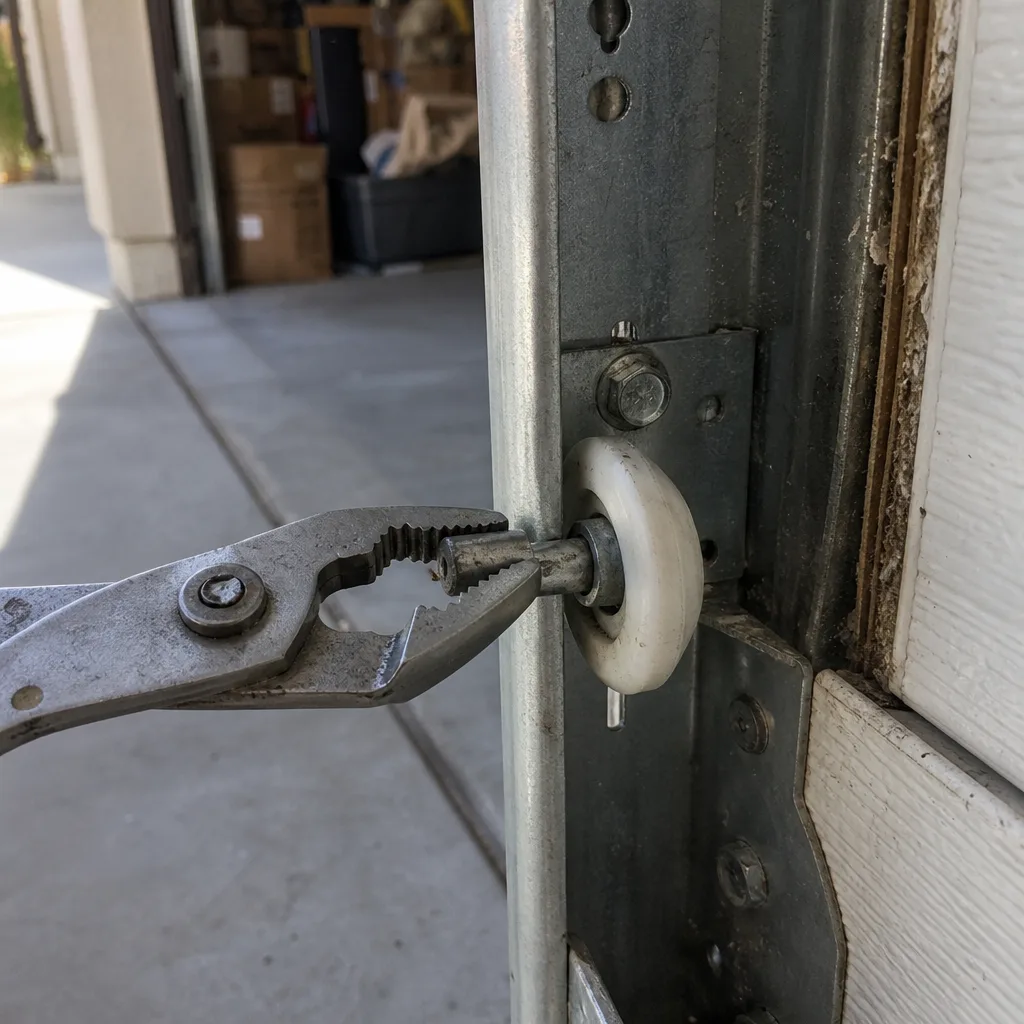
Here’s the counterintuitive part. A door that fails completely is telling you something clearly. A door that misbehaves and then works fine is often in worse shape, because the failure is still developing and you can’t see the part doing it.
An intermittent symptom means the failure is conditional. It depends on temperature (the spring is a little shorter cold than hot), on position (a flat spot only makes contact once per revolution), or on load (the opener’s torque limit trips only on the heaviest point of travel). A hard failure has already happened. An intermittent one hasn’t happened yet, which means you’re catching it while there’s still a choice about when to repair it.
In our experience, the two most common intermittent offenders are the safety sensor and the opener’s logic board. A sensor that trips sometimes is usually a slight misalignment that shifts with thermal expansion, or a lens with a fine film of desert dust on it. A logic board that drops a signal occasionally on a Genie or Chamberlain opener is on its way out, and the “occasional” gets more frequent before it stops entirely.
So don’t dismiss a door that “just did it that once.” Write down the date, the temperature, and what the door was doing. That log is what lets a technician reproduce the fault instead of guessing.
How to Film a Symptom Before You Call
A short video shot from the right angle saves a return trip and gets you a more accurate estimate. Here’s how to capture what a technician actually needs to see.
- Film on a phone in landscape, in good light. Open the garage door from inside so the overhead light or daylight reaches the tracks and torsion shaft.
- Capture a full up-and-down cycle. Start the door from closed and let it complete both directions without stopping. The transition points are where most symptoms show.
- Hold a steady wide shot first. Frame the whole door, both tracks, the opener rail, and the torsion shaft. Don’t zoom in yet; the motion is the point.
- Then get one close shot of the suspected area. For a grinding sound, pan under the torsion shaft (the horizontal bar above the door with the springs on it) so the bearing plates are visible. For a clicking sound, film along the track where the rollers ride. For a travel problem, keep the door in frame so the jerk is visible.
- Record the sound, don’t narrate over it. Let the phone’s mic pick up the actual noise. Describe it after the clip, or in the text you send with it.
- Take a still photo of any visible damage. Fraying cable, a bent track, a separated spring coil, a cracked panel.
Send the video when you request a quote, or have it ready when you call. It’s the fastest way to get a written price that reflects the actual fault rather than a worst-case range covering three possibilities.
What You Can Safely Check Yourself
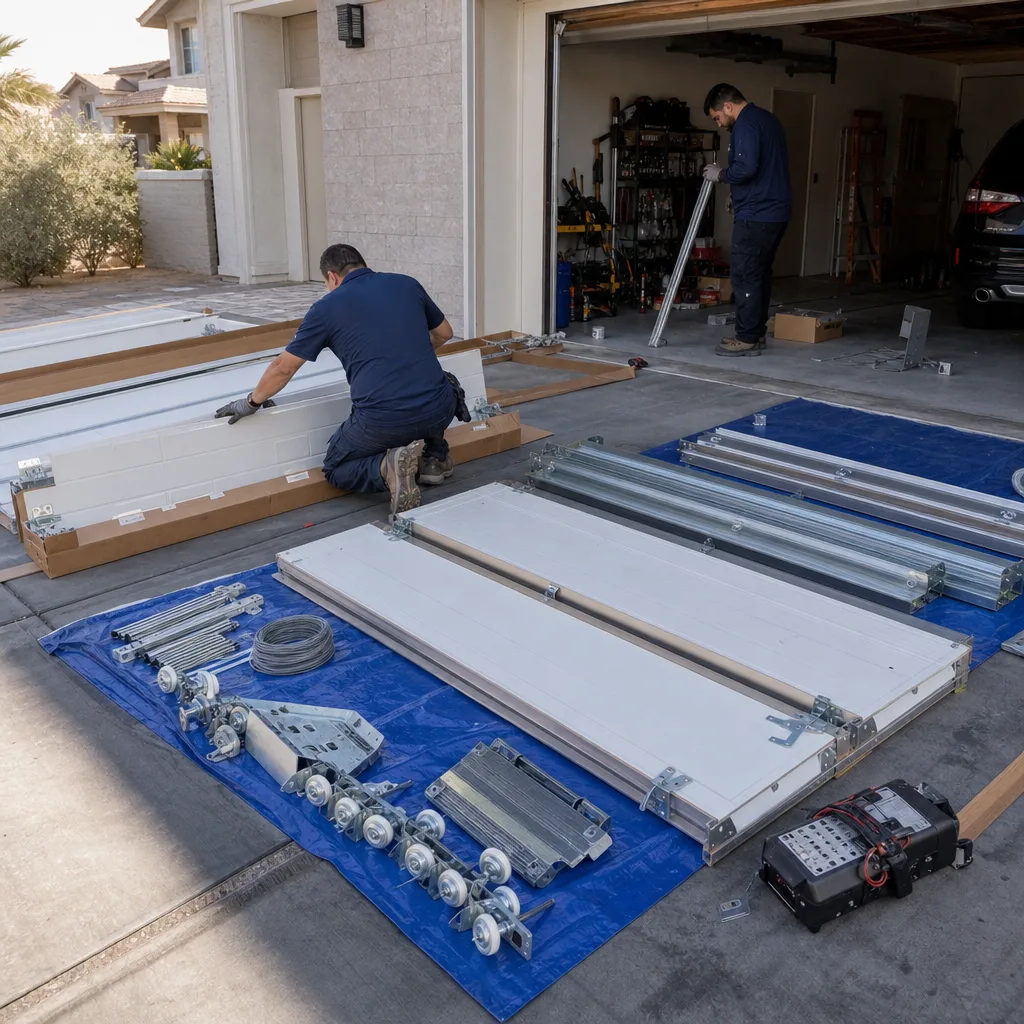
Some things are safe to look at with your eyes. Very few are safe to touch. Here’s the safe list.
- Look at the tracks. Are they bent, dented, or pulled away from the wall? A visible kink is a Tier 2 symptom.
- Look at the rollers. Are any of the nylon wheels visibly flat on one side, or are any metal rollers worn shiny and thin? Don’t reach into the track; just look.
- Look at the cables. Are the braided steel cables intact, or is there visible fraying, kinking, or slack? Fraying is Tier 1. Don’t touch the cable to test it.
- Test the safety reverse. Stand clear, close the door, and pass your hand through the sensor beam near the floor. The door should reverse immediately. If it doesn’t, that’s Tier 1.
- Listen from a few feet away. Sound is your best non-contact diagnostic tool. Note the rhythm, the timing (open or close), and the location.
- Look at the hinges. Visible rust, cracks, or a hinge that’s pulling out of the panel are easy to spot and worth mentioning.
What not to do: don’t put your hand near a spring or cable to “check tension,” don’t try to loosen a torsion shaft, and don’t force a stuck door with the opener. Those parts store enough energy to hurt you, and they aren’t something a homeowner can safely assess by feel.
Where the DIY Line Is (and Why Springs Are Past It)
We’re not going to tell you everything requires a professional. Some of this is genuinely within reach. Replacing a single roller, if you’re comfortable with tools, is a common homeowner task. Lubricating hinges and the torsion shaft bearings with the right product is reasonable maintenance. Cleaning the sensor lenses and re-aiming them is a five-minute job most people can do.
The torsion spring is a different category entirely. Those springs hold the entire weight of the door in tension, and winding or unwinding them requires the right winding bars, the right hand position, and a working knowledge of where the energy goes if your grip slips. The stored energy in a wound torsion spring has serious injury potential, which is why we tell every Summerlin homeowner the same thing: measure the spring, photograph it, note the door’s weight, and call a trained professional. There’s no safe shortcut around that. The same caution applies to a door off its track and to any cable under load.
The compromise is simple. You do the safe inspection and the video documentation. We do the parts that store energy. That division is what keeps the repair a repair rather than an injury.
Realistic Summerlin Repair Cost Ranges
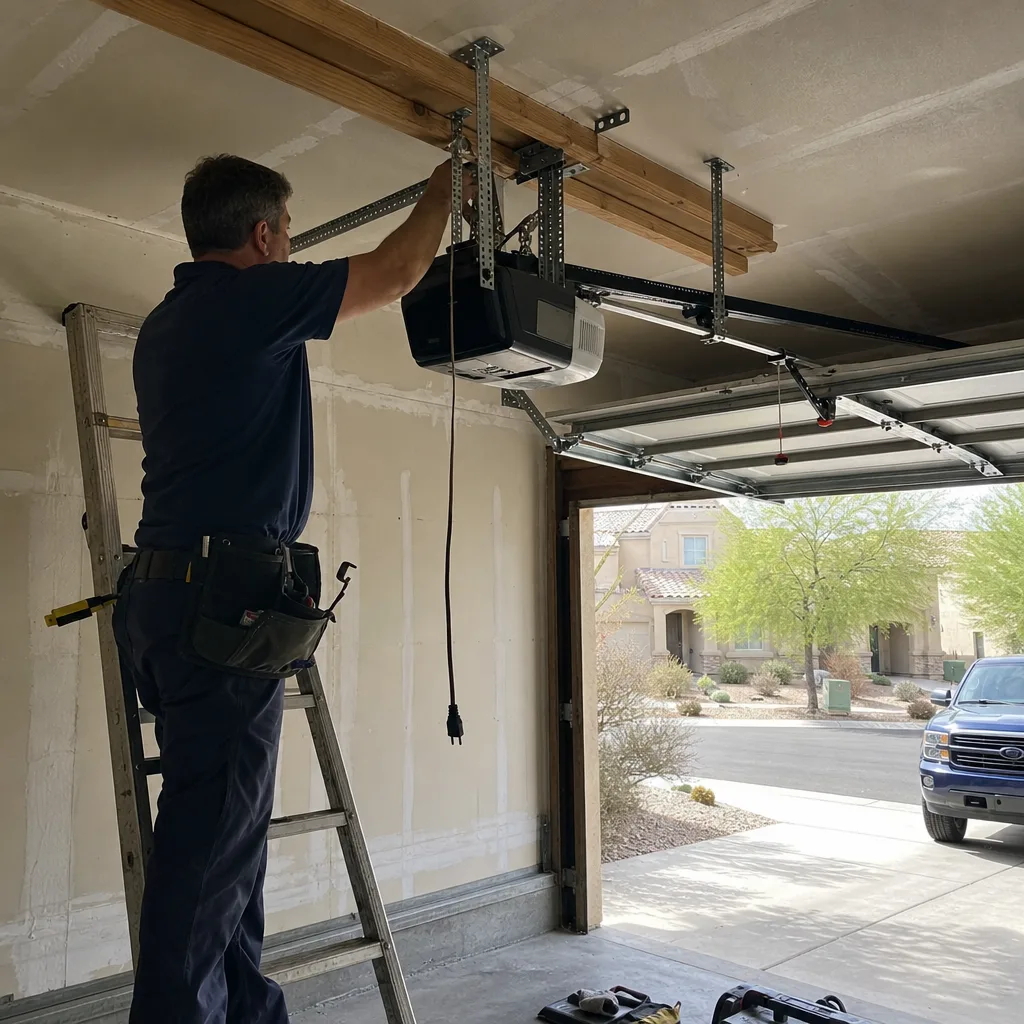
Here’s what the common repairs actually run in the Summerlin market. These are ranges, not quotes, and a written price always comes before work starts.
- Roller replacement (per roller): $45 to $80; often done in sets of 10 to 12.
- Bearing plate replacement: $120 to $180.
- Torsion spring replacement (single): $250 to $400; a two-spring door typically $350 to $450.
- Cable replacement (per side): $150 to $280.
- Track realignment: $80 to $200.
- Hinge replacement: $40 to $90 each.
- Safety sensor realignment: $80 to $150.
- Opener logic board replacement: $180 to $320 depending on model.
- Full lubrication and tune-up: $80 to $150.
The price is quoted, flat, in writing, and agreed before any work starts. Clause 1 of The Haven Standard exists so a clicking roller doesn’t become a surprise invoice. If you have a written estimate from another company and want a second look, our Garage Door Repair in Summerlin team will review it free, no code needed. And if it’s the opener itself that’s showing symptoms, the Garage Door Opener Repair & Installation in Summerlin page covers the parts you’d realistically be pricing.
Common Mistakes to Avoid
- Authorizing a repair over the phone without seeing the diagnosis. If a company won’t tell you which part failed and why, the quote is a guess. Ask for the component name and the reason.
- Treating a broken spring as a “wait” item. A door with a broken torsion spring is running on the opener alone, which will burn the motor out in short order on a LiftMaster or Chamberlain unit. That turns a $300 spring into a spring plus an opener.
- Ignoring heat-season timing. In Summerlin, spring failures cluster in late spring and early summer. If a door that’s eight years old starts making noise in April, don’t wait until August to look at it.
- Using WD-40 as a garage door lubricant. It’s a solvent, not a lubricant, and it strips the grease the bearings need. Use a proper lithium or silicone-based garage door lubricant on hinges and rollers.
- Over-tightening or forcing anything on the torsion shaft. This is how springs fail dangerously and how homeowners get hurt. Leave the shaft alone.
- Skipping the video. A one-minute clip of the actual fault gets you a more accurate estimate than a five-minute phone description. Send it.
- Paying for a repair with no documentation. The invoice should name the part replaced and the price you agreed to. A photo record of the failed part should come with it.
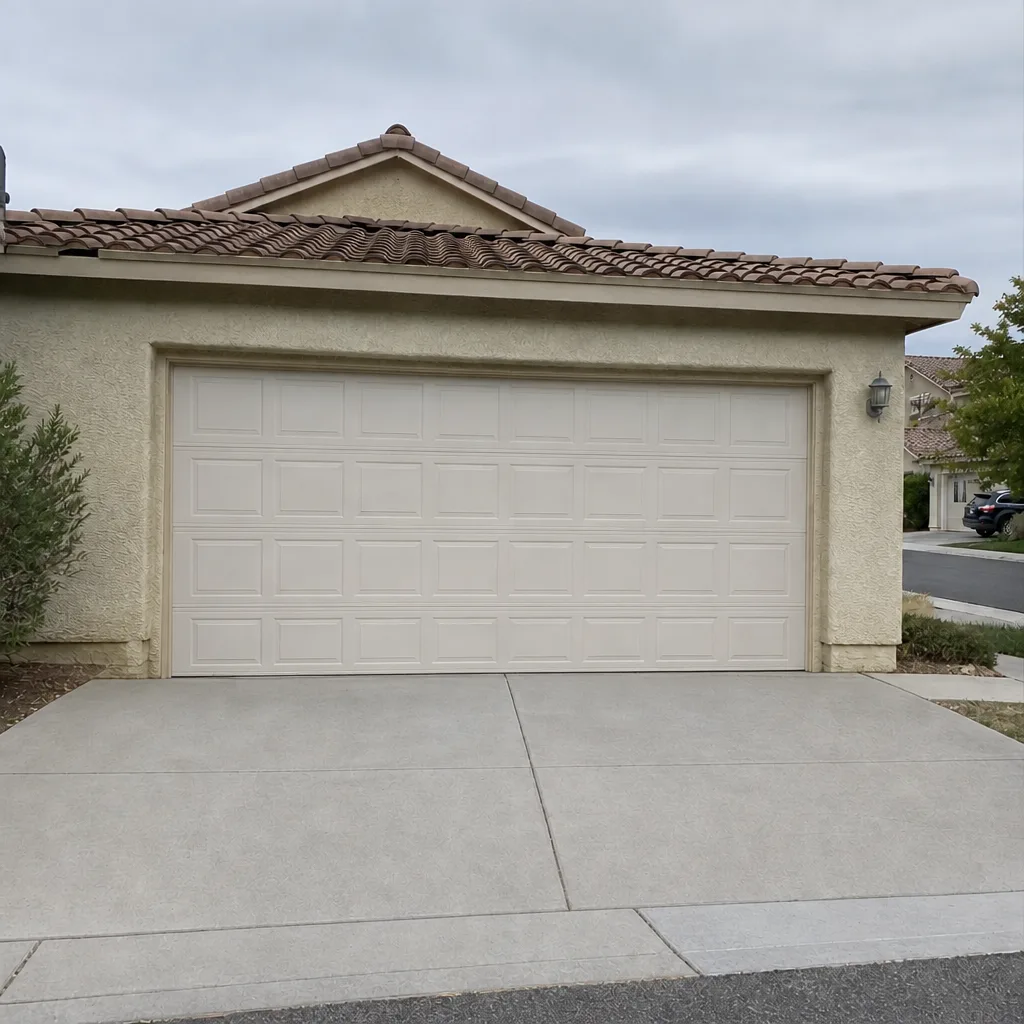
See the difference
BeforeAfter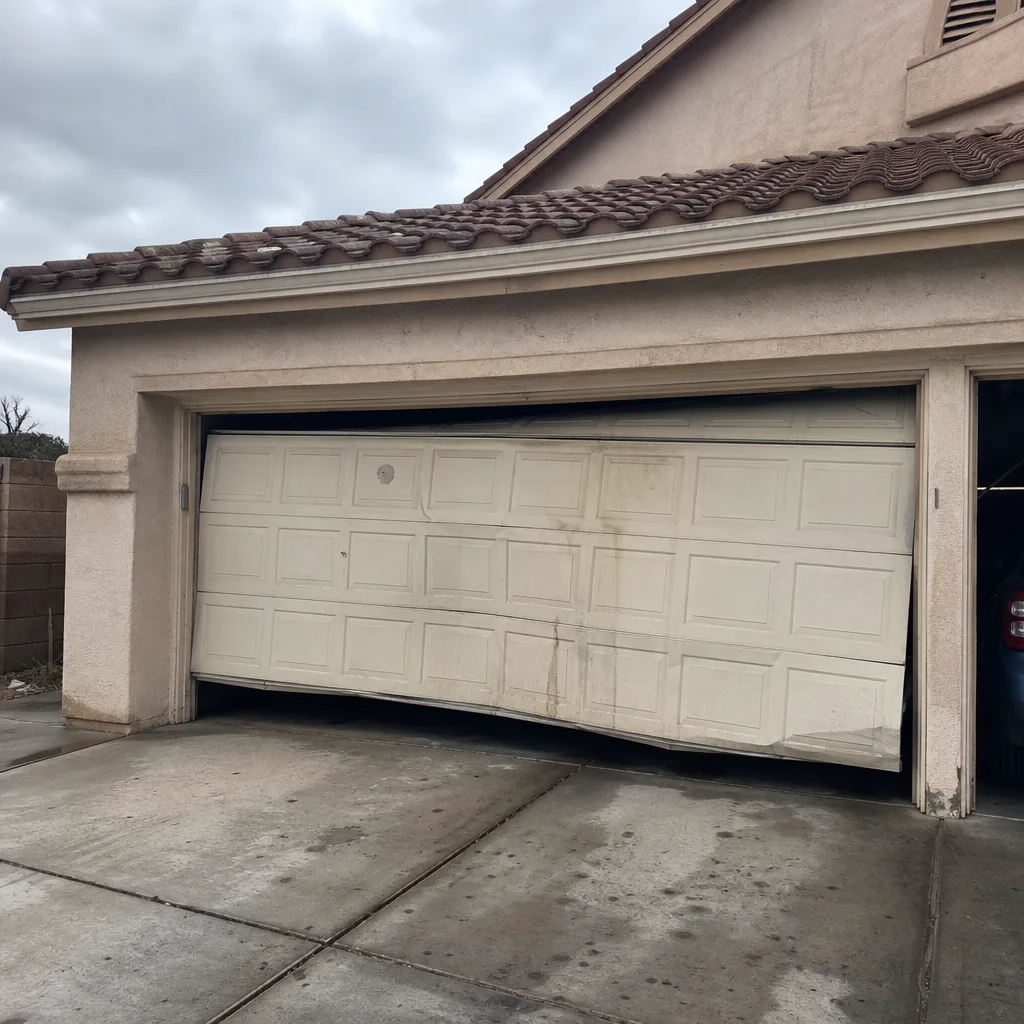 Before
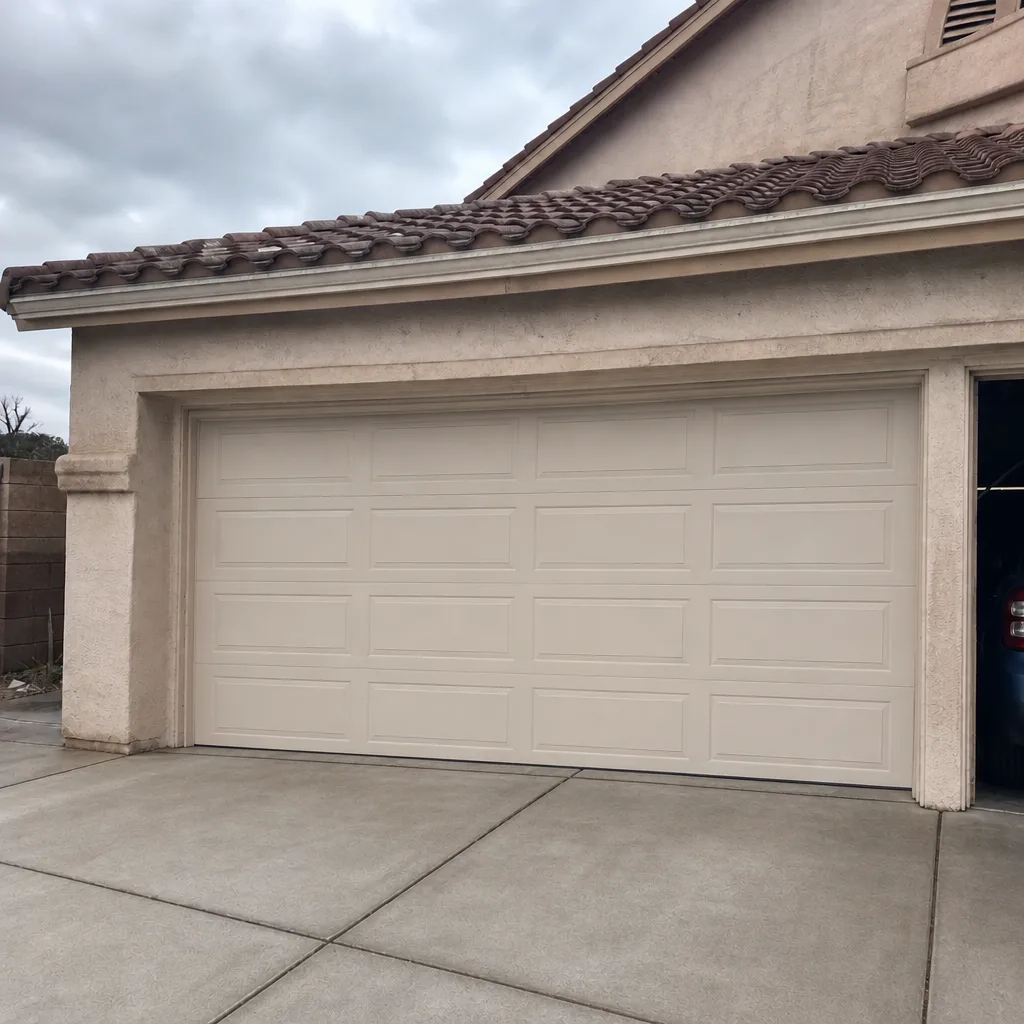 After
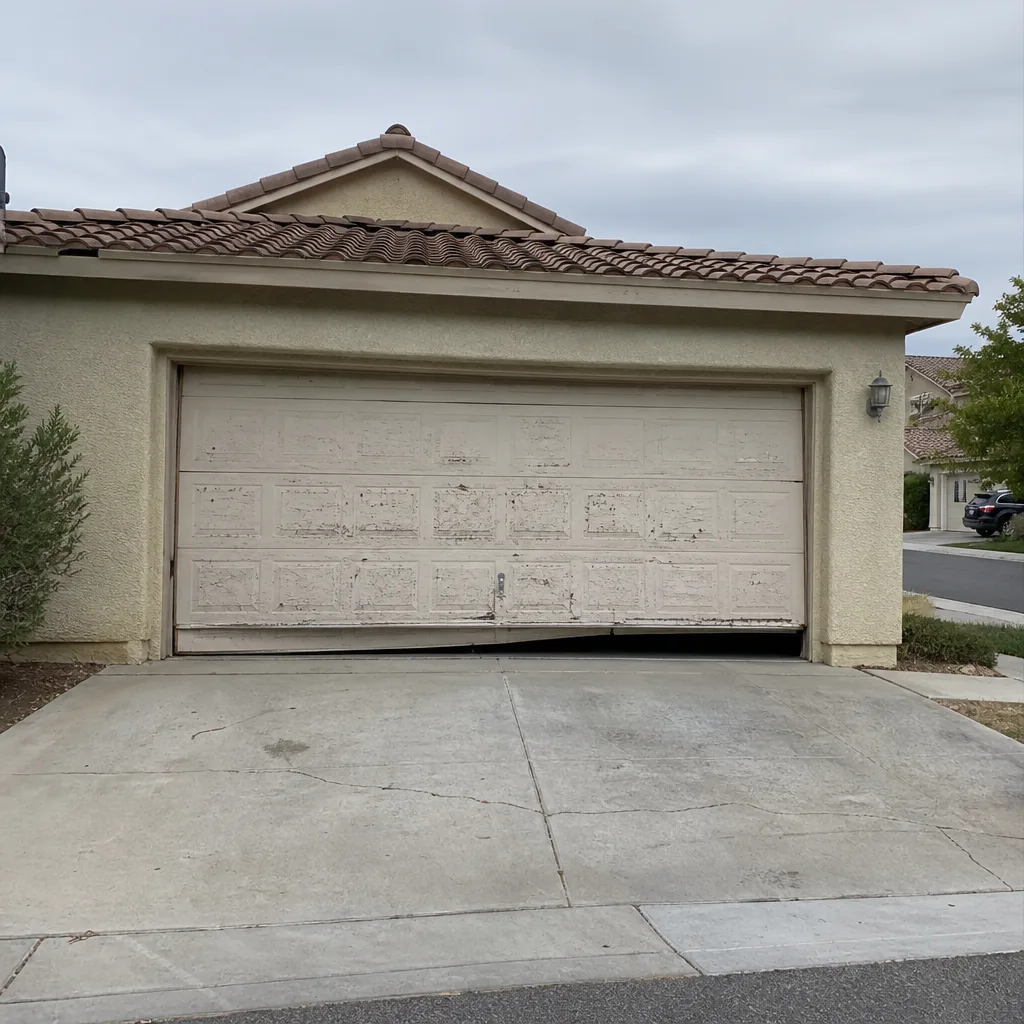 Before
 After
When to Call a Professional
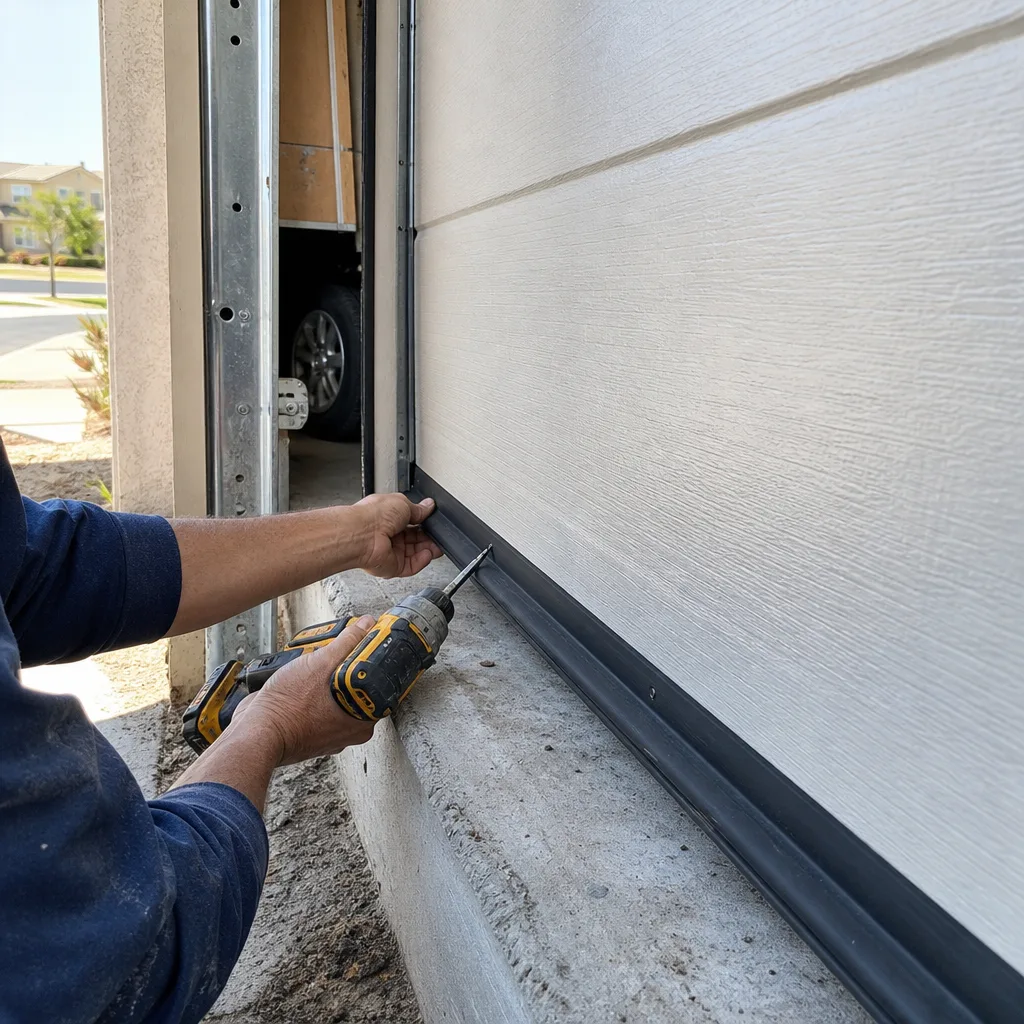
Call now if you’ve heard a pop and the door won’t lift, if a cable is visibly frayed, if the door is off its track, or if the safety reverse test fails. Those are Tier 1 conditions and shouldn’t wait for a scheduled window. Call within a few days if a door 8 to 10 years old starts grinding on descent, if travel is jerky, or if the opener reverses intermittently, since those are Tier 2 and they migrate. And call for a measurement and written price if your door is original to a home built in the 2015 to 2025 window and you simply want to know the spring’s cycle count before the next hot season.
Servo Garage Doors Summerlin offers free estimates in Summerlin. Call (844) 797-3654 and speak with a person, any hour, day or night. You’ll get a named technician, an on-the-way text, and a written price before anything starts.
Frequently Asked Questions
A rhythmic clicking on descent caused by a flattened nylon roller is the most common non-urgent symptom we see, and a loud pop from a failing torsion spring is the most common urgent one. The clicking comes from a flat spot on the roller wheel slapping the track, a $45 to $80 fix. The pop means the spring coil has separated and the door should not be operated. Call (844) 797-3654 for a same-day assessment on the urgent cases.
Torsion spring replacement in the Summerlin market typically runs $250 to $400 for a single spring and $350 to $450 for a two-spring door. The range depends on the spring wire diameter, the door’s weight, and whether it’s a standard-height or larger door. You’ll get a flat, written price before work starts. Call (844) 797-3654 for an exact quote; estimates are free.
Yes. Emergency garage door calls are answered by a live person any hour, and a technician is dispatched to Summerlin the same day. You’ll get a named technician and an on-the-way text rather than a callback window. Call (844) 797-3654 and tell us what you heard before it stopped.
Summerlin’s sustained heat softens nylon rollers and expands metal components, so clearances change and a marginal part becomes a noisy one. A door that’s quiet in January can click and grind by July. If the change appeared with the first heat wave, that’s a symptom worth recording and calling about, not just a seasonal quirk.
No. The written price and written scope are agreed before any work begins, and they don’t move after the fact unless you authorize a change. Clause 1 of The Haven Standard exists for exactly that reason. If the technician finds something the video didn’t capture, you’ll see the photo and approve the difference before it’s touched. Call (844) 797-3654 for a written quote.
Yes. Servo Garage Doors Summerlin works under The Haven Standard as an independently owned and operated business, holding its own license and insurance. Technicians are background-checked, and the license number is on the page, not buried in fine print. Every visit includes a documented photo record of what was found and what was done. Call (844) 797-3654 for a free estimate.
The Bottom Line
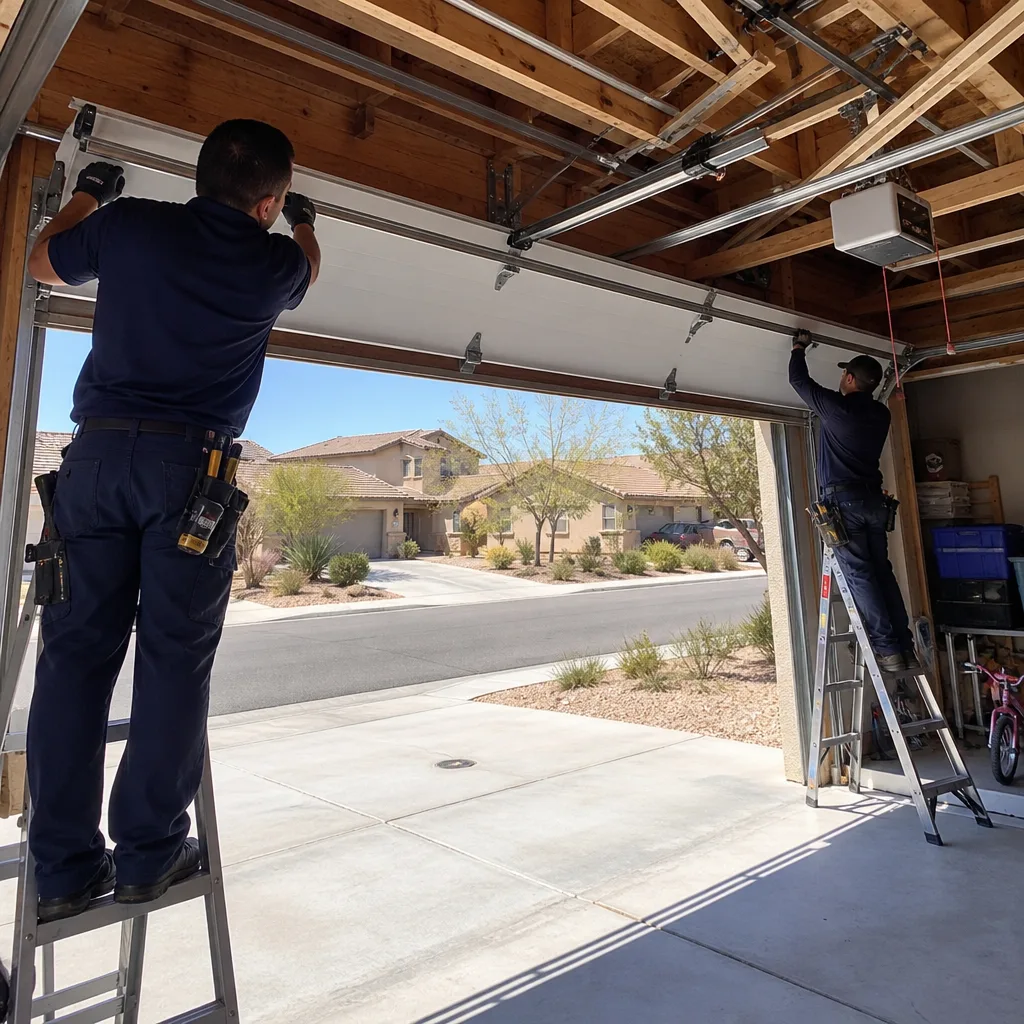
The warning sign is only half the information. What matters is which part is failing and what it costs to fix before it fails completely. Match your symptom to the component, note the urgency tier, and film it before you call so the diagnosis starts from evidence. In Summerlin, add heat to the equation: springs and nylon parts see more thermal cycling than the same components would in a milder market, so “barely noticeable” can move faster here. The door you leave alone all summer is the door most likely to surprise you in July.
Our technicians have up to 11 years of experience, and every job comes with a written price before work starts and a documented photo record when we leave. If a repair isn’t right, the 365-Day Done Right Promise makes it right. Browse the Servo Garage Doors Summerlin home page to see what a visit looks like from start to finish, or read up on Garage Door Installation in Summerlin if a failing door has you considering replacing rather than repairing it. Either way, the phone is answered by a person around the clock.
Contact
Got a symptom you can’t place, or a video you want looked at? Call (844) 797-3654 for a free estimate. We’ll tell you which part we expect to find, quote a flat written price before anything is touched, and show you the failed component in a photo record when the work is done. Servo Garage Doors Summerlin answers live, 24/7, including holidays.
Written by the team at Servo Garage Doors Summerlin.