
Last updated November 17, 2026
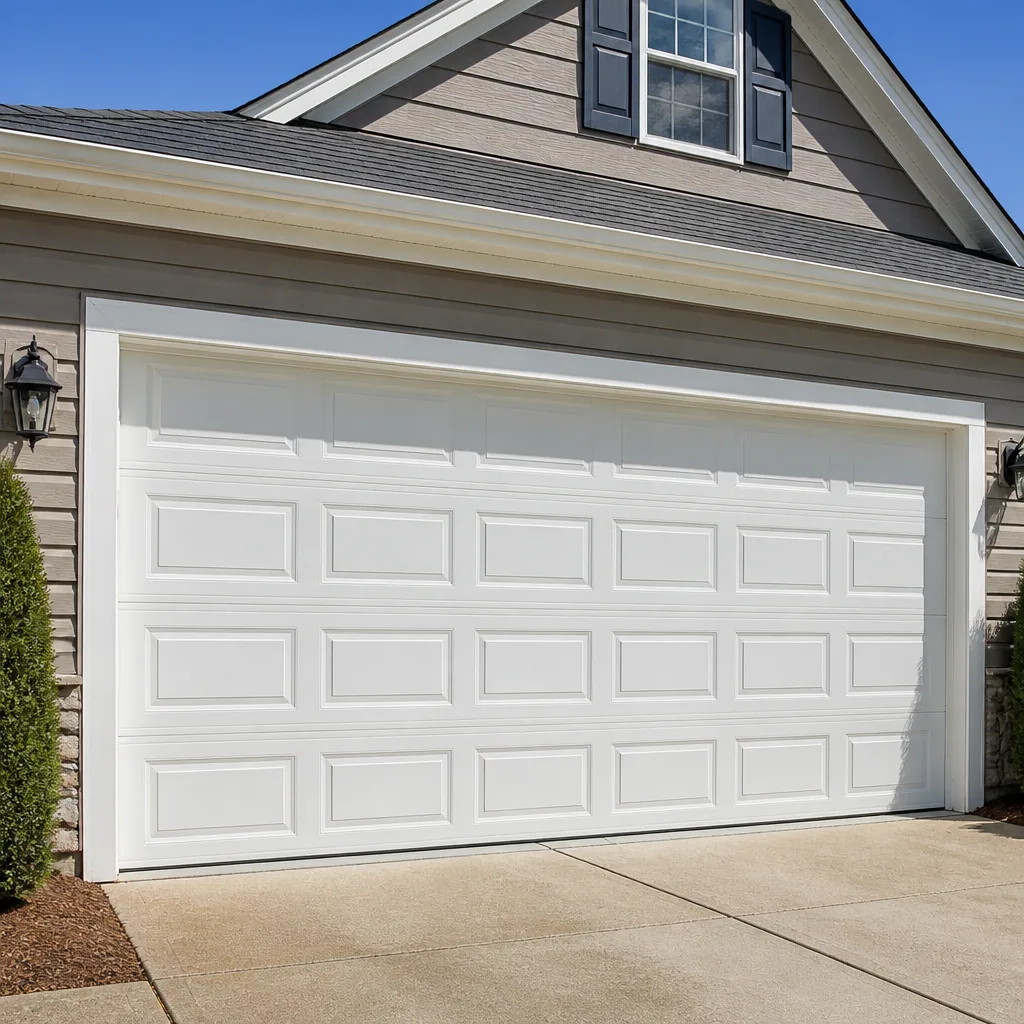 Raised-panel steel
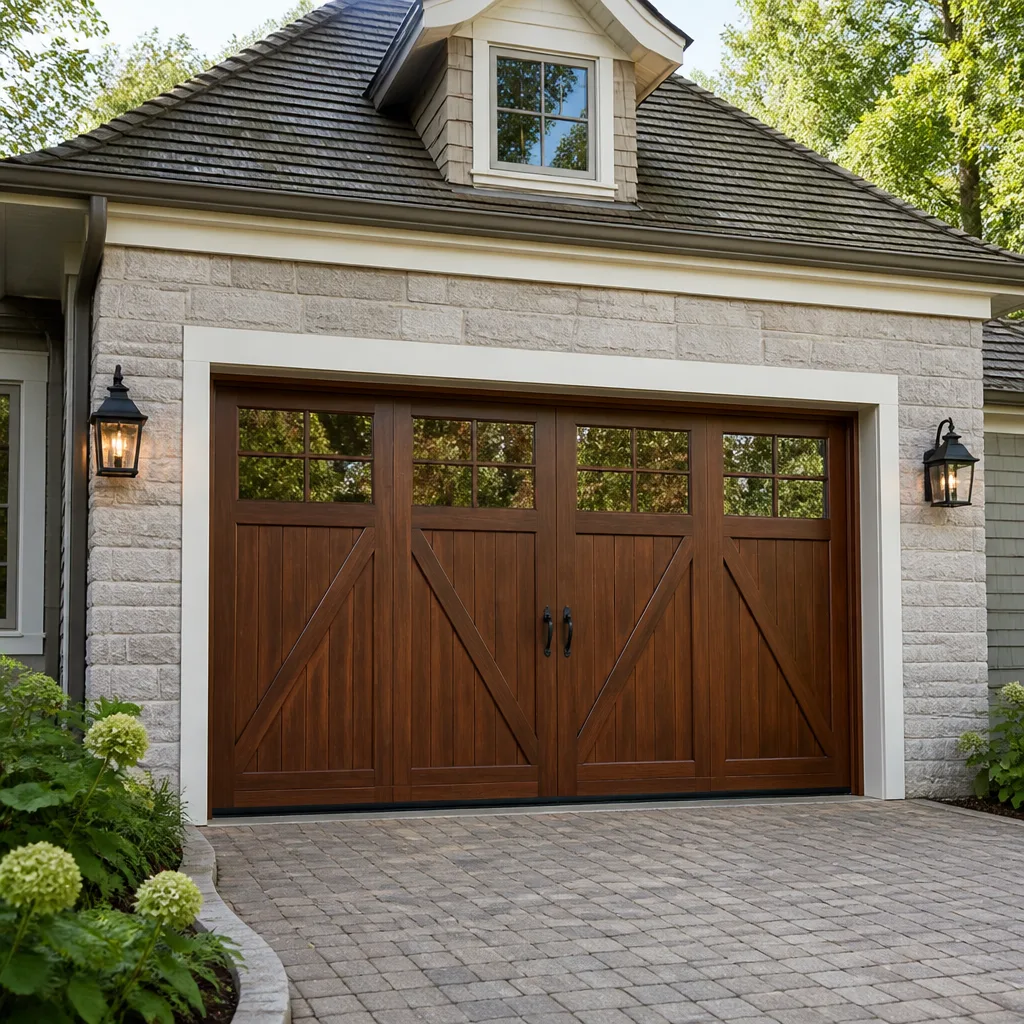 Carriage house
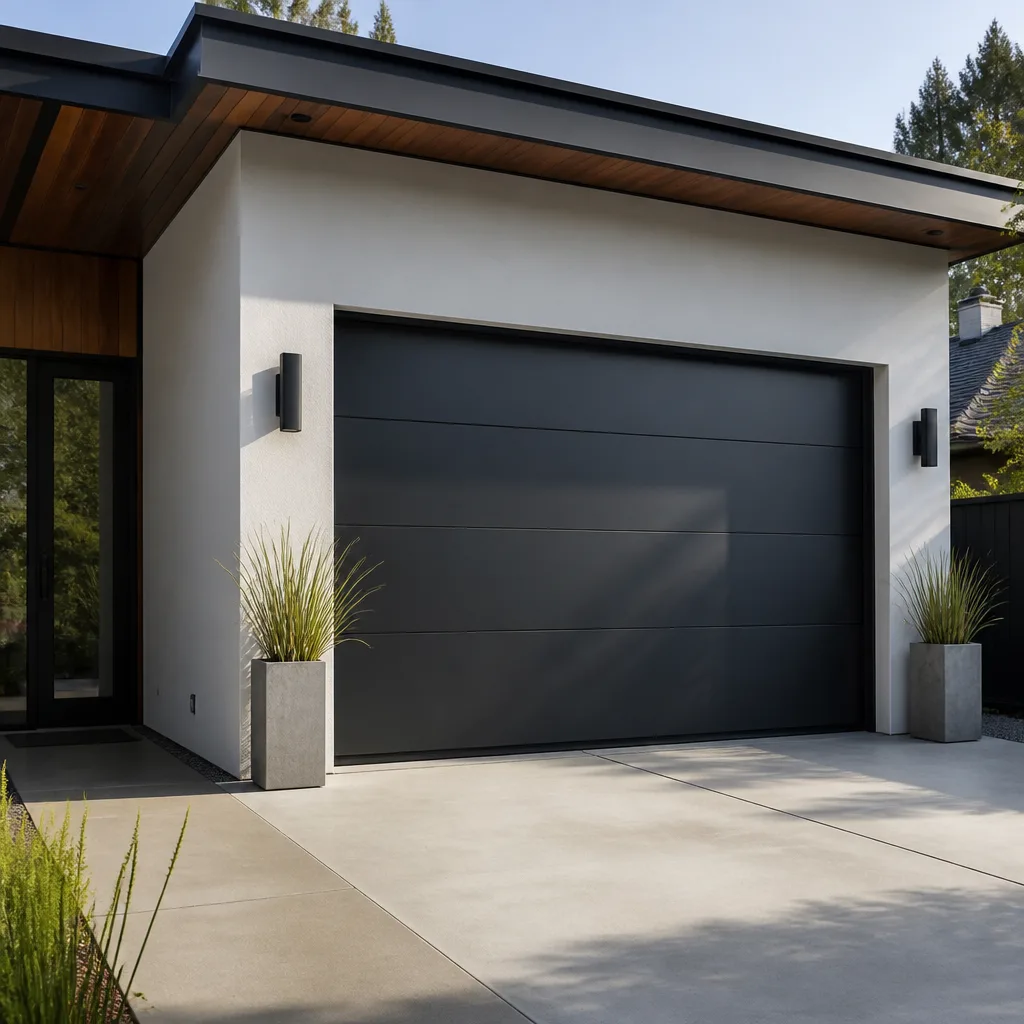 Modern flush
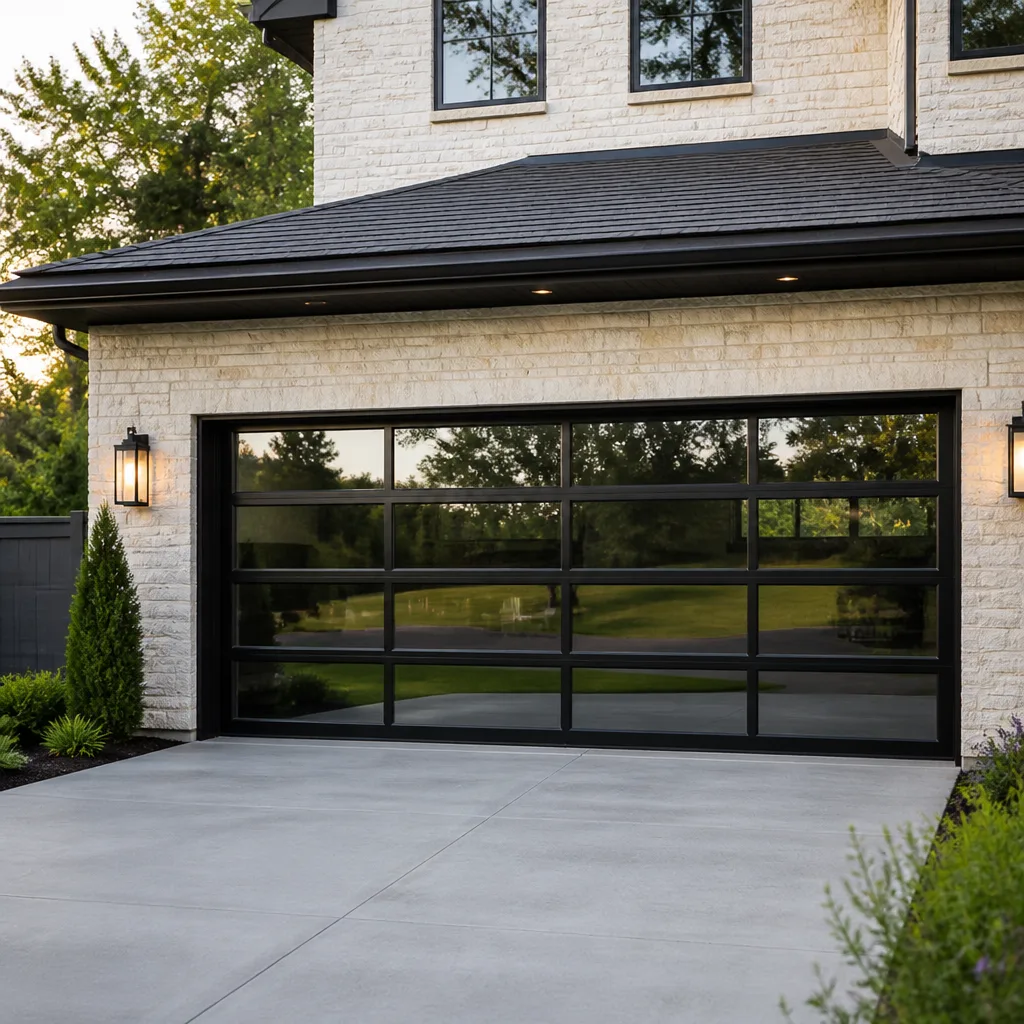 Full-view glass
 LiftMaster openers
 Chamberlain openers
Full 25-point door and opener safety check with every visit - springs, cables, rollers, tracks, and your LiftMaster or Chamberlain opener included
You get a price before we start. It does not change when the pro arrives.
Get your free estimateChoosing the Right Garage Door Brand: A Buyer’s Guide for Summerlin
A steel garage door rated at R-12.9 may not be an R-12.9 door once it’s been sitting in a Summerlin afternoon for six hours. That number was measured at a steady 70°F in a lab. Your west-facing garage can climb well past 100°F, and the door skin absorbing direct sun runs hotter still. Tested R-value and effective R-value are not the same figure in a desert, and no manufacturer is required to tell you the difference. This guide covers the two specifications most buyer’s guides skip – R-value test conditions and finish warranty exclusions – plus the steel gauge, insulation core, and HOA color decisions that actually matter here.
Quick Answer
The right garage door brand for Summerlin is the one whose spec sheet documents R-value test conditions and whose finish warranty covers UV fading without an exclusion clause – not the brand with the biggest national ad budget. In this market, a polyurethane-core door in a lighter HOA-approved color from a manufacturer with a real finish warranty beats a higher-R-value door that voids its finish coverage on heat exposure.
Styles & brands we work with
- Raised-panel steel
- Carriage house
- Modern flush
- Full-view glass
- LiftMaster openers
- Chamberlain openers
Table of Contents
- How to read a garage door spec sheet for desert conditions
- Brand-by-brand: the four manufacturers that matter in Summerlin
- Steel gauge explained: what 24-gauge vs. 25-gauge means
- Insulation cores: polystyrene vs. polyurethane
- Matching finish to Summerlin HOA palettes and heat absorption
- A step-by-step process for choosing your door
- Common mistakes to avoid
- Frequently asked questions
 Before
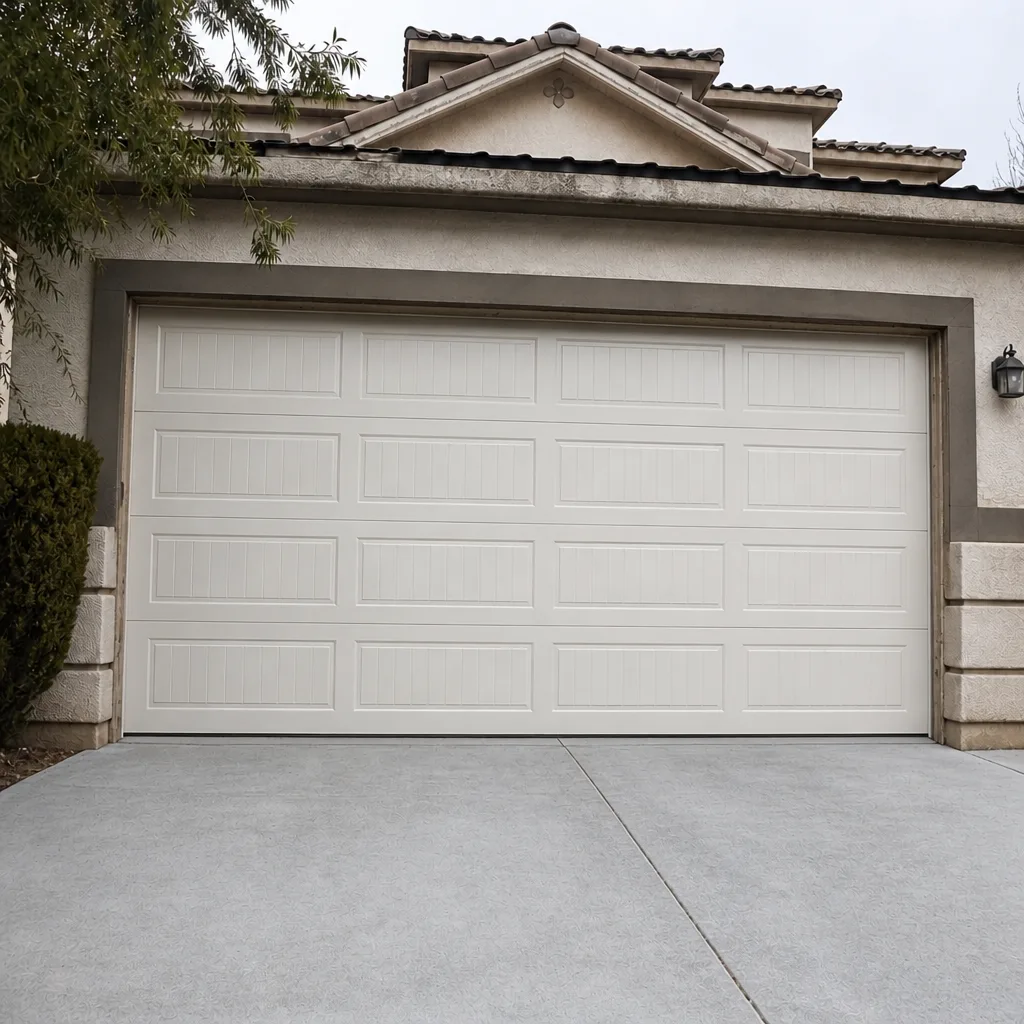 After
How to Read a Garage Door Spec Sheet for Desert Conditions
Manufacturers publish R-value with an ASTM test number and a stated ambient temperature. Read that line first. An R-value of 12 tested at 70°F tells you about a garage in Ohio. It tells you very little about a garage in The Ridges in July. What you want to see is whether the manufacturer documents performance at elevated ambient temperatures, or at minimum whether the door core’s material data (foam density, closed-cell structure) suggests it holds its thermal resistance as heat climbs. Polyurethane foam generally maintains thermal resistance better than open-cell polystyrene as temperatures rise, which is why two doors that both claim R-12 can behave differently at sustained desert heat.
The second line to find is the finish warranty. Look specifically for the words “UV,” “fading,” “chalking,” and “delamination” in the exclusions section. Many finish warranties run ten years or more on paper but exclude the exact failure modes that Summerlin produces. A door on a south- or west-facing wall in Summerlin gets roughly 300 sun-days a year. If the warranty voids on finish failure caused by sun exposure, it’s a warranty for a different climate.
- R-value test temperature – 70°F is the standard. Ask what the number looks like at 100°F-plus.
- Finish warranty exclusions – UV in the exclusion column means no coverage for what actually happens here.
- Core material – polyurethane or polystyrene, and the density if it’s stated.
- Steel gauge – the actual number, not the word “heavy-duty.”
- Color coat process – factory-baked finishes outperform field-painted touch-ups on UV hold.
We’ve pulled spec sheets for Summerlin homeowners who bring us three quotes side by side and find that only one of the three states its R-value test conditions at all. That’s the first filter.
Brand-by-Brand: The Four Manufacturers That Matter in Summerlin
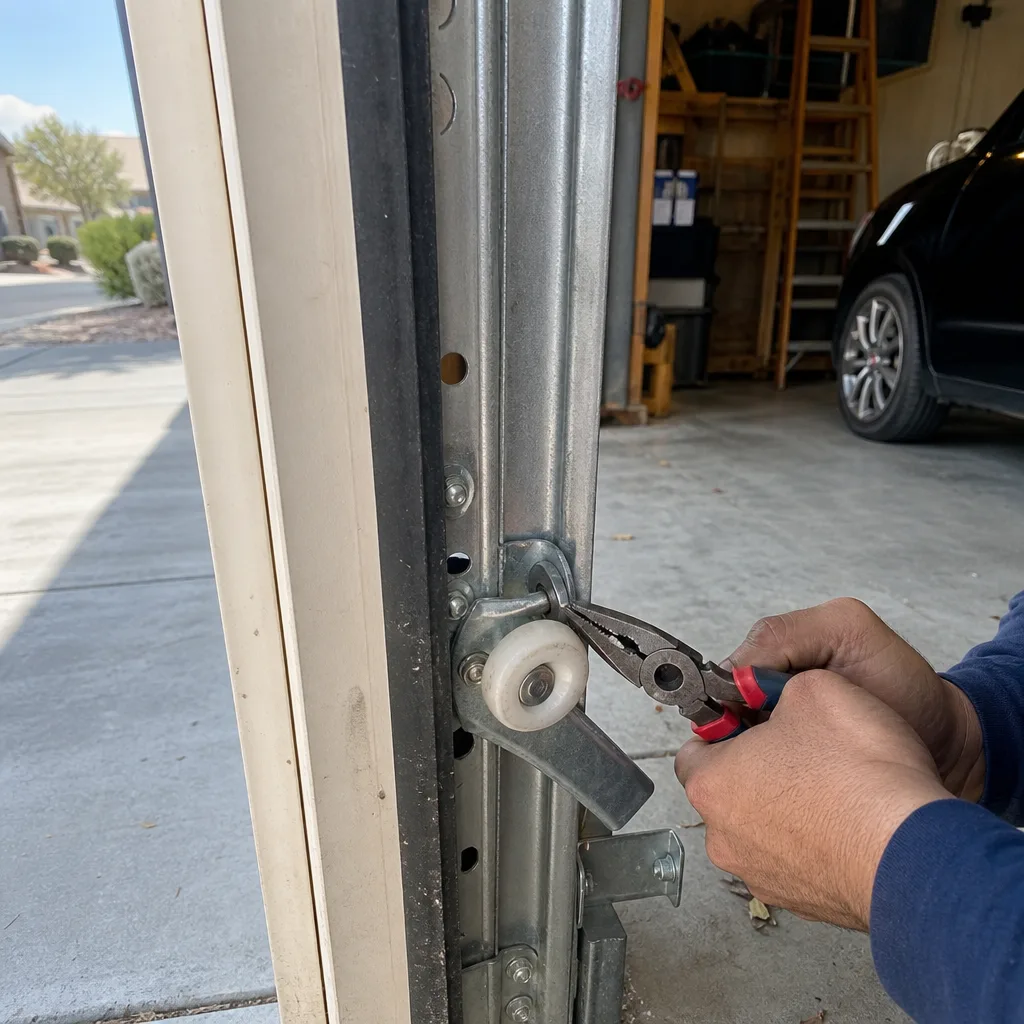
National “best of” rankings weigh price, availability, and marketing reach. In Summerlin, the ranking should weigh R-value documentation, finish warranty language, and how well the brand’s product line matches our HOA palette requirements. Here’s how the four majors sold here stack up on those grounds.
Clopay. The company’s premium insulated lines are widely specified in Summerlin because the finish warranty is typically written in plainer language, and the company publishes performance data. Ask for the specific model’s warranty document, not the brochure summary. Clopay’s residential collections offer a broad range of colors that clear many Summerlin HOA palettes.
Amarr. Amarr’s insulated doors are honest about core construction – you can usually find the polyurethane core spec by model. The finish warranty terms vary by collection, so read per model. Amarr is a frequent choice for homeowners matching an existing door color under HOA rules.
Wayne Dalton. Wayne Dalton’s steel-back insulated doors are common in Summerlin’s mid-2000s inventory for good reason: the thermal performance is solid, and parts availability for repairs is strong. The foam-core models are worth understanding if budget is the primary constraint.
Genie. Genie is primarily an opener manufacturer, but Genie-branded doors and opener-door paired systems appear in Summerlin homes. If you’re replacing a door, matching the opener’s capacity to the door’s weight rating is part of the brand decision – an important point because a heavier insulated door can outrun a lightweight-rated opener.
None of these brands is “best” in the abstract. Clopay wins on documentation transparency. Amarr wins on color range. Wayne Dalton wins on serviceability. Genie wins on opener integration. The brand that fits your west-facing wall and your HOA palette is the right one for you – not the one with a national award on its website.
Steel Gauge Explained: What 24-Gauge vs. 25-Gauge Actually Means
Gauge is a measure of steel thickness, and in sheet metal lower numbers mean thicker material. A 24-gauge skin is thicker than a 25-gauge skin. That’s the whole story competitors’ marketing doesn’t tell you.
Why it matters in Summerlin specifically: a thinner skin dents more easily under daily use and deflects more under heat stress. A door skin that expands and contracts with every summer day eventually shows the flex as a crease near the seams or a bulge in the panel. A thicker skin resists that cycle better. For a door facing west, on a wall that gets six to eight hours of direct sun in July, the difference in service life is measurable in years, not months.
Gauge also interacts with insulation. Thicker steel transmits less heat through conduction to the interior face. So a 24-gauge skin over a polyurethane core performs better than a 25-gauge skin over the same core, even though the R-value rating on paper is identical. That’s a real-world gap the spec sheet won’t show you.
- 24-gauge – thicker skin, better dent resistance, better heat deflection, generally higher thermal mass on the surface.
- 25-gauge – thinner, lighter, less expensive; adequate for a shaded or north-facing wall, less forgiving on a west-facing wall in Summerlin.
- Two-sided vs. one-sided steel – the back skin matters for thermal performance as much as the front.
- Embossed vs. smooth finish – embossed skins hide minor dents and surface irregularities better over time.
When a quote says “steel construction” without a gauge number, it hasn’t told you what you need to know. Ask for the gauge, in writing, before you sign. Written scope before work starts is the whole point of how we quote – it’s not a sales pitch, it’s the process.
Insulation Cores: Polystyrene vs. Polyurethane
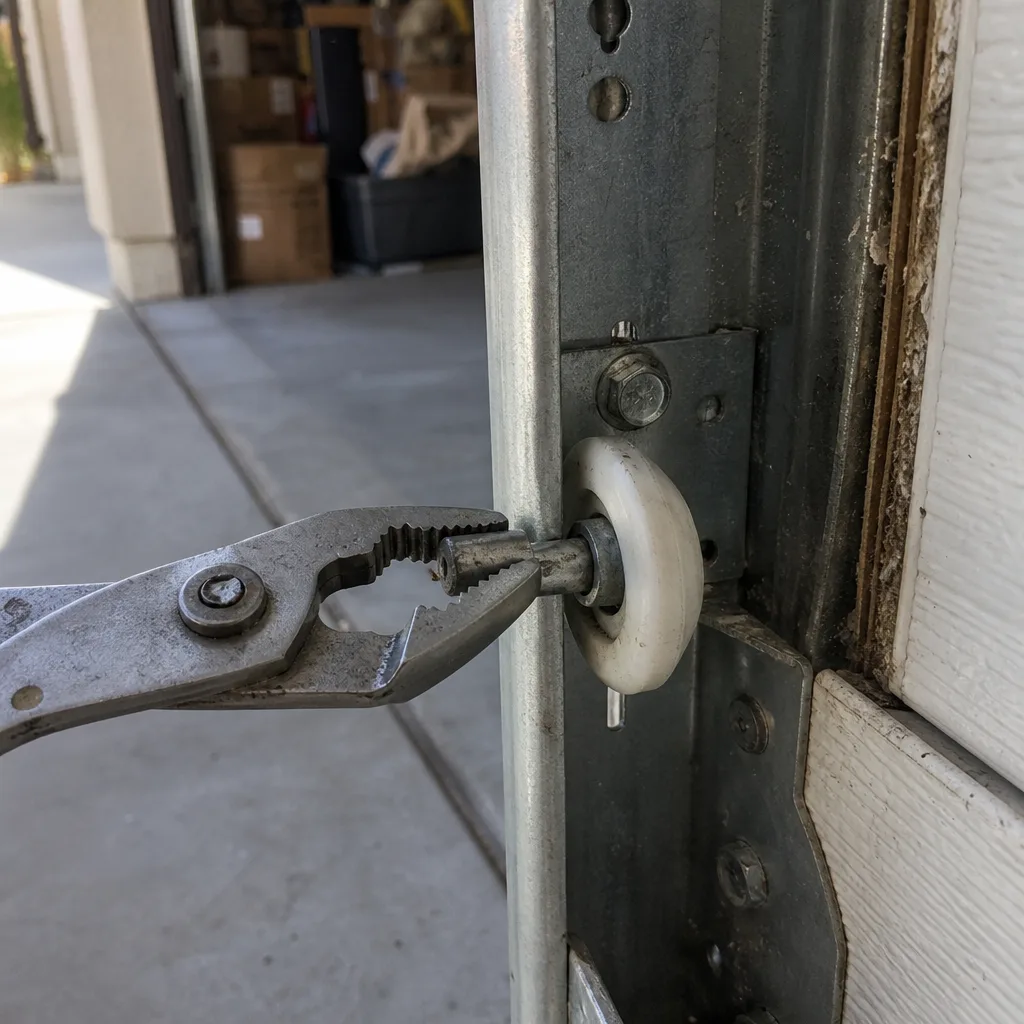
Most garage doors sold today have one of two foam cores: expanded polystyrene (EPS) or polyurethane. They both promise insulation. They don’t behave the same way in desert conditions.
Polystyrene is an open-cell foam. It’s rigid, cost-effective, and rated at reasonable R-values in mild climates. But the open-cell structure loses thermal resistance faster as ambient temperature climbs. In a garage that reaches 115°F on a Summerlin afternoon, an EPS core door that claims R-10 or R-12 in a lab is likely giving you less thermal resistance in practice.
Polyurethane is a closed-cell foam with higher density. It generally holds thermal resistance better at sustained heat, and per inch of thickness it delivers more R-value than polystyrene. It costs more. For a west- or south-facing door in Summerlin, it’s the insulation that matches the climate.
Here’s the part most guides miss: thermal mass matters as much as R-value. A closed-cell polyurethane door holds heat at the panel surface longer, which sounds like a downside until you realize the alternative – a polystyrene core – lets heat move through quicker during peak sun and then cools faster as the ambient dips in late evening. Starting in the afternoon, that cool-down difference shows up as condensation on the interior door face, which over years is a wear factor for the hardware and paint. Match the core to the façade. Polyurethane on south and west; polystyrene is defensible on east and north walls.
Matching Finish to Summerlin HOA Palettes and Heat Absorption
Summerlin’s HOAs enforce design palettes, and the palettes vary by village. What clears the community association in The Trails is not automatically approved in Red Rock Country Club or in Summerlin West. Before you fall in love with a color, get the written palette from your HOA, in the specific village rules. The neighborhood architectural review will want documentation, not a verbal approval.
Here’s the tension: most HOA palettes lean toward earth tones, and the darker shades in those palettes – deep browns, warm charcoals, muted olives – absorb more solar heat on a west-facing wall. That accelerates two things: finish fade and thermal cycling on the steel skin. A dark brown door on a west-facing Summerlin garage sees surface temperatures noticeably higher than a light tan door on the same wall on the same afternoon, and every year of that cycle stresses the finish and the hardware connections at the hinges.
What to do with that:
- Get the written HOA palette for your village before you select a model.
- Identify the lightest color in the palette that you’d be happy living with.
- For west- and south-facing walls, prefer that lighter color even if a darker one in the same palette is your aesthetic favorite.
- Confirm the finish is factory-applied, not field-painted. Factory finishes hold up under UV far better.
- Ask the installer to state the color warranty term in the written scope.
- If the HOA palette includes white or cream, and the neighbors haven’t all gone white, take it seriously – it’s the lowest-heat-absorption choice available.
- Log the decision in your documentation file with the HOA approval letter stapled to the written quote.
If you’re browsing standard sizes and finishes before you commit, the Garage Door Installation in Summerlin page covers what measure and scheduling look like once a color and model are locked in. And when the opener needs to match the door weight, the Garage Door Opener Repair & Installation in Summerlin page covers the lift-rating question.
A Step-by-Step Process for Choosing Your Door
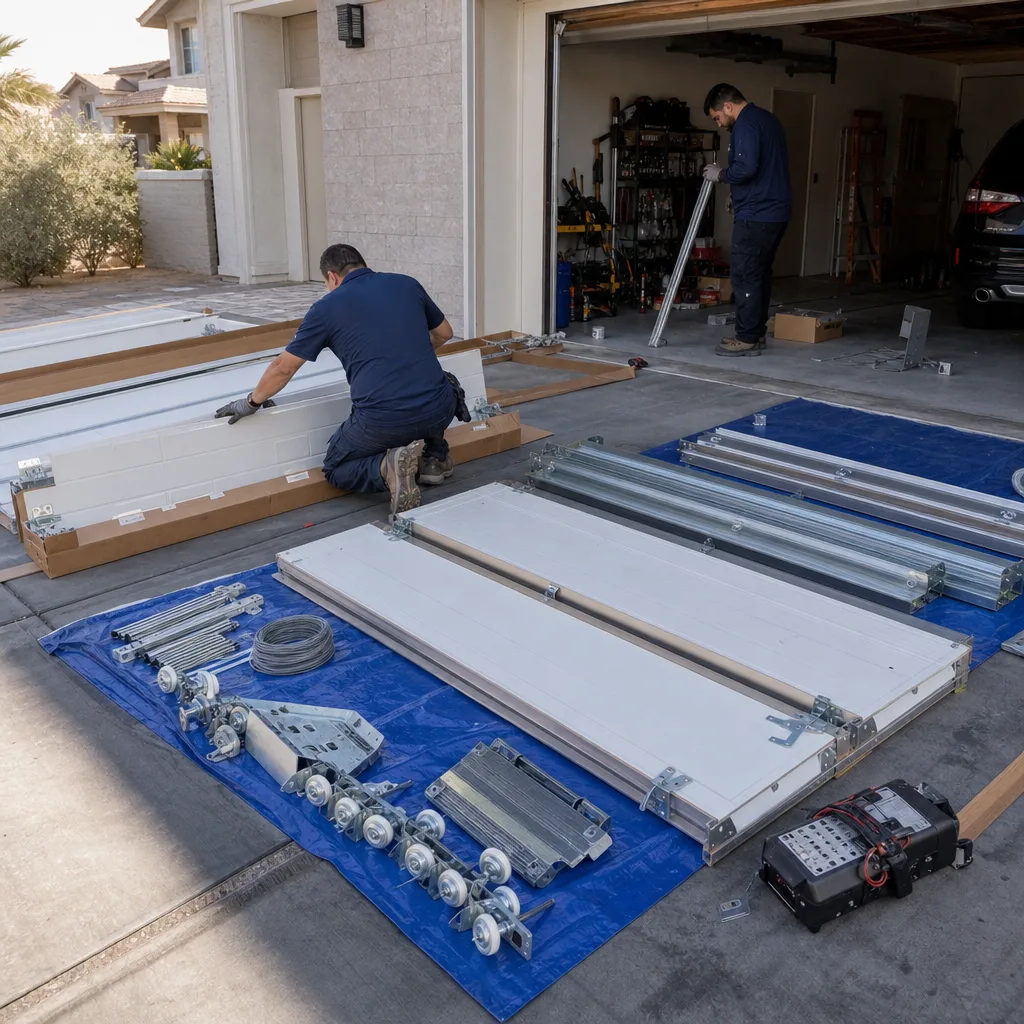
Brand is one decision in a sequence. Do these steps in order and the brand question answers itself.
- Measure the opening and note the wall orientation. West-facing and south-facing walls get the highest solar load; east and north face less. Note the sub-ambient temperature the garage reaches in August afternoon if you can.
- Get your HOA palette in writing for your specific village. Not a general Summerlin palette, the village-specific one.
- Pull three spec sheets for the models you’re considering. Compare R-value test temperature, core material, gauge, and finish warranty exclusions side by side.
- Filter out any door whose finish warranty excludes UV damage. That’s a disqualifier in our climate regardless of any other rating.
- Choose the lightest HOA-approved color your aesthetic tolerates. Darker colors accelerate wear on west-facing walls.
- Match the opener’s capacity to the door’s weight. A heavier insulated door needs an opener rated for it. If your existing opener is borderline, that’s a pre-installation decision, not a post-installation fix.
- Request a free measure and a written price. Get the model number, gauge, core, color, and warranty term on paper. A written scope before work starts removes the surprise at the end.
- Book the install when the door and hardware are ready. This is measured, ordered work – not same-day. A written price is the milestone to look for, not a countdown timer.
We handle all of this as part of the written scope on every job – the model number and gauge on the quote, the HOA paperwork in your file, and a documented photo record when the technician leaves. That’s been the process on every door we’ve made right, and there’s a reason we’ve done it that way: the customer sees the real part, the real number, and the real paperwork before anybody touches anything.
Common Mistakes to Avoid
- Buying on national awards and ad budget. A brand that advertises heavily in Ohio isn’t necessarily the one whose finish warranty survives a Summerlin summer. Read the warranty, not the marketing page.
- Ignoring the R-value test temperature. Two doors both claiming R-12 can perform very differently in a garage that regularly exceeds 110°F. Ask for the test conditions, and ask what the number looks like at heat.
- Picking a dark color on a west-facing wall. HOA palettes include dark earth tones, and they look great – on a wall that doesn’t take full afternoon sun. On west-facing walls in Summerlin, darker colors accelerate finish fade and thermal cycling.
- Leaving steel gauge off the quote. “Steel construction” without a gauge is a spec that hasn’t been specified. Demand the actual number in writing.
- Mixing an old opener with a heavy insulated door. A new door that’s heavier than what the opener was rated for is a breakdown waiting to happen, and it voids the opener’s warranty in most cases.
- Skipping the HOA approval in writing. A verbal “sure, that’s fine” from an HOA board member will not survive a violation letter. Get it in writing and keep the file.
- Paying for the door before the written scope is signed. The written price should arrive before any work begins. If a company wants a deposit before a written scope, that’s the moment to pause.
See the difference
BeforeAfter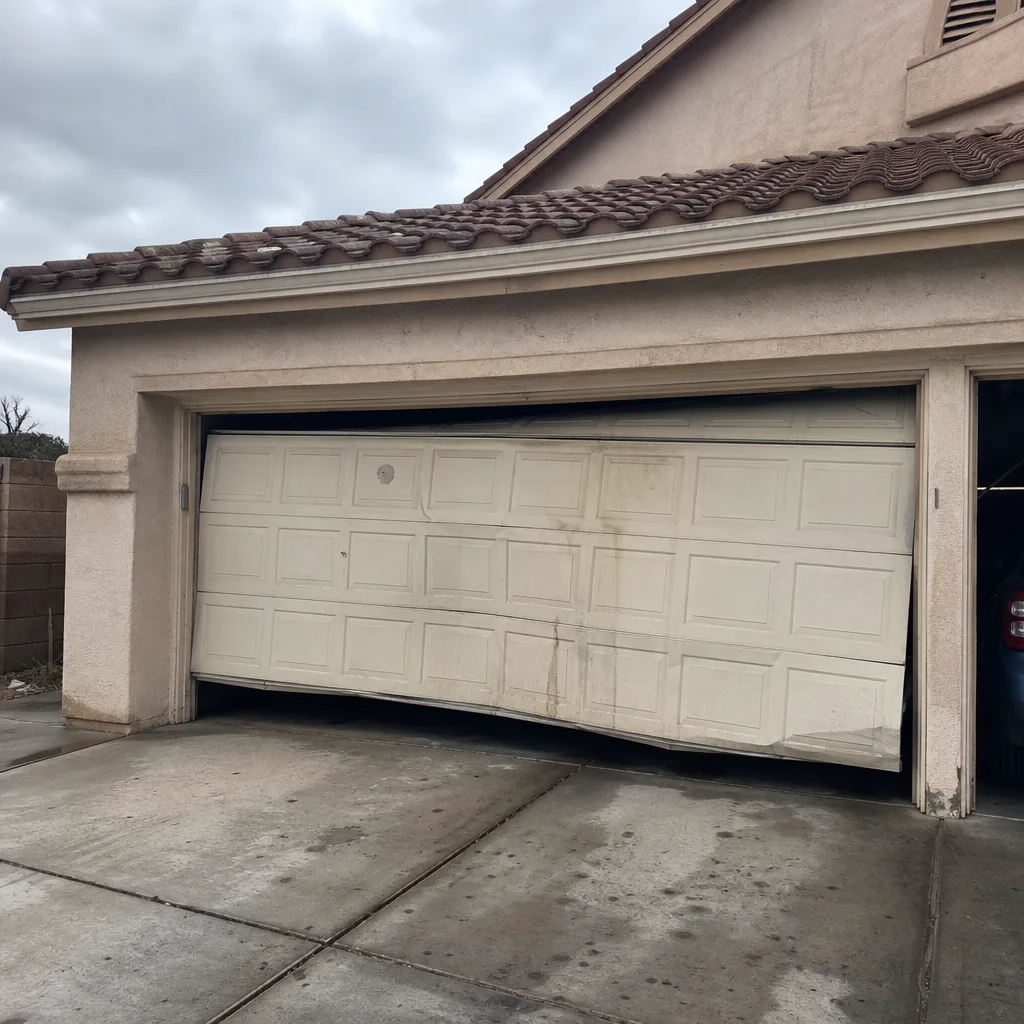 Before
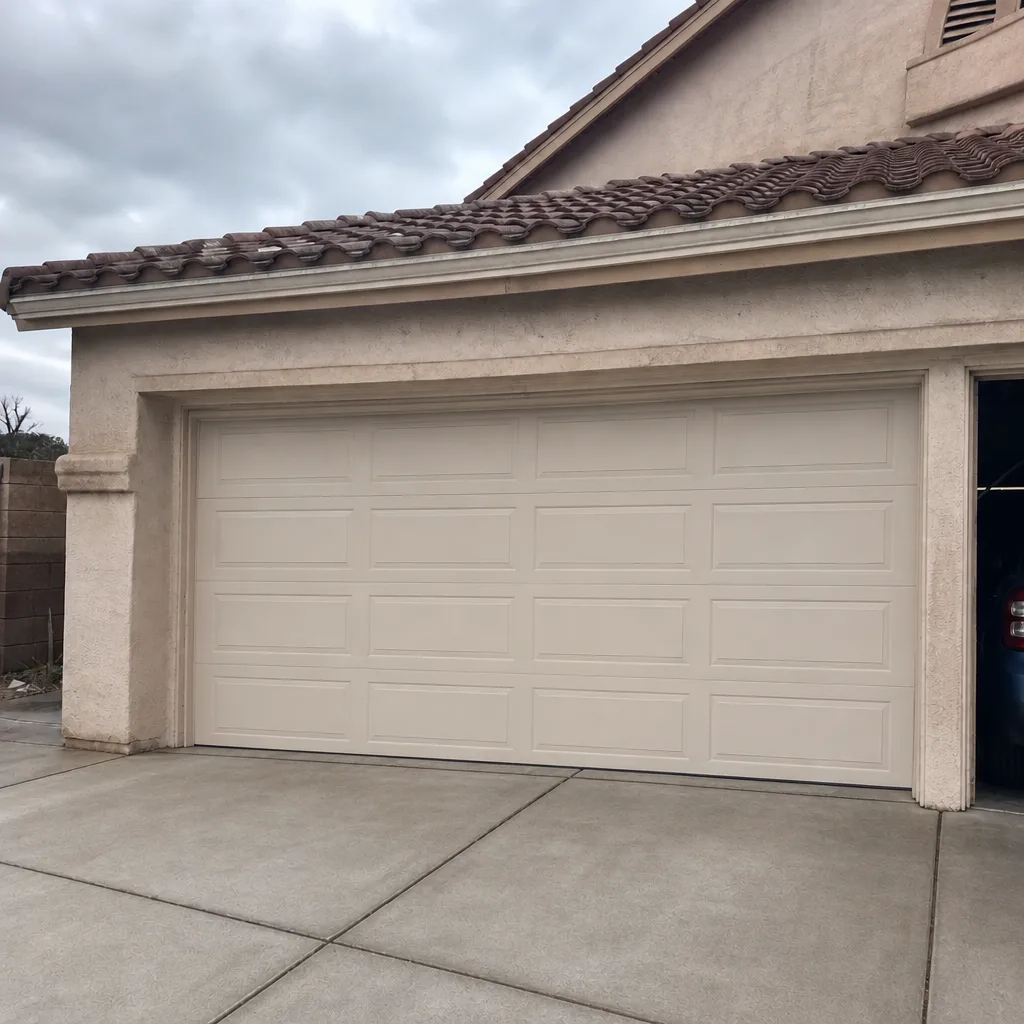 After
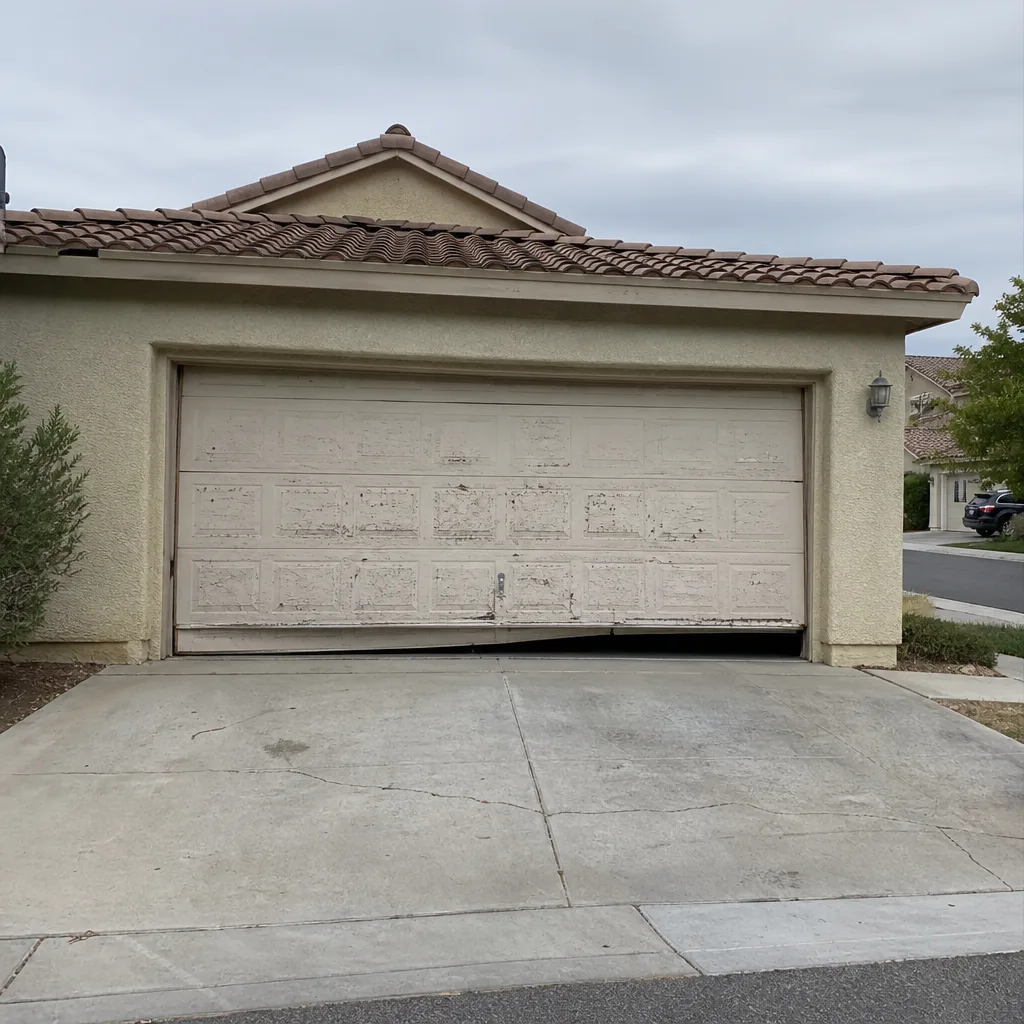 Before
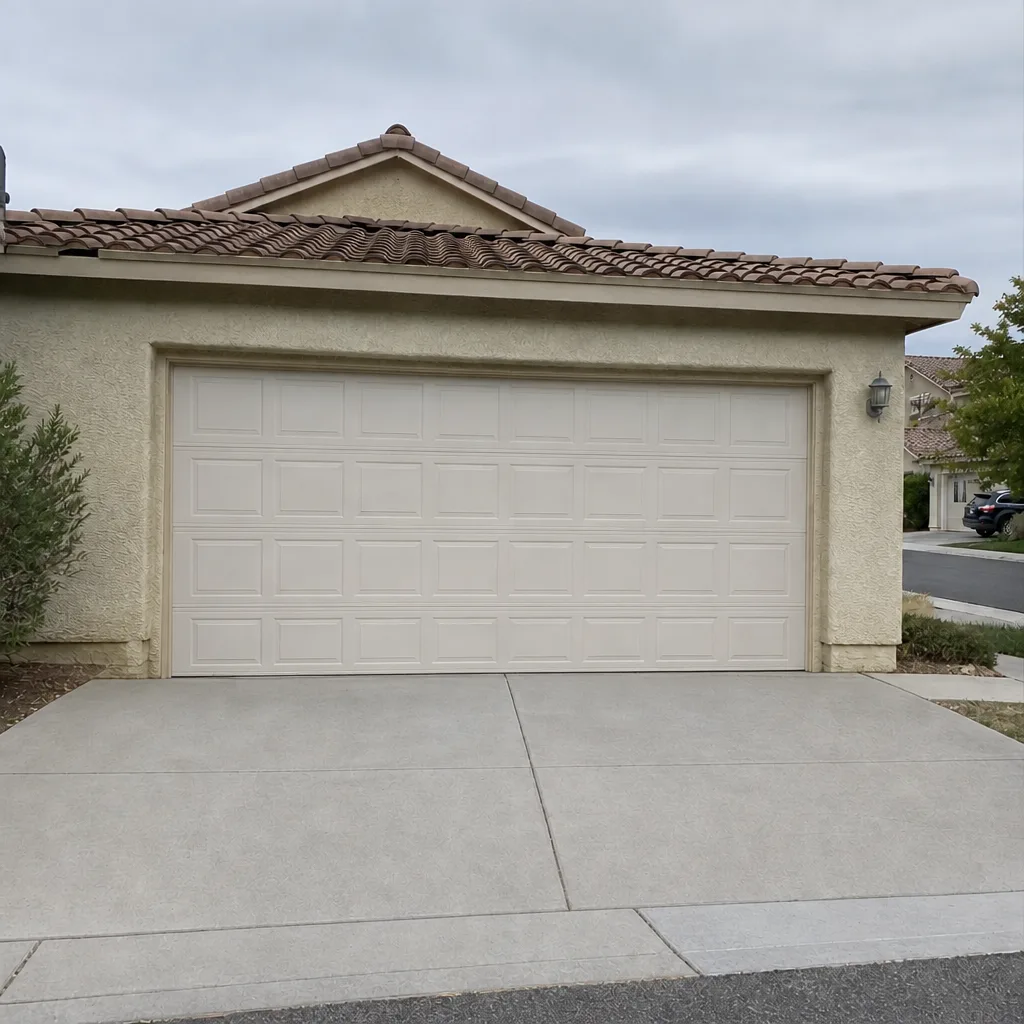 After
When to Call a Professional
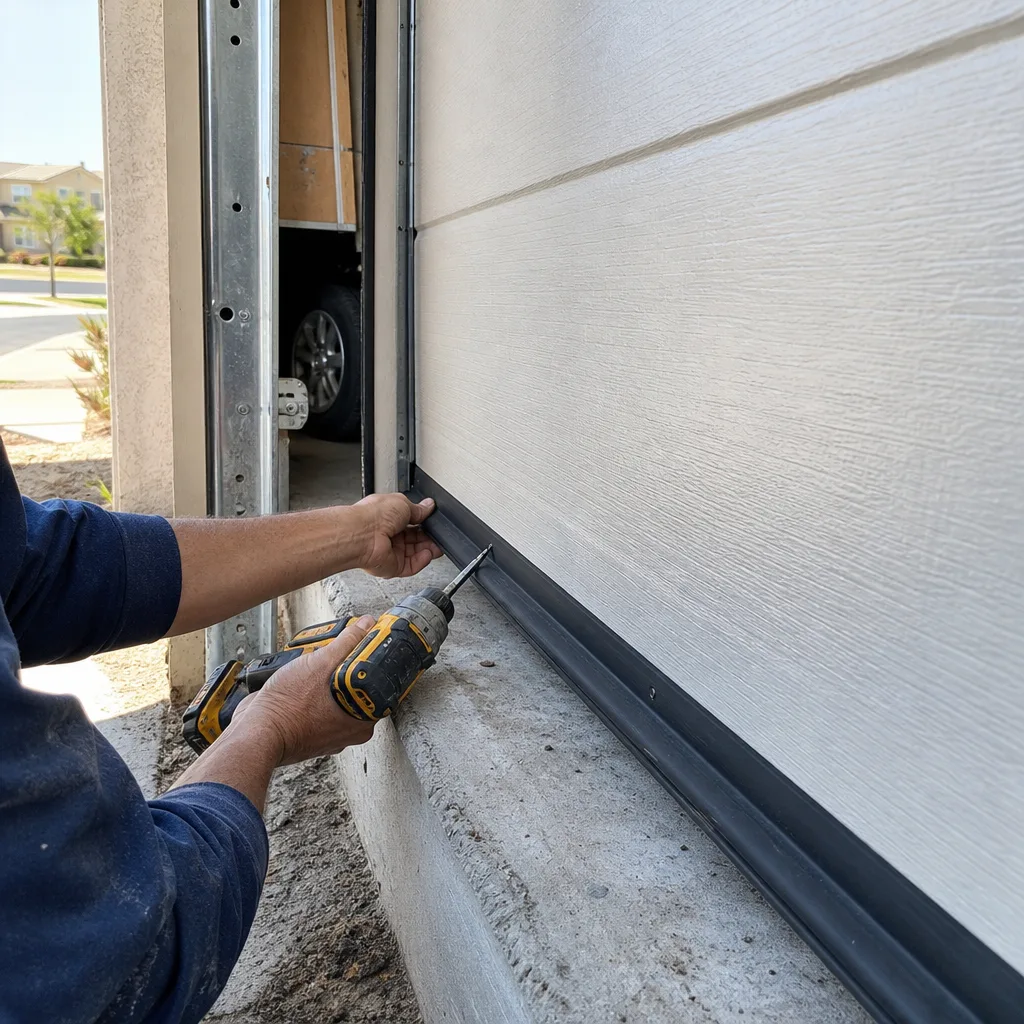
Brand selection is a research project; installation and repair are not. The measured, ordered, and installed door is professional work, and so is any diagnosis of an existing door. Call us when: you’ve narrowed the door and are ready for a written quote with the model number, gauge, and core on it; your existing door has a broken torsion spring (the coiled bar above the door, which stores dangerous energy – do not touch it); your opener is straining to lift a heavier door; or your door’s finish has started delaminating and you want a second opinion on whether the warranty covers it. We also offer a free second opinion on any written estimate from another company – bring the paperwork and we’ll walk it line by line. Servo Garage Doors Summerlin provides free estimates in Summerlin – call (844) 797-3654.
One more safety note: high-tension torsion springs and cables, and the electrical work around the opener, are not DIY territory. The spring above your door holds enough energy to cause serious injury if it lets go while you’re working near it. What you can safely check: that the door is balanced, that the safety reverse works, and that nothing is visibly damaged. For everything else, call.
Frequently Asked Questions
The best brand for Summerlin is the one whose spec sheet documents R-value test conditions and whose finish warranty covers UV fading without an exclusion clause. On those two filters, we typically see Clopay and Amarr models fare well on finish warranty language, and Wayne Dalton fare well on serviceability and parts. National rankings don’t measure either filter. Call (844) 797-3654 for an exact quote – estimates are free.
Look for the R-value test conditions more than the headline number. A door rated R-12 at 70°F will likely perform below that in a Summerlin garage that reaches past 110°F in the afternoon. A polyurethane-core door in the R-10 to R-16 range with documented elevated-temperature performance is a better choice than a door rated R-16 at 70°F that doesn’t say what happens at heat. Call for a free measure and a written price on a specific model.
Yes. Gauge measures steel thickness – lower numbers are thicker. A 24-gauge skin resists denting and heat-driven deflection better than a 25-gauge skin over the same core. On a west-facing Summerlin wall with six to eight hours of direct sun, the difference shows up as a longer service life, not just a heavier door. Call (844) 797-3654 to talk through the right gauge for your wall orientation.
Because finish warranty terms are written for national product lines, not for specific climates. Many warranties exclude UV fading and delamination because those are the leading cosmetic failure modes in high-sun regions. A warranty that excludes UV in Summerlin is effectively a warranty for a climate that doesn’t exist here. Read the exclusions before you read the term length. For a written price and written scope on any door we quote, call (844) 797-3654.
You can, but it will wear faster. Dark colors absorb more solar heat on a west-facing wall, which accelerates finish fade and thermal cycling on the steel. If your HOA palette includes a lighter color you’re happy with, prefer it on any west- or south-facing wall. To confirm what your specific village HOA will approve, get the palette in writing before you commit to a model.
Replacement cost depends on core (polystyrene vs. polyurethane), gauge, size, and finish – not just brand. We quote the door with the model number, gauge, core, color, and warranty term on a written price before any work starts, so the number on the invoice matches the number on the quote. Call (844) 797-3654 for an exact written quote – estimates are free and we’ll bring the documentation.
The Bottom Line
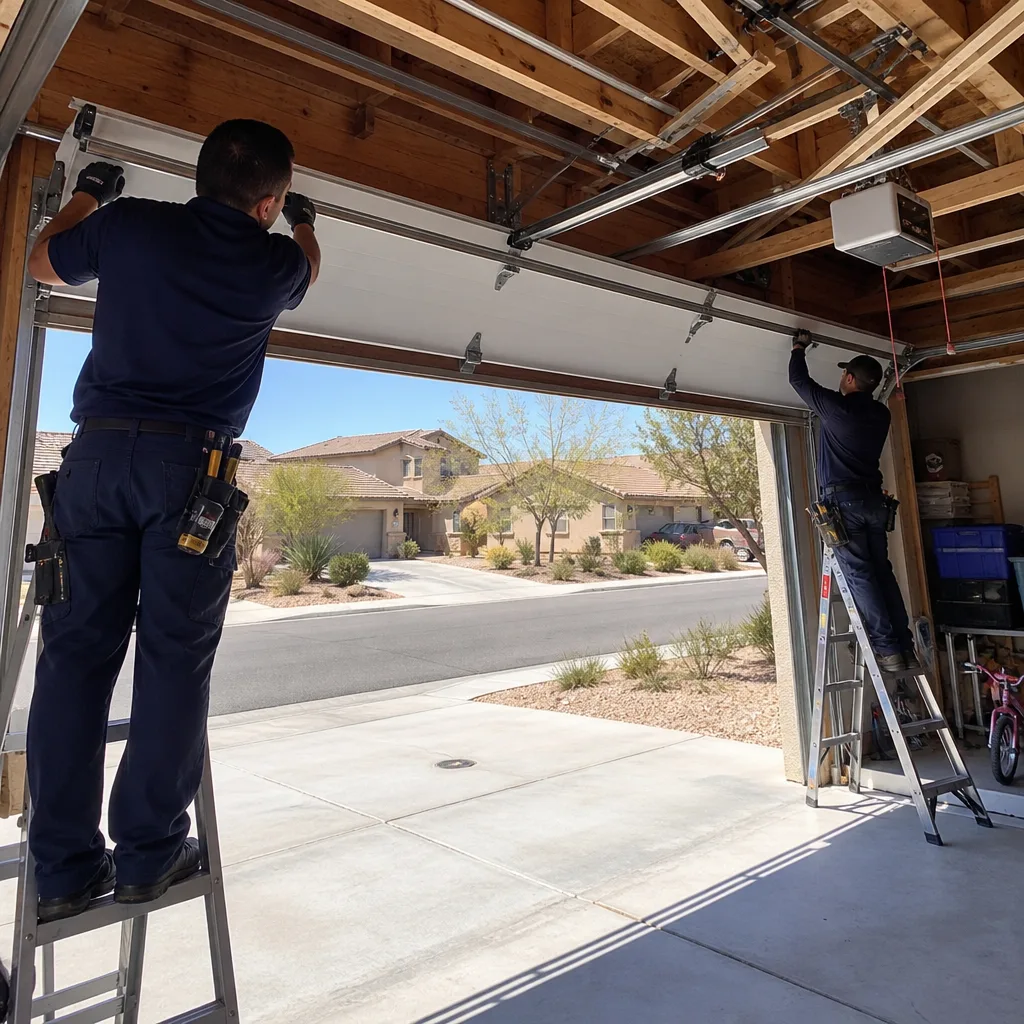
Brand selection in Summerlin comes down to two specs the national rankings ignore: how the manufacturer tests R-value, and what its finish warranty does with UV fading. A polyurethane-core door at 24-gauge, in the lightest HOA-approved color your aesthetic can tolerate, from a manufacturer whose finish warranty covers sun exposure, will outlast a higher-R-value door that skips those details. Steel gauge, insulation core, and wall orientation matter more than the logo on the box. Call (844) 797-3654 for a free measure, a written price, and a written scope before you commit to anything.
If you’re ready to look at your existing door, start with our Garage Door Repair in Summerlin page – the specs we check on repair are the same ones we check on replacement. If you’re starting fresh, the Servo Garage Doors Summerlin home page lays out The Haven Standard, including Clause 1 (flat written price before any work) and Clause 4 (the technician photographs the failed part before any quote). Every brand decision we help with is documented the same way: measured, specified, priced in writing, and photographed on the way out.
Written by the team at Servo Garage Doors Summerlin.