
Last updated November 17, 2026
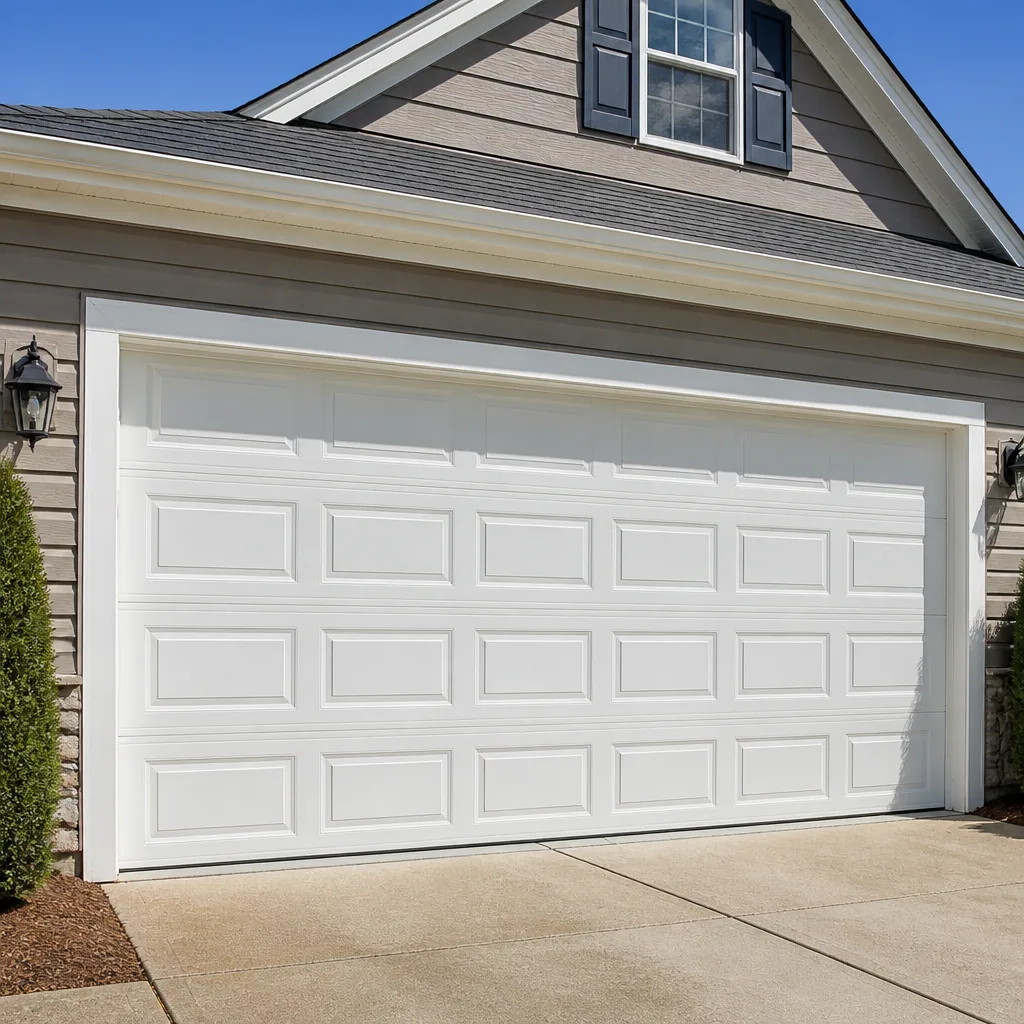 Raised-panel steel
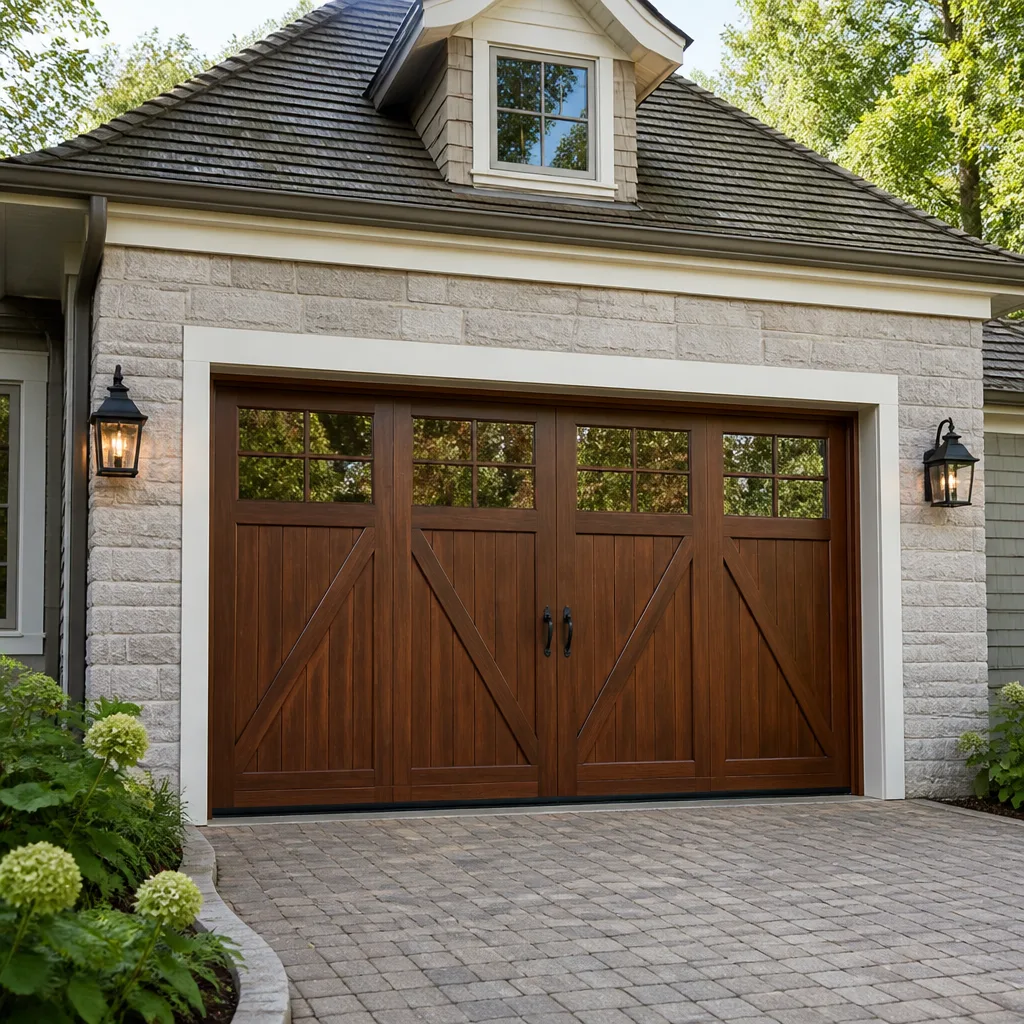 Carriage house
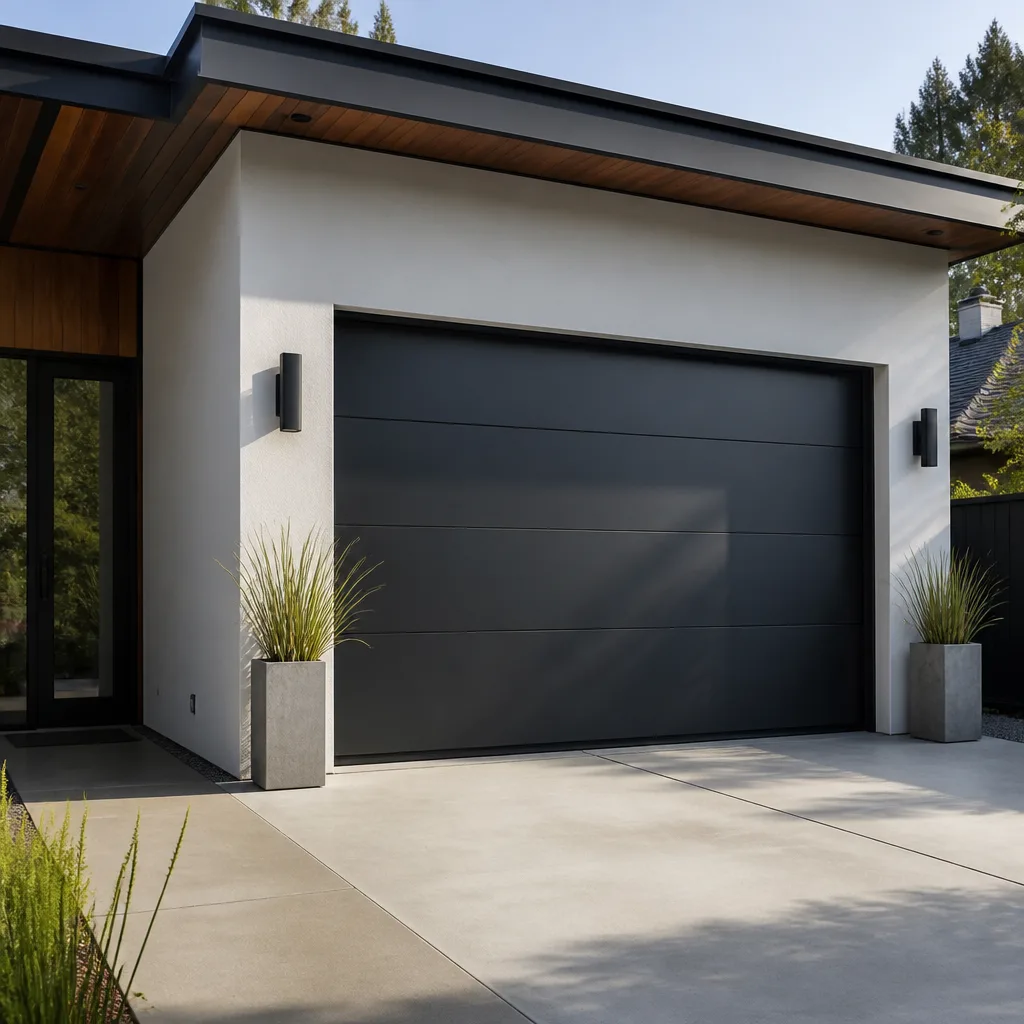 Modern flush
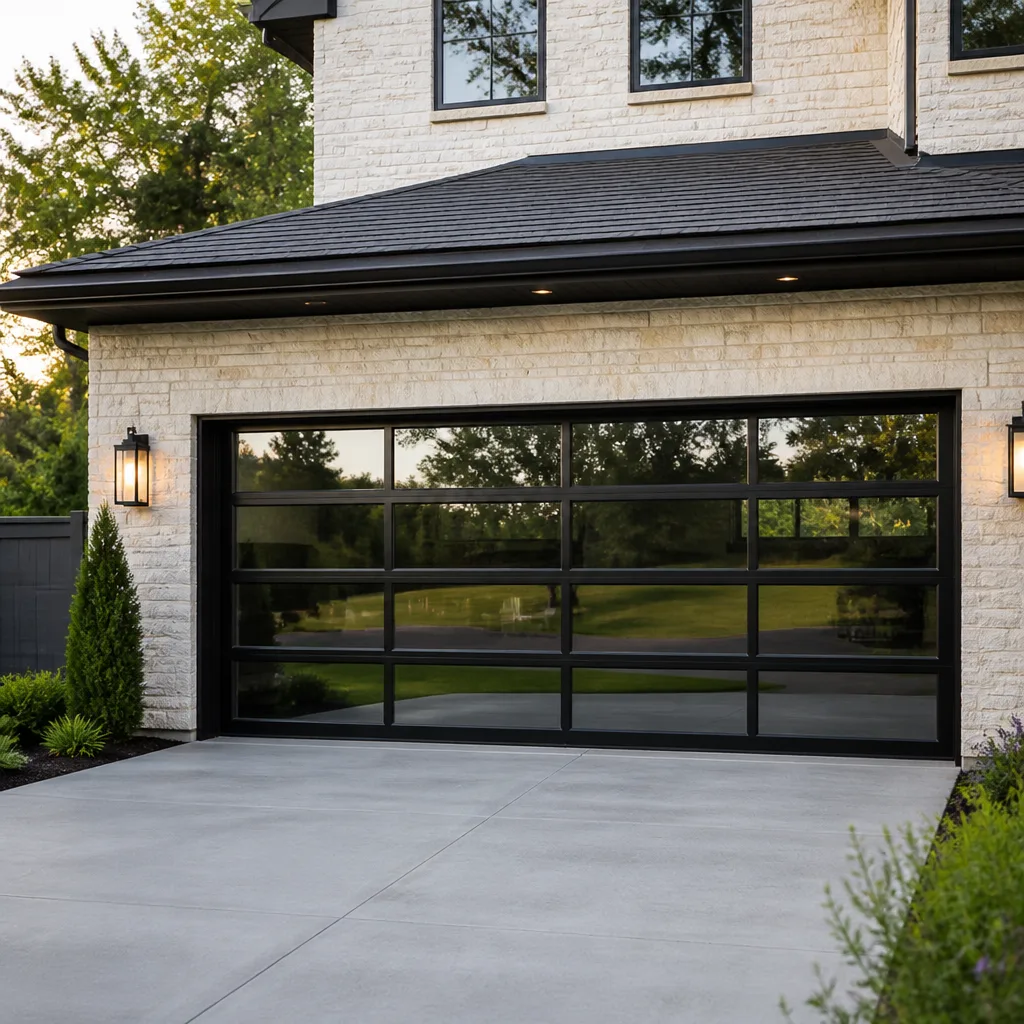 Full-view glass
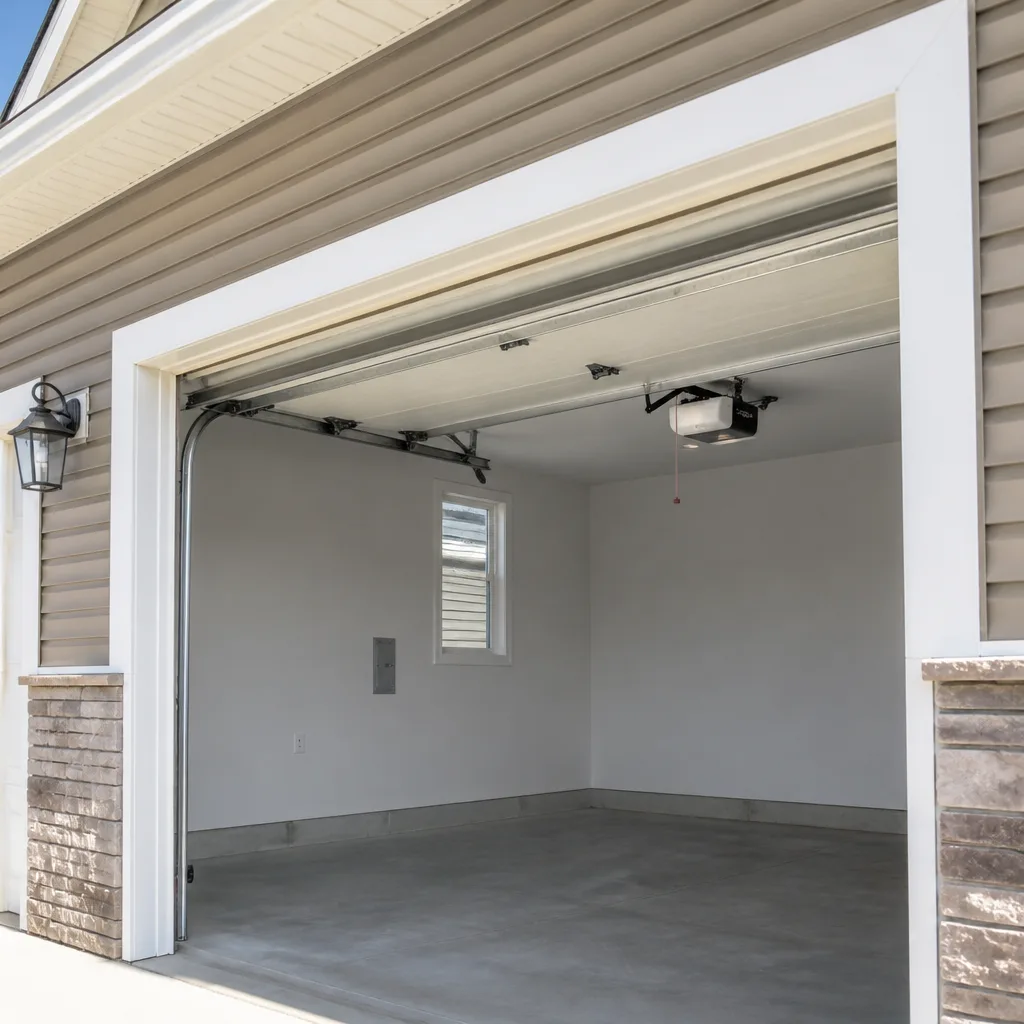 LiftMaster openers
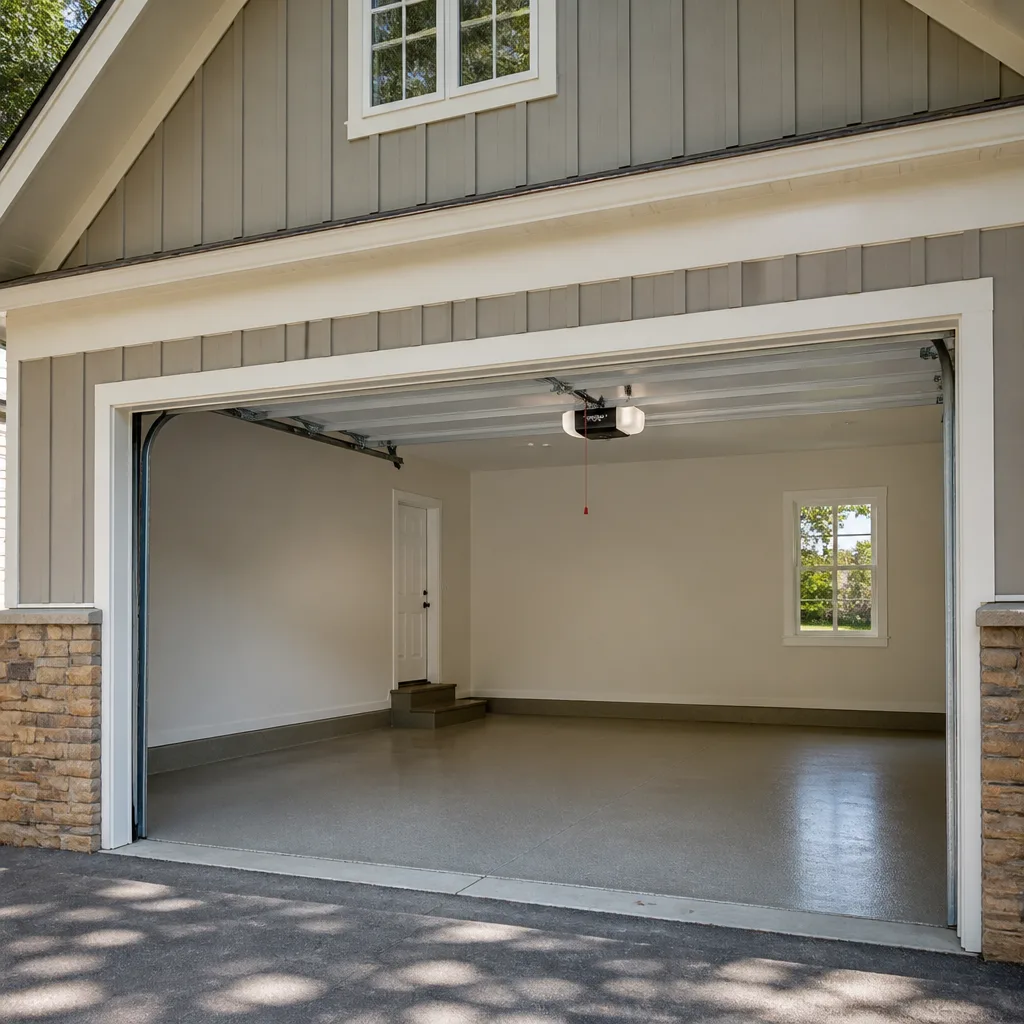 Chamberlain openers
Full 25-point door and opener safety check with every visit - springs, cables, rollers, tracks, and your LiftMaster or Chamberlain opener included
You get a price before we start. It does not change when the pro arrives.
Get your free estimateGarage Door Repair Troubleshooting: Common Problems and How to Fix Them
The most common misdiagnosis we see on a garage door service call is a “broken opener” that is actually a snapped torsion spring. The motor is fine. It simply cannot lift a door that has lost its counterbalance, so it strains, hums, and gives up. That mistake costs homeowners a $400 opener replacement they didn’t need. In Summerlin, where we take a lot of these calls, the pattern repeats often enough that we built a diagnostic routine around it.
This guide goes one layer deeper than the usual symptom-to-part chart. It shows you how to confirm what actually failed before you spend anything, using the same visual checks a technician performs in the first three minutes on site. You’ll learn how to read the door’s behavior, what to photograph with your phone, and which symptoms point to a bigger problem hiding underneath.
Quick Answer
Most garage door failures trace to one of four causes: a broken torsion spring, a snapped or unspooled cable, an opener fault, or a track and roller problem. You can usually narrow it down in under three minutes without tools by looking at the spring for a visible gap, checking whether the cables are still wound on their drums, and testing the door by hand using the manual release. If the door is heavy or won’t stay up on its own, stop and call a professional, because that points to a counterbalance failure that is dangerous to work on yourself.
Styles & brands we work with
- Raised-panel steel
- Carriage house
- Modern flush
- Full-view glass
- LiftMaster openers
- Chamberlain openers
Table of Contents
- The Four-Cause Decision Tree
- How to Confirm a Broken Torsion Spring
- Cable Failure: What an Unspooling Looks Like
- Is It Really the Opener?
- Track Misalignment and Roller Derailment
- The Manual Disconnect Test
- What to Photograph Before You Call
- Symptoms That Hide a Bigger Problem
 Before
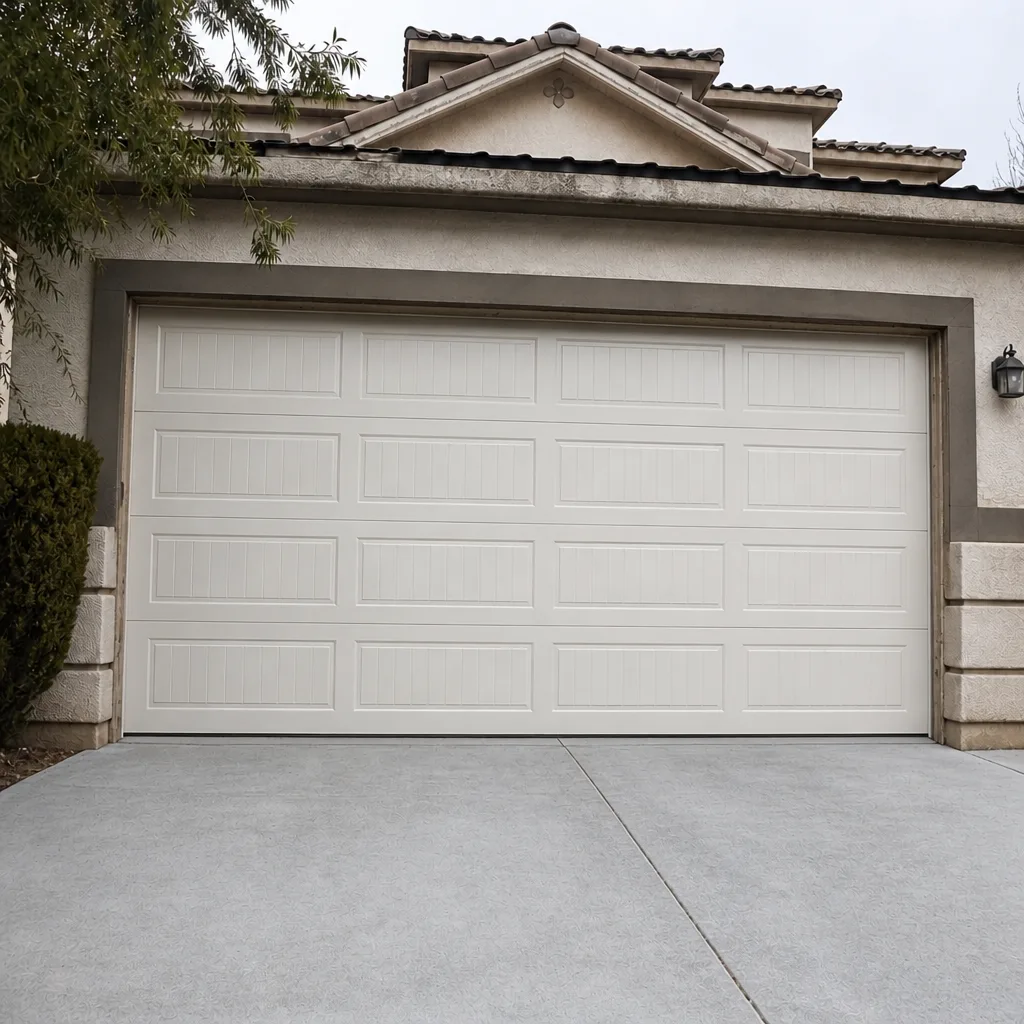 After
The Four-Cause Decision Tree
Before you touch anything, run the door through a simple sequence of observations. Each answer narrows the field. This is the same order a technician follows, and it works on every brand we service, from LiftMaster and Chamberlain openers to Clopay and Amarr doors.
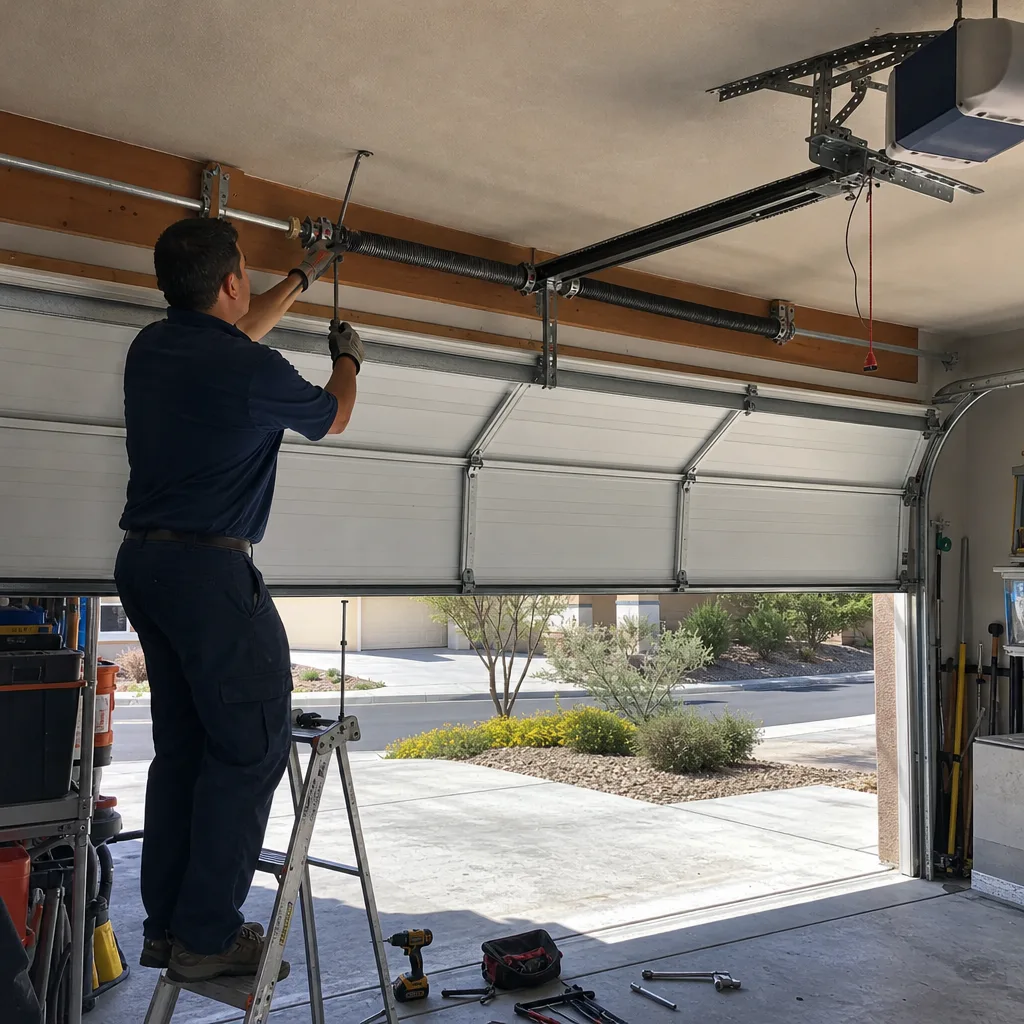
- Look at the spring. If you have a torsion system (the spring is mounted horizontally above the door on a shaft), check for a visible gap in the coil. A gap means the spring is broken.
- Look at the cables. On each side of the door, a steel cable runs from a bottom bracket up to a drum. If a cable is loose, off its drum, or lying slack, you have a cable failure.
- Listen to the opener. If the motor runs but the door doesn’t move, the problem is likely mechanical (spring, cable, or a disconnected trolley). If the motor hums and stops, or nothing happens at all, the opener itself or its safety sensors are suspect.
- Check the tracks and rollers. Look for a roller that has popped out of the track, a bent section of vertical or horizontal track, or a door that is visibly crooked in the opening.
In Summerlin, the dry desert air and the temperature swing between a 100-degree afternoon and a cool night take a toll on springs and cables. Metal fatigues faster here than in humid climates, and we see spring failures clustered in spring and early summer after the first big heat. Brand name doesn’t insulate you either. We’ve replaced failed springs on Wayne Dalton and Raynor doors alike, and the diagnostic steps are identical.
How to Confirm a Broken Torsion Spring
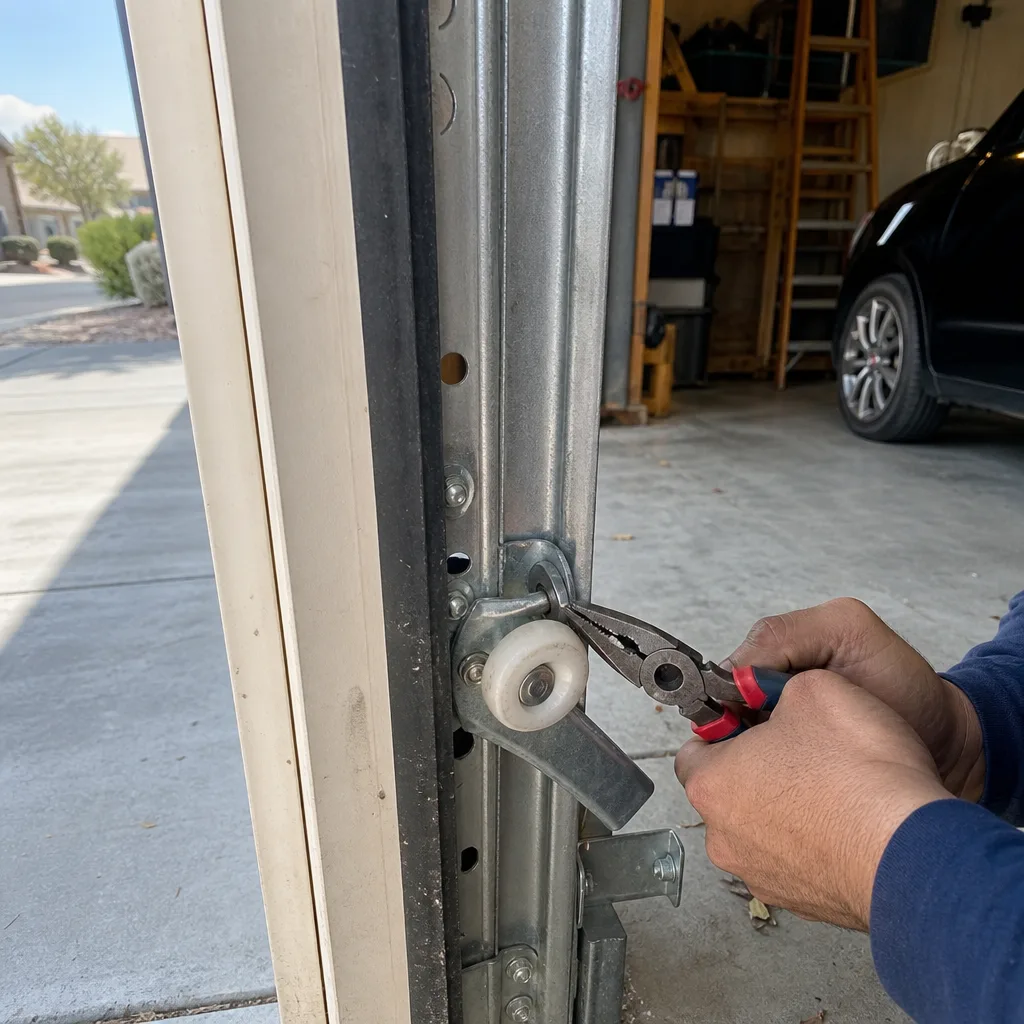
A broken torsion spring is the single most common cause of a door that won’t open, and it’s the one most often misread as an opener failure. The torsion spring is the coiled steel above the door that stores the energy to counterbalance the door’s weight. When it snaps, that counterbalance disappears and the full weight of the door falls onto the opener, which was never designed to lift it.
Here’s how to confirm it visually. You’re looking for a clean gap, usually a quarter-inch to a half-inch wide, somewhere along the length of the coil. Sometimes you’ll see two separated coils hanging. The wire diameter matters too: a 0.25-inch wire spring on a standard seven-foot door is a common spec, and when it breaks you’ll see the two halves sitting apart on the shaft. Don’t try to measure the gap precisely under tension; just confirm the break exists.
A word on safety: torsion springs and the cables under them are under extreme tension. Do not attempt to loosen, remove, or wind a spring yourself. A released torsion spring can cause serious injury in an instant. This is the one repair we always recommend leaving to a trained technician, and it’s not a sales pitch. It’s the physics of stored energy.
If you’ve confirmed a broken spring, the repair itself is straightforward for a professional and typically quoted as a flat, written price before any work begins. For a local breakdown of what that looks like, see our page on garage door repair in Summerlin.
Cable Failure: What an Unspooling Looks Like
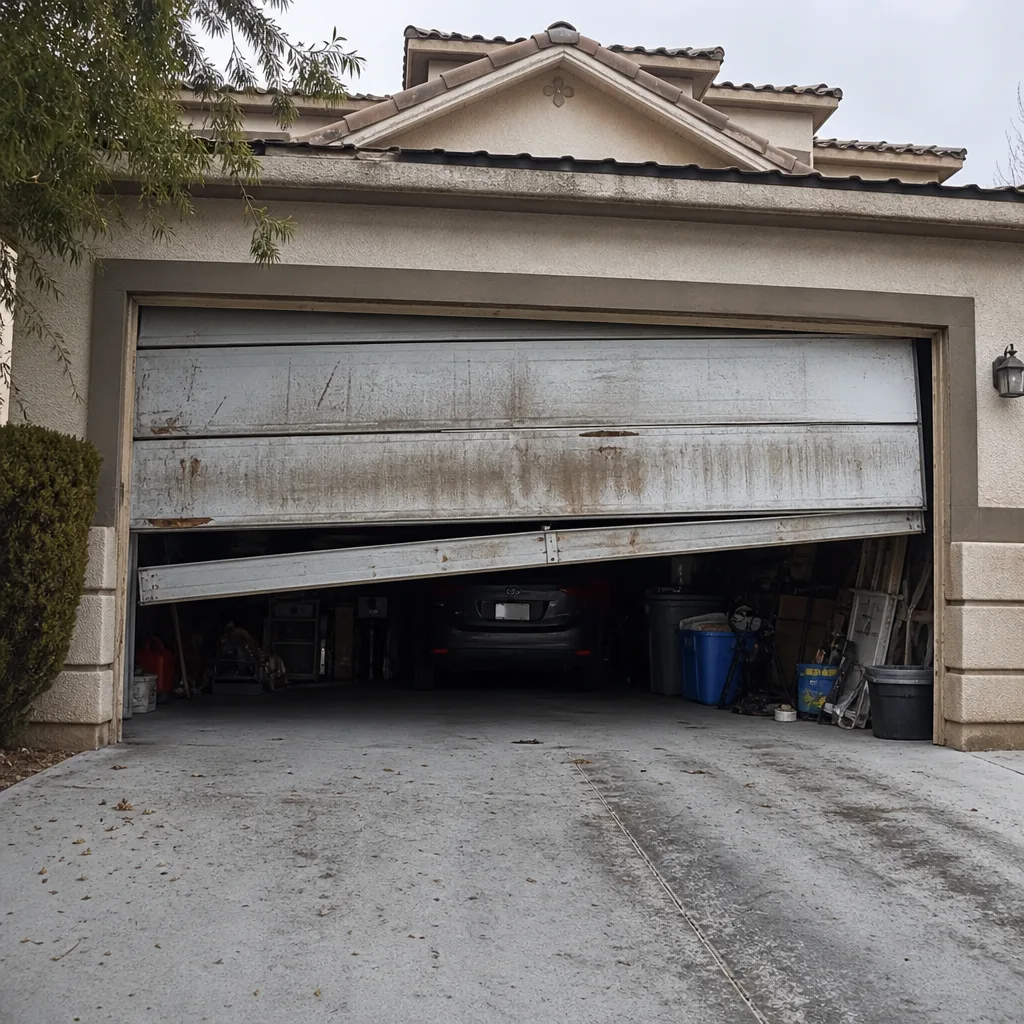
A cable failure often looks like a spring failure from across the garage, but the visual signature is different. The lift cables run from a bracket at the bottom corner of the door up to a drum at the top of the shaft. When a cable snaps or comes off its drum, you’ll see it hanging slack or tangled, and the door may sit crooked in the opening, one side lower than the other.
What to look for:
- A cable lying loose along the side of the door or bunched at the bottom bracket.
- A drum at the top that has cable wound unevenly or not at all.
- The door sitting visibly out of level, with one corner higher than the other.
- Frayed strands near the bottom bracket, which signal a cable about to fail before it actually does.
Cables are also under high tension, so the same caution applies: don’t cut, loosen, or try to rewind a cable yourself. A snapped cable under load can whip. If you see one, keep the door closed and call for service. In our experience around Summerlin, cable wear shows up most on doors that get opened and closed several times a day, like a busy family’s daily-driver door facing the street.
Is It Really the Opener?
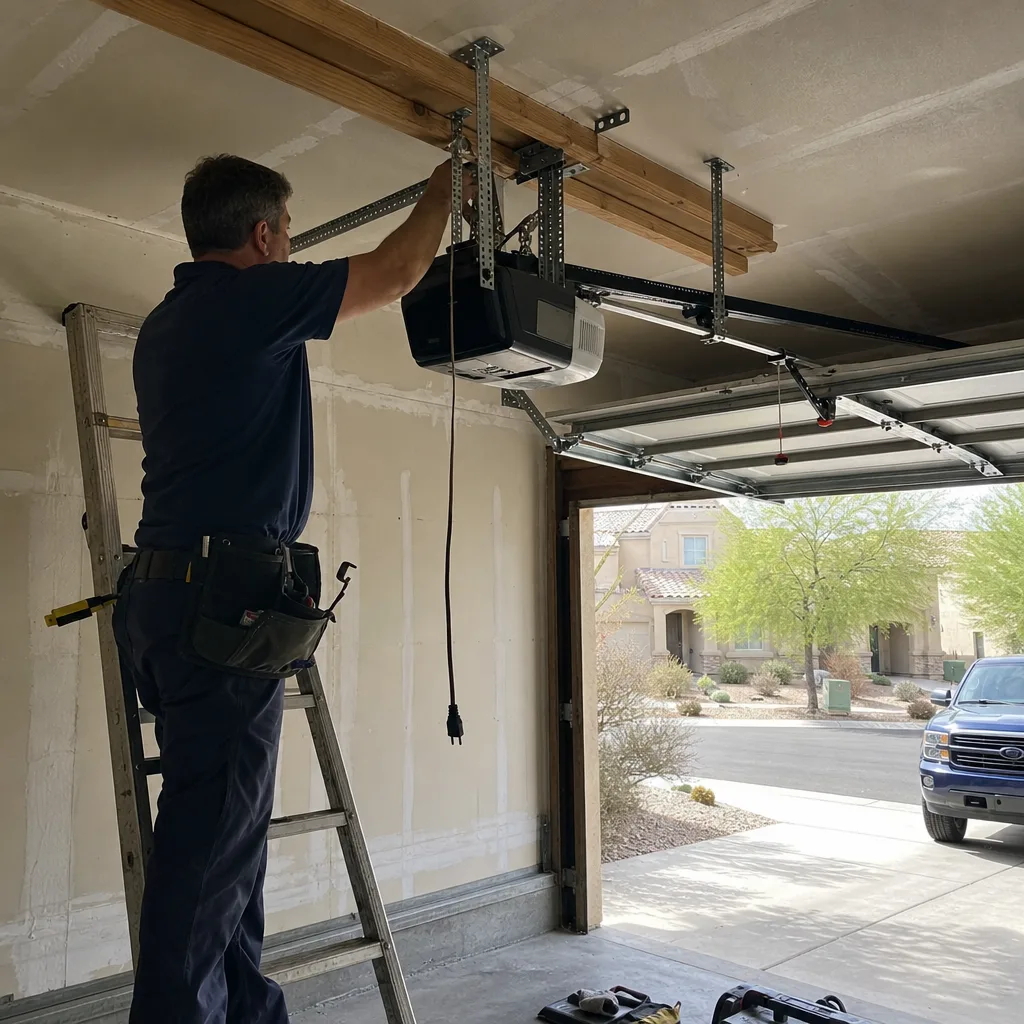
This is where the $400 mistake happens. Homeowners hear the opener straining or see the door not moving and assume the motor is dead. Most of the time the opener is doing exactly what it should: trying to lift a door that has lost its counterbalance and can’t be lifted. So before you price a new opener, rule out the mechanical causes above.
The tell is in the sound and behavior. An opener that runs but leaves the door still is usually fine and is being defeated by a mechanical problem. An opener that hums for a second and stops, or that clicks and does nothing, may have a real fault: a bad logic board, a failed capacitor, or a stripped gear inside the unit. A door that reverses immediately after starting to close is often a safety-sensor issue, not a motor issue.
If you’re troubleshooting a LiftMaster, Chamberlain, Genie, or Craftsman unit, the opener’s own diagnostic lights are worth checking. Many models flash a code when a sensor is misaligned or a component has failed, and that code narrows the field fast. If you’ve cleared the mechanical causes and the opener is still the suspect, our garage door opener repair and installation in Summerlin page covers what repair versus replacement looks like.
Track Misalignment and Roller Derailment
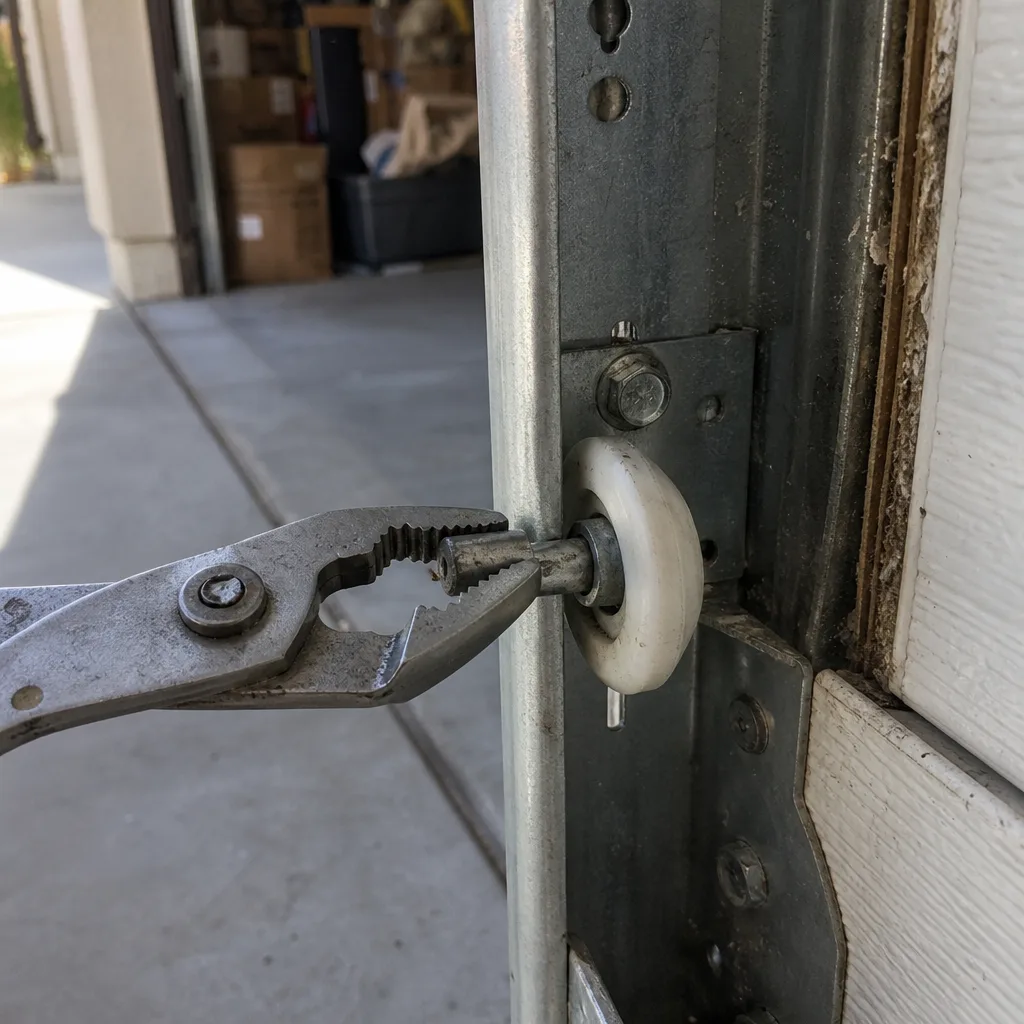
A door that grinds, jumps, or comes off its track has a track or roller problem, and it’s usually visible without tools. The vertical tracks guide the door up, and the horizontal tracks carry it back over your head. Rollers ride inside those tracks. When a roller pops out, the door can bind or hang on one side.
Run your eye along both tracks:
- A roller sitting outside the track, rather than seated in the channel.
- A bent or dented section of track, often from a bumper or a stray object.
- Rollers that are worn flat or cracked, which let the door rattle and drift.
- A door that scrapes the track on one side as it travels.
A single derailed roller can sometimes be reseated, but a bent track needs to be realigned or replaced, and worn rollers are best replaced as a set. Don’t force a door that’s off its track; the weight and geometry can bring it down hard. Around Summerlin, we see more track issues on doors facing west, where the afternoon sun heats the metal and the daily expansion and contraction slowly works fasteners loose over time.
The Manual Disconnect Test
The manual release is the red cord hanging from the opener’s trolley. It disconnects the door from the opener so you can operate it by hand. Pulling it is the single most useful diagnostic step you can take, because it isolates the door from the motor.
Here’s how to do it safely:
- Make sure no one is standing under or near the door.
- Close the door fully first, then pull the red cord straight down. You should hear the trolley release.
- Lift the door slowly by hand. If it feels extremely heavy or won’t budge, stop. That means the spring has failed and there’s no counterbalance. Do not force it.
- If it lifts with reasonable effort, raise it about halfway and let go. A properly balanced door will hold its position. One that slams down or drifts has a spring or balance problem.
- Reconnect by pulling the cord again or running the opener, depending on your model.
What the door does after you disconnect tells you almost everything. A door that’s easy to lift and holds halfway is balanced, meaning the problem is in the opener. A door that’s heavy or won’t stay up has a counterbalance failure, and no opener replacement will fix it. If you’re not comfortable with the test, don’t run it. That’s a reasonable call, and a technician can do it in seconds.
What to Photograph Before You Call
You can make your service call faster and your quote more accurate by taking four or five photos with your phone before you dial. This is exactly the kind of evidence that lets a technician arrive with a likely parts list instead of making a second trip.
Photograph:
- The torsion spring (or extension springs, if that’s what your door has), up close enough to show any gap or break.
- Both cable drums at the top corners, so any unspooling or uneven winding is visible.
- The bottom brackets and the first few feet of cable, where fraying shows.
- The full door from a few steps back, to show whether it’s sitting level.
- The opener’s model label, usually on the back or side of the motor housing.
When we arrive, the technician photographs the failed component before quoting a replacement. That’s Clause 4 of The Haven Standard, and it’s the founding rule the business was built on. Your own photos just get the conversation started sooner. It means the written price you receive is based on what’s actually broken, not a guess made over the phone. For Summerlin homeowners who’d rather text than talk, this is the fastest path to an accurate quote.
Symptoms That Hide a Bigger Problem
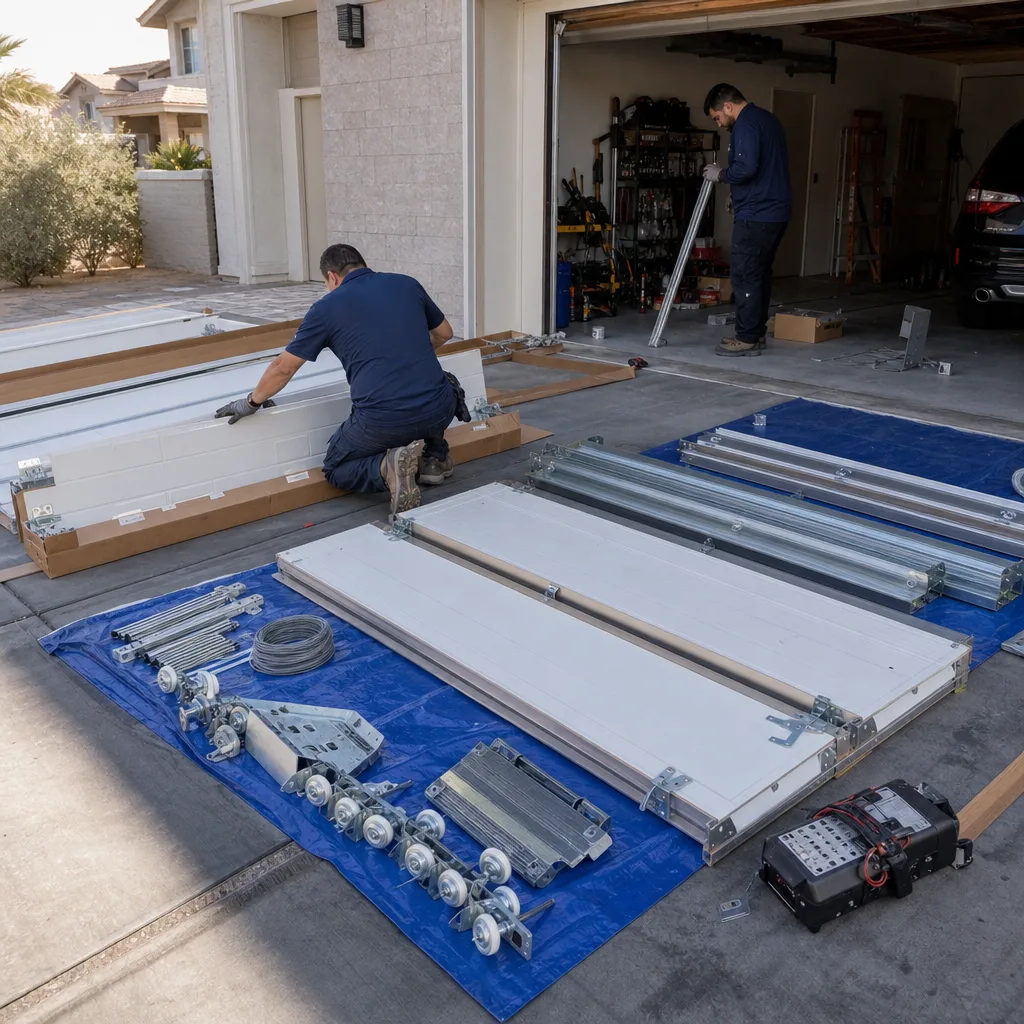
Some symptoms look like one thing and turn out to be another. Reading them correctly can save you from paying for the wrong repair twice.
A door that reverses mid-travel is often blamed on a limit switch, but in our experience it’s frequently a sign of worn rollers or a binding track. The door meets resistance, the opener’s safety system reads it as an obstruction, and it reverses. Replacing the limit switch won’t fix it because the switch was never the problem. The same goes for a door that opens partway and stops: it can be a travel-limit setting, but it can also be a failing spring that’s lost just enough tension to throw off the balance.
A loud bang from the garage, often mistaken for a car door slamming, is the classic sound of a torsion spring breaking. If you heard it and the door now won’t open, you have your answer. And a door that’s getting noticeably harder to lift by hand over weeks, rather than all at once, points to a spring losing tension gradually, which is worth catching before it fails completely.
Common Mistakes to Avoid
- Replacing the opener when the spring is broken. The most expensive misdiagnosis on the list. Confirm the counterbalance before you price a new motor.
- Forcing a heavy door by hand. A door that won’t lift easily has lost its spring. Forcing it can bend the tracks or bring the door down.
- Ignoring a loud bang. That sound is usually a spring snapping. If it happened, don’t run the opener again; have it checked.
- Trying to wind or loosen a torsion spring yourself. The stored energy makes this genuinely dangerous. Leave spring and cable work to a trained technician.
- Greasing the wrong parts. Lubricating rollers or the spring is fine; greasing the tracks attracts grit, and in Summerlin’s dusty air that turns to grinding paste.
- Skipping the manual release test. It’s the fastest way to separate an opener problem from a mechanical one, and it takes under a minute.
- Accepting a phone quote with no written scope. A price without a written explanation of what’s being fixed is a guess. Ask for both before anyone starts.
See the difference
BeforeAfter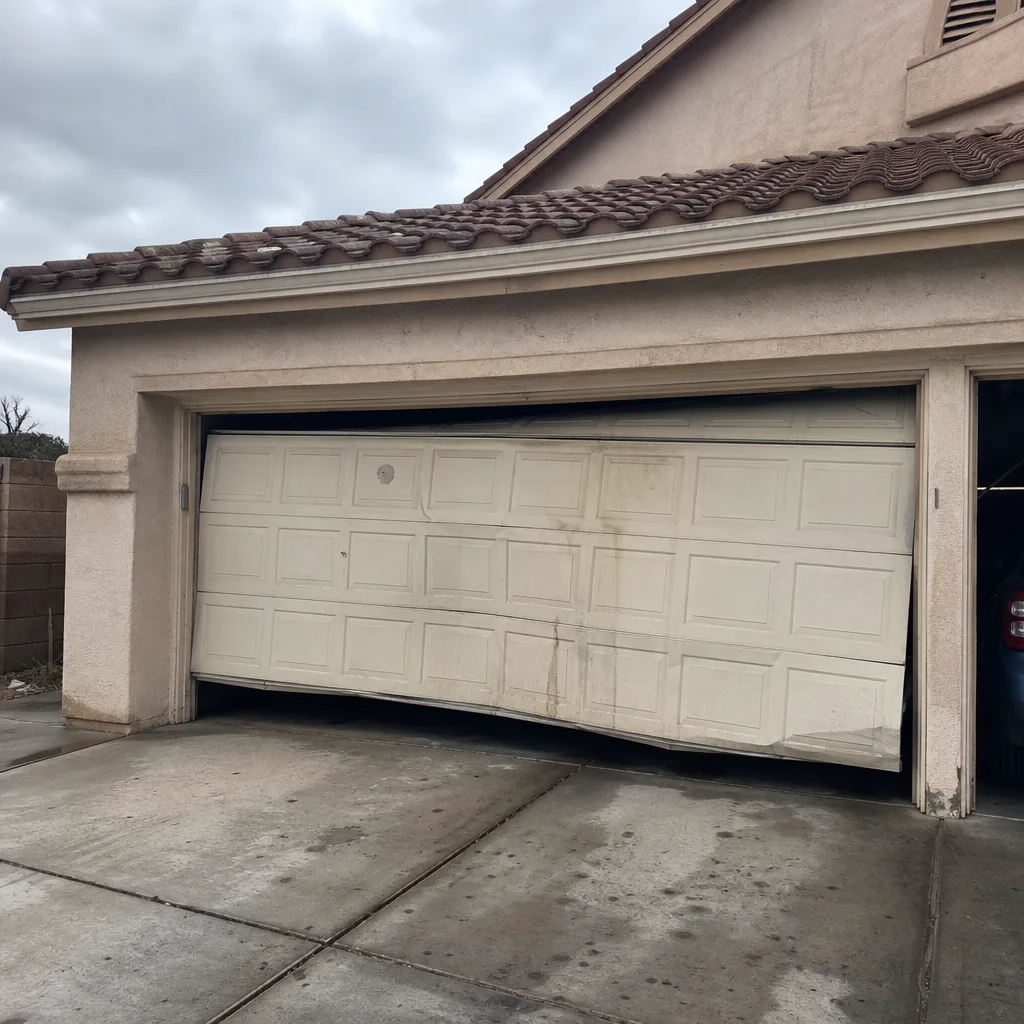 Before
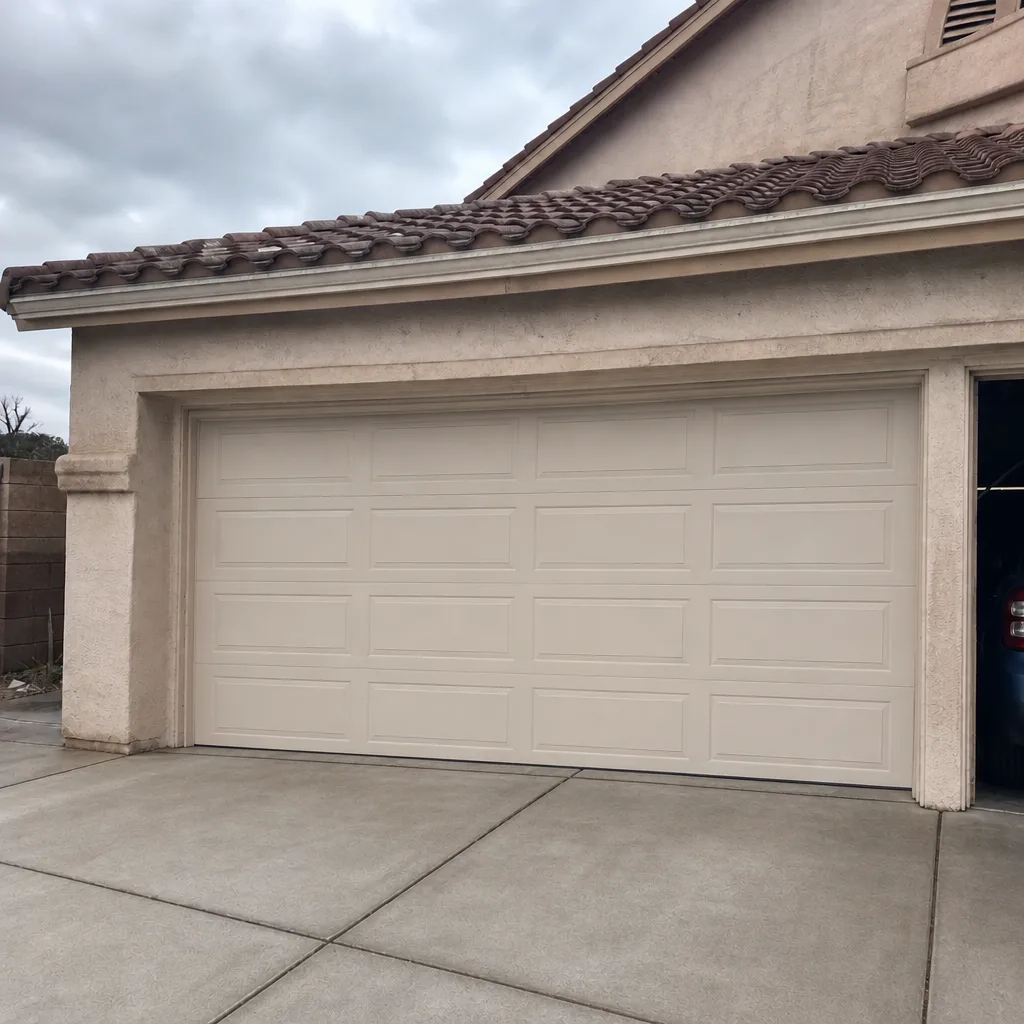 After
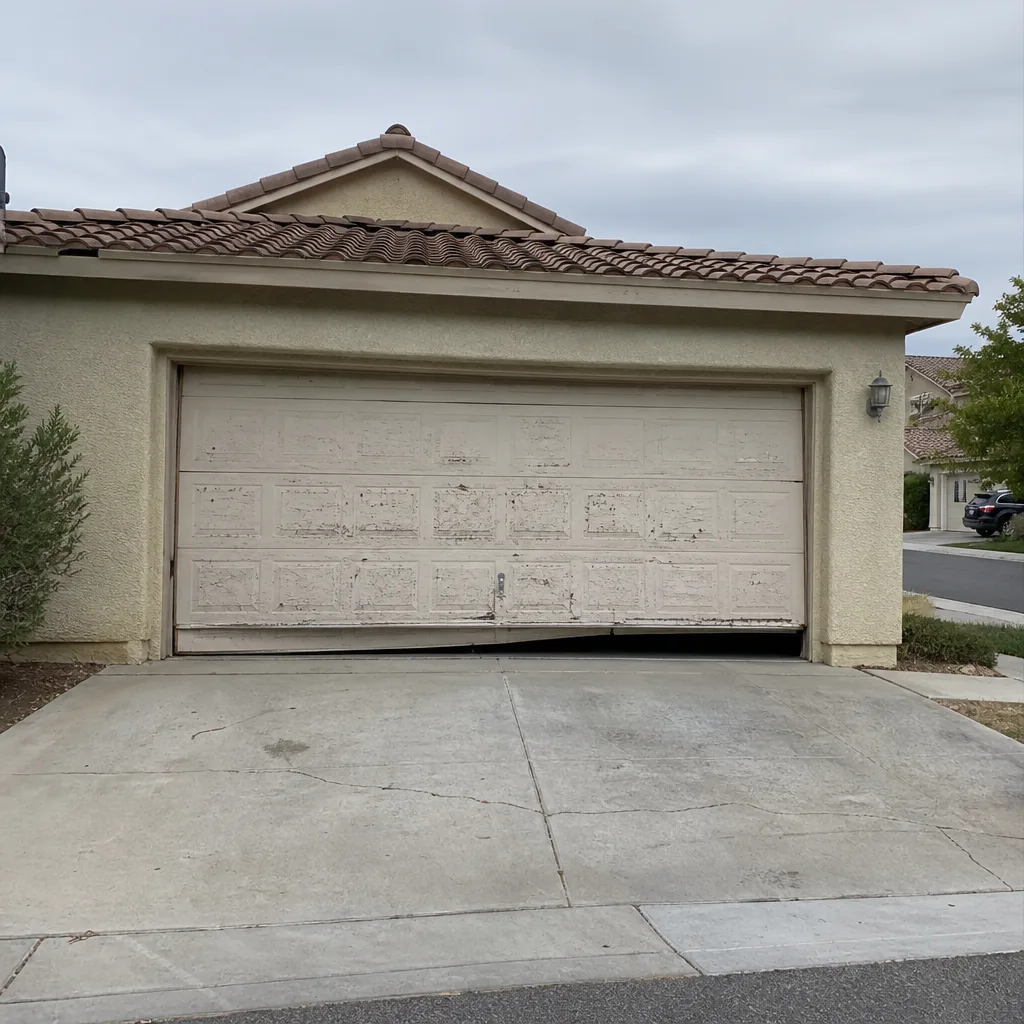 Before
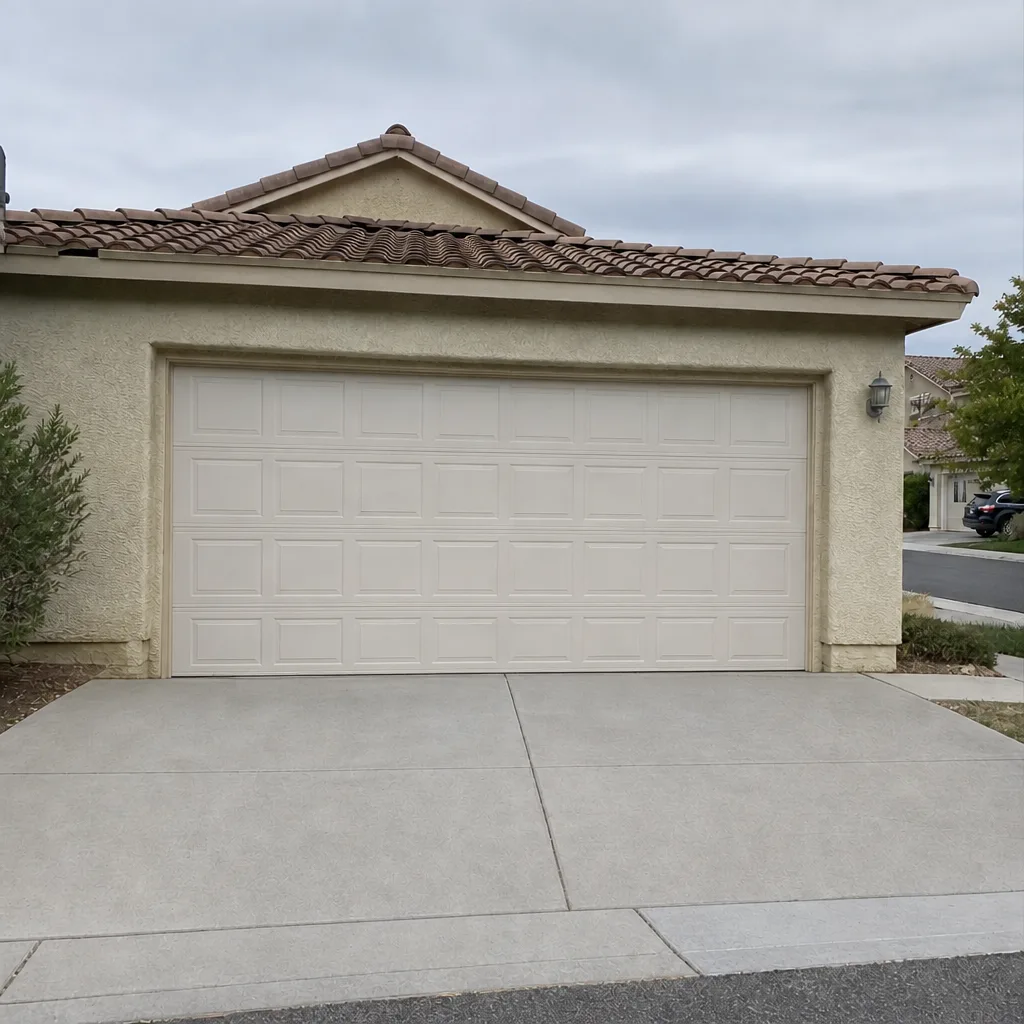 After
When to Call a Professional
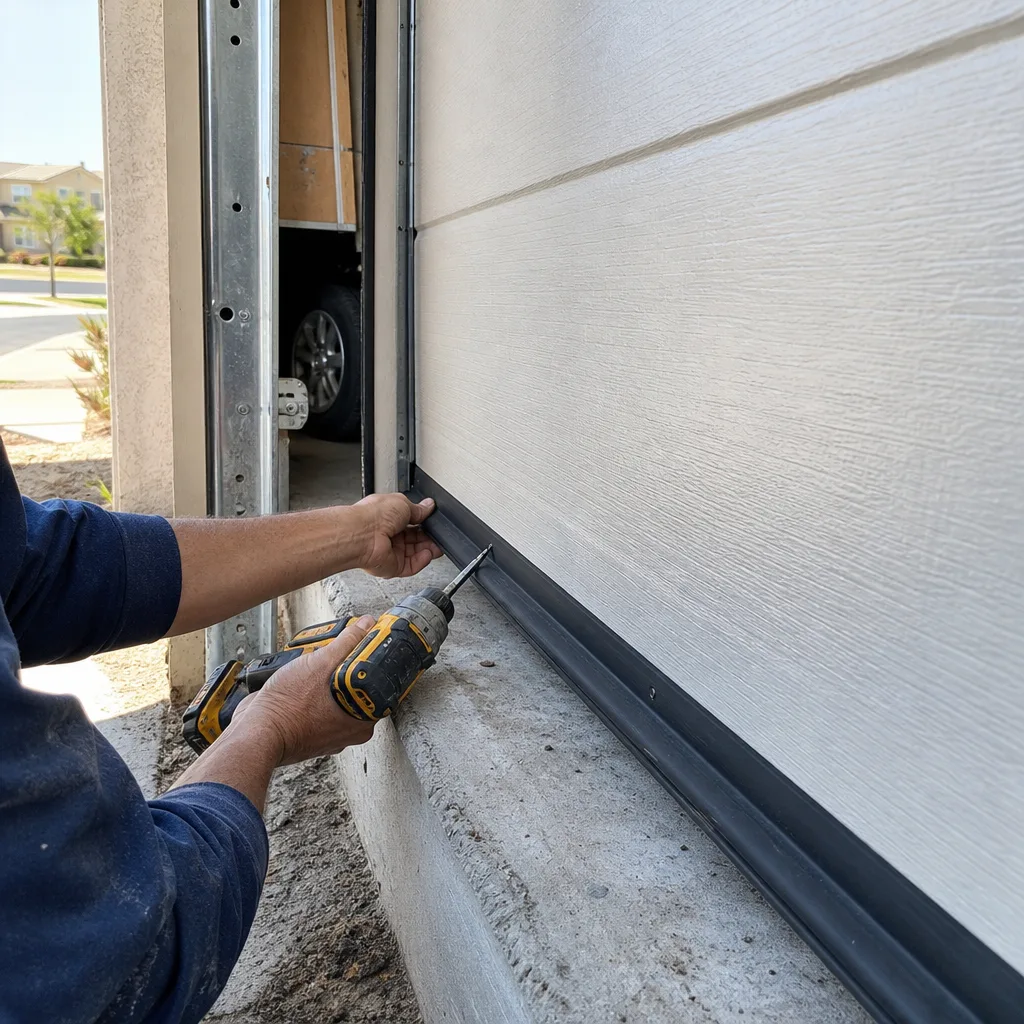
Call a professional for anything involving torsion springs, cables, or a door that’s off its track, because those carry real injury risk. Call us too if the manual release test shows a heavy or unbalanced door, if the opener keeps reversing after you’ve checked the sensors, or if you’ve confirmed a broken spring and want a written price before committing. A snapped spring on a Wayne Dalton or Raynor door is the same job regardless of brand, and it’s best handled by someone who does it daily.
Servo Garage Doors Summerlin offers free estimates in Summerlin. Call (844) 797-3654 and you’ll reach a live person, day or night, including holidays. Every job comes with a flat, written price and written scope before any work starts, a documented photo record when the technician leaves, and the 365-Day Done Right Promise. If you’ve already got a written estimate from another company, bring it in for a free second opinion. You don’t need a coupon.
Frequently Asked Questions
A broken torsion spring is the most likely cause of a door that won’t open, especially if you heard a loud bang from the garage. Confirm it by looking at the spring above the door for a visible gap in the coil, and run the manual release test to see whether the door is heavy by hand. If it is, keep the door closed and call (844) 797-3654 for a written quote. Estimates are free.
It depends on the failed part, which is why we confirm the diagnosis first and then quote a flat, written price. A spring replacement, a cable job, and a track realignment are different repairs at different prices, and you should never get a firm number before the failed component is identified. Call (844) 797-3654 for an exact quote after a quick diagnosis. Estimates are free, and the price is agreed before any work starts.
For urgent calls, yes. We answer the phone with a live person around the clock, including holidays, for emergency garage door calls. When a technician is dispatched, you get a named technician and an on-the-way text rather than a vague callback window. For a door stuck open in a Summerlin heat wave, that same-day availability matters. Call (844) 797-3654.
No. The written price and written scope are delivered before any work starts, per Clause 1 of The Haven Standard. If the technician finds something the photos didn’t show, they walk you through it and requote before proceeding, not after the invoice is written. You approve the number you see. Call (844) 797-3654 to get started.
A door that reverses mid-travel often has a safety sensor issue or resistance in the track. Before assuming the opener is bad, check that the sensors at the bottom of the tracks are aligned and their lenses are clean, and look for worn rollers or a binding track. If it keeps happening after that, call (844) 797-3654 for a diagnosis.
Yes. Servo Garage Doors Summerlin is independently owned and operated, and it holds its own license and insurance, which are documented rather than buried in fine print. Our technicians are background-checked and have up to 11 years of experience, and they photograph the failed component before quoting a replacement. Call (844) 797-3654 for a free estimate.
The Bottom Line
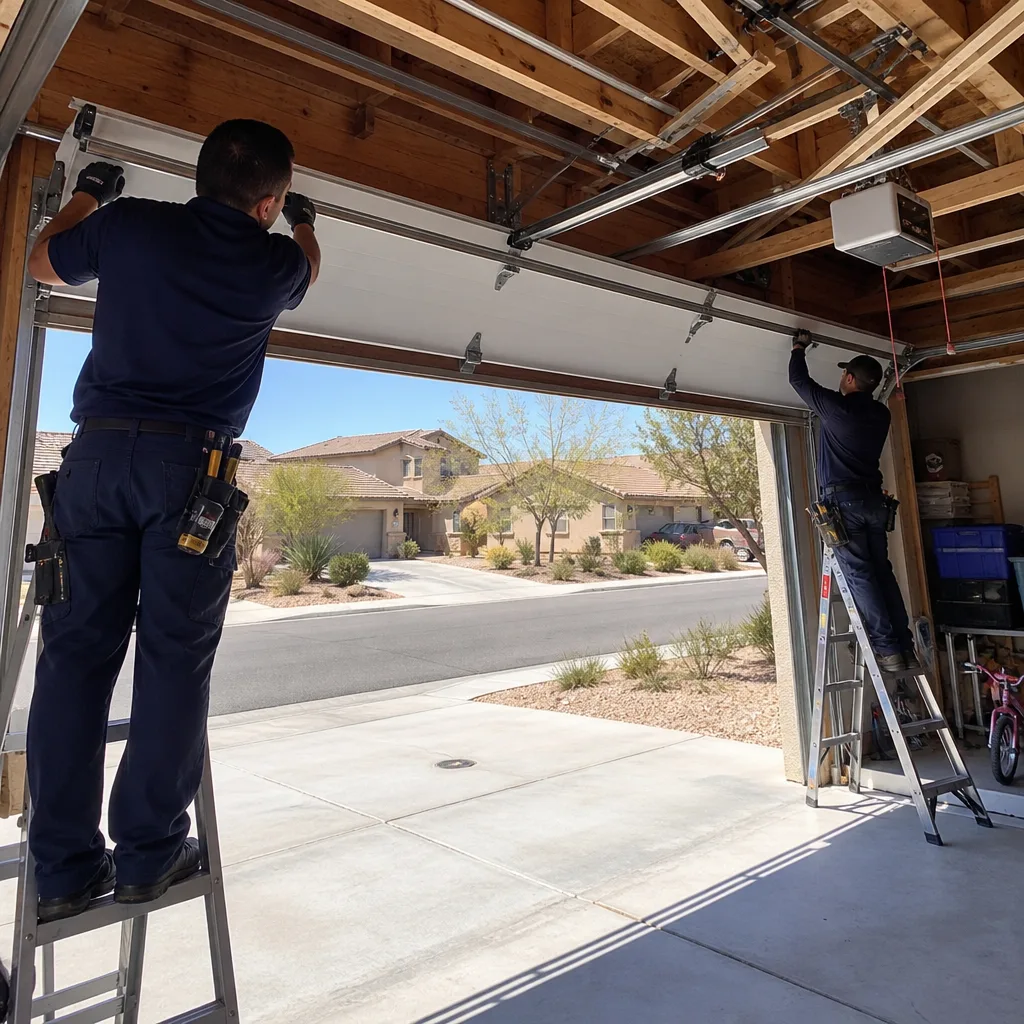
Most garage door failures come down to a spring, a cable, an opener, or a track, and you can usually tell which one in under three minutes by looking for a spring gap, checking the cables, and running the manual release test. The biggest money-saving move is confirming the counterbalance before you price a new opener. When in doubt, don’t force a heavy door or touch a spring under tension. Photograph what you see, call a professional, and ask for a written price and scope before any work begins. In Summerlin, the desert heat makes springs and cables fail a little faster than elsewhere, so that first visual check each year is worth the two minutes.
Call (844) 797-3654 for a free estimate. Start with a look at our Servo Garage Doors Summerlin home page, or explore garage door installation in Summerlin if a repair has turned into a replacement.
Written by the team at Servo Garage Doors Summerlin.