
Last updated November 17, 2026
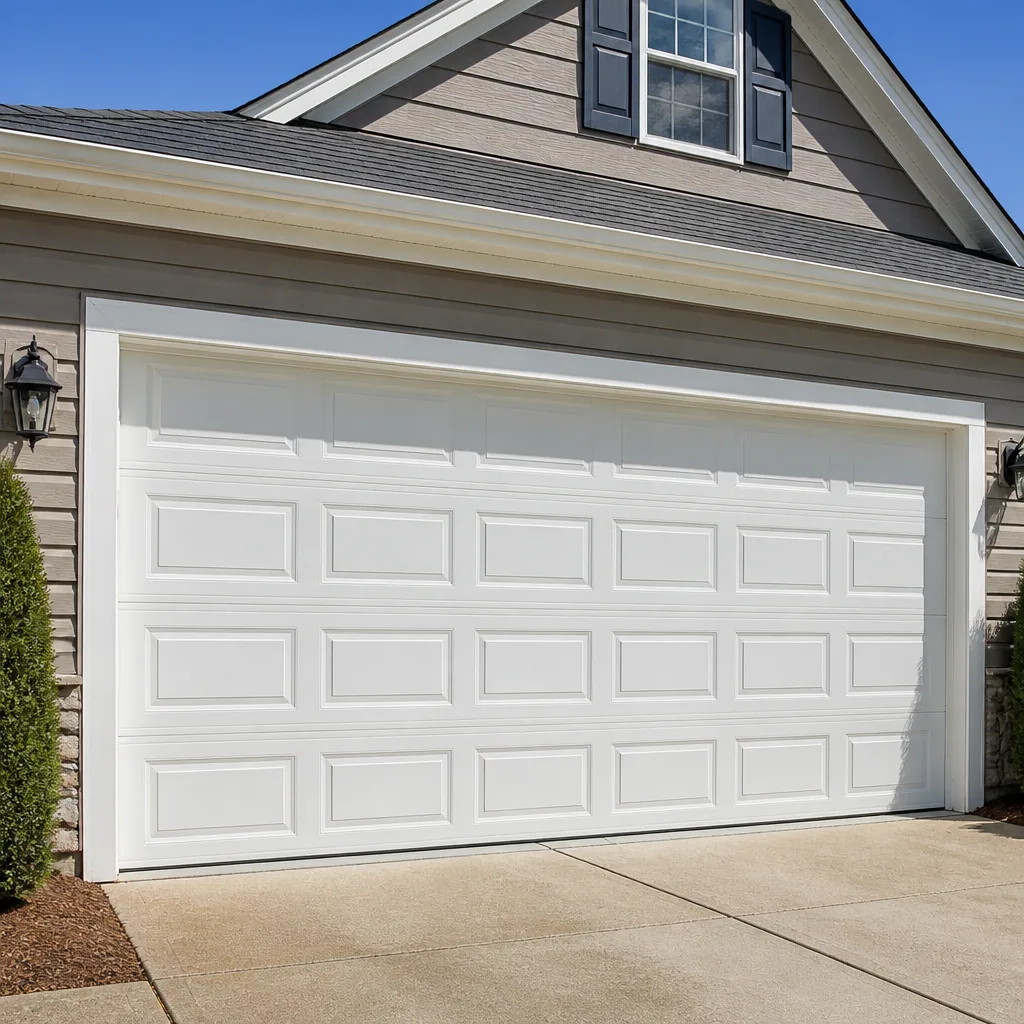 Raised-panel steel
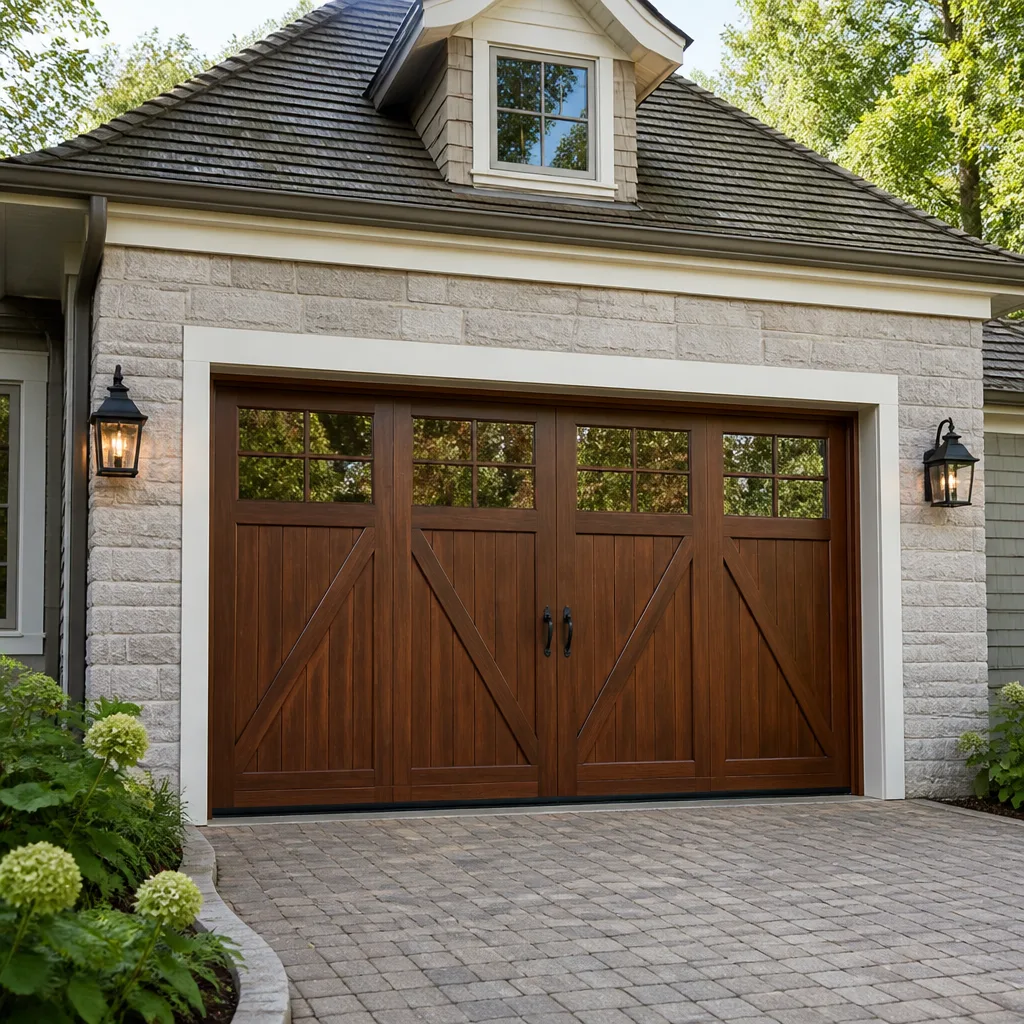 Carriage house
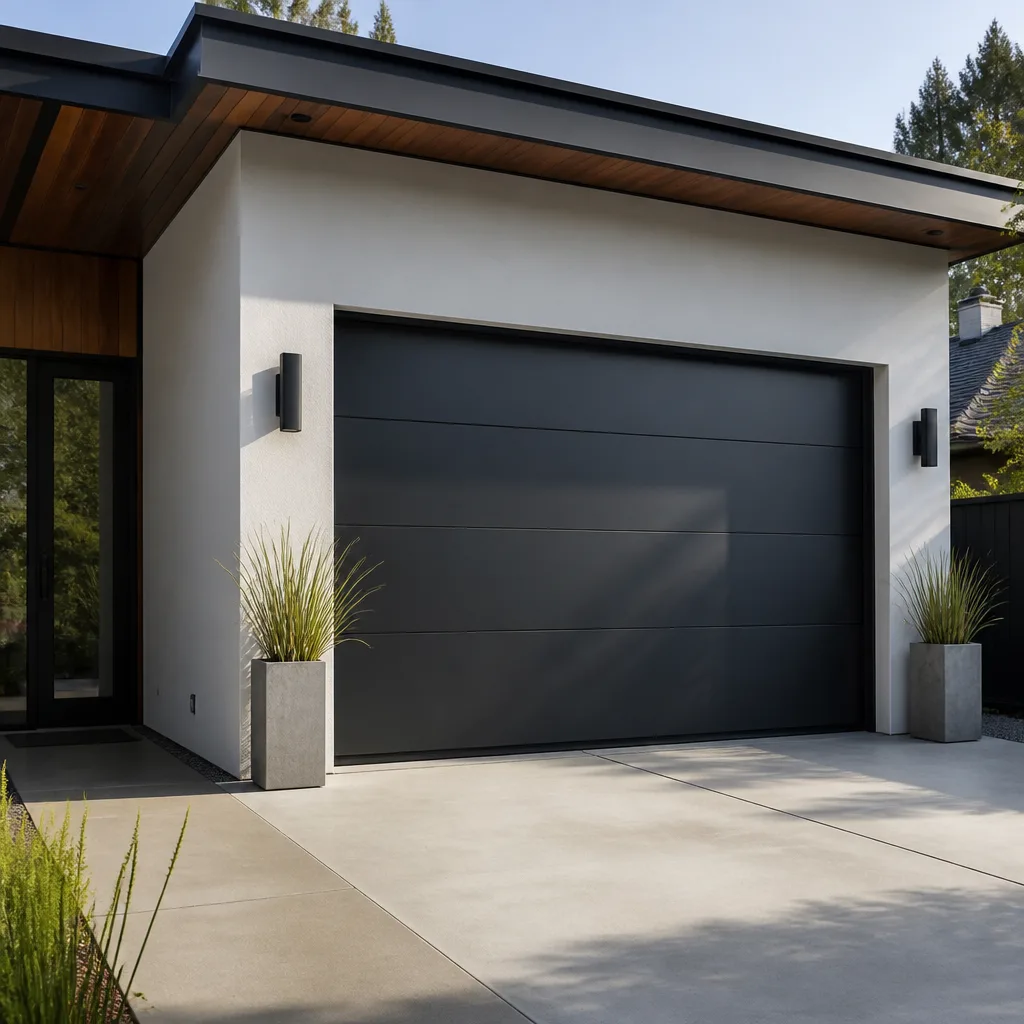 Modern flush
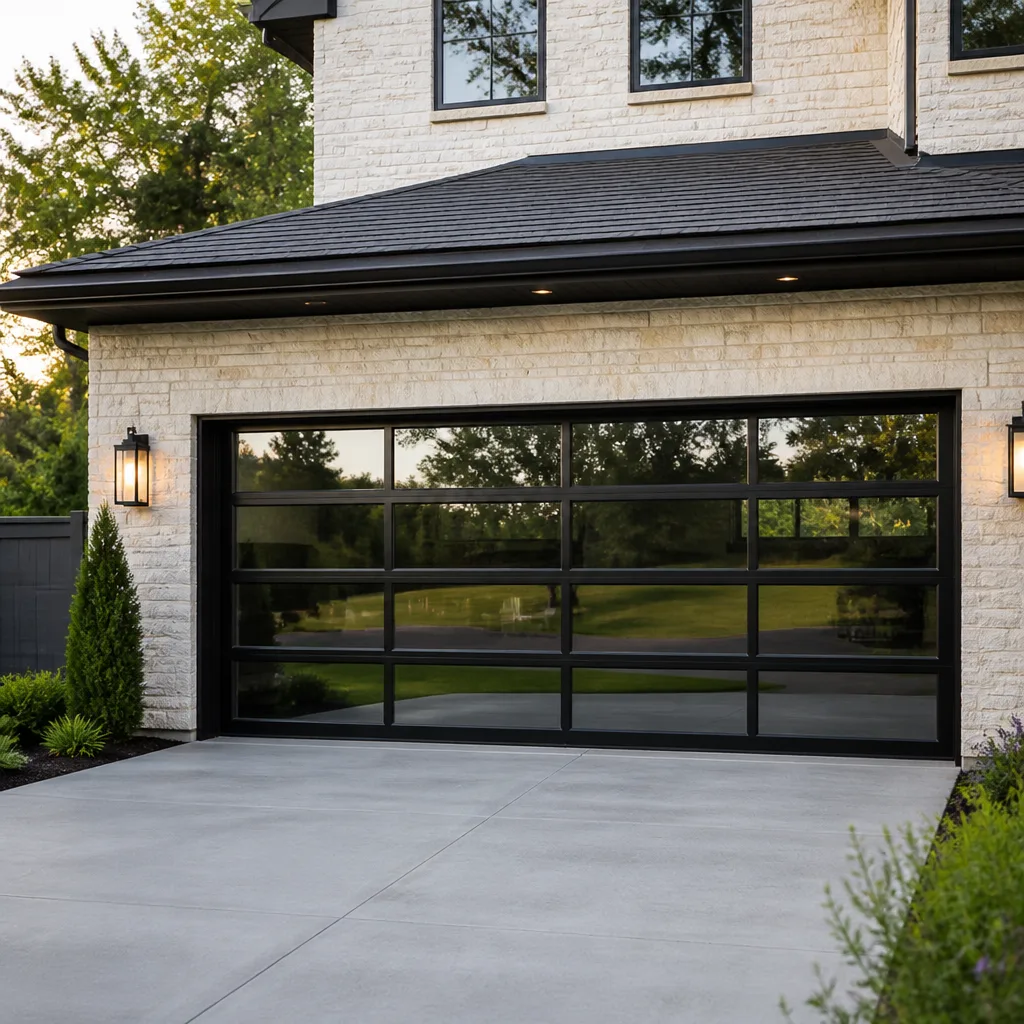 Full-view glass
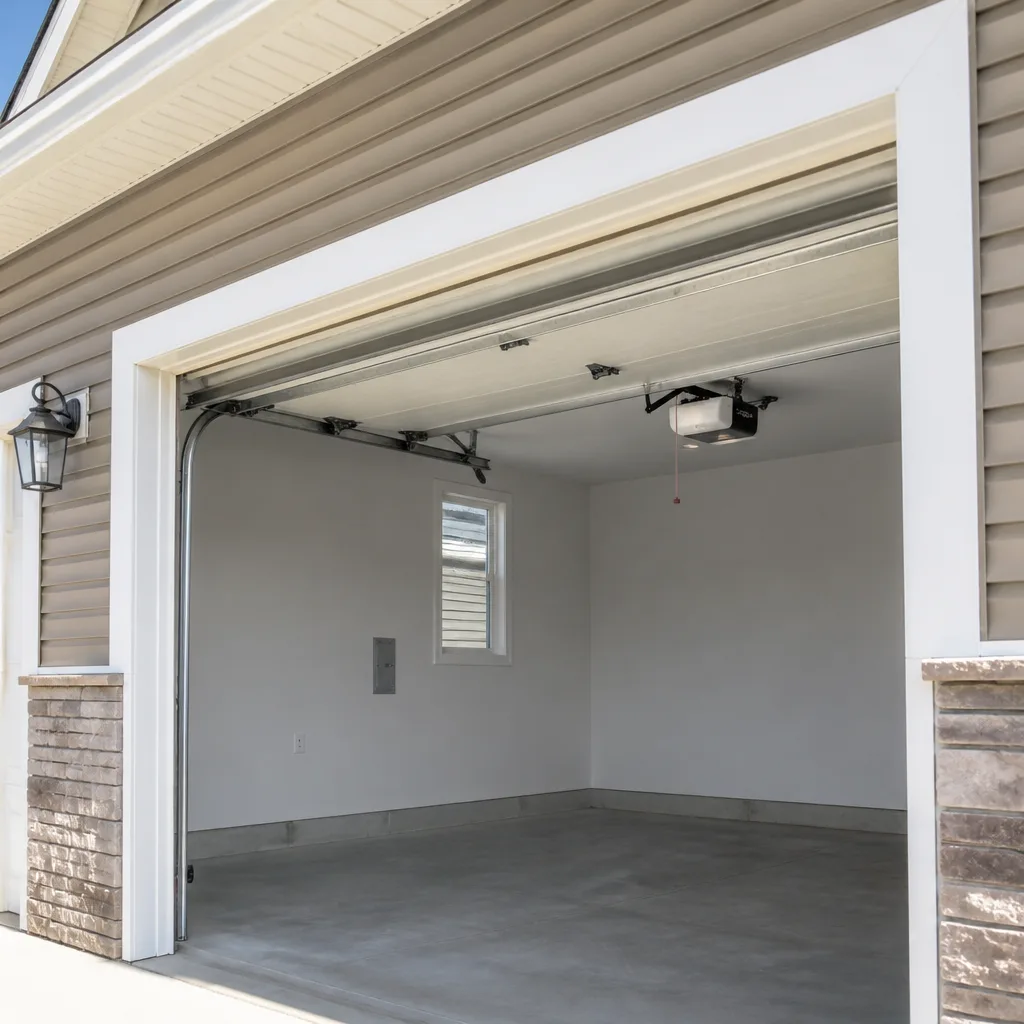 LiftMaster openers
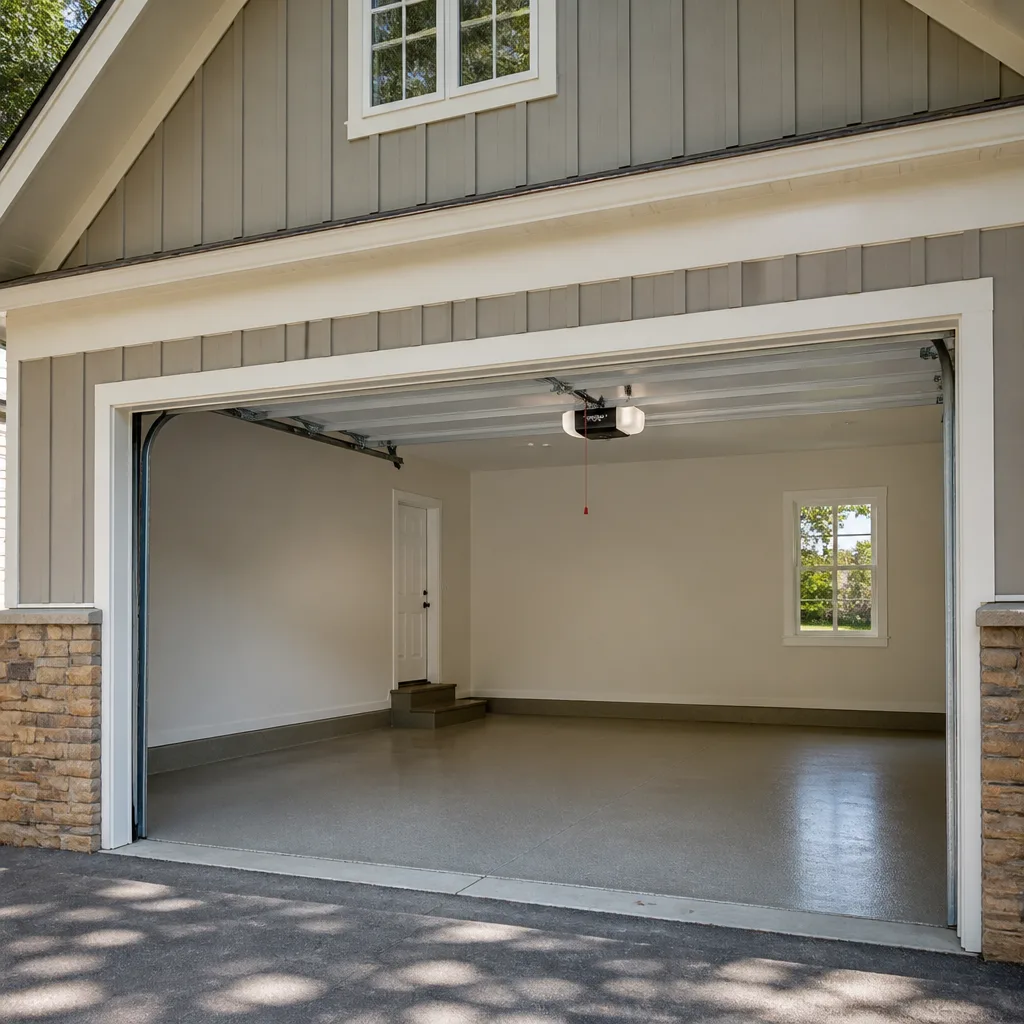 Chamberlain openers
Full 25-point door and opener safety check with every visit - springs, cables, rollers, tracks, and your LiftMaster or Chamberlain opener included
You get a price before we start. It does not change when the pro arrives.
Get your free estimateThe Complete Garage Door Installation Guide for Summerlin Homeowners
A non-insulated steel door in direct western sun exposure, which is what most of Summerlin’s newer builds ship with, can reach an interior surface temperature near 130°F by mid-afternoon. That heat doesn’t stay in the garage. It radiates through the shared wall and ceiling into the rooms behind it, and your air conditioner pays for it every July. The insulation question on a Summerlin garage door isn’t about comfort. It’s about HVAC load. This guide covers what actually changes a door decision in Summerlin: material behavior in dry heat and monsoon dust, R-value by orientation, Clark County permitting, sizing for the era your house was built, and the documentation you should receive before any hardware goes up.
Quick Answer
Garage door installation in Summerlin typically costs $1,600 to $4,800 for a standard single or double door, including removal, hardware, and haul-away, with insulated doors and custom sizes pushing toward the top of that range. The right door for Summerlin is usually an insulated steel model at R-12 or better on west- and south-facing garages, sized to the actual rough opening and permitted through Clark County or the City of Las Vegas. Every installation should begin with a written price, a written scope, and a documented photo record of existing conditions.
Styles & brands we work with
- Raised-panel steel
- Carriage house
- Modern flush
- Full-view glass
- LiftMaster openers
- Chamberlain openers
Table of Contents
- Which material holds up best in Summerlin’s climate?
- What R-value does your Summerlin garage actually need?
- Do you need a permit to install a garage door in Summerlin?
- How door sizing works, and why “standard” is a trap
- The installation process, step by step
- What Clause 4 documentation means on an install
- What installation costs in Summerlin, line by line
- Common mistakes to avoid
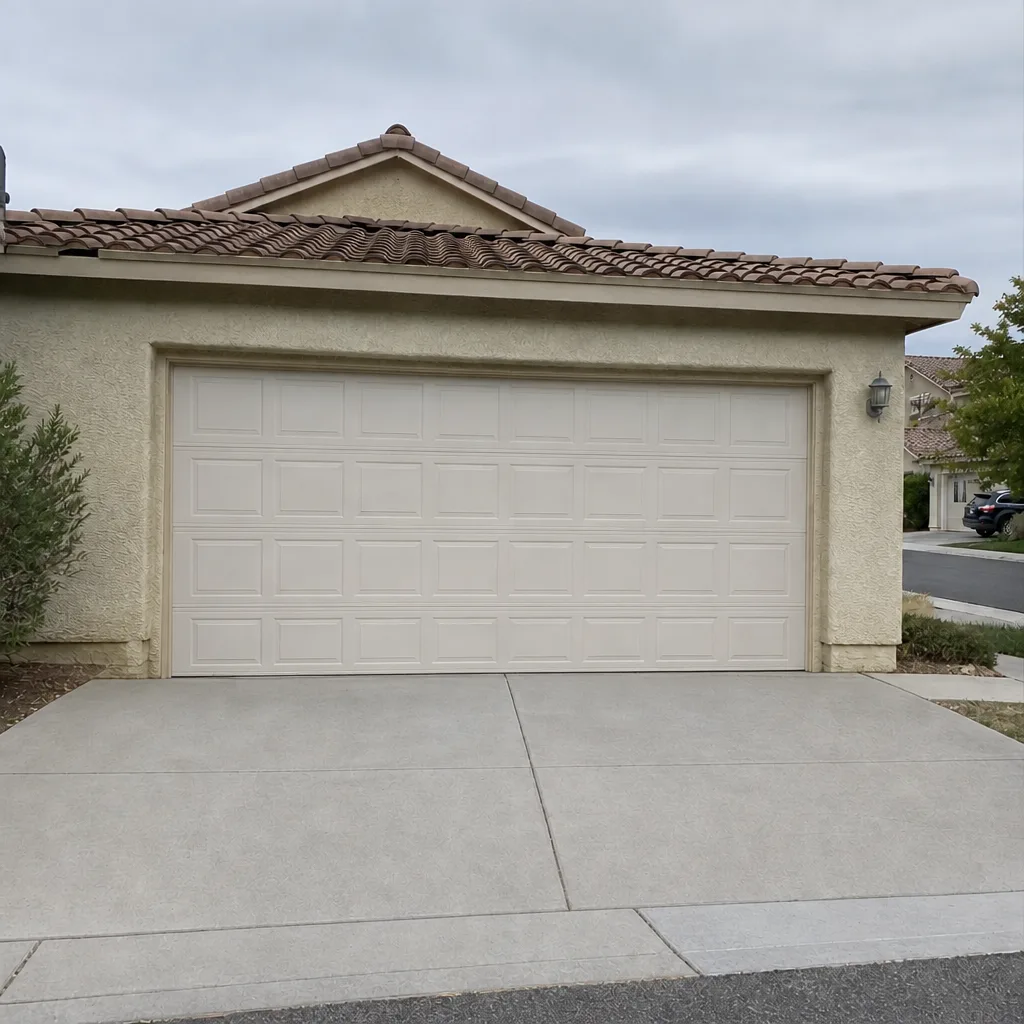
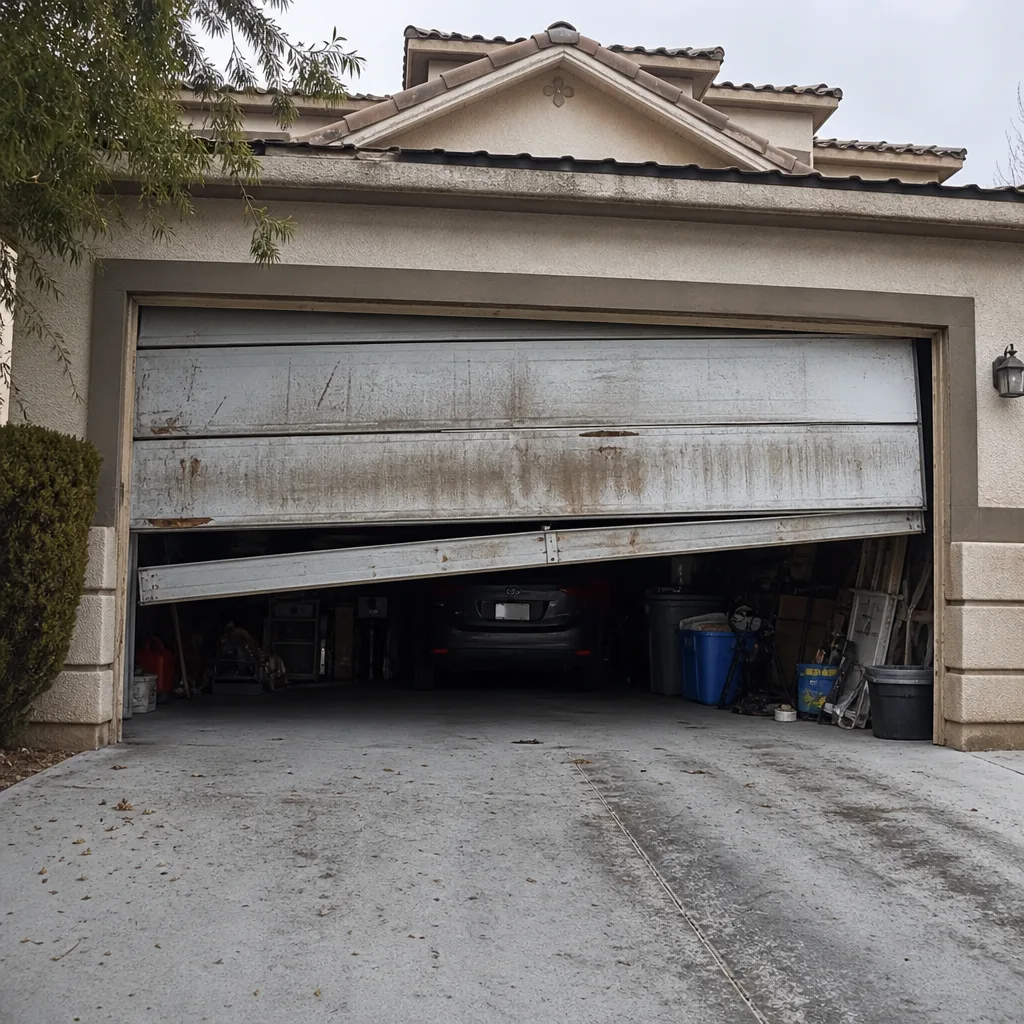 Before
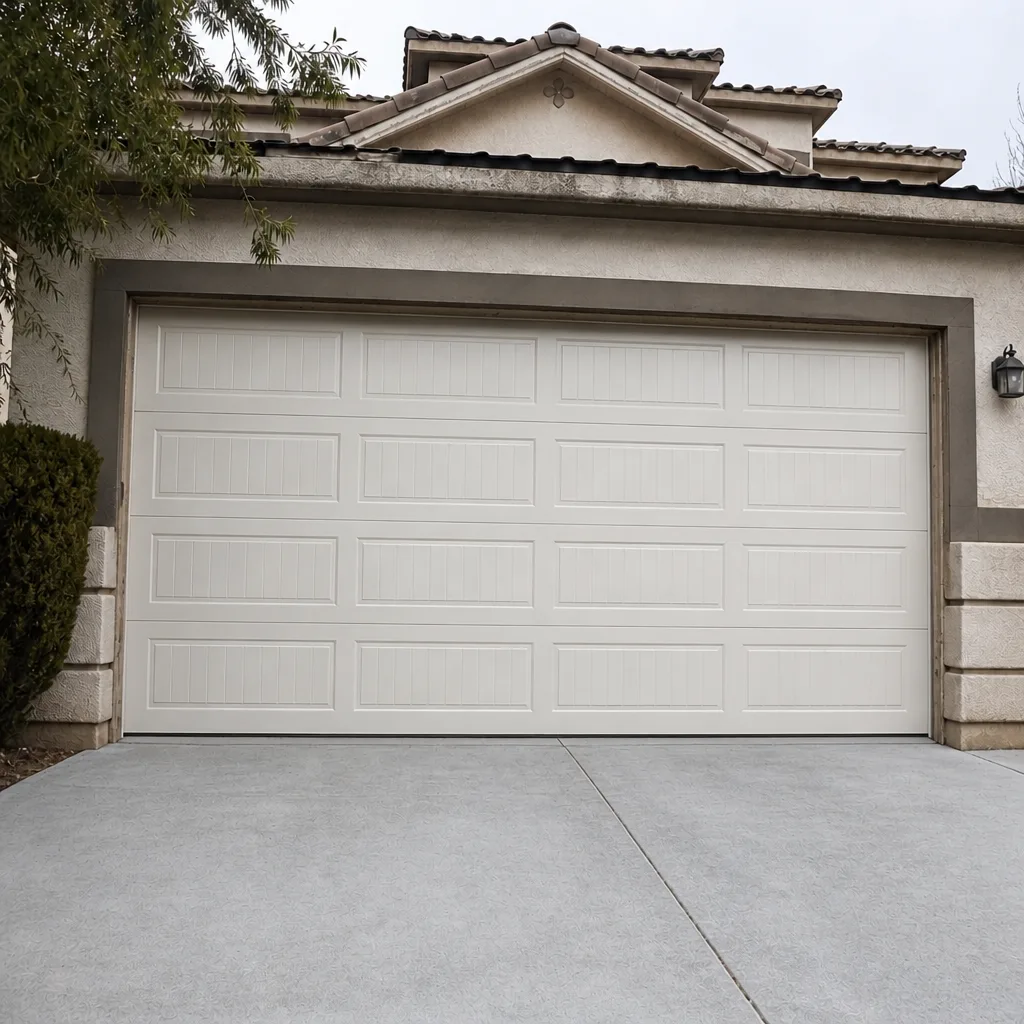 After
Which material holds up best in Summerlin’s climate?
Summerlin runs a high-desert cycle: 110°F afternoons in July and August, cool nights, single-digit humidity most of the year, and spring wind events that carry fine dust against every west-facing surface. A garage door here sees more thermal cycling in a week than a coastal California door sees in a season. That cycle is what kills cheap doors. Material choice is really a question of how a door handles expansion, UV, and dust intrusion over ten years.
Steel is the default for good reason. Modern doors use 24- to 27-gauge steel, and the gauge number runs backward: 24-gauge is thicker than 27-gauge. A 24-gauge door with a two-inch insulated core resists denting from a stray basketball and holds its shape through thermal cycling. Thinner 27- or 28-gauge panels oil-can and dent at the hinges within a few summers. In our experience across Summerlin installations, the steel gauge matters more than the brand name on the sticker.
Aluminum handles UV without fading or rusting and weighs less, which takes load off the opener and torsion system. The trade-off is dent resistance. Aluminum panels deform at impact that steel would shrug off, so an aluminum door on a driveway where kids play basketball is a decision you’ll revisit.
Wood composite outperforms natural wood in Summerlin’s dry heat by a wide margin. Natural wood doors need re-sealing every couple of years against UV and low humidity cracks; composite doors hold finish far longer and won’t check or split the same way. If you want the wood look on a Summerlin home, composite is the version that survives.
What R-value does your Summerlin garage actually need?
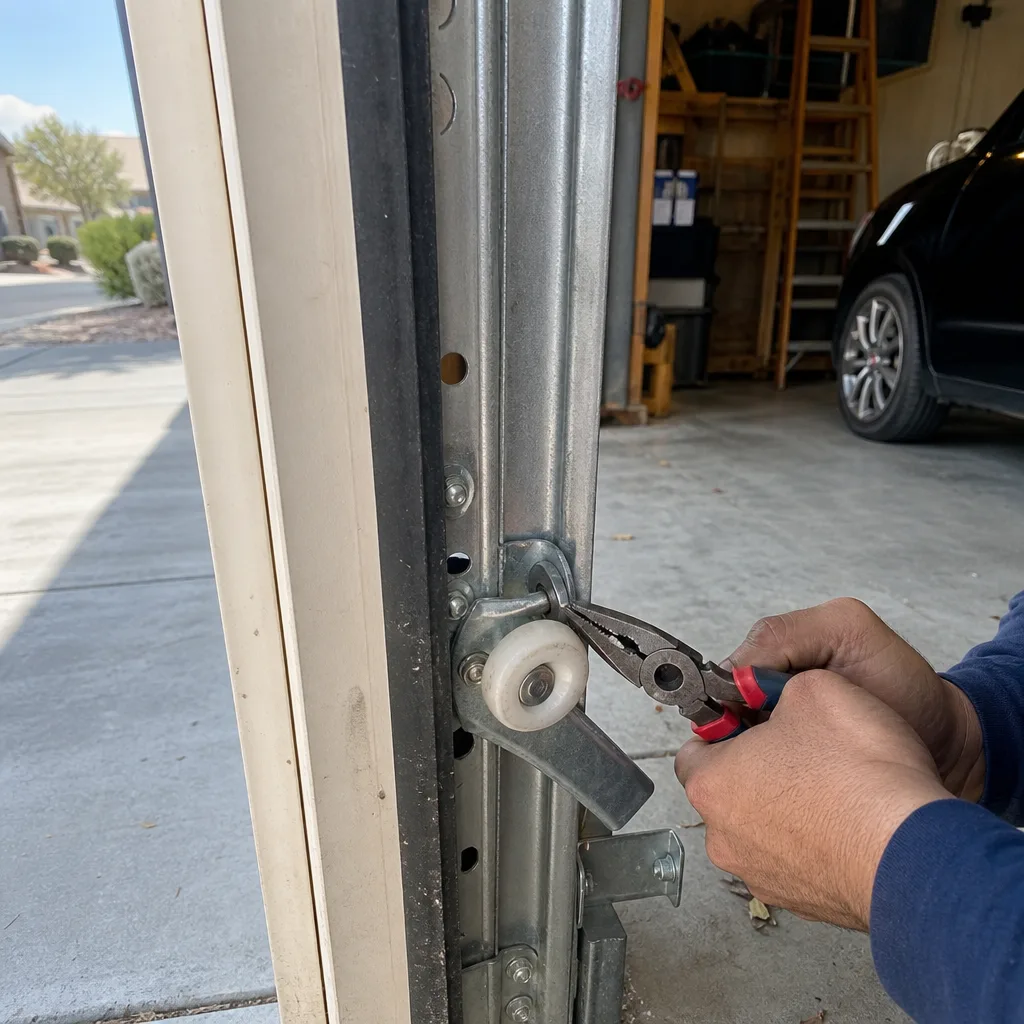
R-value measures how well a door resists heat transfer. Higher is better. The number that matters for your house depends on which way the door faces, because Summerlin’s sun exposure is uneven across the day.
- West-facing garage (afternoon sun): target R-12 to R-16. These doors absorb the worst of the summer sun from 2 p.m. to 6 p.m., and an uninsulated door turns the garage into an oven that pushes heat into adjacent bedrooms.
- South-facing garage: R-9 to R-12. Strong midday exposure, less brutal than west.
- North- or east-facing garage: R-6 to R-9 is often enough. Morning sun only, cooler surface temps.
- Garage under living space: go higher regardless of orientation. The ceiling transfer matters more than the door itself.
The reason this is Summerlin-specific: a west-facing garage on a Summerlin street with no mature shade trees can add real load to your HVAC. A 130°F interior door surface radiates into the shared wall continuously. Insulation reduces that transfer, and a properly sealed perimeter stops the dust that comes with the spring winds. If your garage shares a wall with a bedroom or a home office, the R-value decision is a comfort decision and an energy-bill decision at once.
Do you need a permit to install a garage door in Summerlin?
Yes, in most cases. Summerlin sits within unincorporated Clark County and, in some sections, within City of Las Vegas jurisdiction, and both require a permit for garage door replacement when the door is part of the structural opening or when the work changes the opening. A like-for-like replacement of the same size door in the same opening is sometimes handled without a permit, but the answer depends on your address and the scope, and confirming that is part of the job.
What the permit process usually involves:
- Confirming which jurisdiction your address falls under (Clark County or City of Las Vegas).
- Submitting the door specification, including wind-load rating where required.
- Confirming the door meets current safety requirements, including automatic reversal and photoelectric safety sensors on any opener.
- Scheduling the inspection if the jurisdiction requires one after installation.
Wind-load rating matters here. Southern Nevada code references wind requirements for exterior openings, and a door rated for the opening is part of a compliant install. Skipping the permit can surface at resale, when a buyer’s inspector asks for documentation on the door and the answer is a shrug. We confirm jurisdiction and permit requirements before we quote, so the written scope reflects the real job. Permits aren’t a reason to avoid the work. They’re the paper trail that makes the work defensible.
How door sizing works, and why “standard” is a trap
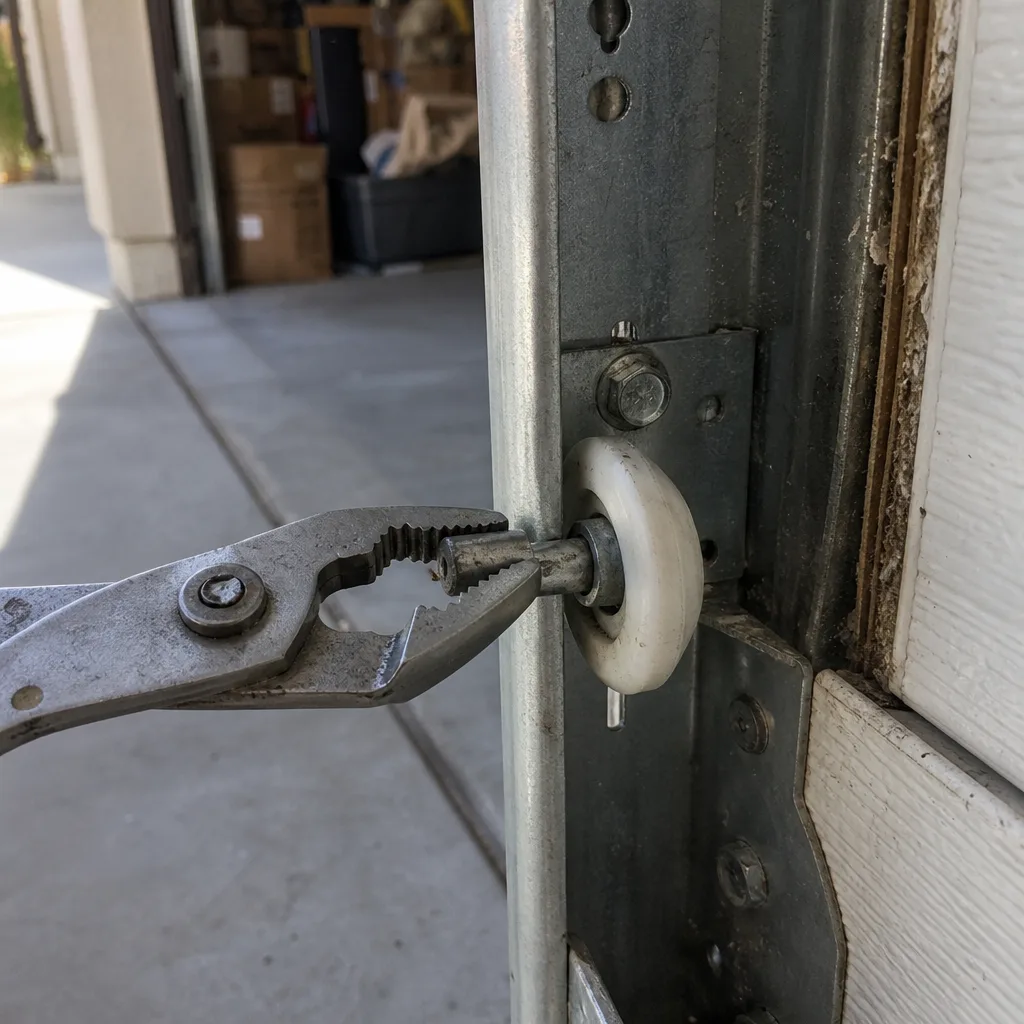
“Standard” garage door sizes exist, but Summerlin homes built between 2015 and 2025 and older Summerlin construction from the 1990s don’t always match them. A door that’s quoted from a nominal size and doesn’t fit the rough opening is a door that gets trimmed, shimmed, or sent back. Measuring the rough opening correctly is the step that prevents all of that.
The rough opening is the framed hole the door fills, measured between the finished jambs, floor to header. The door itself is slightly smaller than the opening to allow for the track and hardware. What you need to measure:
- Width: the clear opening between the left and right jambs, measured at the widest point, top, middle, and bottom.
- Height: floor to the bottom of the header, measured at both sides and the center.
- Headroom: the distance from the top of the door to the ceiling. A standard torsion setup needs about 12 inches; low-headroom setups need different hardware.
- Sideroom: the space between the door edge and the wall or obstruction. Standard track needs 3.75 inches on each side; anything less needs a different track configuration.
- Backroom: how far the door travels back into the garage when open. A double door needs about the door height plus 18 inches of clear travel.
Summerlin garages from the 1990s sometimes have shallower dimensions or obstructions from water heaters and HVAC equipment that a generic measurement misses. A door measured on-site beats a door ordered from a phone call every time. This is also where brands like Amarr, Wayne Dalton, and Raynor matter: each offers size ranges and panel configurations that fit an odd opening without a custom order and its lead time.
The installation process, step by step
Installation is the one part of this work where sequencing and measurement decide the outcome. Here’s how a proper install runs. This is the shape of the job, not a DIY guide: garage doors operate under high tension, and the torsion spring and cables carry enough stored energy to cause serious injury. That work belongs with a trained technician.
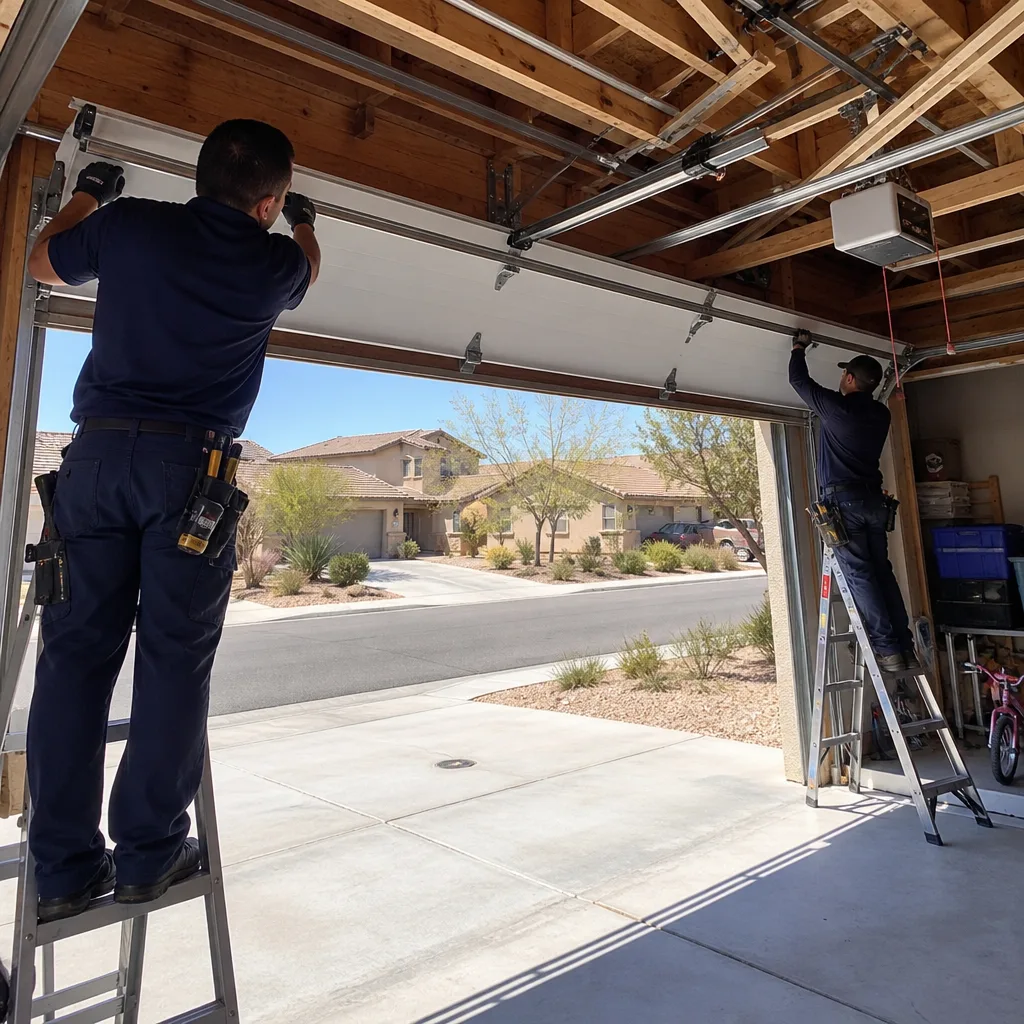
- Document existing conditions. Photograph the opening, the header, the jambs, the floor, and any existing hardware before anything is removed.
- Remove and dispose of the old door. Track, panels, springs, and opener come down together, and haul-away is part of the written scope.
- Fix the opening. Straighten jambs, address rotted or loose trim, and confirm the header is sound. A door hung on a crooked opening never seals.
- Install new track and hardware. Vertical track plumb, horizontal track level, brackets anchored into framing, not drywall.
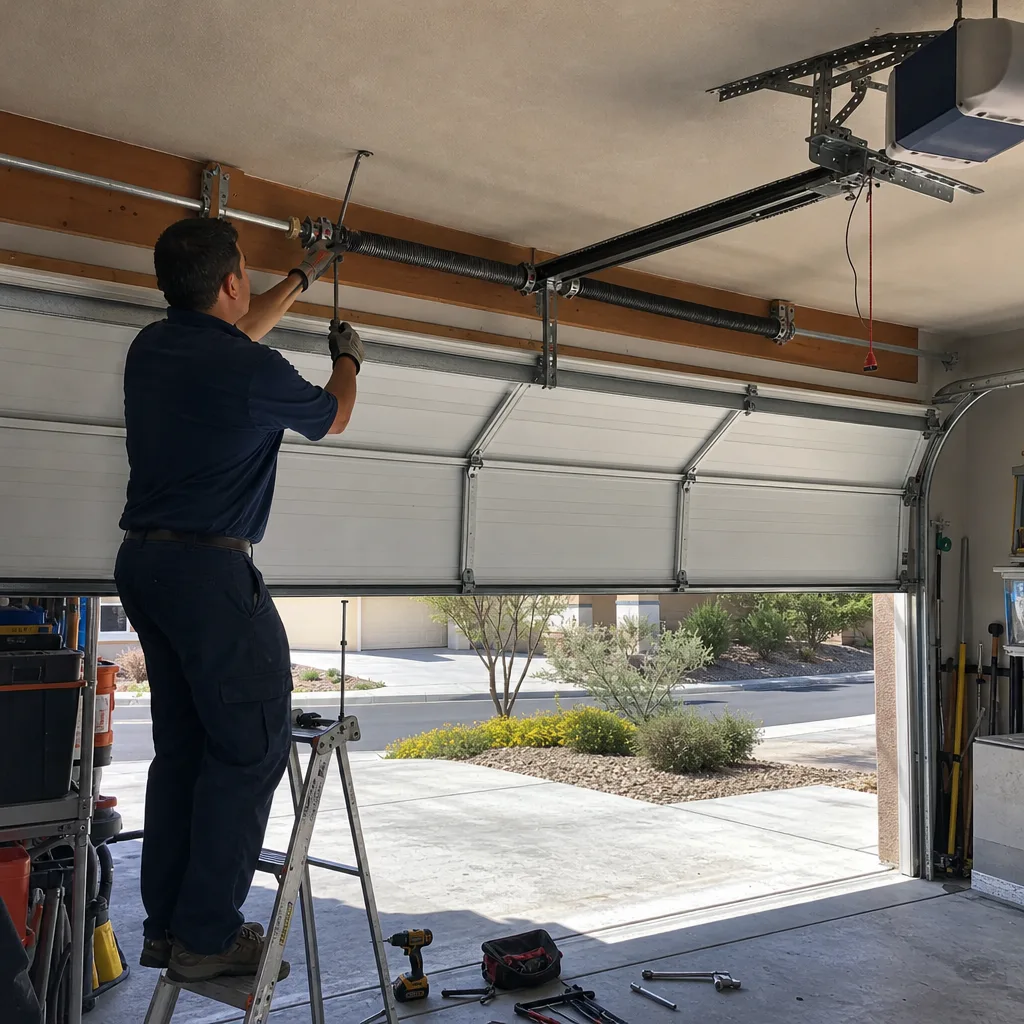
- Set the torsion system. The spring is wound to the door’s weight. This is the high-tension step, done with the right bars and the right procedures.
- Hang the door and balance it. Panels set in the track, hinges and rollers installed, door balanced so it holds position at mid-travel.
- Install the opener and safety system. If a new opener goes in, the photoelectric sensors mount at the floor and the reversal test is run and documented.
- Seal the perimeter. Bottom weatherseal, side and top seals. In Summerlin, this is the dust-exclusion step and it’s not optional.
- Test, document, and hand over. Full open-and-close cycle, safety reversal test, and the photo record of completed work delivered to you.
If the opener is being replaced or upgraded alongside the door, that’s a separate scope with its own written price. See our Garage Door Opener Repair & Installation in Summerlin page for what that covers.
What Clause 4 documentation means on an install
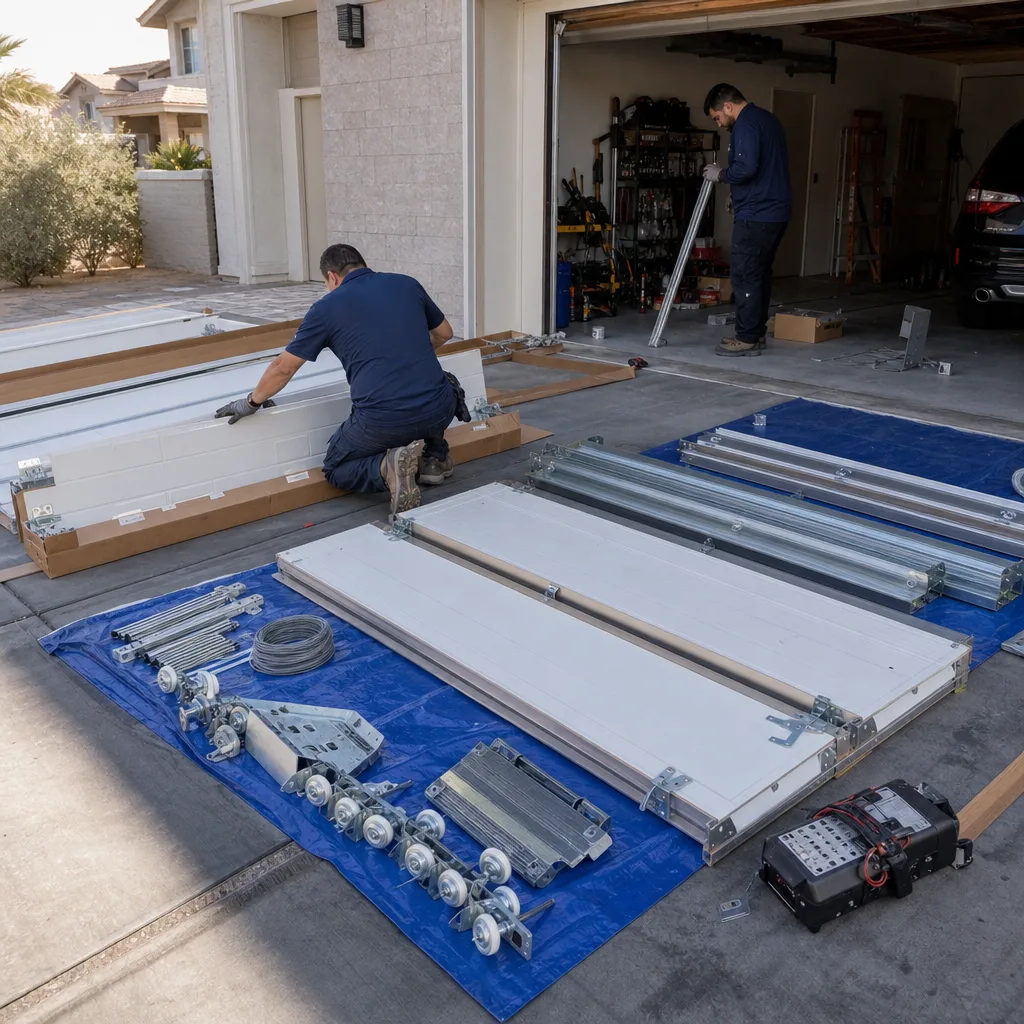
Clause 4 of The Haven Standard is the rule that a customer sees the failed part before anyone quotes a replacement. On a repair, that means the technician photographs the broken torsion spring or the snapped cable. On an installation, it means the technician photographs the conditions that drive the quote: the rough opening measurements, the header, the existing track, the floor slope, and any obstruction that changes the hardware required.
Why it matters. An install quote with no documented conditions invites two problems. The first is a scope change mid-job (“we found your header was out of level once we got in there”) that arrives as a bigger invoice. The second is a door hung on an opening that was never measured properly, which fails at the seal within a season. Servo photographs the opening before quoting and again after the install, and you get both sets of images. It’s the same paper-trail logic that governs repairs: the evidence leads, the price follows it, and the price is agreed before work starts.
What installation costs in Summerlin, line by line
These ranges reflect the Summerlin market for standard residential installs. Your exact number depends on the opening, the door, and the opener. Every job here is quoted at a flat, written price with a written scope delivered before work begins, so the number on the page and the number on your invoice match.
- Single door, non-insulated steel: $900 – $1,600, installed
- Single door, insulated steel (R-9 to R-12): $1,400 – $2,400, installed
- Double door, insulated steel: $2,200 – $3,800, installed
- Custom or oversized door: $4,000 – $7,500+, installed
- Old door removal and haul-away: usually included, confirm in the scope
- New opener (belt drive, with safety sensors): $450 – $900, installed
- Perimeter weatherseal (bottom, sides, top): $150 – $400, installed
- Permit fee: varies by jurisdiction, quoted in the written scope
Installation is measured and scheduled work, not same-day service. A door is ordered to your opening, and the install date follows delivery. What we can promise is that the price and scope are written and agreed before any hardware is set, and if a door comes in wrong or the fit is off, the fix is on us. The 365-Day Done Right Promise covers installation the same way it covers repair. For a broader look at how we handle the repair side of this trade in the area, see our Garage Door Repair in Summerlin page, and for the full picture of what we do, the Servo Garage Doors Summerlin home page. The dedicated Garage Door Installation in Summerlin page covers the install offer in more detail.
Common Mistakes to Avoid
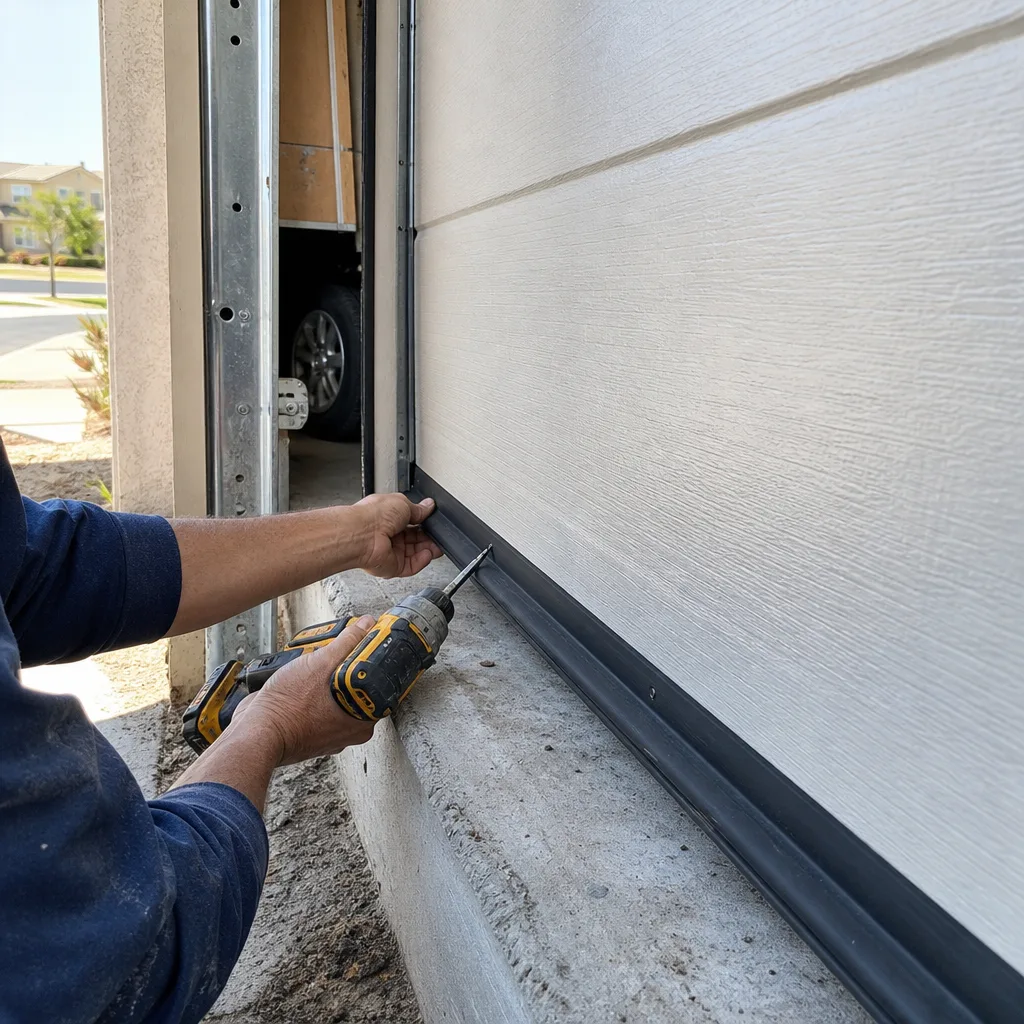
- Buying on R-value alone without checking the seal. An R-16 door hung with a leaky bottom seal lets Summerlin’s spring dust straight in and does less for your garage than an R-9 door sealed tight. The seal is half the job.
- Quoting from a nominal size. A door ordered from a “standard” size that doesn’t match the rough opening gets trimmed or returned. Measure the opening, all of it, every time.
- Skipping the permit. Clark County and City of Las Vegas both care about garage door work, and an unpermitted door surfaces at resale. The permit is cheap next to the resale conversation.
- Ignoring orientation. A west-facing Summerlin garage and a north-facing one are different insulation decisions. The same door spec on both is a spec written for nobody’s house.
- Reusing the old track and springs. New door, old springs wound for a different door weight is a door that goes out of balance and eats the opener. Match the spring to the door.
- Natural wood on a dry-heat elevation. If you want the wood look in Summerlin, composite holds its finish. Natural wood needs re-sealing every couple of years against UV and low humidity and won’t last as long.
- Accepting a verbal price. A price that lives in a phone call can’t be compared, and it can change once the truck arrives. Get it in writing, with the scope, before anything is ordered.
See the difference
BeforeAfter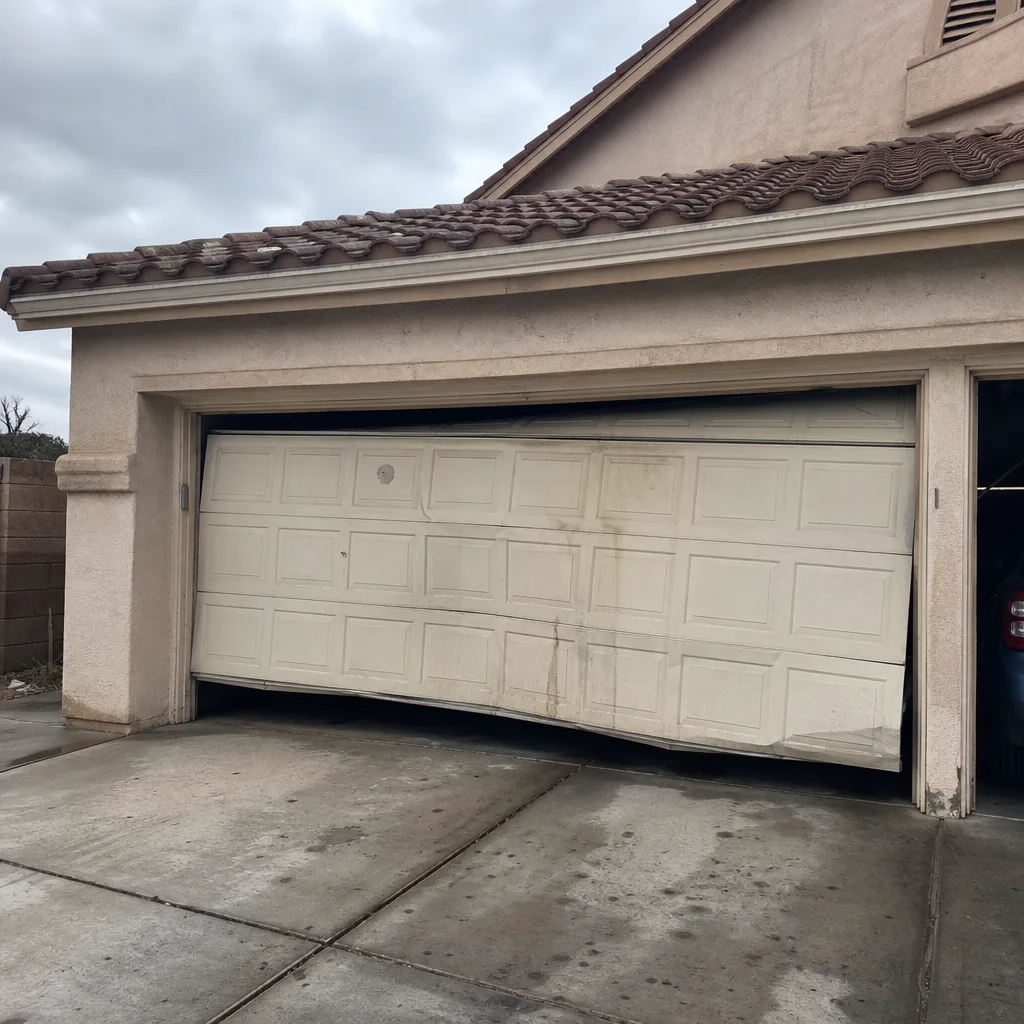 Before
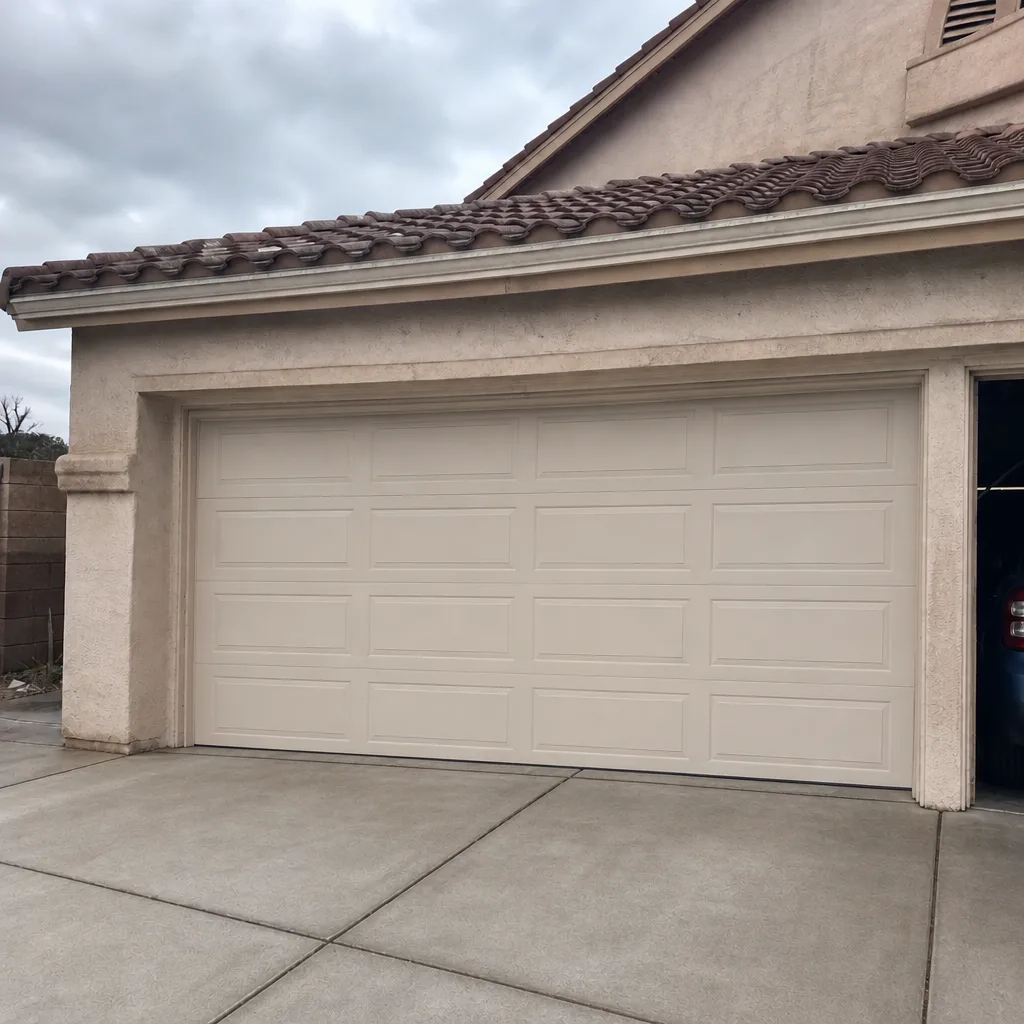 After
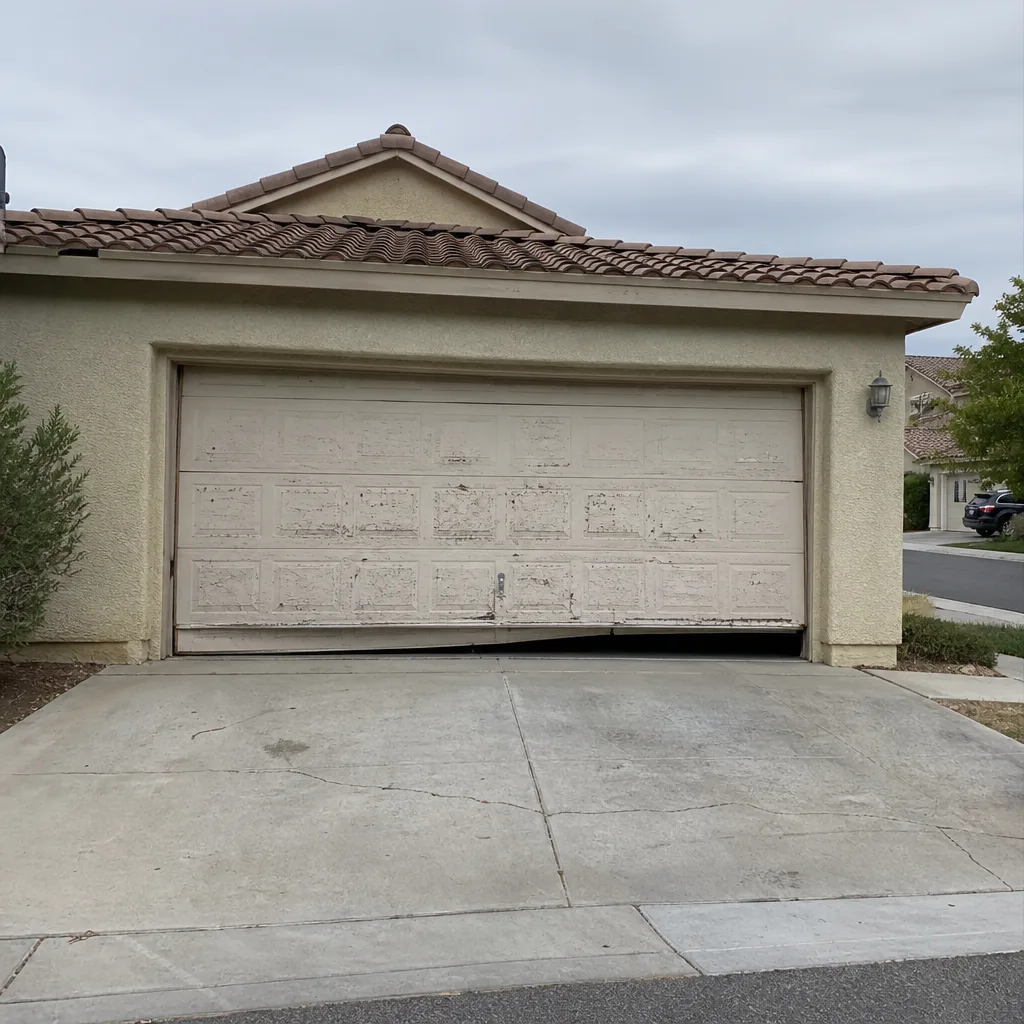 Before
 After
When to Call a Professional
Call a professional for anything involving the torsion spring, the cables, the track alignment, or the electrical work on an opener. Those carry stored energy and shock risk that a homeowner shouldn’t be managing. Call also when the project starts with a measurement question you can’t answer from the opening itself, when you don’t know which jurisdiction your Summerlin address falls under, or when you want a written price on a specific door before you order anything. If another company has already given you a written estimate, bring it. We offer a free second opinion on any competing written estimate, no coupon or code needed, and we’ll tell you what we’d do and why, in writing. Servo Garage Doors Summerlin offers free estimates in Summerlin. Call (844) 797-3654.
Frequently Asked Questions
Most Summerlin installations run $1,400 to $3,800 for an insulated steel single or double door, with non-insulated single doors starting around $900 and custom or oversized doors reaching $4,000 to $7,500 or more. Opener and weatherseal work are quoted separately. The price is written and agreed before any work starts. Call (844) 797-3654 for an exact quote. Estimates are free.
No. Installation is measured, ordered, and scheduled work, not same-day service. A door is built to your opening and the install date follows delivery. What we commit to is a written price and written scope before anything is ordered, and a documented photo record when the job is done. Emergency and repair calls are different. Call (844) 797-3654 to schedule a measure and a written price.
It shouldn’t, which is why we photograph and measure the opening before we quote. If existing conditions change the hardware required, that’s captured in the written scope before you agree to anything. If the scope changes mid-job for a reason we missed, the change is written and approved before the work continues. Call (844) 797-3654 and we’ll walk you through what the scope covers.
Usually yes. Summerlin addresses fall under Clark County or City of Las Vegas jurisdiction depending on the section, and both require a permit for most garage door replacement work. The permit requirement and fee are confirmed and included in the written scope. Call (844) 797-3654 with your address and we’ll confirm which jurisdiction applies.
Aim for R-12 to R-16 on a west-facing garage. That face takes the worst of the afternoon sun from 2 p.m. to 6 p.m., and an uninsulated door turns the garage into a heat source that pushes into adjacent rooms. North- and east-facing garages in Summerlin can usually go lower, around R-6 to R-9. Call (844) 797-3654 to talk through your orientation and get a written spec.
Yes. Our technicians are background-checked and the business operates under a license you can see on the page, not buried in fine print. Our technicians have up to 11 years of experience. Every job includes a documented photo record of what was found and what was done. Call (844) 797-3654 for a free estimate.
The Bottom Line
Installing a garage door in Summerlin is a climate decision before it’s a style decision. Match the material to dry heat and dust, match the R-value to the door’s orientation, measure the rough opening instead of assuming a standard size, and confirm whether Clark County or City of Las Vegas jurisdiction applies. Then get the price in writing, with the scope, before anything is ordered, and expect the install to close with a documented photo record of what was found and what was completed. If you want a free second opinion on a written estimate you already have, bring the paperwork. Call (844) 797-3654 for a free estimate on your Summerlin project.
Written by the team at Servo Garage Doors Summerlin.