
Last updated November 17, 2026
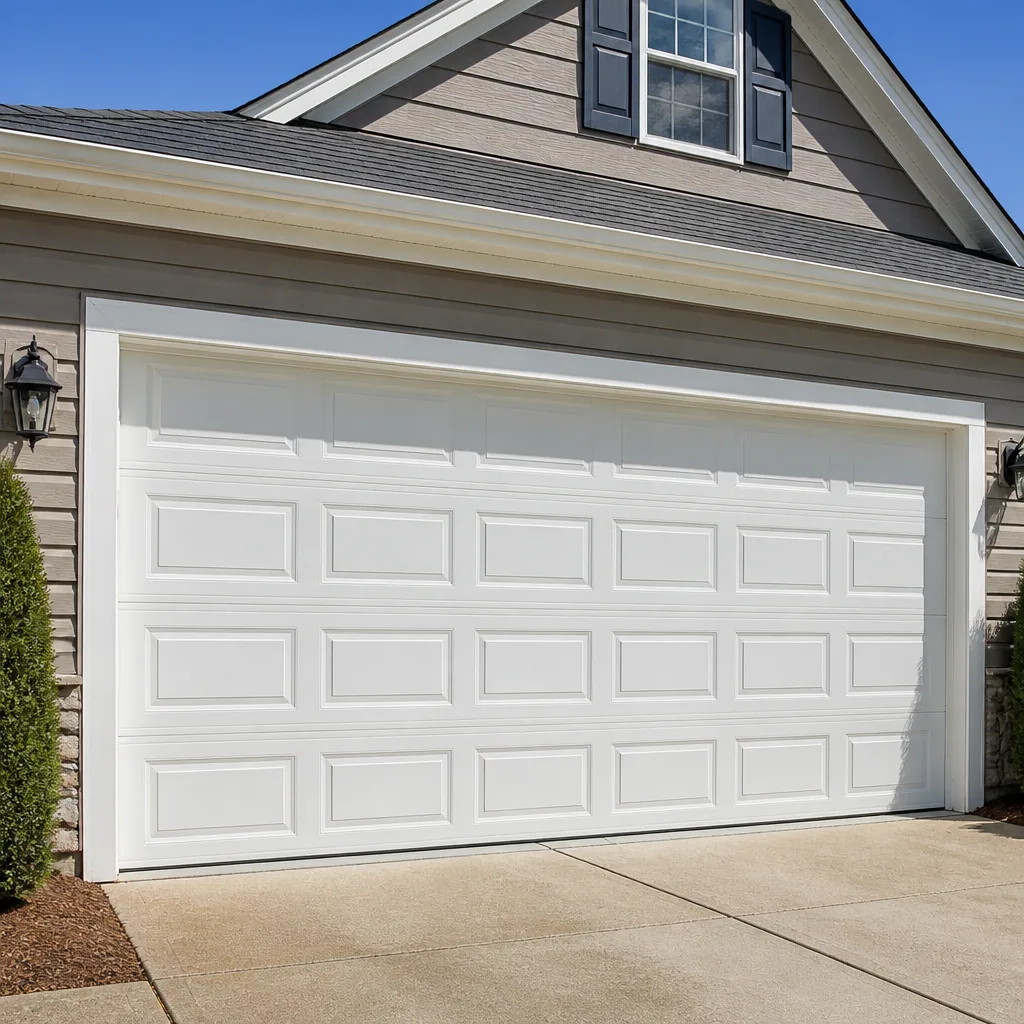 Raised-panel steel
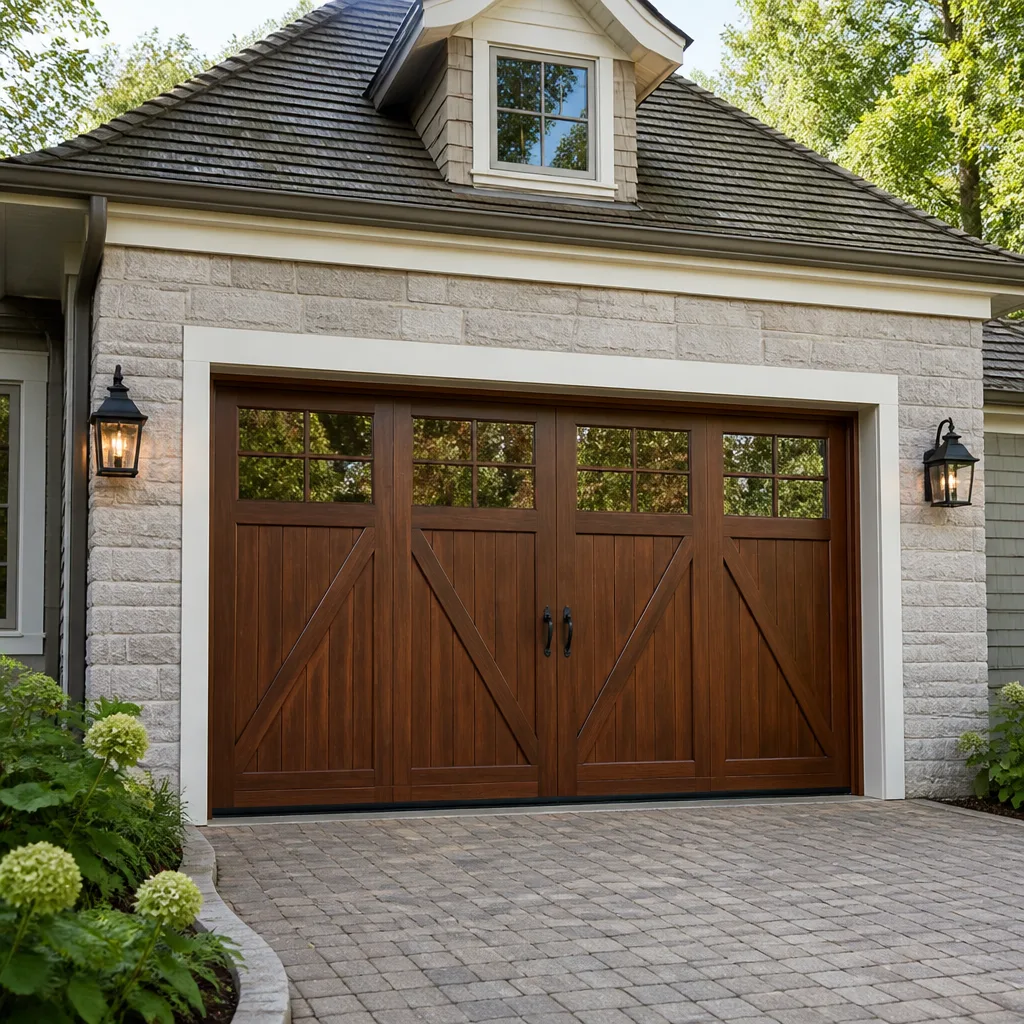 Carriage house
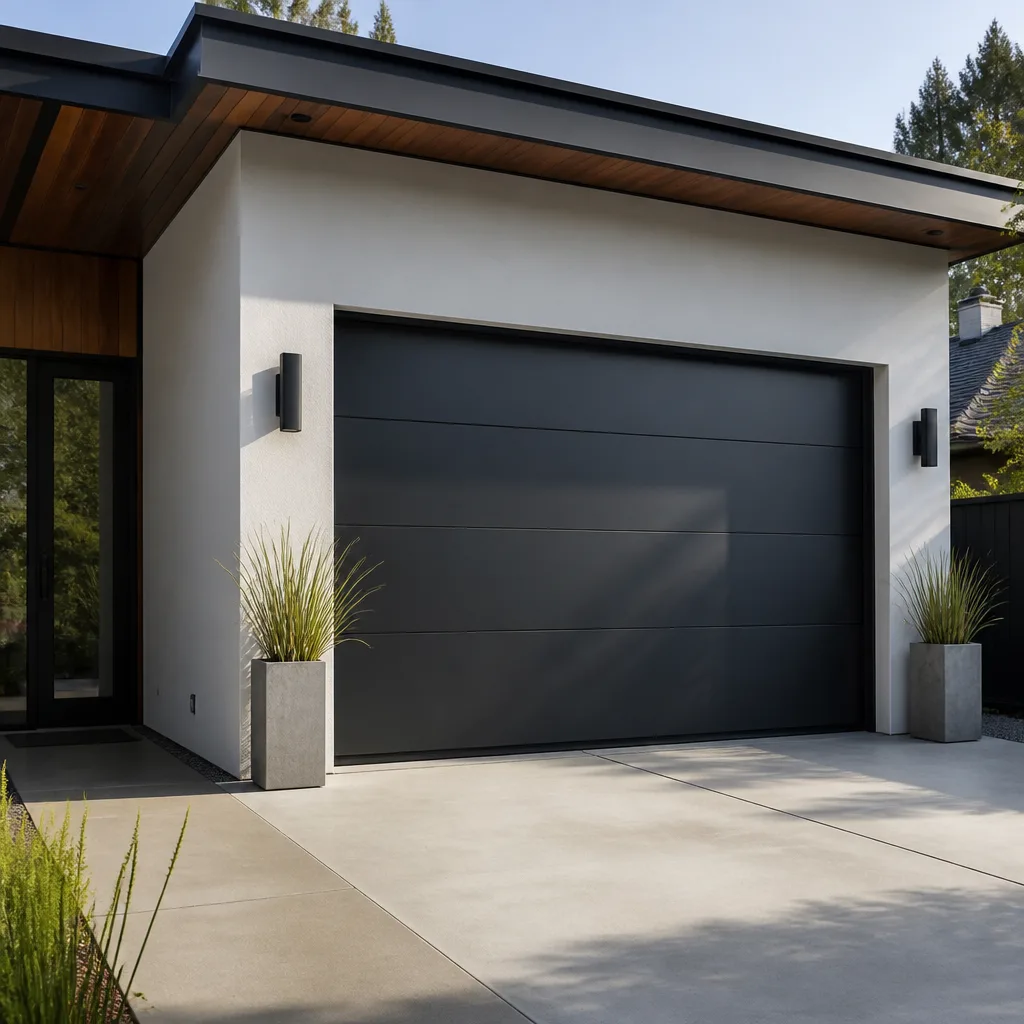 Modern flush
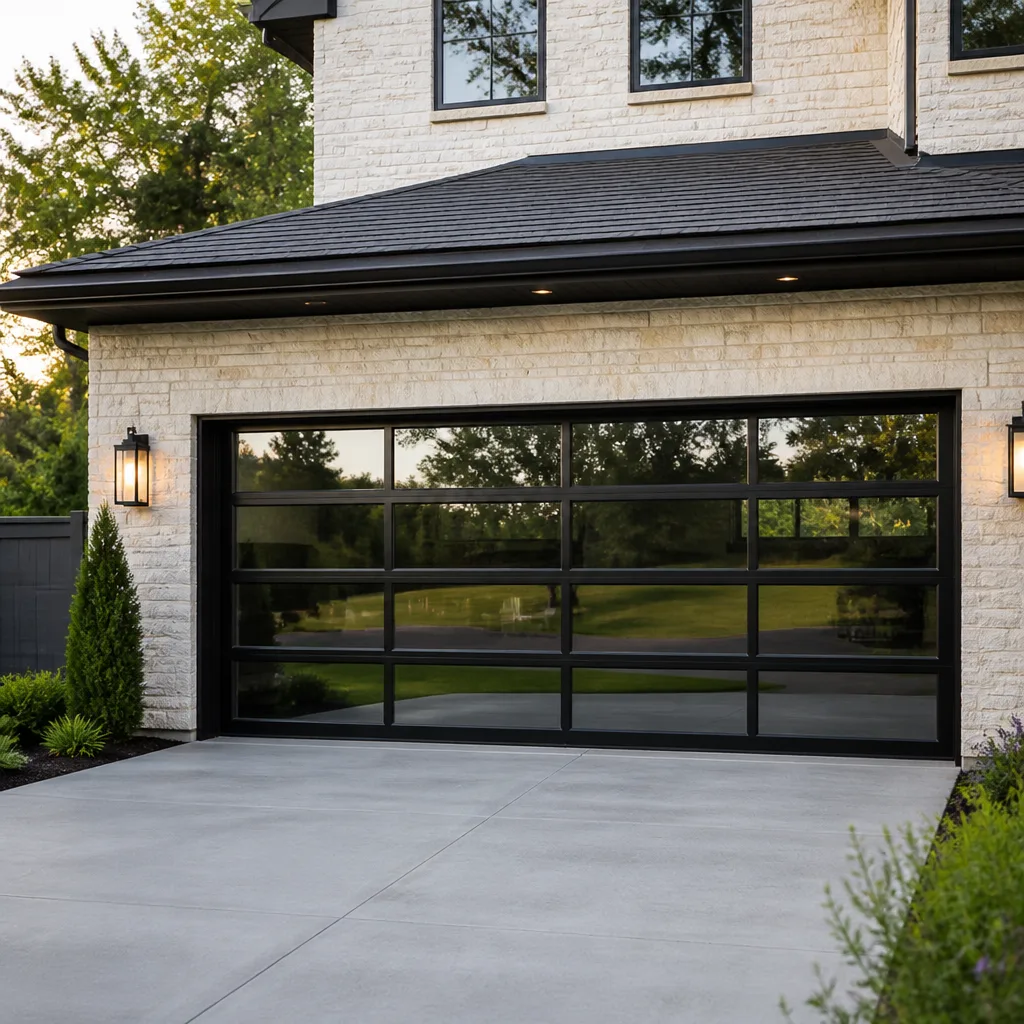 Full-view glass
 LiftMaster openers
 Chamberlain openers
Full 25-point door and opener safety check with every visit - springs, cables, rollers, tracks, and your LiftMaster or Chamberlain opener included
You get a price before we start. It does not change when the pro arrives.
Get your free estimateThe Complete Garage Door Parts Guide for Summerlin Homeowners
A technician tells you the cable drum is worn. You nod. You have no idea what a cable drum is, where it sits, or whether $200 in labor to swap a $15 part is reasonable. That gap in vocabulary is the entire transaction. Most Summerlin homeowners can name the spring and the opener and nothing else, which leaves fourteen or so components that decide whether your door opens safely and nobody to check the quote against. This guide names every major part, says what it does in one plain sentence, and puts a realistic parts cost next to it. Read it once and the next conversation in your garage is a different conversation.
Quick Answer
A residential garage door system has roughly sixteen core components across three groups: the lifting system (torsion spring, winding cone, anchor bracket, cables, cable drums), the travel system (track, rollers, hinges, center bearing plate, bottom bracket), and the operating system (opener, header bracket, trolley carriage, struts, bottom seal). Most parts cost between $4 and $180 at supplier pricing. Labor is usually the larger number on the invoice, which is exactly why knowing the part cost matters before you agree to anything.
Styles & brands we work with
- Raised-panel steel
- Carriage house
- Modern flush
- Full-view glass
- LiftMaster openers
- Chamberlain openers
Table of Contents
- A Labeled Anatomy of Your Garage Door System
- Parts Cost Table: What Each Component Actually Costs
- Why Components Fail Together
- Summerlin Wear Patterns: Heat, UV, and Dust
- A Parts-Identification Test You Can Do Standing in Your Garage
- What Documentation Should Look Like on a Real Repair
- Common Mistakes to Avoid
- When to Call a Professional
 Before
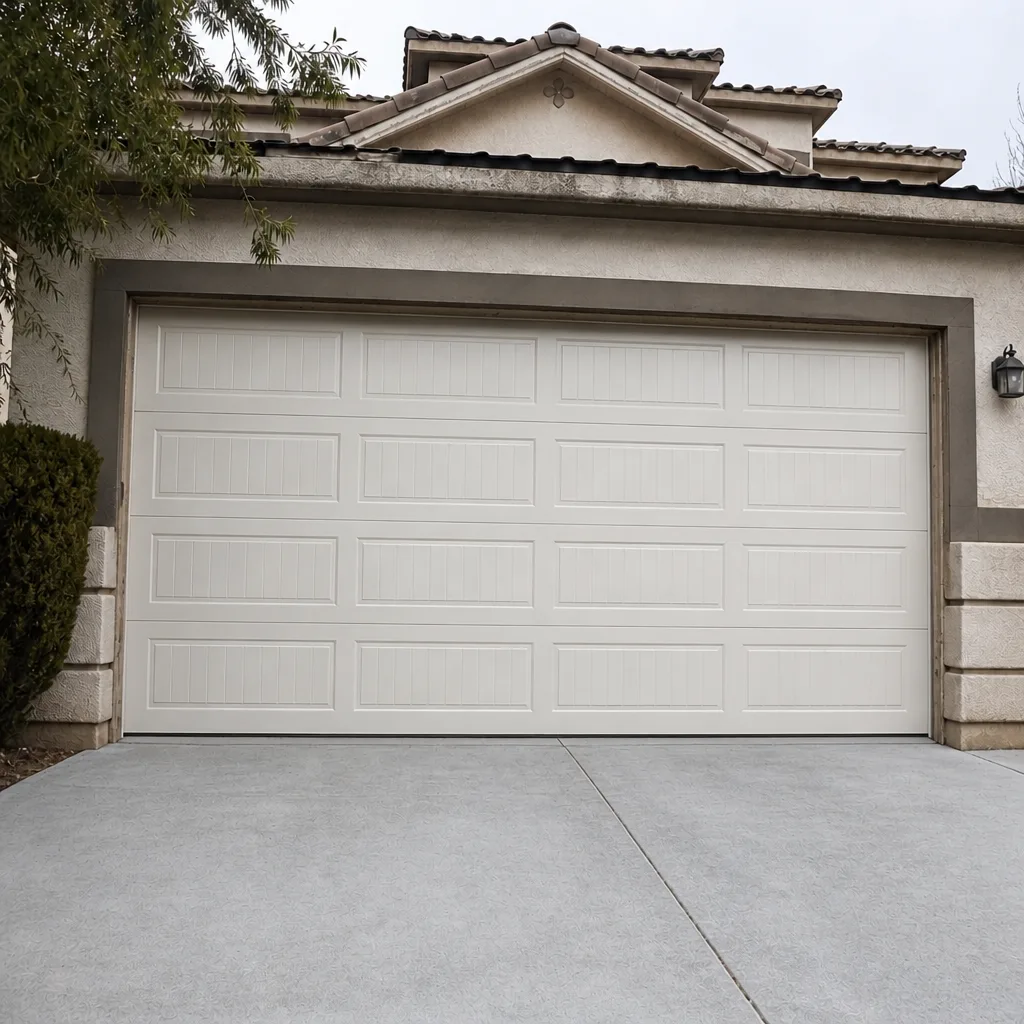 After
A Labeled Anatomy of Your Garage Door System
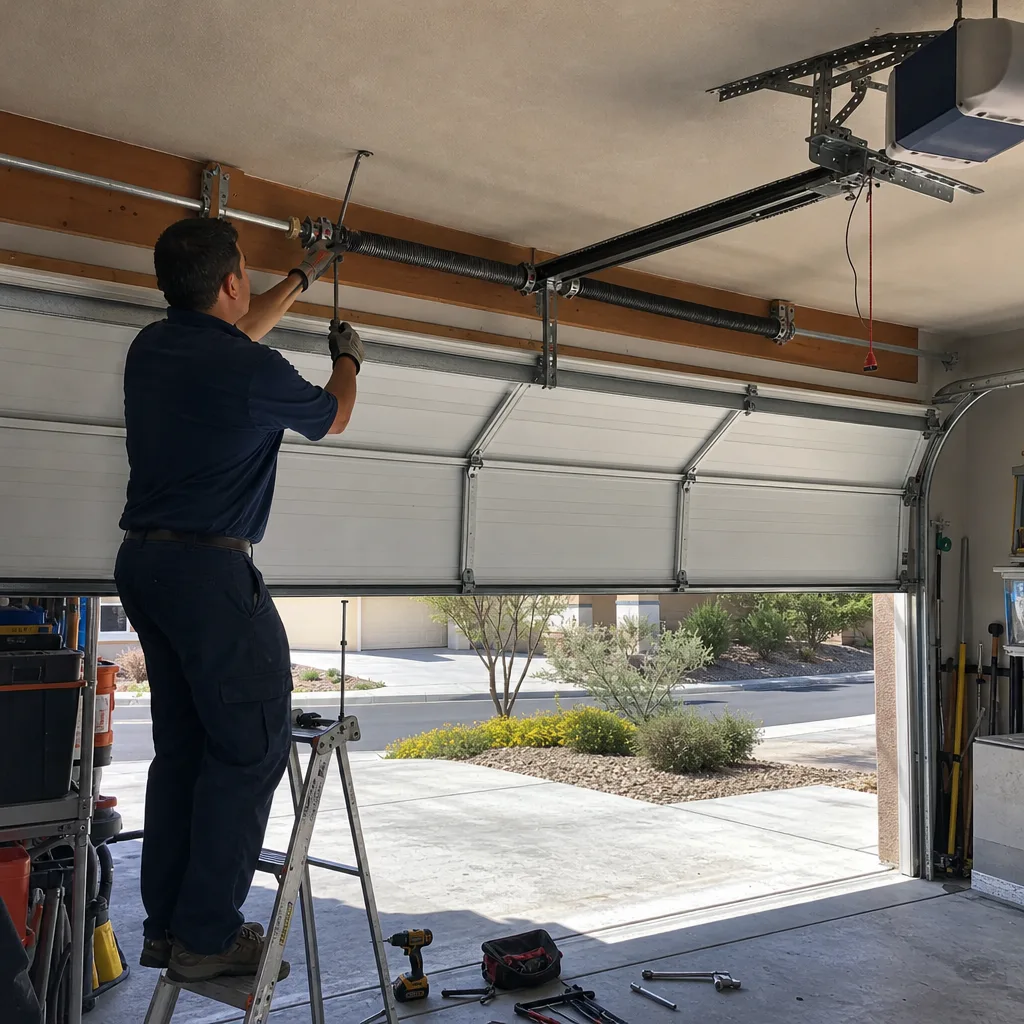
Stand in your garage facing the door. The big horizontal bar above your head is the torsion shaft, and everything hanging off it is the lifting system. Here is what you’re looking at, component by component.
- Torsion spring – The coiled steel spring on the shaft above the door. It stores the energy that counterbalances the door’s weight so the opener lifts roughly ten pounds instead of two hundred.
- Winding cone – The cone-shaped fitting at one end of the spring where tension is set. It has set screws that lock the spring to the shaft once the correct number of turns is applied.
- Spring anchor bracket – The heavy steel plate bolted to the wall above the door that holds the stationary end of the spring. All the spring’s stored force pushes against this bracket.
- Center bearing plate – A smaller bracket at the middle of the shaft that keeps the torsion tube spinning straight. A worn bearing here often shows up as a grinding sound at mid-travel.
- Cable drum – The grooved aluminum or steel spool at each end of the shaft that the lift cable winds onto. Its groove pattern keeps the cable tracking evenly as the door moves.
- Lift cables – The braided steel cables that run from the bottom bracket up to the drum. They’re the physical link between the door and the spring, and they carry the load if a spring lets go.
- Bottom bracket – The steel plate at the lower corner of the door where the cable attaches. It’s under constant tension and is one of the parts that most deserves your respect.
- Vertical track – The straight steel channel on each side of the door opening that guides the door as it rises.
- Horizontal track – The curved-then-flat channel that carries the door back into the ceiling of the garage once it clears the header.
- Rollers – The small wheels (nylon or steel) mounted on stems at each hinge that ride inside the track.
- Hinges – The pivot points between door panels, numbered 1 through 4 from the bottom. Hinge 1 is the one that takes the most load.
- Struts – Horizontal steel reinforcement bars bolted across the door’s back face. They resist the door’s tendency to bow in the middle on wider openings.
- Header bracket – The steel bracket bolted to the wall or ceiling above the door that anchors the opener’s rail.
- Trolley carriage – The sliding shuttle on the opener rail that pulls the door via the arm and j-bar. The release cord you pull in a power outage disconnects this carriage from the chain or belt.
That’s the full working set. If a technician points at any of these and you can trace what it touches and what touches it, you can evaluate the quote. That’s the whole point of having the vocabulary. Our own technicians work from a Servo Garage Doors Summerlin home standard that requires photographing the failed component before quoting a replacement, which is only useful to you if you know what you’re looking at in the photo.
Parts Cost Table: What Each Component Actually Costs
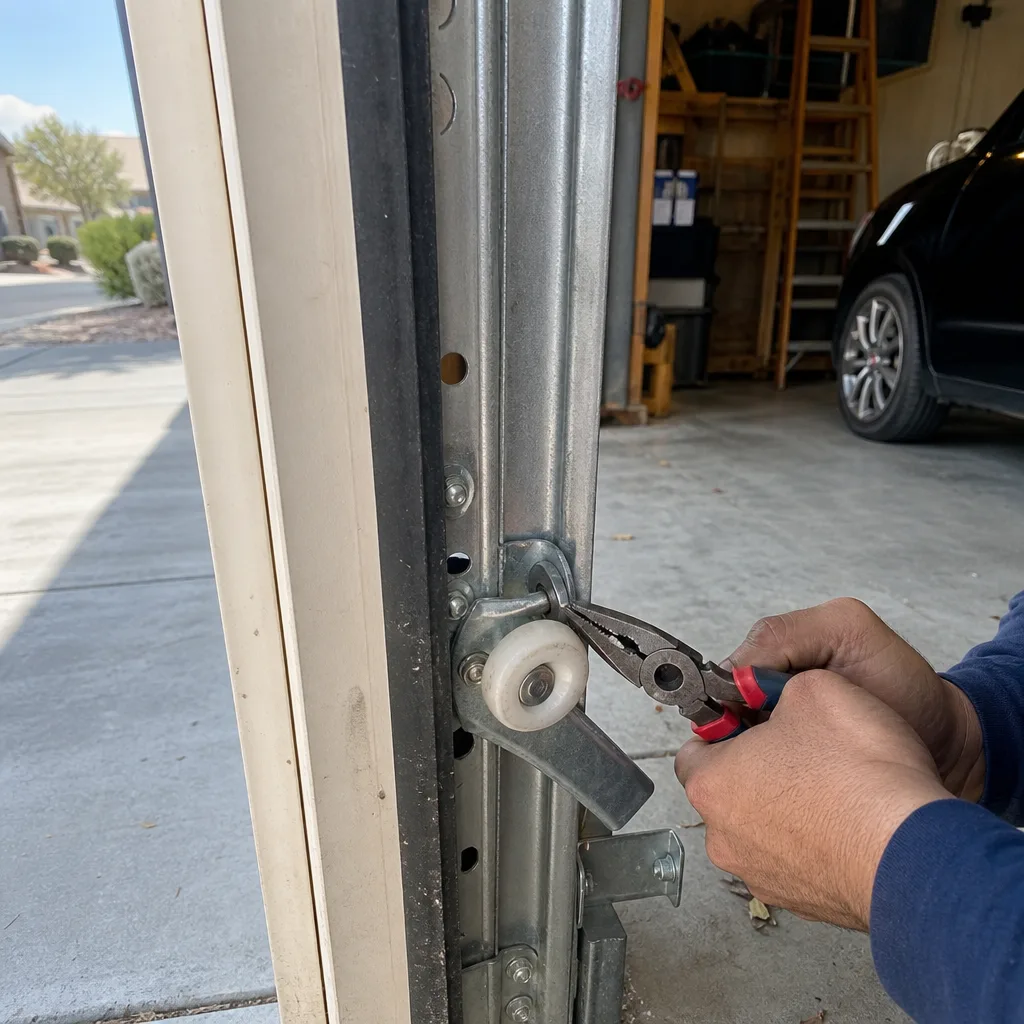
The parts ranges below reflect current supplier pricing, not retail markup. A technician’s invoice will be higher than these numbers because it includes parts sourcing, labor, and the service call itself. Use them to sanity-check a quote, not to argue that a part costs $14 and nothing more should be charged.
- Torsion spring: $35 to $90 per spring, depending on wire gauge and cycle rating. Springs are generally replaced in pairs.
- Winding cone: $8 to $18 each.
- Spring anchor bracket: $15 to $40.
- Center bearing plate: $10 to $25.
- Cable drum: $12 to $25 each.
- Lift cable (set): $25 to $50 per pair.
- Bottom bracket: $10 to $20 each.
- Vertical track section: $40 to $90 per side.
- Horizontal track section: $50 to $110 per side.
- Nylon rollers (set of 10): $30 to $70.
- Steel rollers (set of 10): $20 to $40.
- Hinges (set): $25 to $60 for a full numbered set.
- Strut: $30 to $60 per bar, sized to the door width.
- Header bracket: $12 to $25.
- Trolley carriage: $25 to $55.
- Bottom seal and weather stripping (full kit): $40 to $90.
Notice what these numbers tell you. The parts are rarely the expensive part of a repair. The labor, the diagnostic time, and the drive are. That’s not a reason to distrust a labor charge; it’s a reason to ask what that labor covers. A written scope that names the part, the number of turns or adjustments, and the verification step is what makes a quote readable. It’s also why a “call for a quote” arrangement should put you on guard. Our own written scope and written price come before work starts, which is Clause 1 of The Haven Standard, and it exists because the alternative leaves you guessing.
Why Components Fail Together
Garage door parts don’t fail in isolation. They fail in groups, and the group tells you what to inspect next. A bottom bracket that has worn its cable attachment point will eventually snap a cable; a snapped cable will unevenly load the cable drum and groove it; a grooved drum will prematurely fray the new cable. Replace only the cable and you’ve restarted the clock on the same failure with a fresh bill attached.
Here’s the inspection pattern a competent visit follows when a lift cable breaks:
- Photograph the broken cable end and its attachment at the bottom bracket.
- Inspect the cable drum for grooves, cracks, and uneven wind.
- Check the bottom bracket for wallowed holes and worn tangs.
- Inspect the opposite cable for matching wear, since both carry the same load.
- Examine the spring coils for gaps, which indicate fatigue or imminent failure.
- Confirm the door’s balance after reassembly, then test the opener’s safety reverse.
If a technician quotes a cable replacement without addressing the drum and bracket, you have your answer. And if a quote shows only the cable, ask directly whether the drum was inspected. That’s not a hostile question. It’s the question a professional expects from a homeowner who read the parts guide. For a full breakdown of repair pricing on this part of the work, Garage Door Repair in Summerlin covers how these jobs are scoped and what a fair range looks like.
Summerlin Wear Patterns: Heat, UV, and Dust
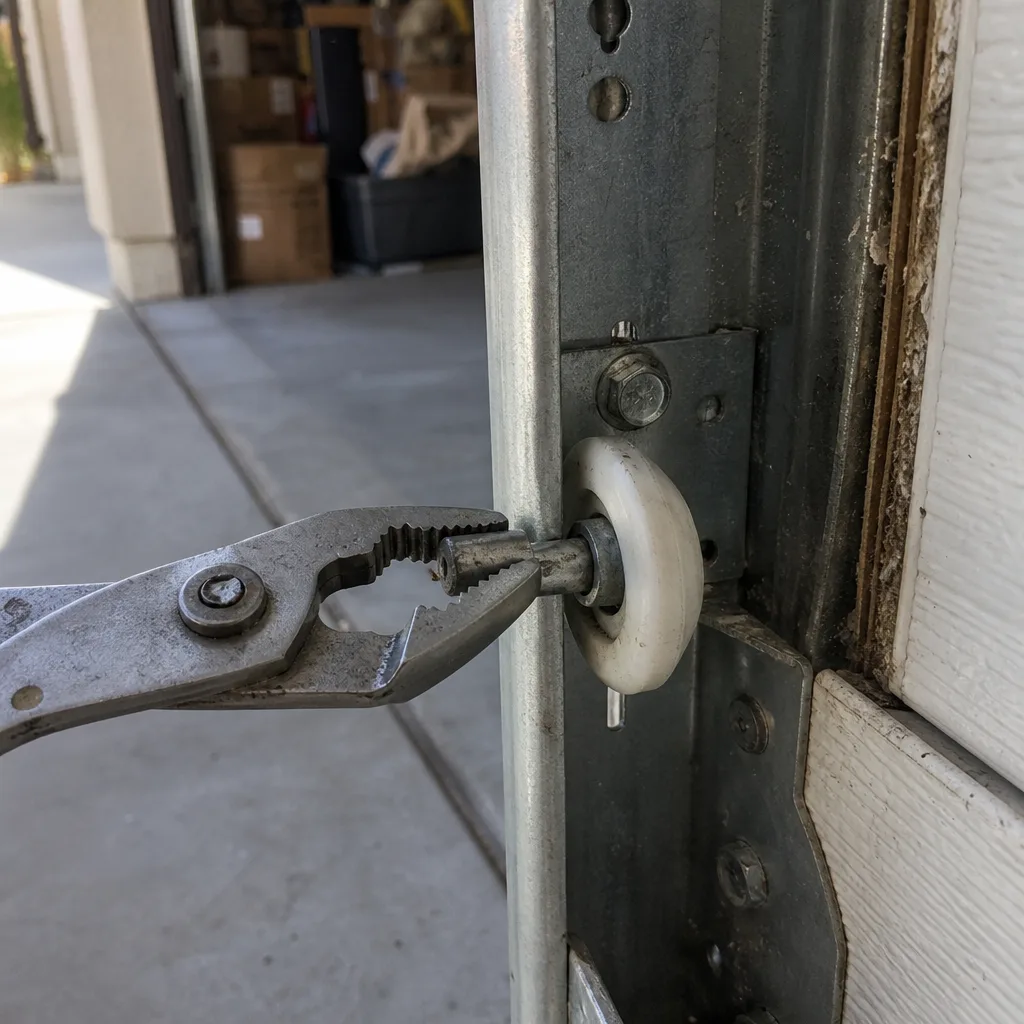
Summerlin sits high enough and dry enough that garage doors here age differently than they do in a coastal climate. We see three dominant wear patterns, and each has a specific culprit.
UV degradation on the bottom seal. The Desert Vista and The Ridges areas face west and south with very little tree cover, meaning the bottom seal and perimeter weather stripping take direct sun for a decade. Rubber hardens, cracks, and loses its seal in a pattern that’s visible from the driveway as a ragged edge. Once it hardens, you’ll notice fine dust drawn in through the gap and into the garage interior.
Thermal cycling in nylon rollers. Summerlin can swing forty to fifty degrees Fahrenheit between a cold winter morning and an afternoon high, and nylon rollers respond by expanding and contracting daily. Over a few thousand cycles the nylon cracks, and you’ll hear the fracture as a rhythmic click or a hard thump at the same door height every time. Steel rollers don’t crack this way, but they’re noisier. Our technicians start by asking whether the sound changes with the season, because that answer narrows the roller diagnosis faster than a visual inspection alone.
Dust intrusion in spring coils. The dust that blows off the open lots and washes around the hillside subdivisions settles into the tight spaces of a torsion spring, where it works as an abrasive between the coils. Accelerated metal fatigue in a spring with visible dirt grit is a pattern we see regularly in Summerlin. A spring that would last longer in a damp climate can fail sooner here, and a clean, lubricated spring lasts longer than one ignored. Lubricating the coils periodically with a garage-door-specific spray is one of the few homeowner tasks worth doing yourself, because it’s harmless and it slows a real wear mechanism.
Belt-driven openers on Amarr and Wayne Dalton doors come up often here too, and the belt vs. chain choice affects how much that thermal noise reaches the room above the garage. If your opener is the part you’re trying to diagnose, Garage Door Opener Repair & Installation in Summerlin goes into the brand-specific logic board and travel-limit details that matter on the Nevada brands we see most.
A Parts-Identification Test You Can Do Standing in Your Garage
This is the same visual check a technician runs, minus the tools. You can confirm most of it with a flashlight and a few minutes.
- Look up at the torsion shaft. You should see the coiled spring, the two cones at its ends, the anchor bracket at the wall, and the center bearing plate mid-shaft. If the spring has a visible gap or a separated coil, call a professional before touching anything.
- Trace the cables from the bottom corners. Follow each cable up from the bottom bracket, along the vertical track, over the horizontal track, to the drum. Where it wraps the drum, check for a neatly grooved wind pattern.
- Inspect each roller. Nylon rollers should look smooth and round with no cracks or flat spots. Steel rollers should spin freely with no wobble. Push each one gently; a roller that moves too easily or not at all is a problem.
- Check the hinges. Hinge 1 at the bottom carries the most load. Look for a bent or loose hinge plate and a securely seated roller stem.
- Run your hand along the bottom seal. A hard, cracked strip means UV degradation. A seal that leaves daylight visible under the closed door means it’s not doing its job against dust.
- Examine the struts. A strut that’s bowed or missing bolts is a sign the door needs reinforcement before another repair is attempted.
- Open and close once. A door that balances at mid-travel and reverses on contact with a two-by-four is doing what it should. One that moves heavily or jumps at a specific height is telling you something specific – usually a spring or a roller.
If the door won’t balance, or you hear anything unusual when it moves, stop and look up. The torsion spring stores enough energy to cause serious injury, and a technician with proper winding bars is the only safe answer. We do not recommend adjusting, winding, or releasing a torsion spring yourself under any circumstances, no matter what a video shows.
What Documentation Should Look Like on a Real Repair
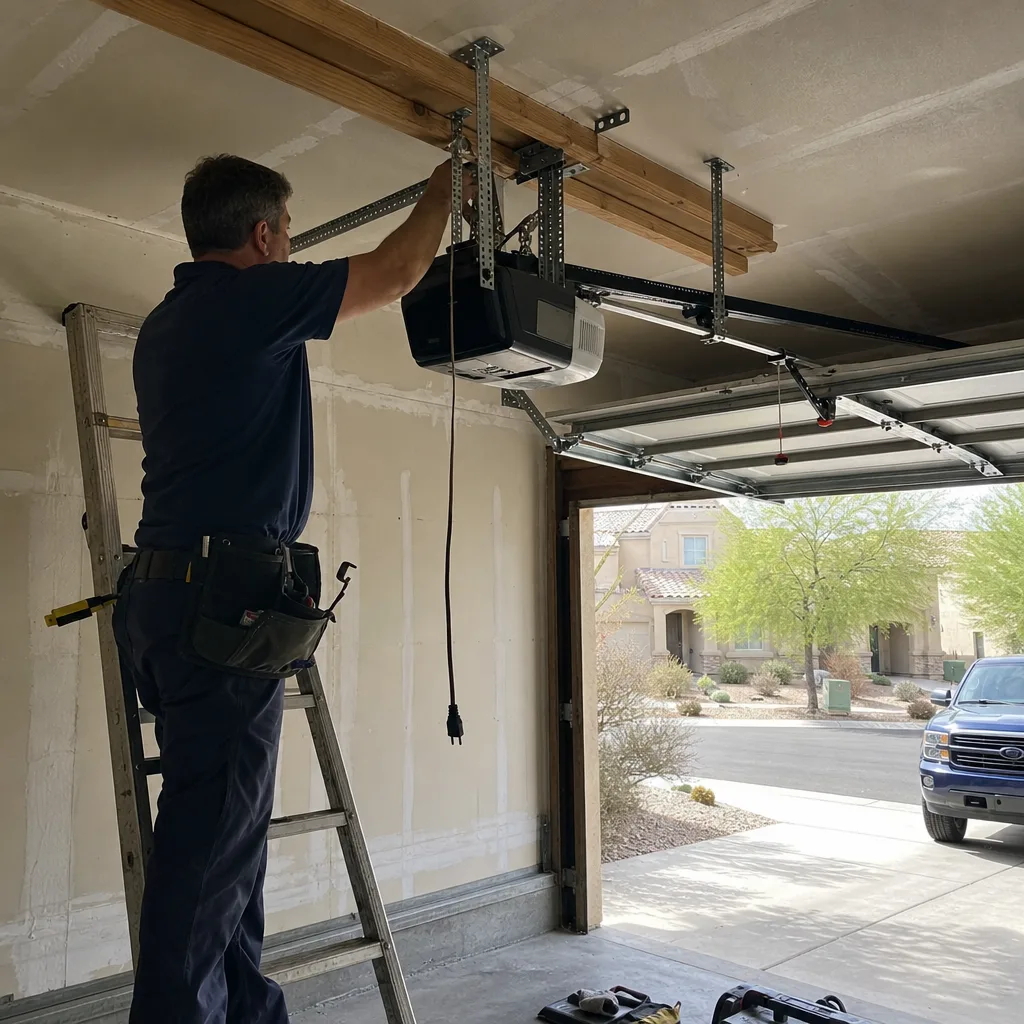
Every repair has an invoice. A well-documented repair has a photo record showing what the technician found before he started and what was done before he left. The difference matters when a part fails again, when you sell the house, or when a homeowner isn’t sure a part was actually replaced.
Here’s what the record from a properly documented visit in Summerlin looks like:
- A photograph of the failed component in place, before removal.
- The part number and cycle rating, written on the scope.
- A flat written price and written scope, agreed before work began.
- A photograph of the new part installed, showing correct seating and tension.
- The technician’s name and license number on the page, not in fine print.
That list is Clause 4 of The Haven Standard, and it’s why we photograph before quoting. A company that hands you a written estimate after work starts, or refuses to put the part cost in writing, is telling you something about the second half of the transaction. If you’re comparing written estimates from another company, we offer a free second opinion on any written estimate you bring in. The paperwork is the point. It’s what you own at the end of the job, and it’s what holds the work to account if something goes sideways. If the project turns out bigger than a repair, Garage Door Installation in Summerlin covers the full replacement options and how those jobs are scheduled and measured in advance.
Common Mistakes to Avoid
- Replacing only the cable when the drum is also worn. The new cable will fray against the grooved drum within months, and you’ll pay for the same repair twice. Always ask whether the drum was inspected and photographed.
- Accepting a quote with no part numbers. A written price without a specific part and cycle rating is a verbal estimate in a different font. Ours are always written, per the standard we hold ourselves to, and so should any quote you accept.
- Ignoring a cracked nylon roller in Summerlin’s climate. Thermal cycling cracks nylon rollers and the crack tightens until the roller binds in the track. A binding roller can twist the door frame before it fails completely.
- Winding your own torsion spring. Do not attempt this. The stored energy can kill. Call a licensed technician for anything that involves the spring, the winding cone, or the cable under tension.
- Skipping the bottom seal replacement. In Summerlin’s dust and sun, a hardened seal lets grit inside and accelerates wear on everything behind it. It’s a $40 to $90 part that protects the rest of the system.
- Believing a same-day-installation promise. Installation and replacement are measured, ordered, and scheduled jobs. A company promising same-day installation of a new door is promising something it probably can’t deliver.
- Using the lowest quote as the decision point. A quote that’s hundreds below others usually means a cheaper-grade part or a missing inspection. Ask what the part cycle rating is and whether the drum and bracket will be checked.
When to Call a Professional
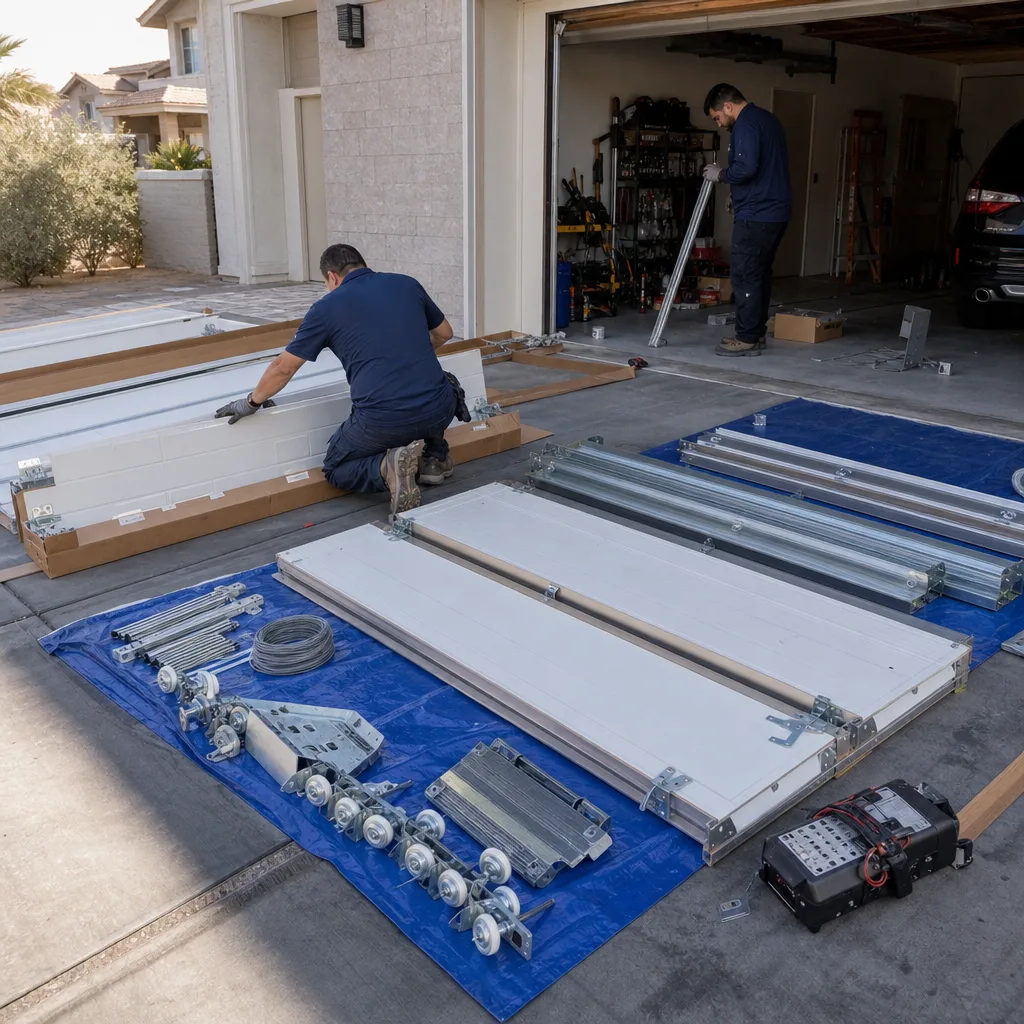
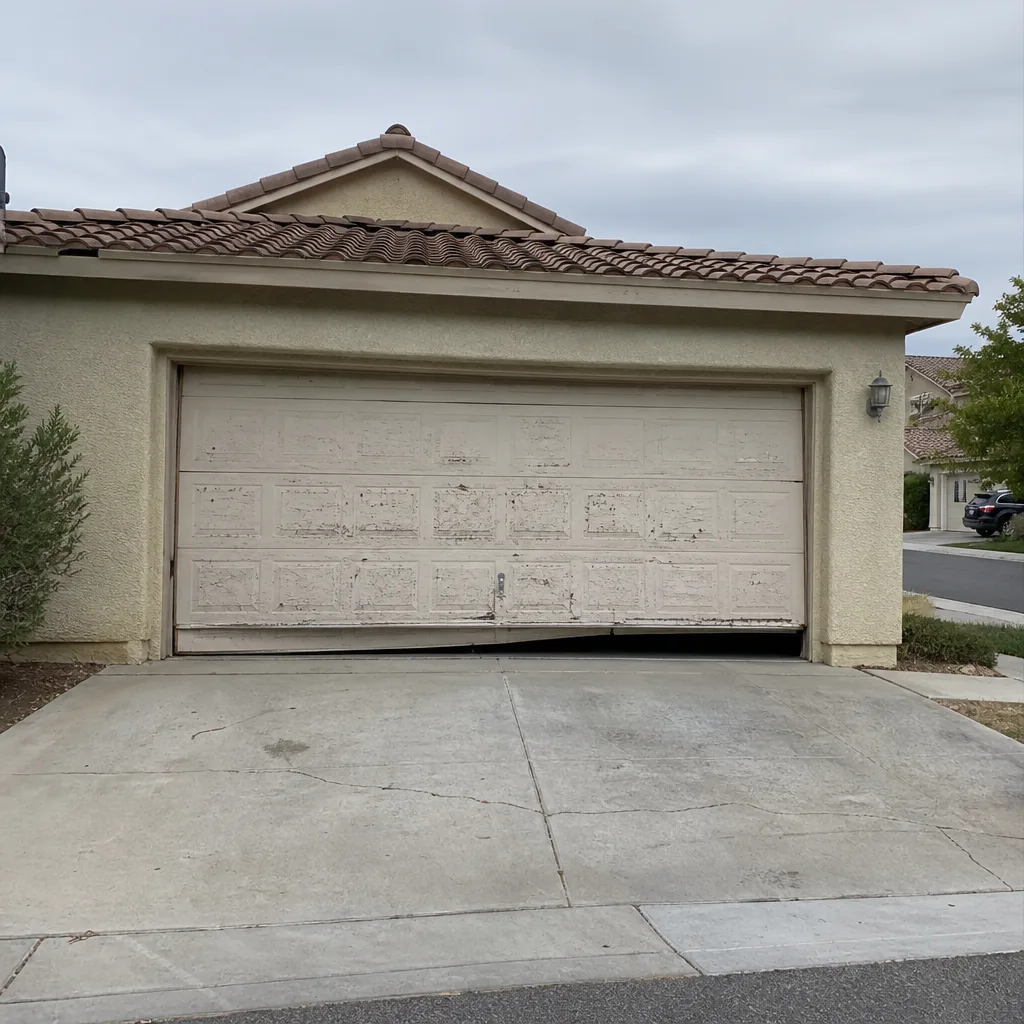
Call a licensed professional when any of the following is true: you hear a loud bang from the garage and the door won’t open; the door is crooked on one side or off its track; a cable is visibly frayed, kinked, or snapped; a spring has a visible gap; the door reverses inconsistently or the safety sensors won’t stay aligned; the opener runs but the door doesn’t move; or the door sits more than a few inches from balance at mid-travel. Any of those can turn into an injury or a bigger repair if it’s left alone. Servo Garage Doors Summerlin offers free estimates in Summerlin. Our technicians are licensed and insured, and we answer the phone 24/7, including emergency calls. Call (844) 797-3654 for a written price before any work starts.
See the difference
BeforeAfter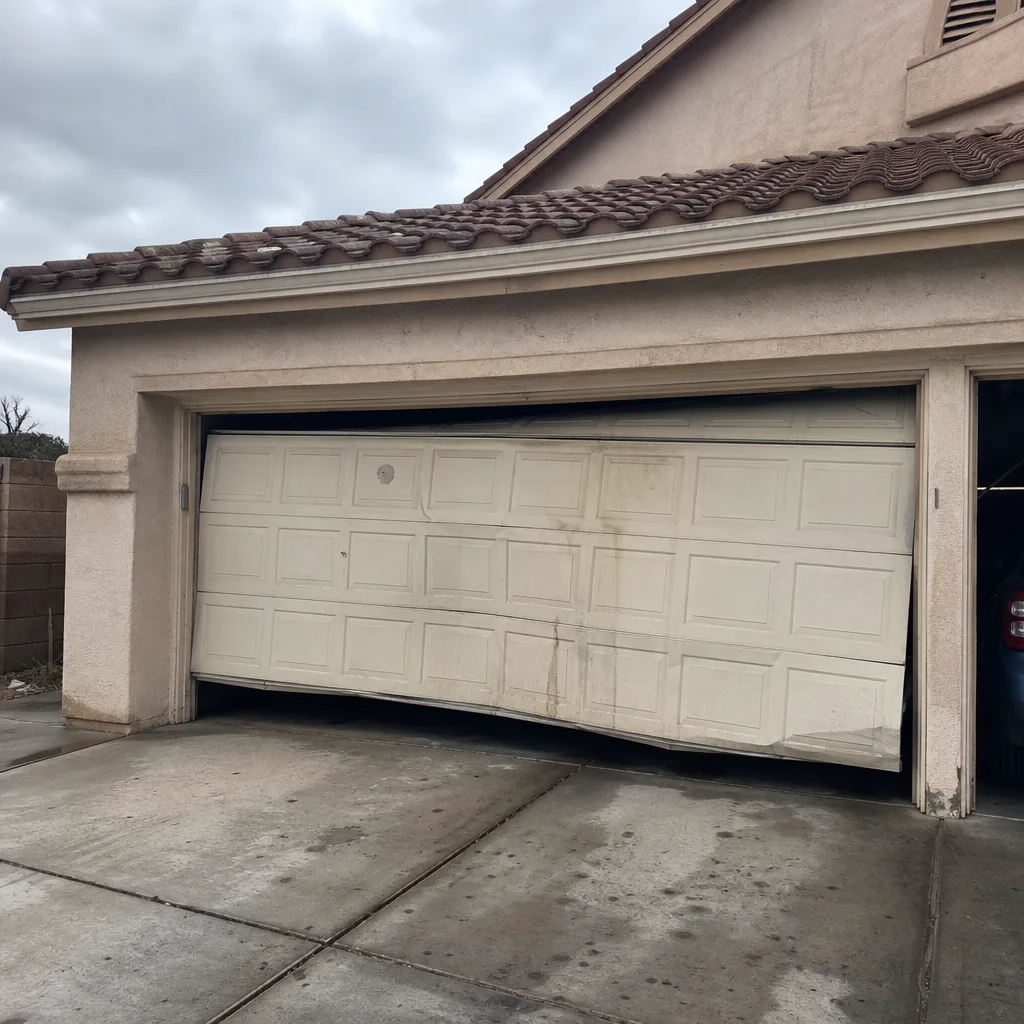 Before
 After
 Before
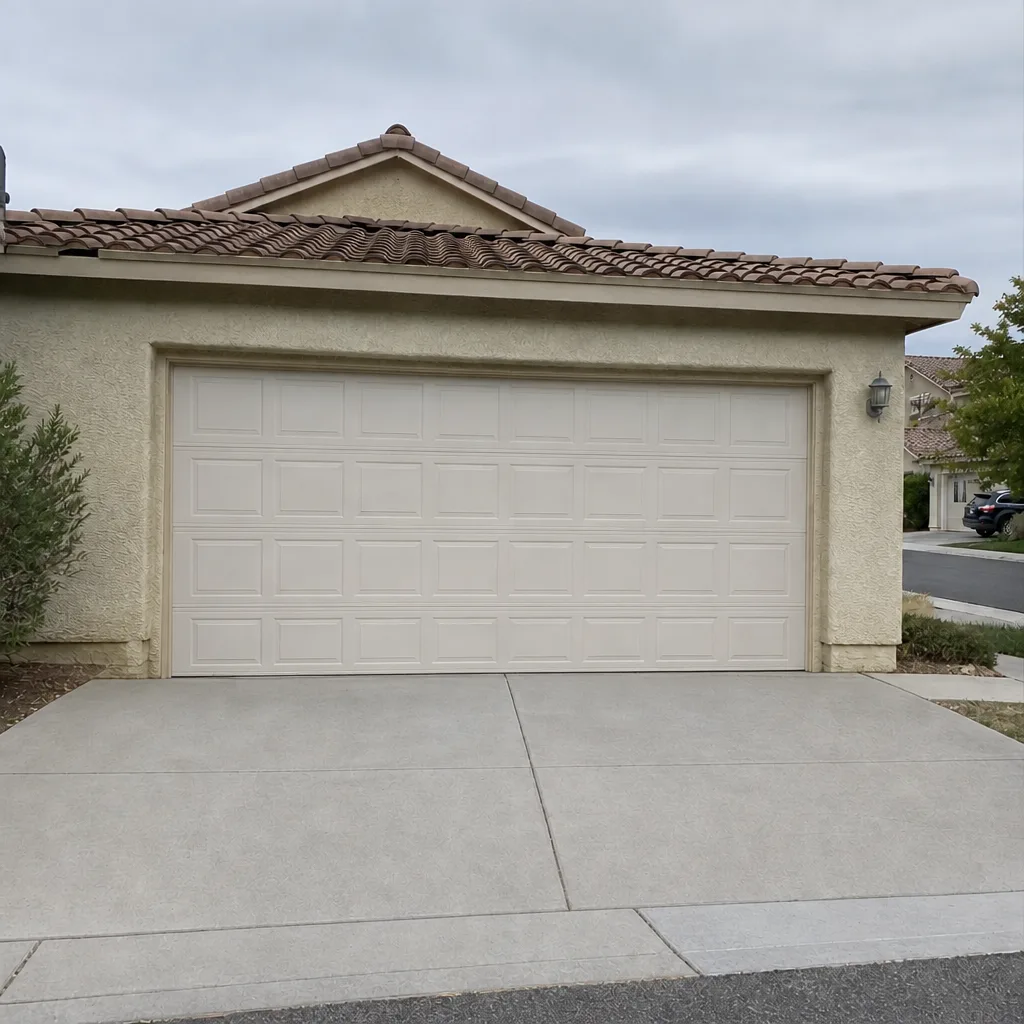 After
Frequently Asked Questions
A residential garage door system has three groups: the lifting system (torsion spring, winding cone, anchor bracket, cables, cable drums), the travel system (track, rollers, hinges, center bearing plate, bottom bracket), and the operating system (opener, header bracket, trolley carriage, struts, bottom seal). Sixteen components is a reasonable count for most standard doors. Knowing the name and location of each is the difference between accepting a quote and evaluating one.
The cable drum itself runs $12 to $25. The labor to replace it, plus the cable and bracket inspection that should accompany the job, typically lands the total repair in the low hundreds. The exact number depends on your door height and whether the opposite side needs work too. Call (844) 797-3654 for an exact written price, and we’ll photograph the drum before quoting.
Summerlin’s forty- to fifty-degree daily temperature swings expand and contract nylon rollers thousands of times over their life. That thermal cycling cracks the nylon, and a cracked roller binds in the track. The sound usually appears at the same door height every time. Steel rollers don’t crack this way but they’re noisier. We look at how the sound changes with the season before deciding which replacement is right for you.
Yes. A worn drum’s grooves fray the cable’s braid, and the new cable fails within months. That’s why a competent cable repair includes a drum and bottom-bracket inspection. If a written quote shows only the cable, ask whether those parts were checked. We document the inspection with photos before any work begins.
Not at our end. A flat written price and written scope are agreed before any work starts, which is Clause 1 of The Haven Standard. If a technician finds a second issue, you’ll see it in writing with a price before any of it proceeds. No work happens on a price you haven’t agreed to. Call (844) 797-3654 for a written estimate, and bring any competing written estimate for a free second opinion.
Yes. Our technicians are licensed, insured, and background-checked, and the license number appears on the page, not buried in fine print. Every job ends with a documented photo record of what was found and what was done, delivered to you before we leave. If a repair isn’t right, our 365-Day Done Right Promise means we come back and make it right.
The Bottom Line
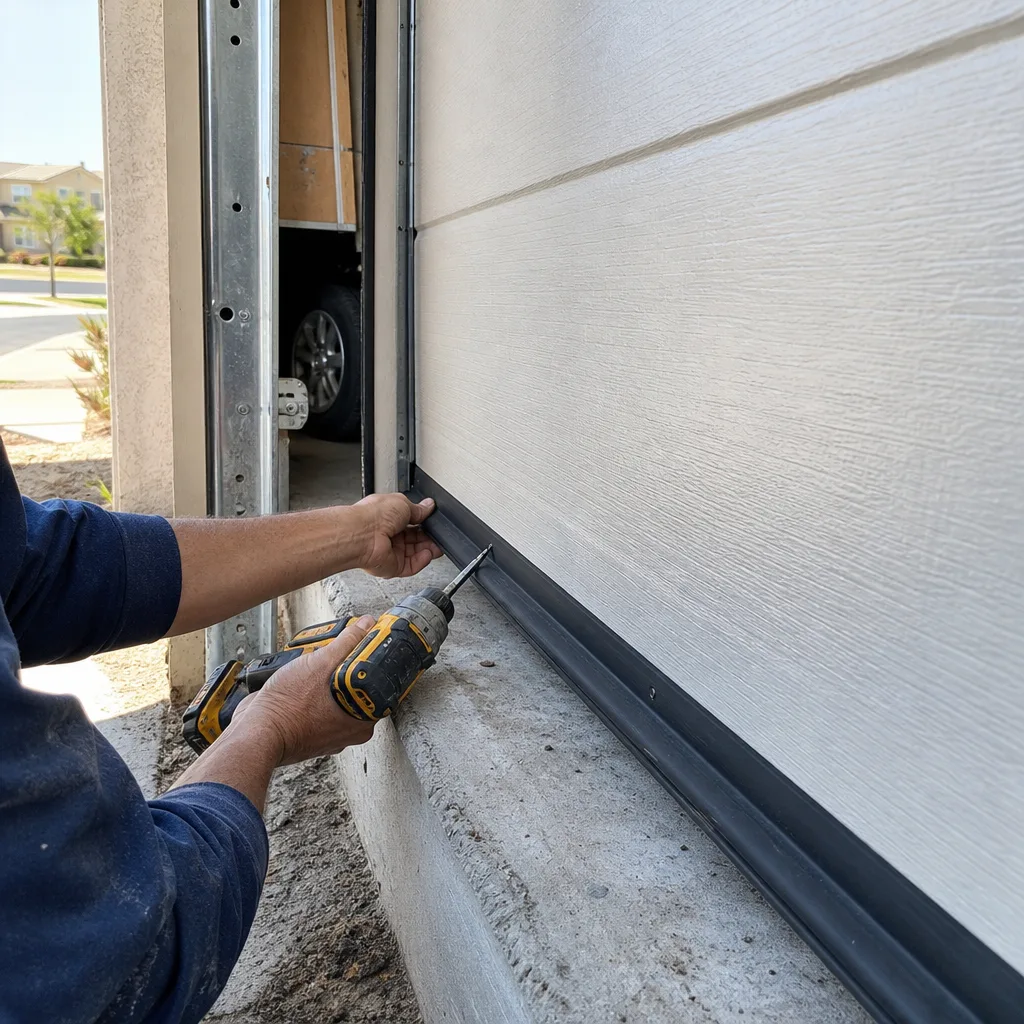
Sixteen parts, and most of them cost less than a good dinner. The labor, the diagnostic skill, and the documentation are what you’re really paying for, and the way to evaluate those is to know the parts by name. A cable drum, a bottom bracket, a cracked nylon roller in Summerlin’s thermal swing, a UV-hardened bottom seal: each has a realistic cost and a defined job. When a technician names the part, you should be able to trace it and confirm it. That’s the whole reason this guide exists. The vocabulary is the protection. Use it, ask for the photograph, read the written scope, and keep the record.
If the door needs a look, we answer the phone 24/7. Call (844) 797-3654 for a free estimate, a flat written price before any work starts, and a documented record when we leave. Every visit includes a photo record and a free second opinion on any written estimate you’ve already received.
Written by the team at Servo Garage Doors Summerlin.