
Last updated November 17, 2026
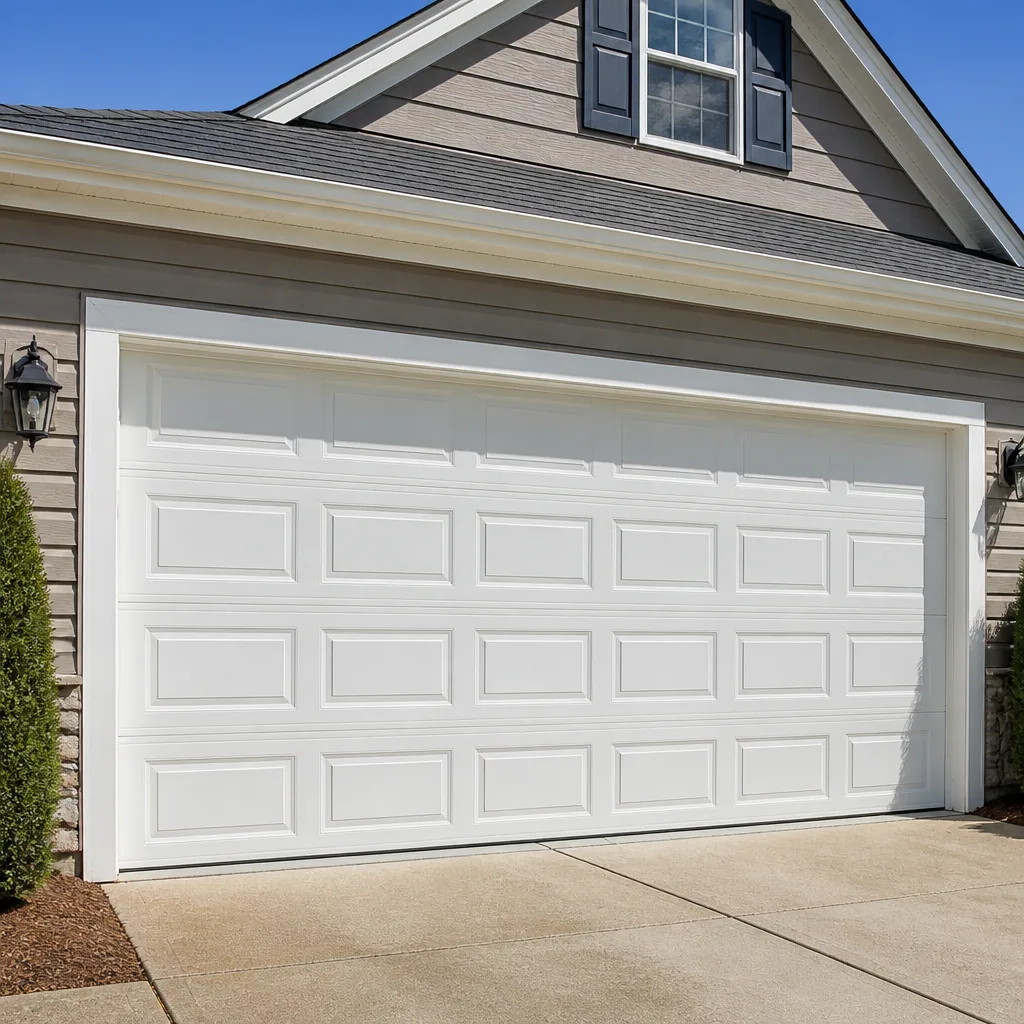 Raised-panel steel
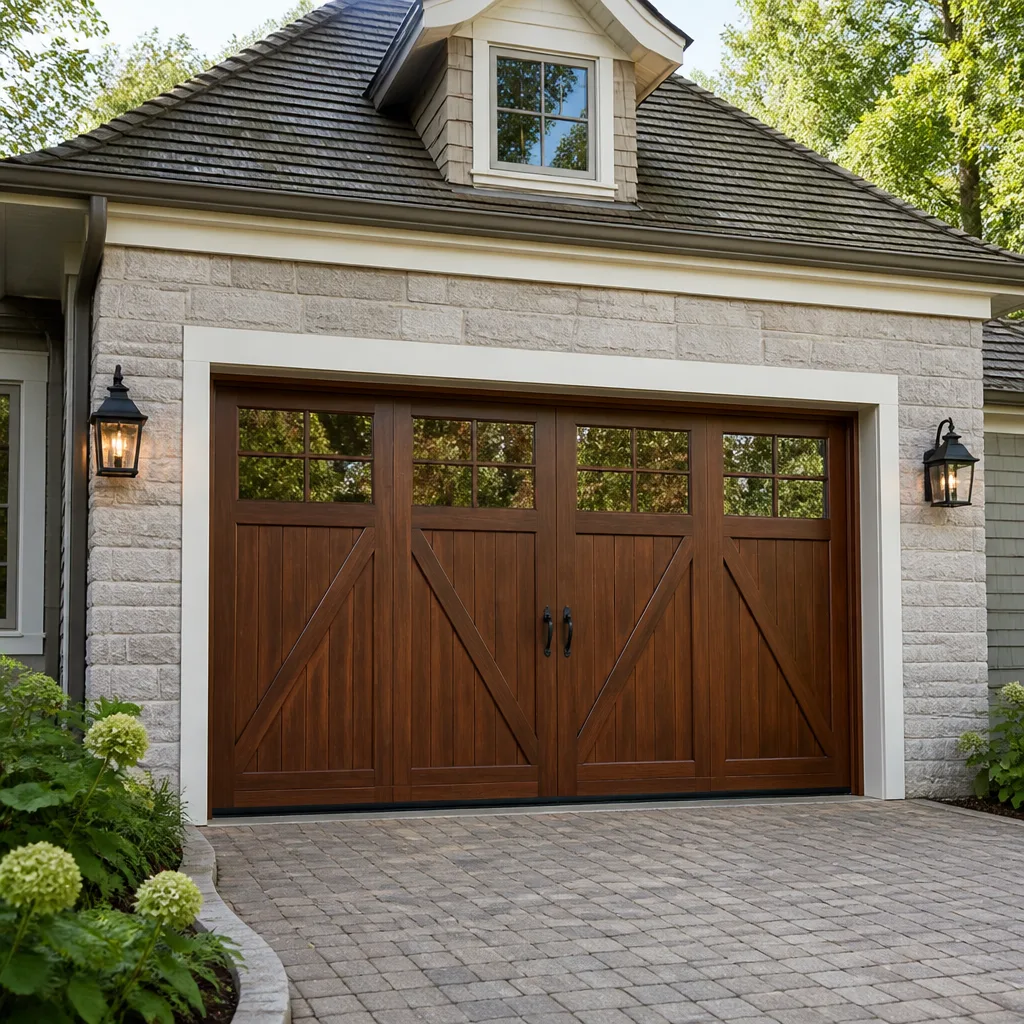 Carriage house
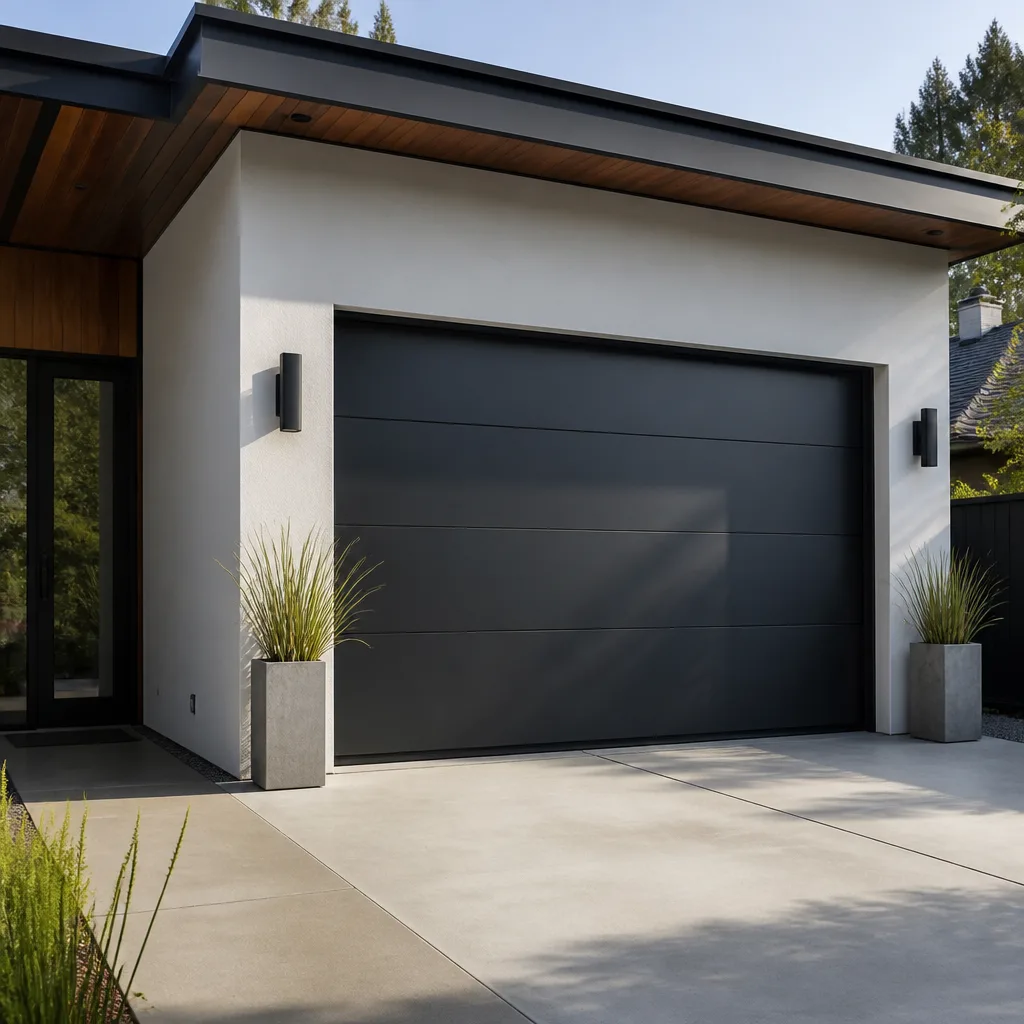 Modern flush
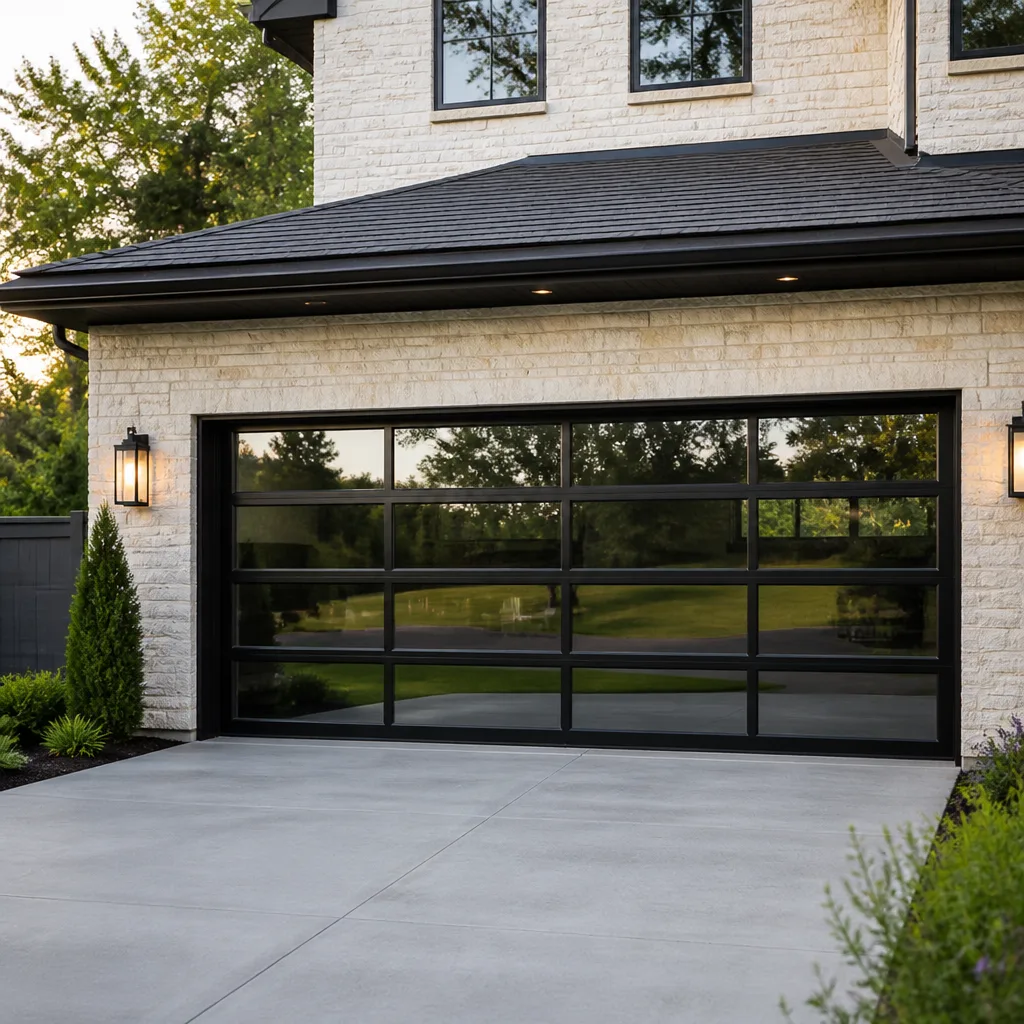 Full-view glass
 LiftMaster openers
 Chamberlain openers
Full 25-point door and opener safety check with every visit - springs, cables, rollers, tracks, and your LiftMaster or Chamberlain opener included
You get a price before we start. It does not change when the pro arrives.
Get your free estimateDIY vs Professional Emergency Garage Door: What’s Safe to Do Yourself
Stress doesn’t make torsion spring work safer. It makes it more dangerous, and a garage door emergency is exactly when the wrong decision gets made fastest. The math is uncomfortable: a torsion spring under tension stores enough energy to break a wrist or worse, yet at 11 p.m. with the car trapped and a kid asleep upstairs, people attempt things they would correctly refuse to touch on a calm Saturday morning. This guide separates the handful of emergency fixes that are genuinely safe from the ones urgency quietly makes lethal, and it tells you how to secure a broken door in Summerlin tonight without finishing the repair yourself.
Quick Answer
The only emergency garage door tasks that are safe to do yourself are sensor alignment, a remote or keypad battery swap, pulling the manual release on a door that’s clear, and a temporary bottom-seal patch. Anything involving torsion or extension springs, cables, or a track held under load is not a DIY job, and urgency makes it more dangerous, not less. Call a trained technician for those, and use the interim securing steps below to make the door safe while you wait.
Styles & brands we work with
- Raised-panel steel
- Carriage house
- Modern flush
- Full-view glass
- LiftMaster openers
- Chamberlain openers
Table of Contents
- Why an emergency changes the safety math
- Safe emergency self-fixes you can do right now
- Unsafe emergency self-fixes and why urgency amplifies the risk
- How to secure a broken door safely without completing a repair
- What to photograph before the technician arrives
- An emergency service call versus the cost of an injury
- Summerlin conditions that turn small problems into emergencies
- When to call a professional
 Before
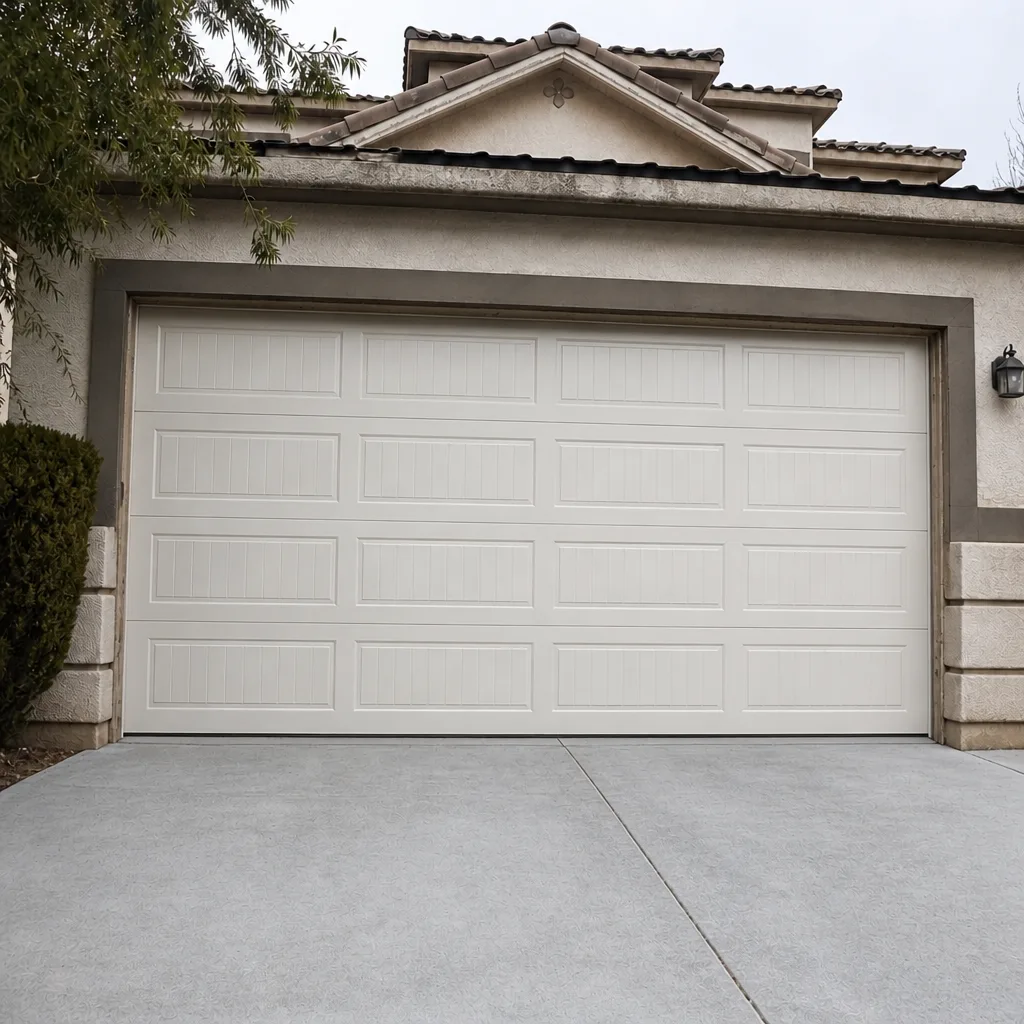 After
Why an emergency changes the safety math
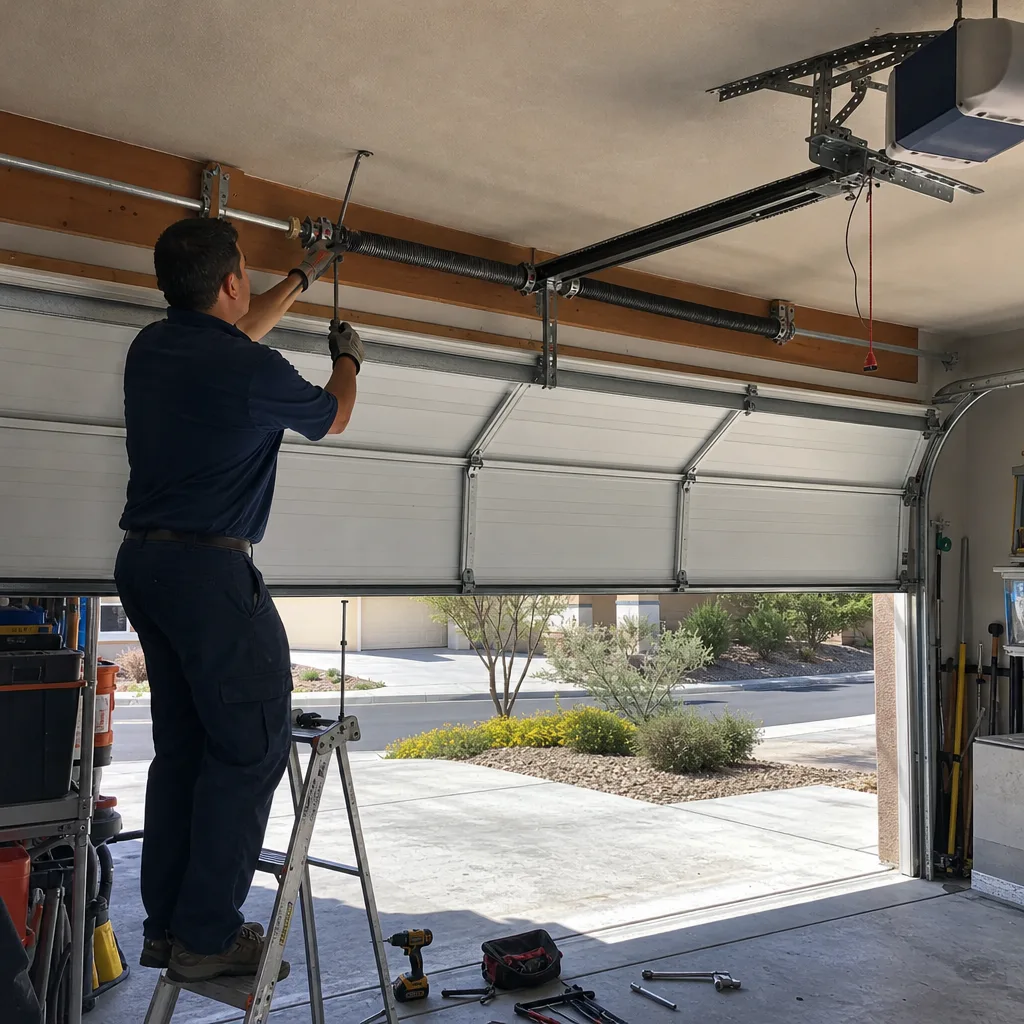
The physics of a garage door don’t care about your schedule. A torsion spring, the coiled bar that counterbalances the door’s weight, is wound to carry hundreds of pounds of tension every hour of every day. When it breaks, that stored energy releases instantly. Under normal conditions, most homeowners look at a snapped spring and call someone. In an emergency, the same person reaches for a winding bar because the car is blocked and the flight leaves in four hours. That shift is the whole problem.
We’ve watched this pattern play out across Summerlin for years. The doors we’re called to after a failed DIY attempt usually share one detail: the homeowner started the job after dark, or after a stressful day, or on a deadline. Stress narrows attention. It makes people skip the manual, skip the gloves, skip the second look at a cable that’s already frayed. In our experience the emergency call that follows costs more and takes longer than the one that would have happened a few hours earlier.
So the safety question splits in two. What’s still safe when you’re rushed is a short list. Everything else waits for a technician, or for daylight, or for both.
Safe emergency self-fixes you can do right now
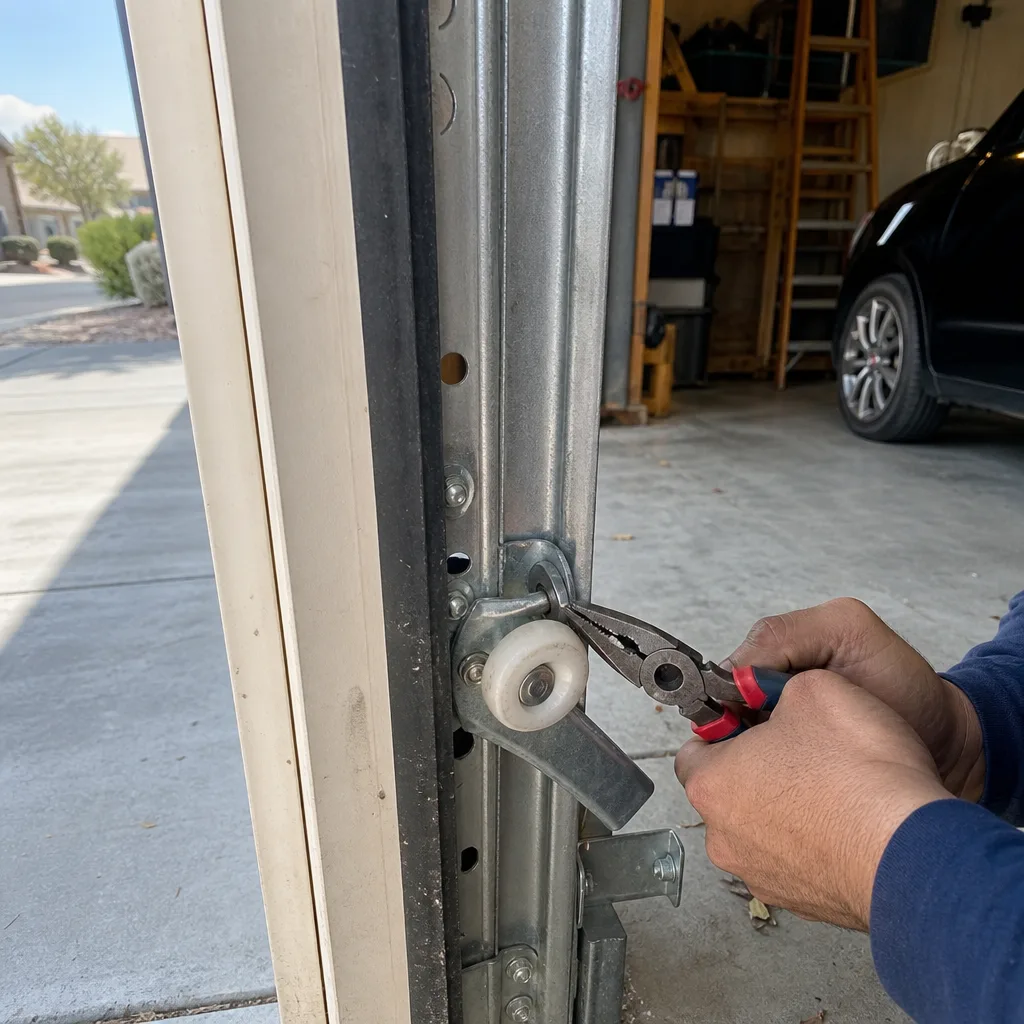
Four problems account for a surprising share of after-hours garage door calls, and all four are safe to check yourself. If your door won’t close, or the opener won’t respond, run through these before you assume the worst.
- Sensor alignment. The two safety sensors at the base of the tracks send an invisible beam across the opening. If that beam is blocked by a broom handle, a recycling bin, or spiderwebs, the door won’t close. Wipe both lenses and check that the indicator lights on each sensor are lit. Nudge a sensor back into line if it’s been bumped.
- Remote or keypad battery. A remote that works up close but not from the driveway usually needs a battery, not a new opener. Swap the coin cell and re-test. The same goes for a wall keypad that’s gone dead.
- Manual release engagement. The red handle hanging from the trolley lets you disconnect the door from the opener so you can lift it by hand. Only pull it when the door is fully closed and nothing is standing under it. On a door that’s already up, don’t pull it; that’s how a door drops.
- Bottom-seal temporary patch. If a chunk of the rubber weather seal has torn away, a strip of heavy tape or a folded shop rag tucked into the gap will keep Summerlin’s spring dust and evening insects out until a proper seal can go on.
If one of these fixes gets the door working, great. If not, move to the securing steps below rather than escalating to the parts you shouldn’t touch.
Unsafe emergency self-fixes and why urgency amplifies the risk
These three jobs are the ones people most want to attempt under pressure, and they’re the ones that cause the worst injuries. None of them are worth the risk, no matter how late it is or how badly the car needs to move.
- Cable reattachment. The lift cables run under enormous tension from drum to bottom bracket. When one slips off, the usual instinct is to hook it back on. A cable that’s under load can snap like a whip, and the bracket it’s attached to is a known point of failure. This is a trained-technician job, full stop.
- Spring winding. Replacing or re-tensioning a torsion spring means winding a bar to a precise number of turns. Get it wrong and the bar can spin free of your grip or the spring can shatter. Even experienced techs work carefully and with the right bars. A homeowner in a hurry with a pair of vise grips is one of the most dangerous setups in the trades.
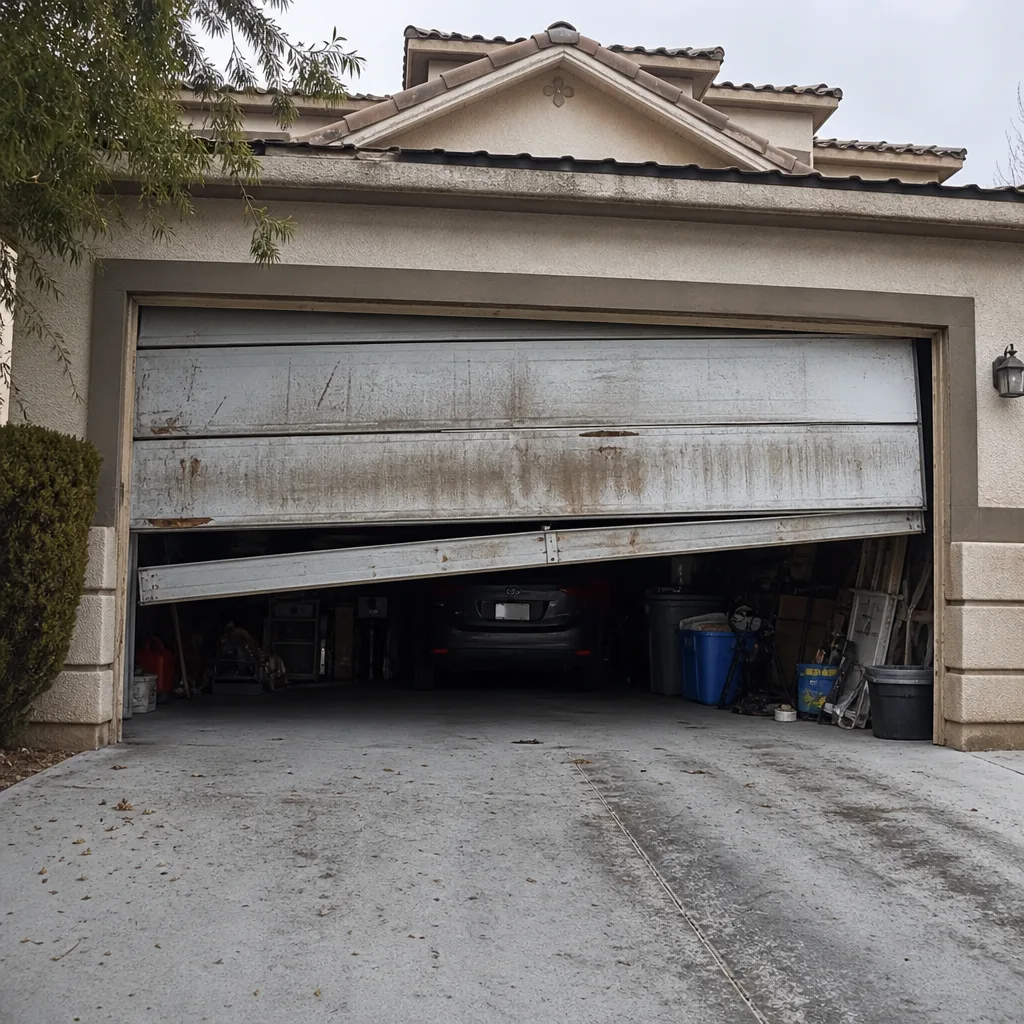
- Track realignment under load. A bent track looks easy to bend back by hand. But when the door is resting on that track, the geometry is under tension, and a track that springs free can drop the door or tear loose. Straightening a loaded track is not a two-handed job; it’s a job for someone who knows how to release the load first.
The reason urgency matters so much: these jobs feel more tempting precisely when the door is stuck open or the car is trapped. That pressure is the signal to stop, not to try harder.
How to secure a broken door safely without completing a repair
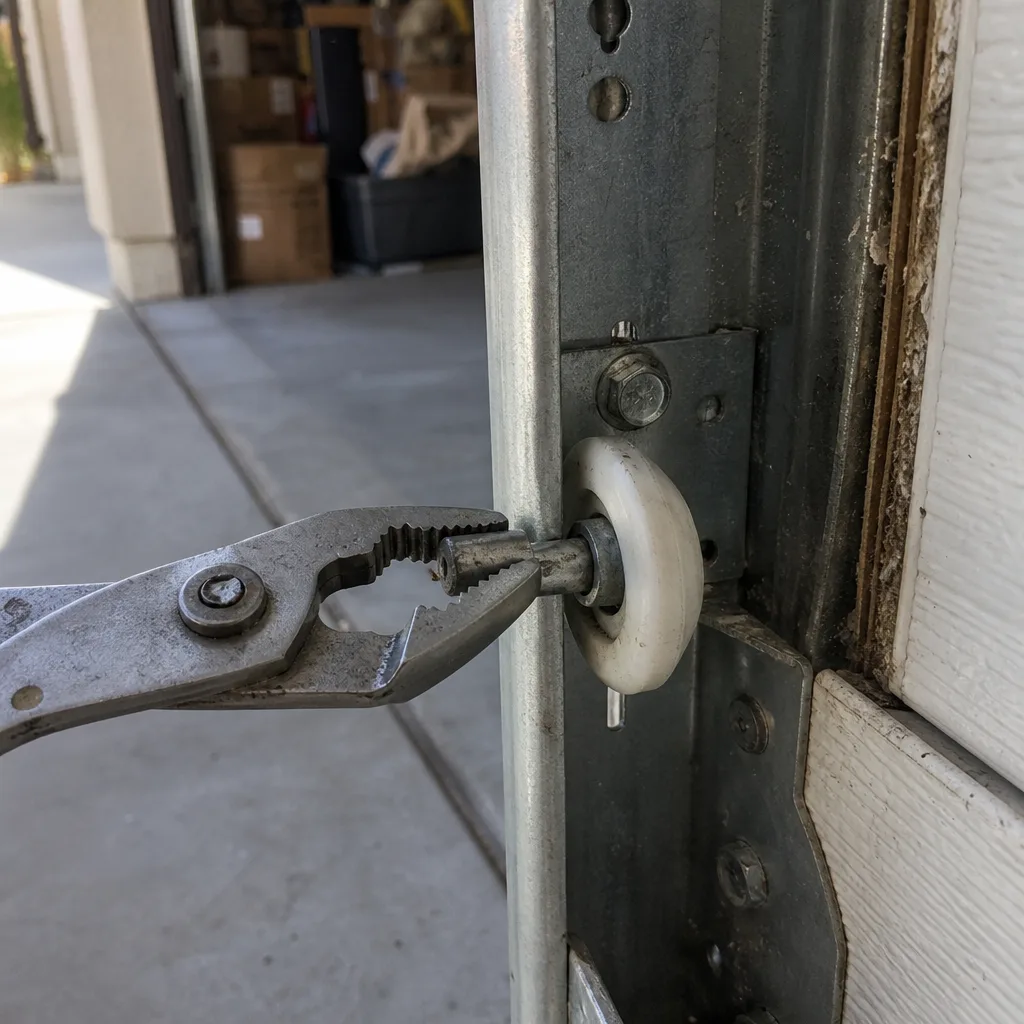
Most guides skip this step entirely. If the door won’t close and you’re not going to attempt the repair, your job is to make the opening safe and weather-tight until a technician arrives. Do this in order:
- Clear the area. Move kids, pets, and anything on the floor out of the door’s path. If the door’s already partially open, keep everyone away from underneath.
- Release the door from the opener only if it’s fully closed. Pull the red manual-release handle and lower the door by hand if it’s safe to do so. Don’t force a door that’s catching or binding.
- Support a partly open door. If the door won’t close, brace it with a pair of sturdy clamps on the tracks just above the bottom rollers, or prop it from below if you have a safe way to. Never rely on the opener to hold it up.
- Lock the door. Most doors have a manual lock or a slide bolt. Engage it to keep the door from being lifted from outside.
- Block the gap. A folded tarp or moving blanket across the bottom gap, weighted down, keeps weather, dust, and pests out of the garage. This is temporary, and it should look temporary so nobody forgets to schedule the repair.
- Turn the opener off. Cut power to the unit at the wall switch so nobody cycles the door by accident.
That leaves the door secure and the opening closed. It does not repair anything, and it shouldn’t be treated as a fix, but it’s the difference between a safe night and a risky one.
What to photograph before the technician arrives
Documentation starts before the truck pulls up. The technician who photographs the failed part before quoting a replacement is working from evidence, and you can give them a head start with the same habit. Good photos shorten the diagnosis and often let the office order the right part before anyone drives over.
- The whole door, closed and open. Both views show track alignment and panel condition.
- The broken part, up close. A snapped torsion spring, a slipped cable, a bent track section. Get a clear shot with something for scale.
- The opener and its model label. The label on the back or side of the unit identifies the brand and model. It’s how we match parts correctly if a Chamberlain or Genie logic board is the culprit.
- The wall button and the safety sensors. If the door won’t respond, these reveal where the problem starts.
- The interior of the garage around the door. A wide shot helps rule out obstructions or damage you might not notice.
Keep the photos on your phone when the technician arrives. The written price you receive should match what the photos show, and if it doesn’t, that’s a question worth asking.
An emergency service call versus the cost of an injury
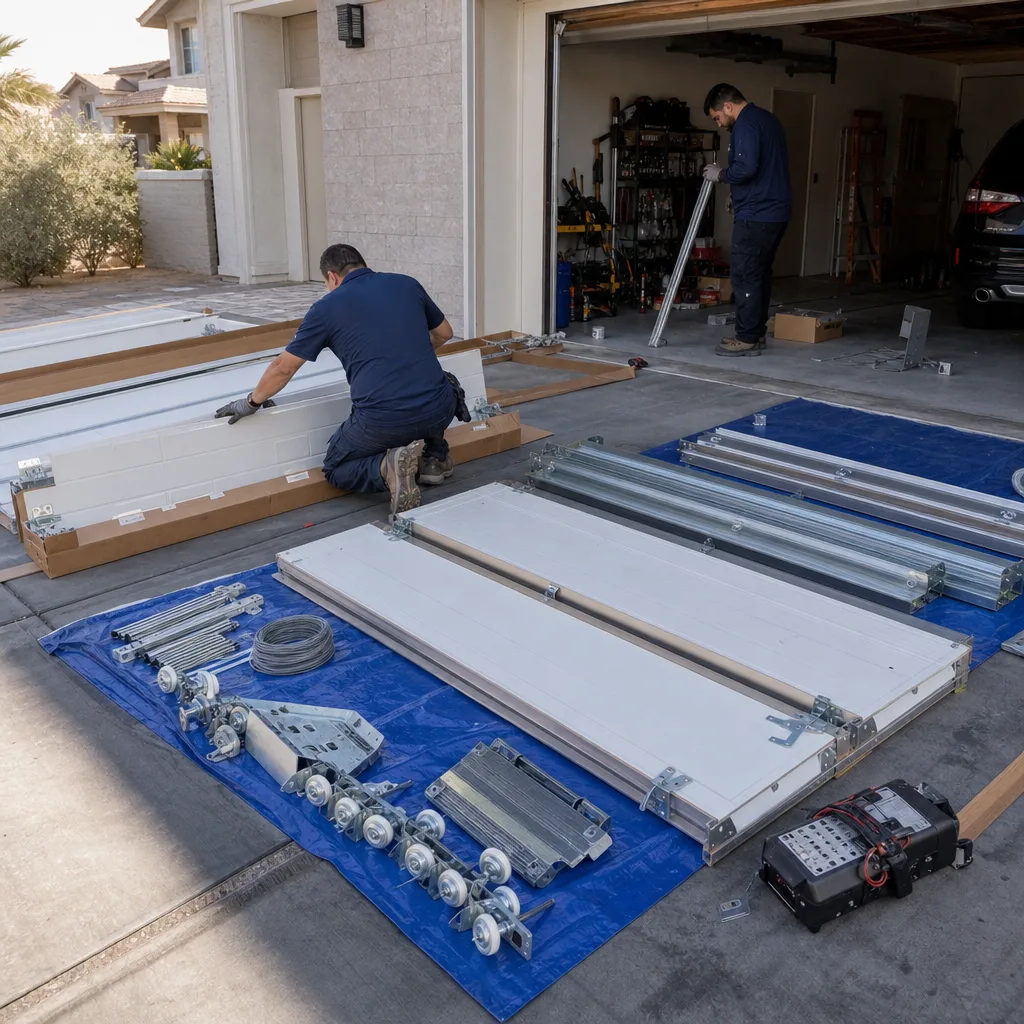
Here’s the plain comparison. A cable or spring repair is a routine job with a known price range, quoted before the technician touches anything. A wrist broken by a snapped cable, or an eye injured by a spring fragment, is not. It’s an emergency-room visit, weeks off work, and the repair you were trying to avoid anyway, now with a medical bill attached.
We’ve been called to a lot of Summerlin doors over the years, and the pattern holds: the failed DIY attempts cost more than the original repair would have. The homeowner spent an hour or two, bought a part, injured themselves or made the door worse, and then paid for a technician to undo the damage and do the job. When you call an emergency line, ask for the flat price before the technician comes out. If a company won’t name it, that tells you what you need to know. A written price and written scope before any work starts is the standard we work to, and you should expect the same from whoever shows up.
Summerlin conditions that turn small problems into emergencies
Summerlin’s climate and building conditions shape which garage door problems show up and when. The dry desert air, the seasonal dust, and the wide temperature swings between summer afternoons and cool nights all put stress on the moving parts of a garage door.
In our experience, spring failures cluster in spring and early summer, when the first hot week arrives and the metal that held through winter contracts and expands. Summer dust finds its way into tracks and rollers, and a grit-clogged track makes the opener work harder and wear faster. The bottom seal is the most commonly ignored part; a torn seal lets dust and heat in and can let small pests in with it. Neighborhoods like The Ridges and Red Rock Country Club, with large south-facing garage doors, see more heat load on the seals and springs than shaded streets nearby. None of this forces an emergency, but each raises the odds if the regular maintenance is skipped.
When you need help, Garage Door Repair in Summerlin is where a same-day call usually starts, and a Garage Door Opener Repair & Installation in Summerlin visit handles the opener-side emergencies like a dead logic board or a stripped gear.
When to Call a Professional
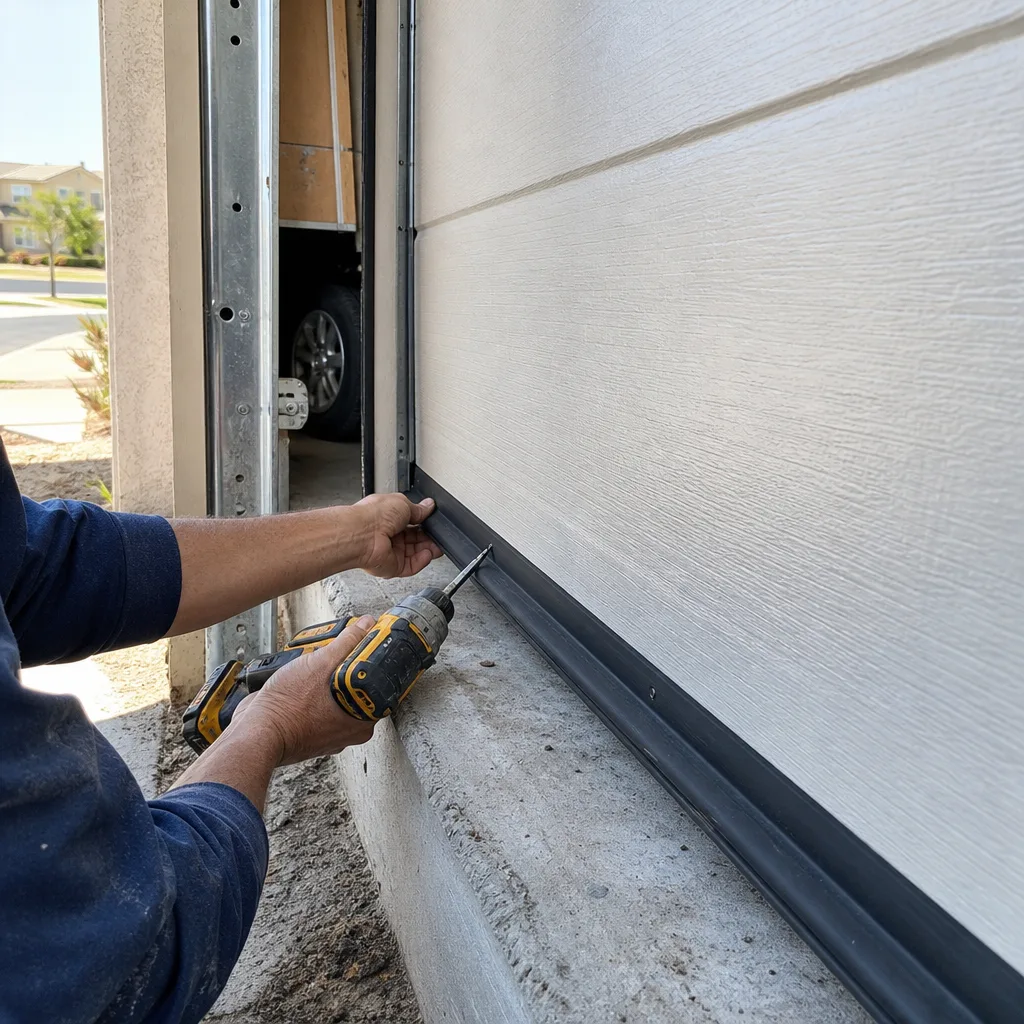
Call a professional the moment the problem is a spring, a cable, or a loaded track. Call sooner if the door is stuck open, is hanging unevenly, or has dropped and won’t lift. Also call if you’re not sure; the phone call costs nothing, and a technician can tell you over the phone whether it’s a sensor or a spring.
Servo Garage Doors Summerlin offers free estimates in Summerlin. Call (844) 797-3654 and a live person answers, day or night. We’ll name the price range before anyone comes out, quote a flat written price and scope before any work starts, and leave you a documented photo record of what was found and what was fixed. If you’ve already got a written estimate from another company, bring it in for a free second opinion. Our technicians have up to 11 years of experience, are background-checked, and are licensed and insured. The 365-Day Done Right Promise means if the repair isn’t right, we make it right.
See the difference
BeforeAfter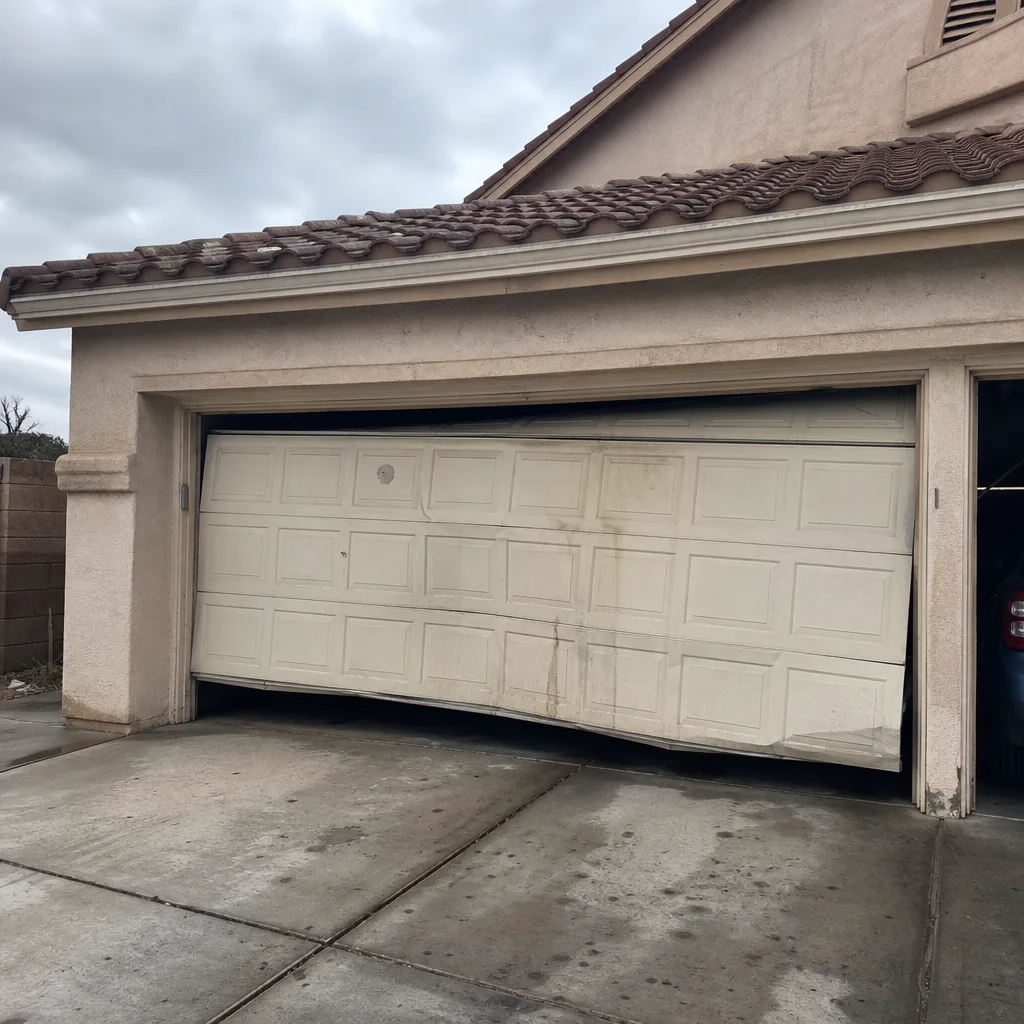 Before
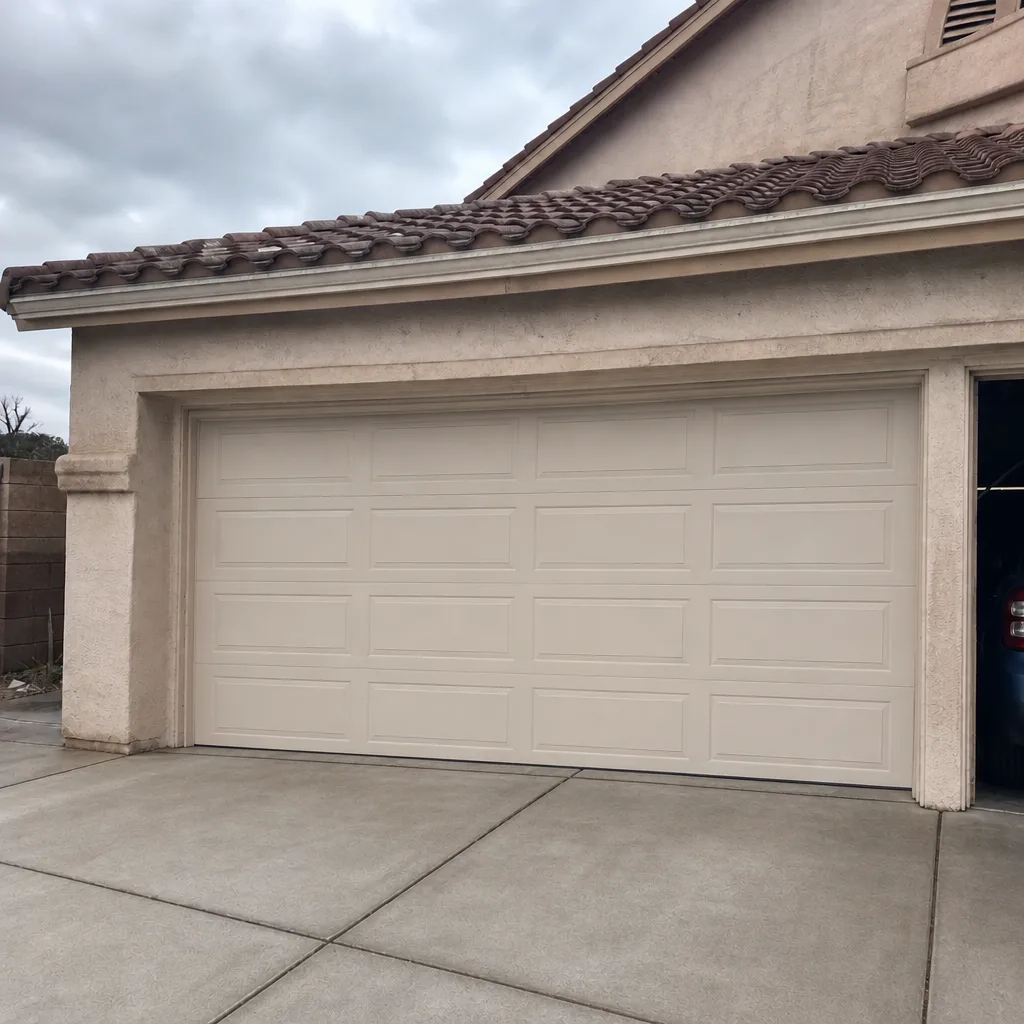 After
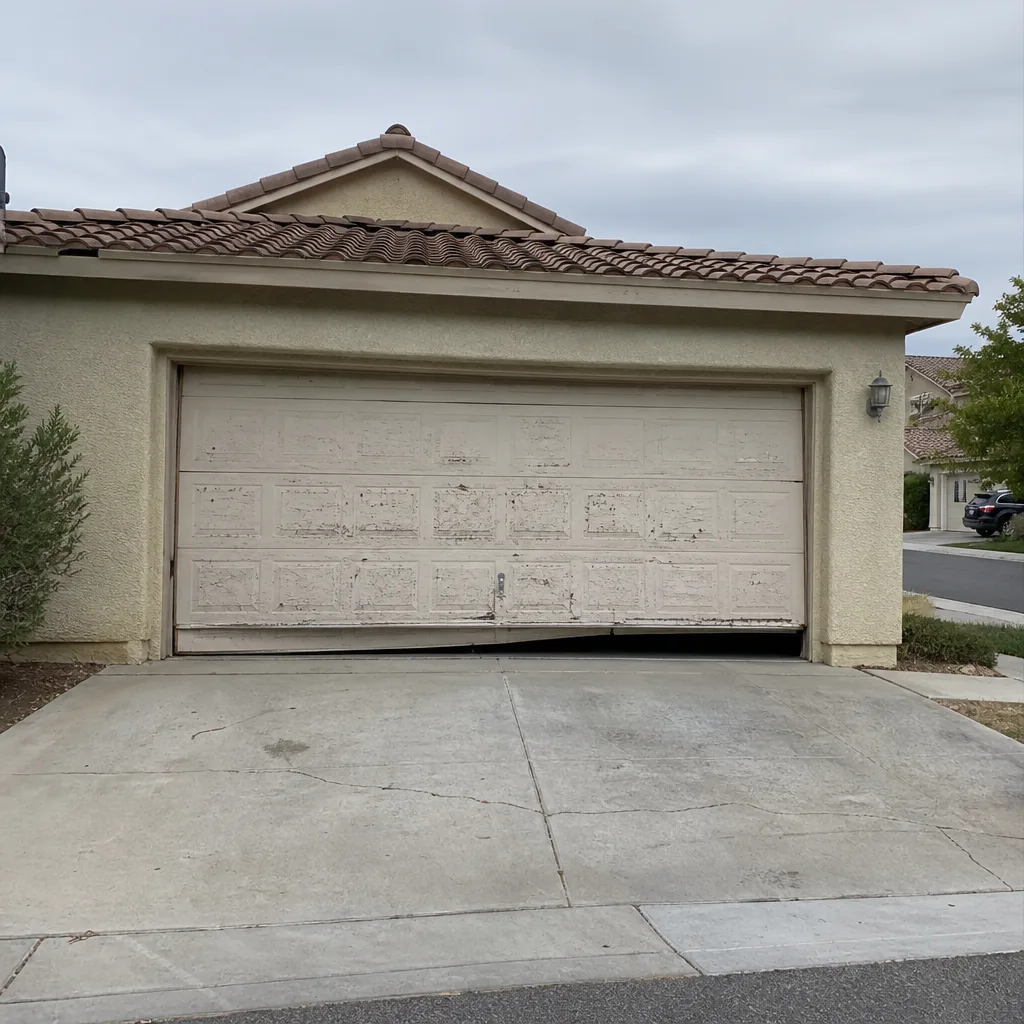 Before
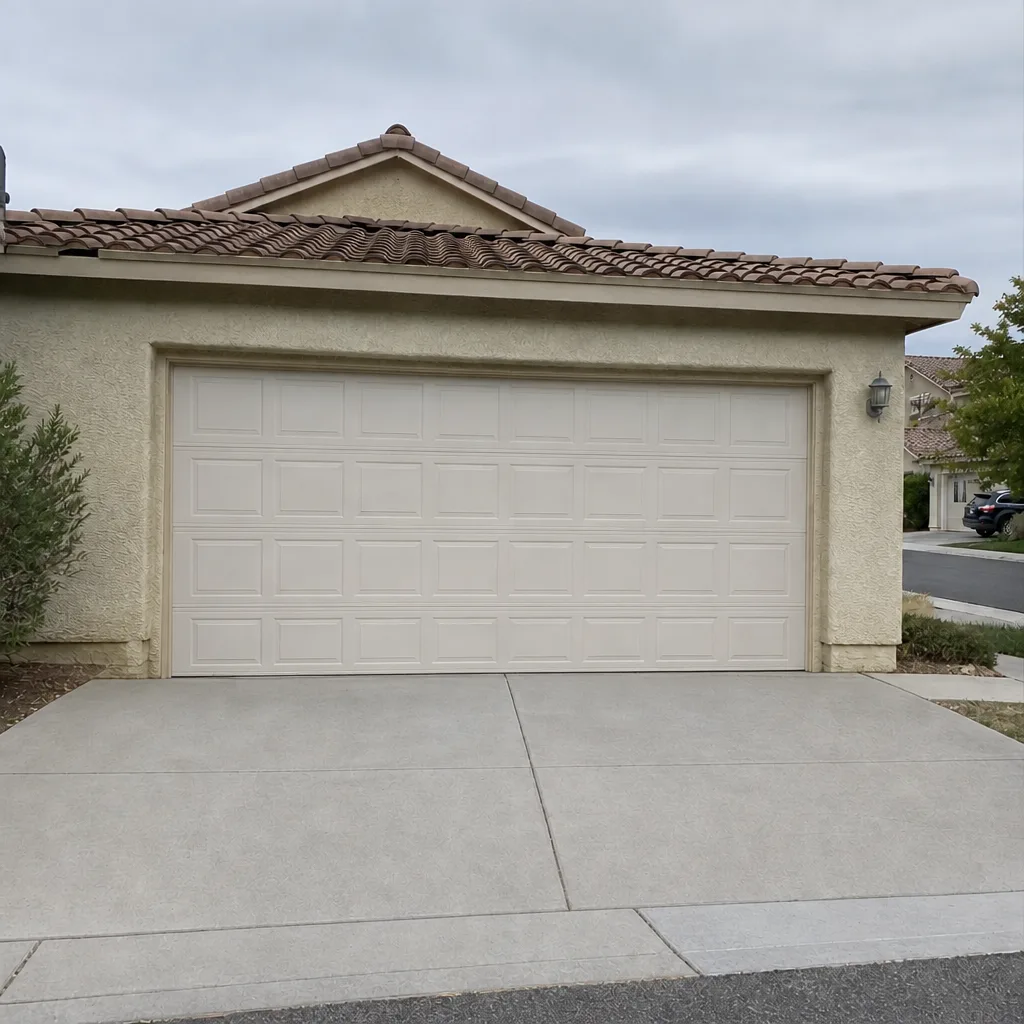 After
Common Mistakes to Avoid
- Pulling the manual release on an open door. The red handle disconnects the door from the opener, and on a door that’s already up, that’s how it drops. Only pull it when the door is fully closed.
- Holding a door up with the opener. The opener is not a jack. If the door won’t stay up on its own, brace it with clamps on the tracks, not with the motor.
- Winding a spring with the wrong tools. Vise grips and screwdrivers are not winding bars. A slipped tool on a loaded spring can spin the bar free and cause serious injury.
- Forcing a binding track. A track that’s out of alignment under load can tear loose or drop the door. Straightening it by hand with the door resting on it is a known injury risk.
- Ignoring a cable that’s already frayed. In Summerlin’s dry air, a frayed cable is more likely to snap than a fresh one. Don’t run the door on it; call.
- Blocking the safety sensors with a broom. A common quick fix that disables the door’s main safety feature. If the sensors won’t stay aligned, that’s a call.
- Taping over a torn seal and forgetting it. A temporary patch keeps dust out for a night. If it’s still on the door a month later, the seal has become a permanent repair that was never done.
Frequently Asked Questions
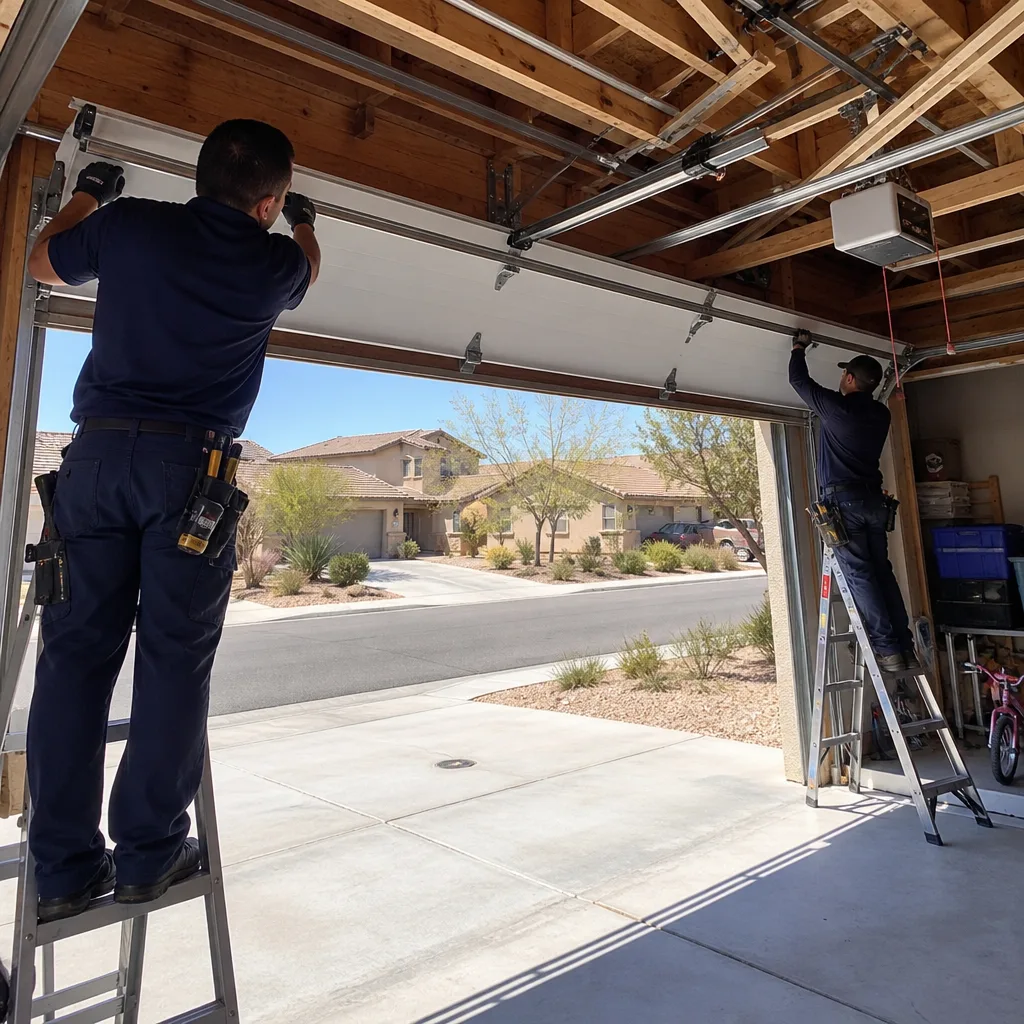
Only four things are safe to do yourself in an emergency: sensor alignment, battery changes, pulling the manual release on a fully closed door, and a temporary bottom-seal patch. Springs, cables, and loaded tracks are not safe to touch, and urgency makes them more dangerous. Call (844) 797-3654 for anything beyond the four safe fixes; estimates are free.
No. A torsion spring is under hundreds of pounds of tension, and winding it wrong can cause a serious injury. The safe move is to secure the door and call a technician. Call (844) 797-3654 and we’ll quote a flat written price before any work starts.
Secure it without repairing it: clear the area, brace the door with clamps on the tracks if it won’t close, lock the door, block the bottom gap with a weighted tarp, and cut power to the opener. Then call (844) 797-3654; a live person answers day or night, and our technicians have up to 11 years of experience.
It depends on the part: a sensor or opener repair is cheaper than a spring or cable replacement, and a professional call costs far less than an injury. We name the price range before we come out and quote a flat written price before any work starts. Call (844) 797-3654 for an exact quote; estimates are free.
No. The written price and written scope you receive are what you pay, quoted and agreed before any work starts. If a company won’t name the price up front, that’s a warning sign. Call (844) 797-3654 for a free written estimate.
Photograph the whole door open and closed, the broken part up close, the opener’s model label, the wall button and safety sensors, and a wide shot of the garage. Good photos let us match parts and quote accurately before the visit. Call (844) 797-3654 and we’ll walk you through what to send.
The Bottom Line
Emergency conditions don’t make garage door repair safer; they narrow your attention and push you toward the jobs you’d normally refuse. The safe self-fixes are sensor alignment, battery changes, the manual release on a closed door, and a temporary seal patch. Everything else, especially springs, cables, and loaded tracks, waits for a technician. Secure the door with clamps and a tarp, cut the opener’s power, photograph what failed, and call. A routine repair has a known price. An injury doesn’t. Servo Garage Doors Summerlin is here around the clock with live phone coverage and written pricing before work starts.
Explore Servo Garage Doors Summerlin home to see how we work, or Garage Door Installation in Summerlin if you’re weighing a replacement over repair. We service LiftMaster, Chamberlain, Genie, Clopay, Amarr, Wayne Dalton, Craftsman, and Raynor, and every visit ends with a documented photo record of what was found and what was done.
Ready to talk it through? Call Servo Garage Doors Summerlin at (844) 797-3654 for a free estimate. A live person answers, we name the price range before anyone comes out, and we quote and agree a flat written price before any work starts.
Written by the team at Servo Garage Doors Summerlin.