
Last updated November 17, 2026
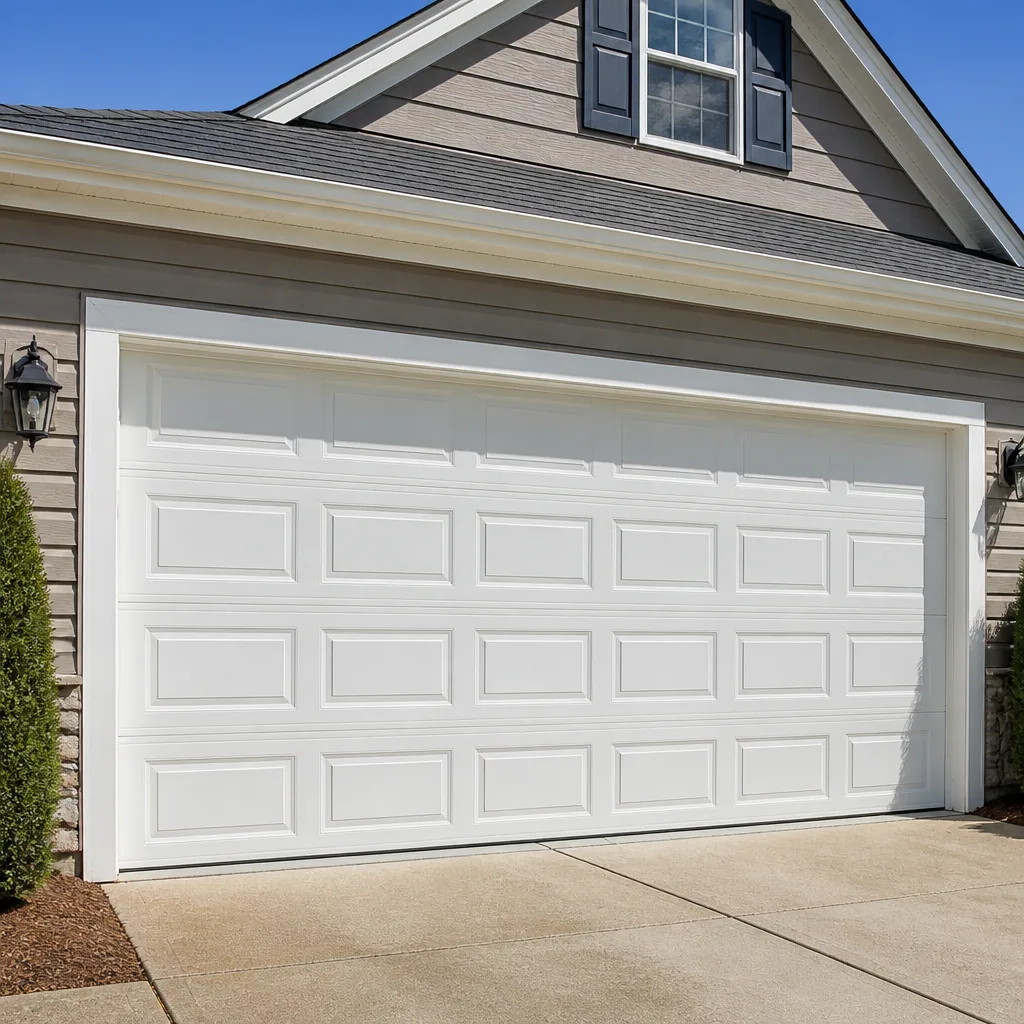 Raised-panel steel
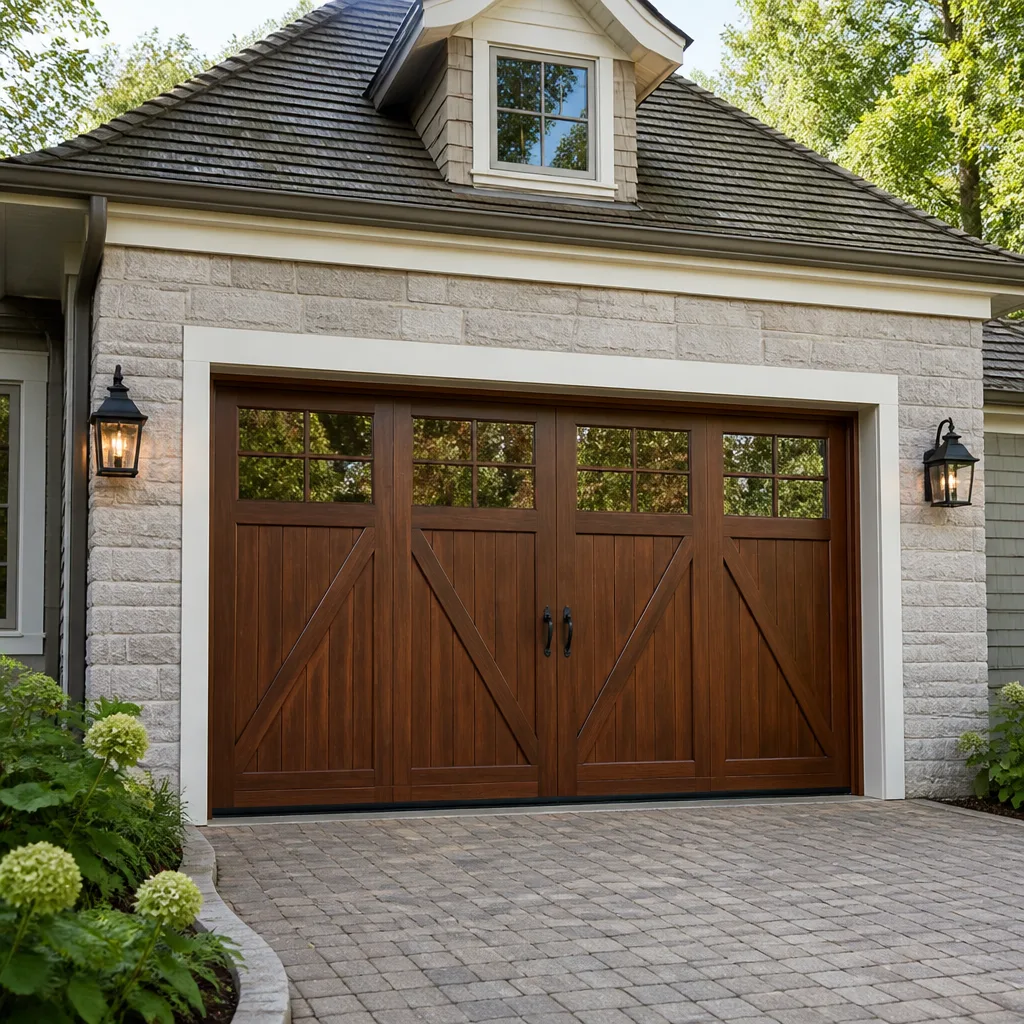 Carriage house
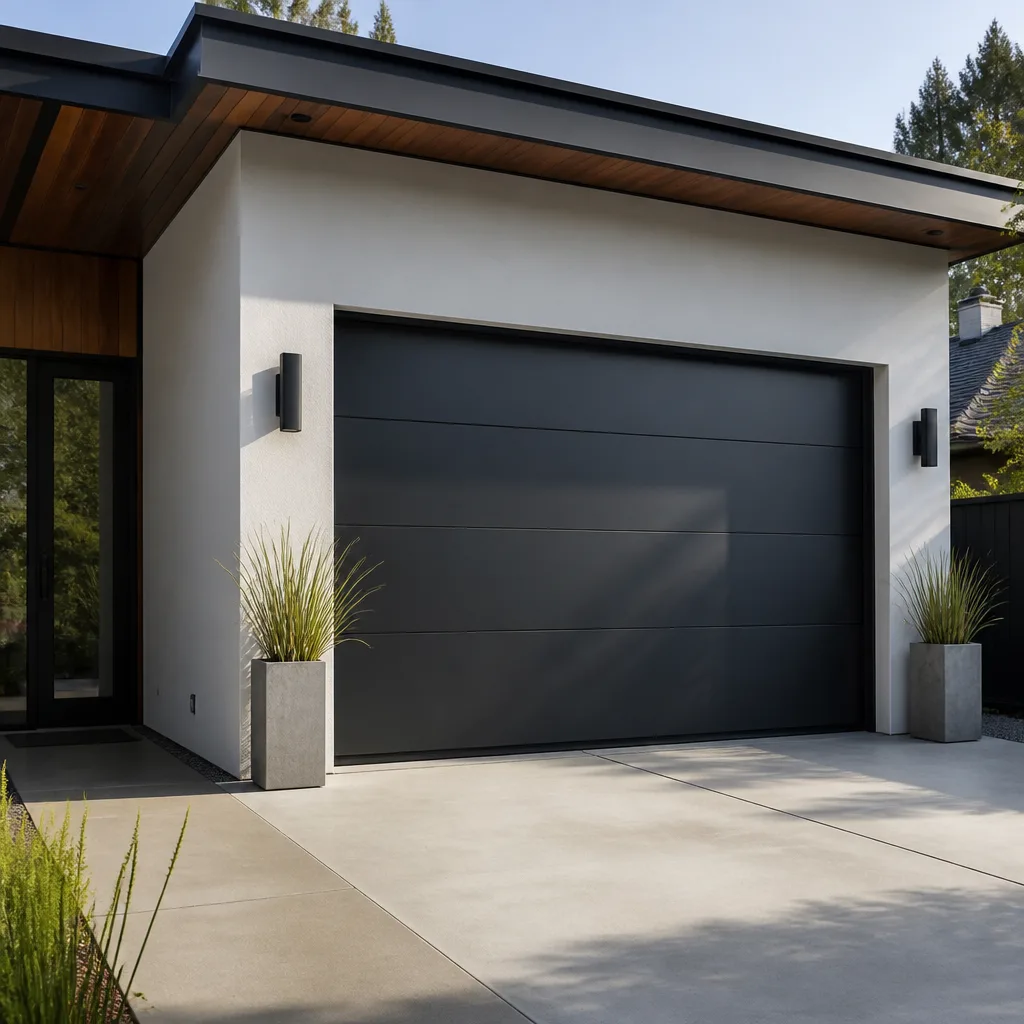 Modern flush
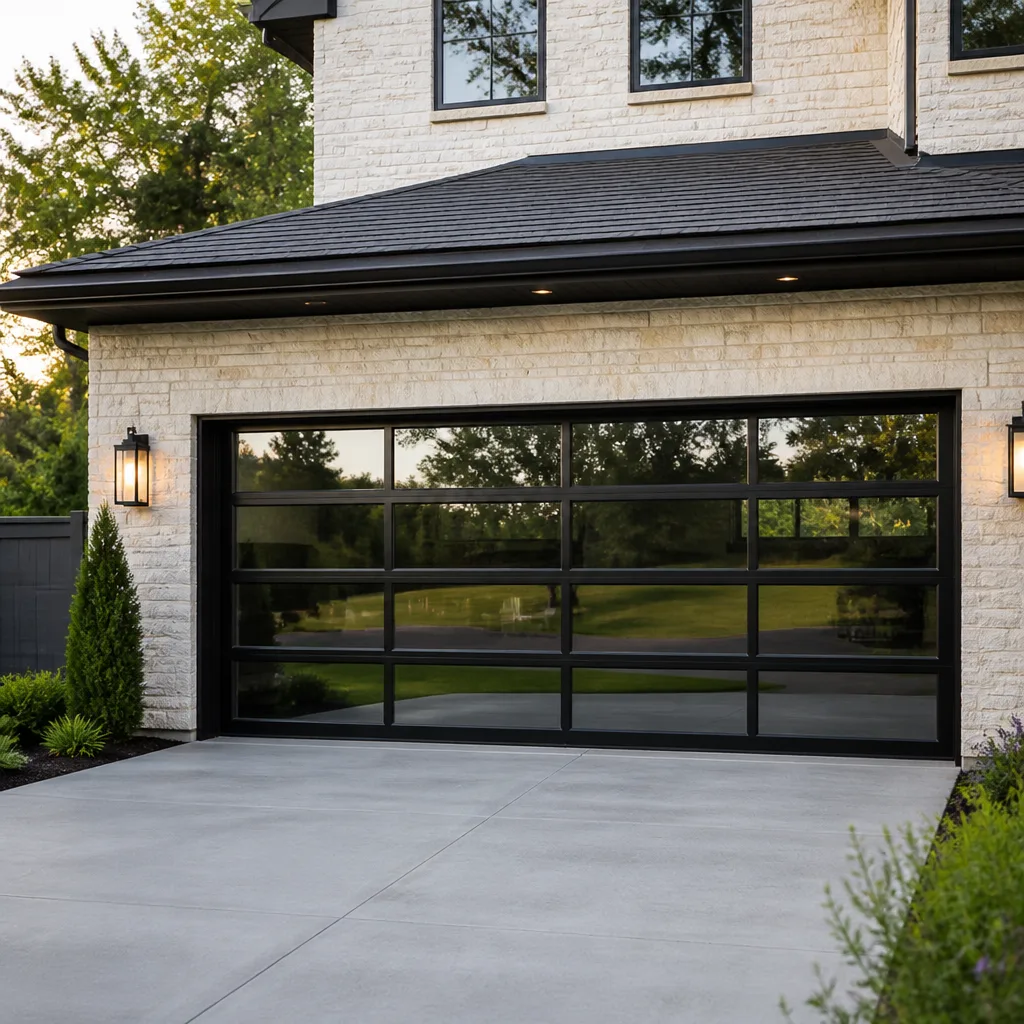 Full-view glass
 LiftMaster openers
 Chamberlain openers
Full 25-point door and opener safety check with every visit - springs, cables, rollers, tracks, and your LiftMaster or Chamberlain opener included
You get a price before we start. It does not change when the pro arrives.
Get your free estimateEmergency Garage Door Troubleshooting: Common Problems and How to Fix Them
A garage door that won’t open is either a power problem, a spring problem, or an obstruction problem. Those three categories cover over 90% of the emergency calls we take in Summerlin, and two of them are free to fix. The door is a simple machine: an opener pulls, springs lift, and a safety sensor watches the path. When one link breaks, the whole system stops, and the noise or the silence tells you which one. This guide walks the same three-branch decision tree our technicians use on arrival, so you can either solve the problem yourself or call with the right facts already gathered.
Quick Answer
Most emergency garage door failures fall into three buckets: power or opener trouble, a broken spring or cable, or a blocked safety sensor. Check the wall outlet and the opener’s LED first, then look at the springs above the door from a safe distance, then clean and realign the photo-eye sensors. If you see a cable off its drum, the door hanging crooked, or you heard a loud bang, stop and call a technician rather than testing anything further.
Styles & brands we work with
- Raised-panel steel
- Carriage house
- Modern flush
- Full-view glass
- LiftMaster openers
- Chamberlain openers
Table of Contents
- The Three-Branch Diagnostic Tree
- Branch One: Power and Opener Problems
- Branch Two: Springs and Cables
- Branch Three: Obstructions and Safety Sensors
- How to Confirm a Broken Spring Without Touching It
- The Photo-Eye Sensor Reset That Fixes Most “Emergencies”
- When to Stop Troubleshooting
- What to Tell the Technician When You Call
 Before
 After
The Three-Branch Diagnostic Tree
Every emergency call starts at the same fork. Is the door getting power, is the lifting hardware intact, or is something in the way? Work the branches in that order, because the cheapest answer is usually first. In Summerlin, where most homes were built between the 1990s and the 2020s, the opener and the safety sensors account for the majority of “won’t open” calls, and a surprising number resolve without a part being replaced.
Here’s the decision tree in order:
- Power and opener. Does the opener respond to the wall button? Is there a light, a click, or nothing at all?
- Springs and cables. With the door closed, look at the torsion spring above the door or the extension springs along the sides. Is the spring intact? Is the cable seated on its drum?
- Obstruction and sensors. Is anything under the door? Are the two small photo-eye lenses at the bottom of the tracks aligned and clean?
If branch one fails, the door won’t move at all. If branch two fails, the opener may hum but the door won’t lift, or it lifts a few inches and stops. If branch three fails, the door usually reverses immediately or refuses to close. That behavior pattern is your first clue, and it’s the same pattern a technician reads before opening a toolbox. Our Garage Door Repair in Summerlin team uses it on every call because it saves the customer money before a single part is quoted.
Branch One: Power and Opener Problems
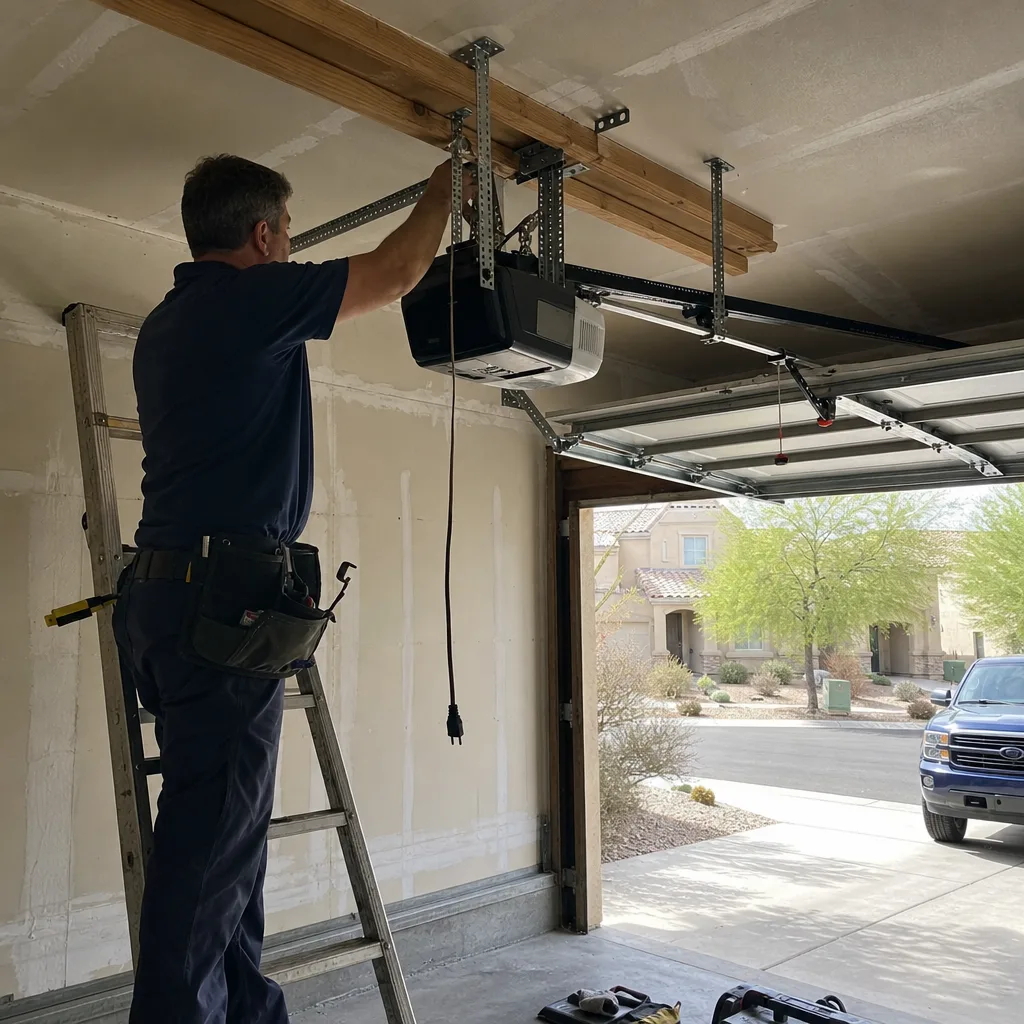
Start where the electricity starts. A dead opener is often a tripped GFCI outlet, a blown breaker, or a wall switch that got bumped. Garage circuits in Summerlin homes share outlets with the irrigation controller, the exterior lights, and sometimes the pool equipment, so a tripped GFCI in the garage is a common culprit after a monsoon-season power flicker. Reset the outlet, then try the wall button again.
If the outlet is live and the opener is silent, check the opener itself:
- Wall button vs. remote. If the wall button works but the remote doesn’t, the problem is the remote battery or its programming, not the door. Replace the battery in a LiftMaster or Chamberlain remote and re-pair it before calling anyone.
- Lock feature. Many Genie and LiftMaster wall consoles have a vacation lock that disables the remotes. If the wall button works and the remote doesn’t, look for a lit lock icon and press it off.
- Logic board or capacitor. If the opener clicks but the motor doesn’t turn, the logic board or the start capacitor may have failed. That’s a diagnosis for a technician, not a homeowner, because the opener is wired into household current.
- Limit switch and travel. If the door stops halfway in the same spot every time, the limit switch (the part that tells the opener where the open and closed positions are) may need adjustment.
If the opener is a Wayne Dalton or an older Craftsman and the motor hums without moving the door, the trolley carriage (the sliding connector between the opener rail and the door arm) may be disengaged. Look for the red emergency release cord and confirm it hasn’t been pulled by accident. Re-engaging it is a simple pull, but reconnecting a door that’s been manually operated for hours is worth a professional eye. Our Garage Door Opener Repair & Installation in Summerlin page covers the opener-specific failure modes in more detail.
Branch Two: Springs and Cables
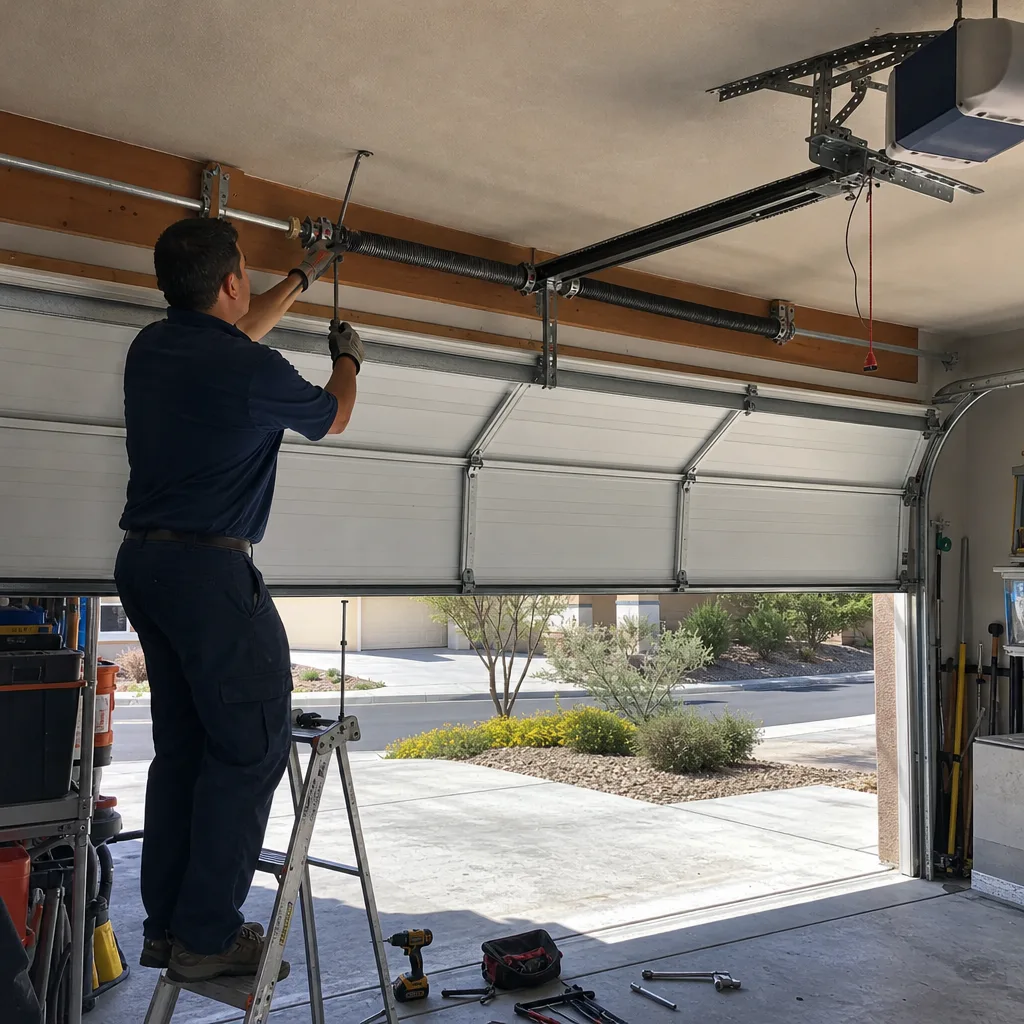
The torsion spring is the coiled steel bar above the door that stores the energy to lift it. Extension springs sit along the horizontal tracks on either side. Either type can fail after a certain number of cycles, and when a torsion spring breaks you usually hear a sharp bang from the garage that sounds like a gunshot. In Summerlin, where the temperature swings between cool winter mornings and 100-degree summer afternoons, we regularly see spring failures in the weeks after a heat wave, because repeated thermal expansion stresses the metal.
A broken spring leaves the door extremely heavy. The opener will try to lift it, strain, and either stall or reverse. The door may rise a few inches and drop. Here’s what to check from a safe distance:
- The spring gap. A torsion spring that has failed shows a clean gap in the coil, often with the two halves separated by an inch or more. You’ll see it without climbing a ladder.
- A gap in the extension spring coil. Extension springs fail with a visible stretch or break along the side track.
- Cable position. The lift cable runs from the bottom corner bracket up to a drum at the top of the track. If the cable is slack, hanging loose, or off the drum, stop.
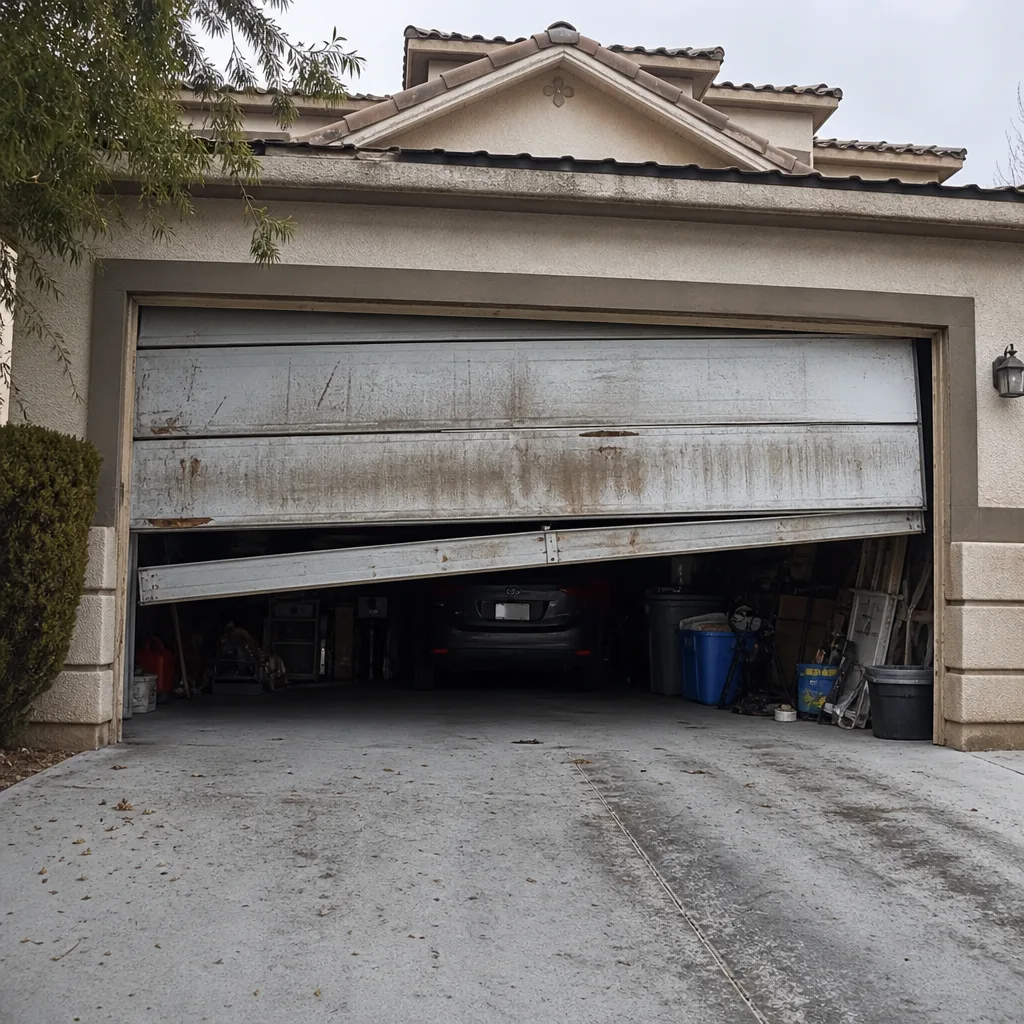
- Door level. Look at the gap under the door. If one side sits lower than the other, the lifting force is uneven, which points to a spring or cable issue.
Springs and cables are under extreme tension. A torsion spring on a standard two-car door can carry well over a hundred pounds of stored force, and a cable under load can whip if released. This is the one branch where the right move is to look, not touch. Our Servo Garage Doors Summerlin home team photographs the failed spring before quoting a replacement, per Clause 4 of The Haven Standard, so you see the failed part with a wire-diameter measurement next to it before any price is discussed.
Branch Three: Obstructions and Safety Sensors
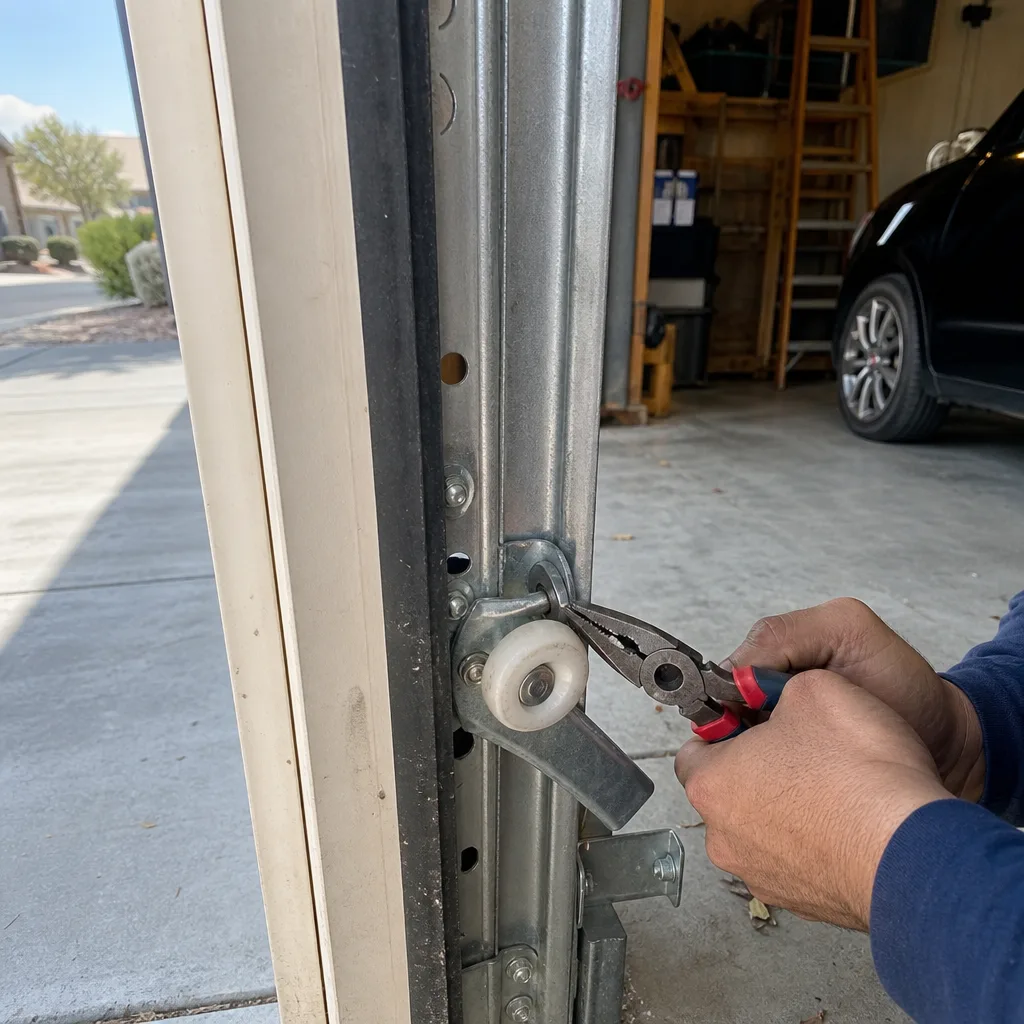
The two small lenses at the bottom of the door tracks are the photo-eye safety sensors. One sends an invisible infrared beam, the other receives it, and if the beam is broken or the lenses are misaligned, the door won’t close and often won’t open cleanly either. This is the single most common “emergency” call that turns out not to be an emergency at all, and it’s free to fix.
Work through these steps before you call:
- Clear the path. A broom, a recycling bin, a garden hose, or a pet toy between the sensors will trip the safety reverse. In Summerlin garages, the leaf litter from the olive and mesquite trees is a frequent culprit after a windy day.
- Wipe the lenses. Dust, cobwebs, and insect nests block the beam. A dry cloth on both lenses solves a surprising number of calls.
- Check alignment. Each sensor has a small LED. If one is solid and the other is blinking or dark, the lenses aren’t facing each other. Nudge the bracket until both LEDs are solid.
- Check the wiring. The thin wires running from the sensors to the opener can be nicked by a lawn tool or chewed. Look for a visible break along the run.
- Test the reverse. With the door open, press the wall button and pass a broom handle through the beam. The door should reverse. If it doesn’t, the sensors are still the problem.
If the door closes when you hold the wall button but not when you release it, the sensors are almost certainly the issue. Clopay and Amarr doors use the same sensor logic regardless of the panel style, so the procedure is identical. Our Garage Door Installation in Summerlin page explains how sensor placement is set at install, which helps you spot a sensor that was mounted too close to the floor or too far from the door.
How to Confirm a Broken Spring Without Touching It
You can confirm a broken spring from the ground with your eyes and your ears, no ladder required. Stand back and look up at the torsion bar above the door. A healthy spring is a continuous coil. A failed one shows a gap, often with the coil ends sitting at different heights. If you heard a loud bang and the door won’t lift, that’s the confirmation.
Here’s the safe visual checklist:
- A clean break in the coil. The two halves of a torsion spring separate when the wire snaps, leaving a visible gap of an inch or more.
- The door feels unusually heavy. Lift the door by hand about a foot if the opener is disengaged. A door with a broken spring feels like dead weight; a healthy door lifts with modest effort.
- The opener strains or stalls. The motor runs, the door doesn’t move, and you may smell a faint hot-motor odor from the strain.
- The door hangs crooked. One side sits noticeably lower, which points to a failed spring on one side or a cable off its drum.
What not to do: don’t try to wind a torsion spring with a pair of screwdrivers. The winding bars a technician uses are hardened steel for a reason. A spring that releases under a homeowner’s tool can cause serious injury, and the wound spring stores enough energy to break a wrist. If you’ve confirmed a break, the right next step is a call, not a repair. We quote a flat written price and a written scope before any work starts, per Clause 1 of The Haven Standard, so you know the number before the technician touches the door.
The Photo-Eye Sensor Reset That Fixes Most “Emergencies”
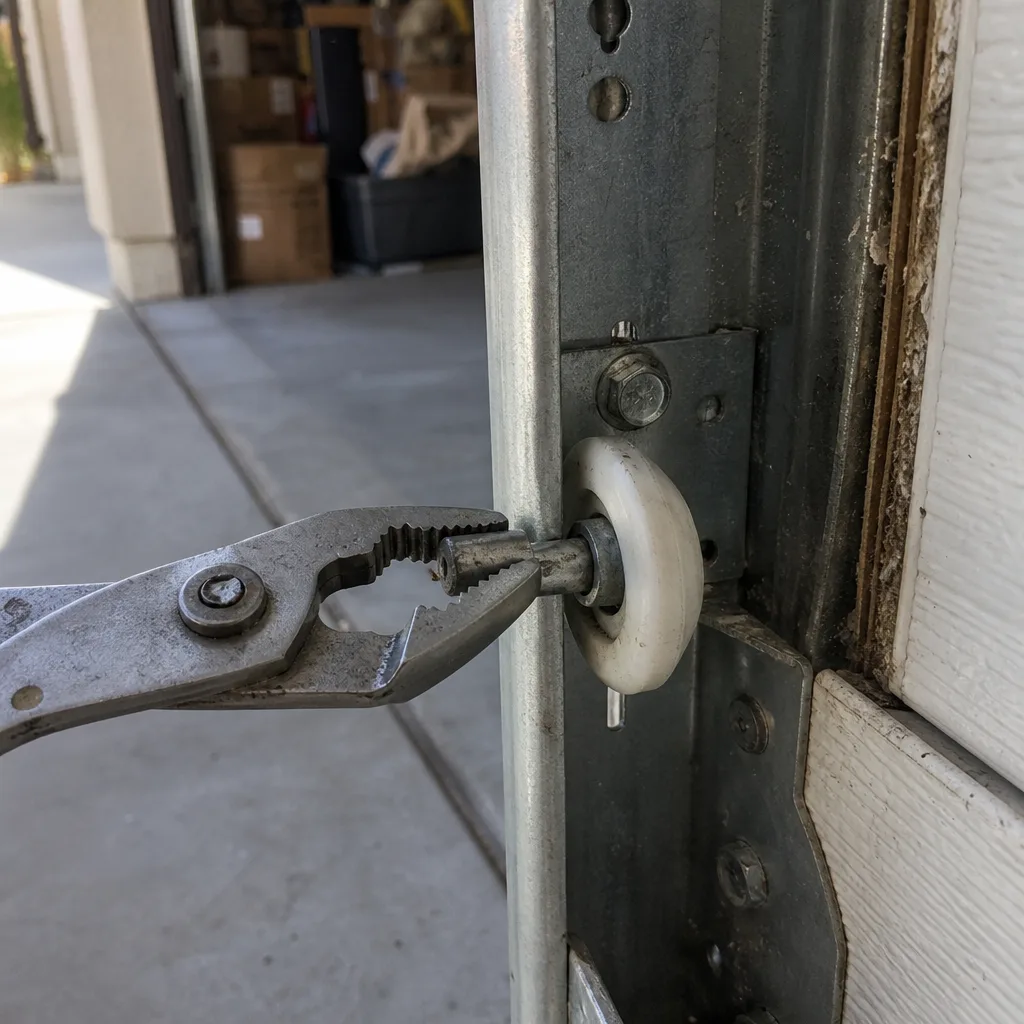
If the door won’t close and the opener light flashes, the sensors are the first suspect. The reset procedure is simple and costs nothing:
- Locate the two sensors at the bottom of the door tracks, one on each side, about six inches off the floor.
- Wipe both lenses with a dry cloth. Check for spiderwebs, dust, and insect nests.
- Look at the LED on each sensor. A solid LED means it’s receiving power and the beam is intact. A blinking or dark LED means a problem.
- Loosen the wing nut or bracket on the sensor that’s misbehaving and aim it at its partner until both LEDs are solid, then tighten.
- Press the wall button to test. If the door closes and stays closed, the problem was alignment or debris, and you’re done.
If the LEDs won’t go solid after cleaning and realignment, the sensor itself may have failed, or the wiring to the opener may be damaged. That’s a part replacement, and it’s a quick one. In Summerlin, the desert dust and the summer heat both take a toll on the plastic sensor housings, so a sensor that worked fine in spring can act up by August. If you’ve reset the sensors twice and the door still reverses, call us and describe the LED pattern; that single detail often tells us whether it’s a $40 part or a wiring repair before anyone drives out.
When to Stop Troubleshooting
Some conditions mean hands off until a technician arrives. These are the situations where a homeowner trying one more thing can turn a repair into an injury or a much larger bill. Stop immediately if you see any of the following:
- A cable off its drum. The lift cable has come off the drum at the top of the track, or is hanging slack. A cable under tension can snap back with force.
- The door resting on one side. If one corner is down and the other is up, the door is binding, and forcing the opener can bend the panels or snap a cable.
- A loud bang during operation. That’s usually a torsion spring breaking. Don’t run the opener again; it will strain the motor and could drop the door.
- A door that won’t stay up. If the door falls when you let go of it, the spring system has failed and the door is unsafe to operate.
- Bent or cracked track. A bent vertical or horizontal track means the rollers are misaligned, and running the door can cause the door to jump the track entirely.
- Smoke or a burning smell from the opener. Stop and unplug it. That’s a motor or wiring fault, not a sensor issue.
If you’re in any of these situations, keep the door closed if it’s already closed, don’t force it, and call for help. Our live phone line is answered by a real person around the clock, and we’ll tell you over the phone whether it’s safe to leave the door as-is until a technician arrives.
What to Tell the Technician When You Call
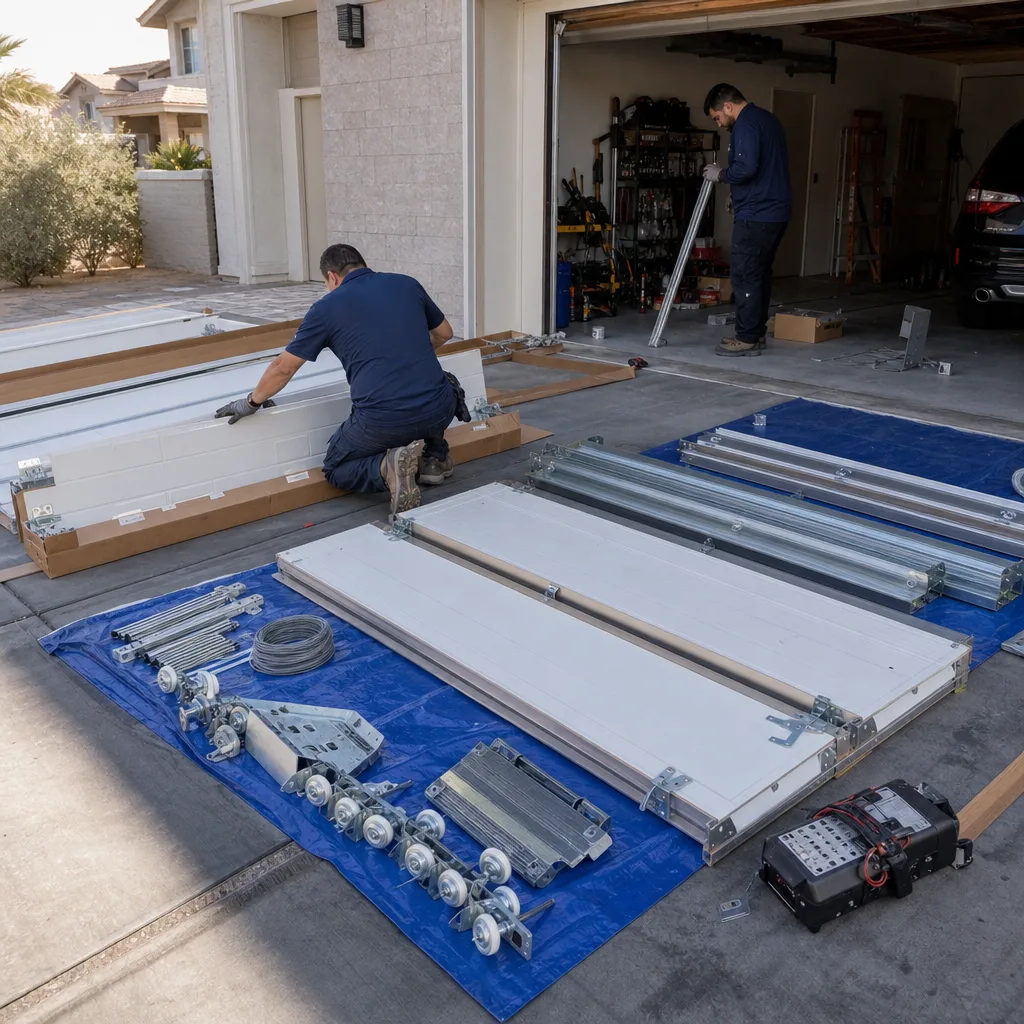
Four data points let us diagnose most problems over the phone and avoid a wasted trip. Have these ready before you dial:
- What the door does when you press the button. Nothing at all, a click but no movement, a hum but no lift, a few inches then stop, or a reverse on close. Each of those points to a different branch of the tree.
- What you see at the springs and cables. A gap in the coil, a cable off the drum, a door hanging crooked, or nothing visible. Describe the spring’s location and type (torsion above the door or extension along the sides).
- What the sensor LEDs show. Solid on both, blinking on one, or dark. This single detail tells us whether it’s a sensor, a wiring fault, or an opener logic issue.
- The door’s make and approximate age, and the opener brand. A Genie opener from 2005 and a LiftMaster from 2018 have different failure modes. A Clopay or Amarr steel door’s panel weight matters for spring sizing.
With those four points, we can usually name the likely cause and a flat written price range before the technician leaves the shop. That’s the whole point of a written price before any work starts, and it’s why we ask.
Common Mistakes to Avoid
- Trying to wind a torsion spring with household tools. The wound spring stores enough energy to break a wrist. Winding bars are hardened steel for a reason, and this is one repair to leave to a trained technician.
- Forcing the door when it’s crooked or binding. Running the opener against a bent track or a broken spring can bend the panels, snap a cable, or burn out the motor, turning a $200 repair into a $1,200 replacement.
- Pulling the red emergency release cord without thinking. Once the door is disengaged, a broken-spring door can drop hard. Only pull it if the door is fully closed and you’re sure it’s safe.
- Ignoring a blinking sensor LED. Most “emergency” calls are a dirty or misaligned photo-eye. Wiping the lenses and checking alignment takes two minutes and costs nothing.
- Replacing the opener when the spring is the problem. If the door is heavy and the opener strains, a new opener won’t fix it. The spring is the load-bearing part, and the opener is only doing the lifting.
- Running the door with a visible cable off the drum. A cable under tension can whip when it releases. Stop and call rather than testing it.
- Hiring the first company that answers without a written price. In Summerlin, the market is busy, and a phone quote that turns into a bigger invoice on arrival is a common complaint. Ask for the flat written price and scope before anyone starts.
See the difference
BeforeAfter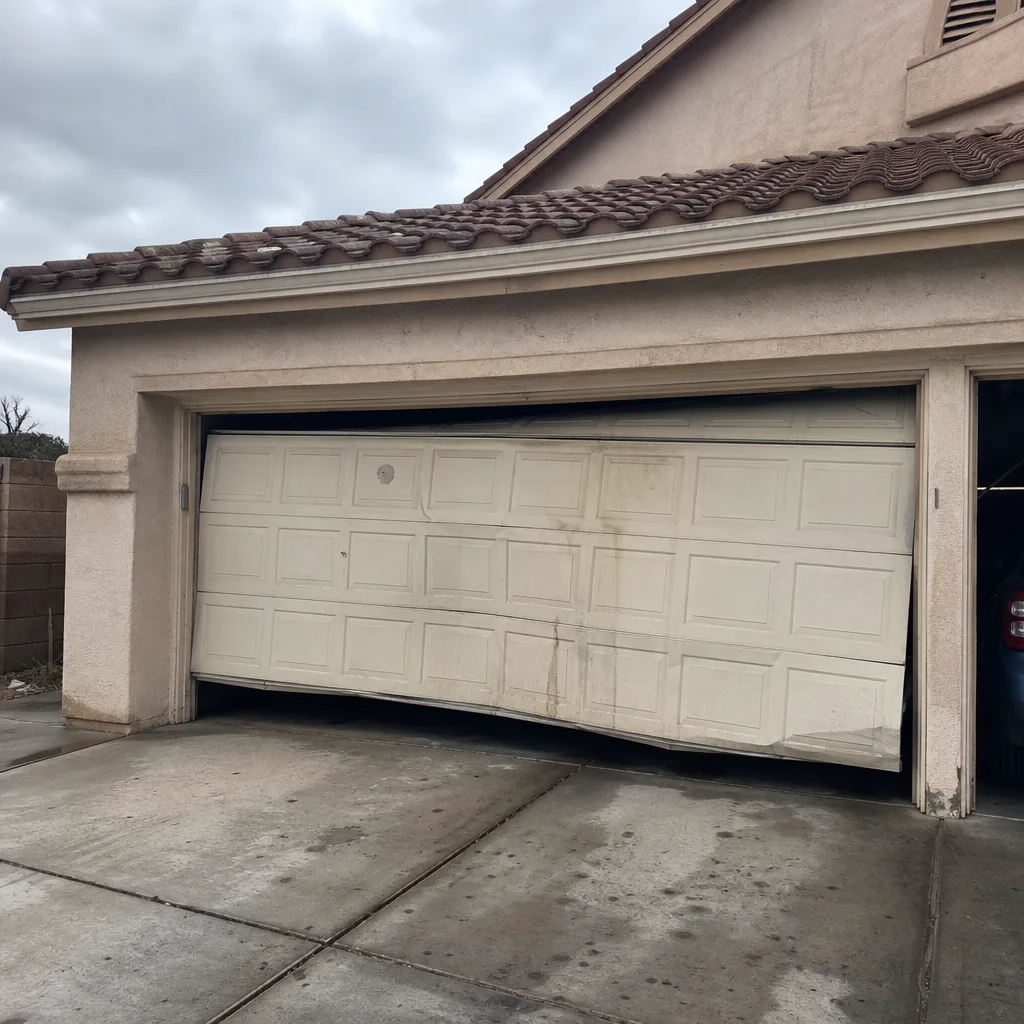 Before
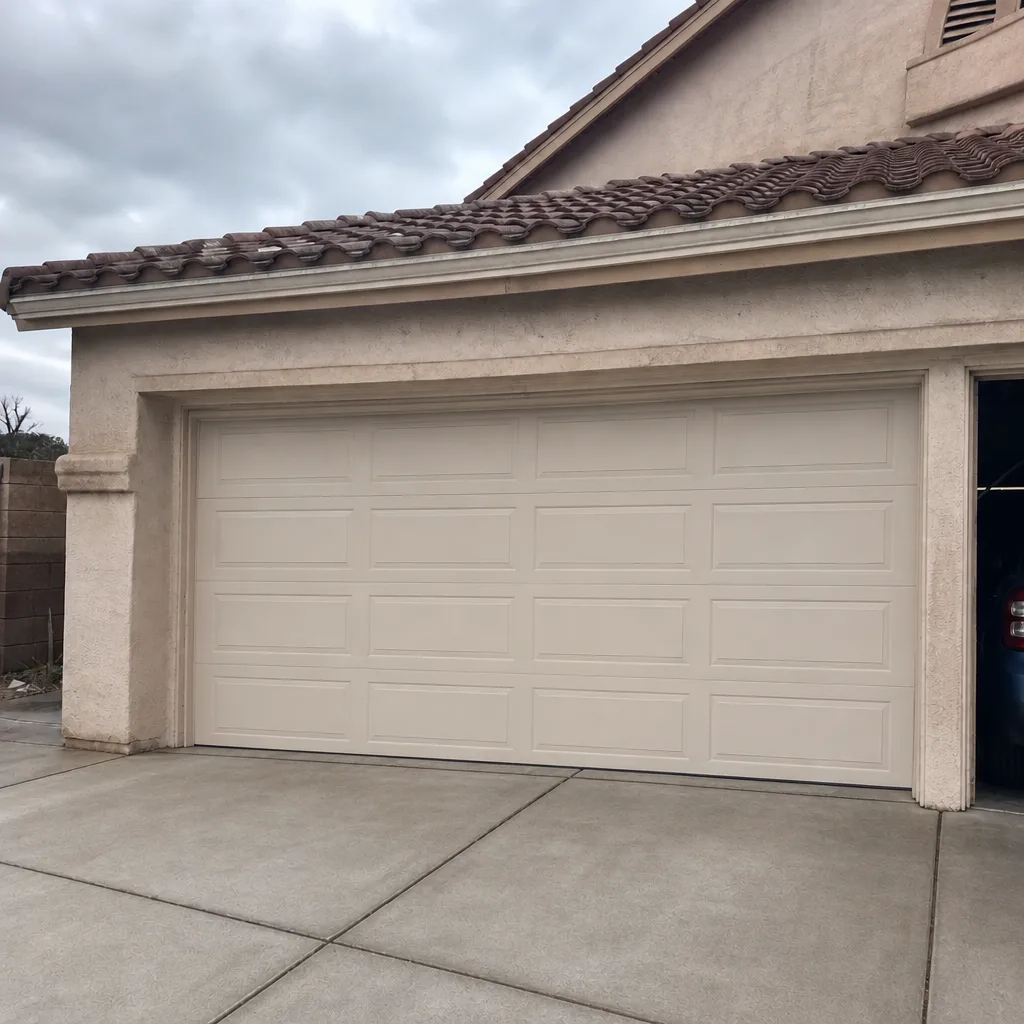 After
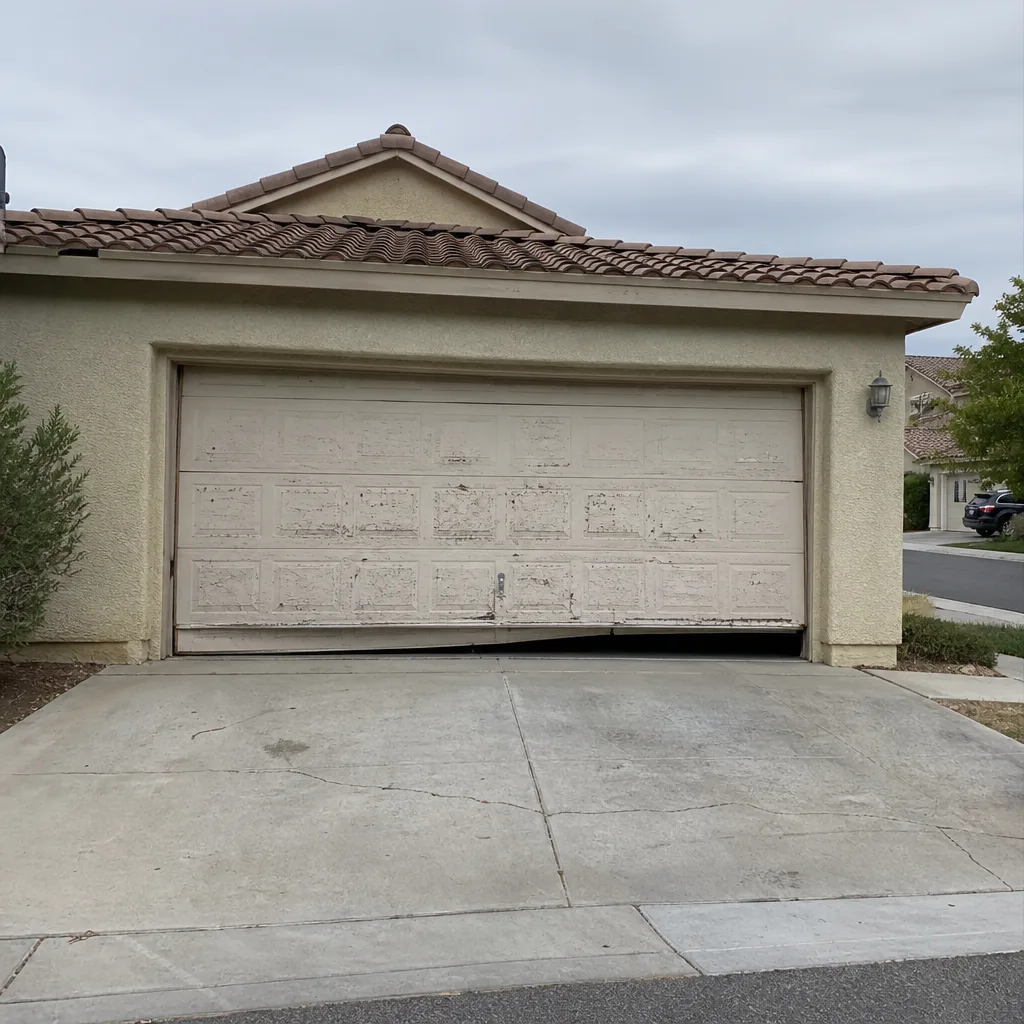 Before
 After
When to Call a Professional
Call a professional if you’ve worked the three branches and the door still won’t operate, if you see a cable off its drum or a door hanging on one side, if you heard a loud bang during operation, or if the opener smells hot or shows smoke. Springs, cables, and opener wiring all carry real risk, and a trained technician can diagnose them in minutes with the right tools. Servo Garage Doors Summerlin offers free estimates in Summerlin; call (844) 797-3654 and describe what you see, and we’ll tell you whether it’s a quick fix or a scheduled repair. Every job comes with a flat written price and a documented photo record of what was found and what was done.
Frequently Asked Questions
The most common cause is a power or sensor problem, followed by a broken spring. Check the outlet, the wall button, and the photo-eye LEDs first, then look at the springs from a safe distance. Call (844) 797-3654 for a free estimate if the door still won’t move after those checks.
No. Torsion springs are under extreme tension and carry enough stored energy to cause serious injury if released incorrectly. A trained technician with the right winding bars should handle it. Call us for a written price before any work begins.
It depends on the part, but a sensor reset or a minor track adjustment is a small line item, while a torsion spring replacement is a larger one. We quote a flat written price and a written scope before any work starts, per Clause 1 of The Haven Standard, so you know the number in advance. Call (844) 797-3654 for a free estimate.
The photo-eye sensors are blocked, misaligned, or dirty, or the close-force limit is set too light. Wipe the lenses and check that both LEDs are solid. If the door still reverses, the sensors or the opener logic need a technician’s eye; call for a free estimate.
No. A door with a broken spring is extremely heavy and can drop without warning, and running the opener against that load can burn out the motor. Keep the door closed and call for service rather than testing it further.
Yes. Our live phone line is answered by a real person around the clock, and we’ll confirm whether the door is safe to leave until a technician arrives. Call (844) 797-3654.
The Bottom Line
Most emergency garage door calls come down to three branches: power, spring, or obstruction. Two of them are cheap to fix and often free to diagnose yourself, and the third, springs and cables, is a hands-off repair that a trained technician should handle. Run the decision tree, note the four data points, and call with useful information rather than a guess. In Summerlin, where heat, dust, and the desert climate stress the hardware, a documented diagnosis and a flat written price before any work begins are worth more than a phone quote. Servo Garage Doors Summerlin offers free estimates; call (844) 797-3654 for yours.
Written by the team at Servo Garage Doors Summerlin.