
Last updated November 17, 2026
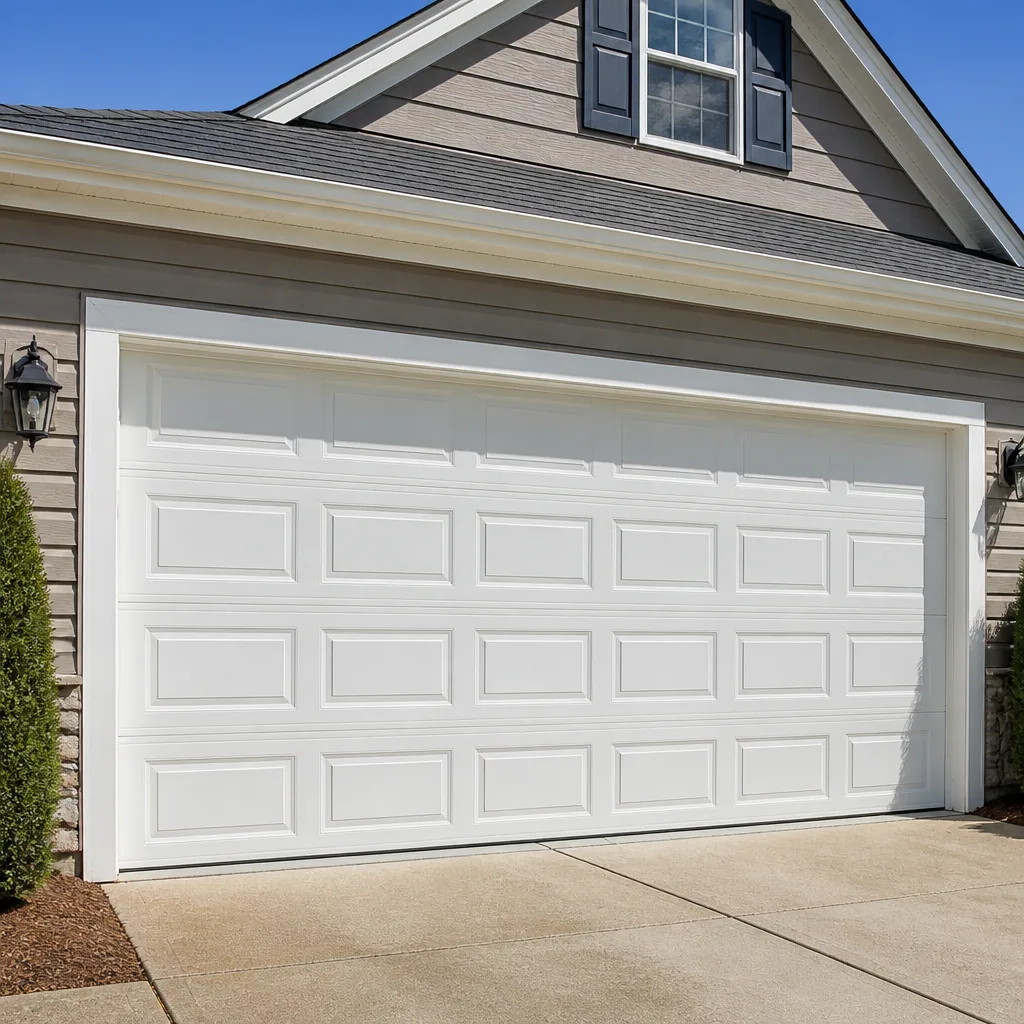 Raised-panel steel
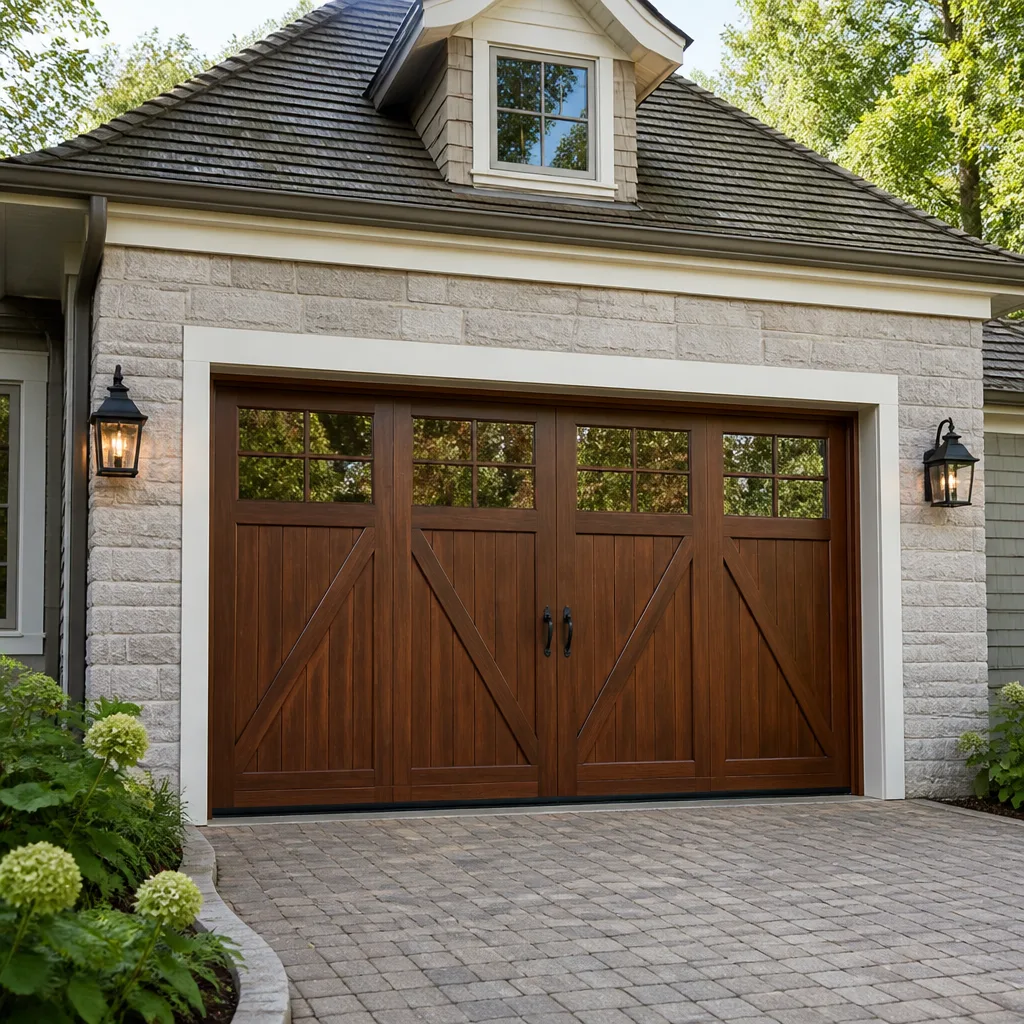 Carriage house
 Modern flush
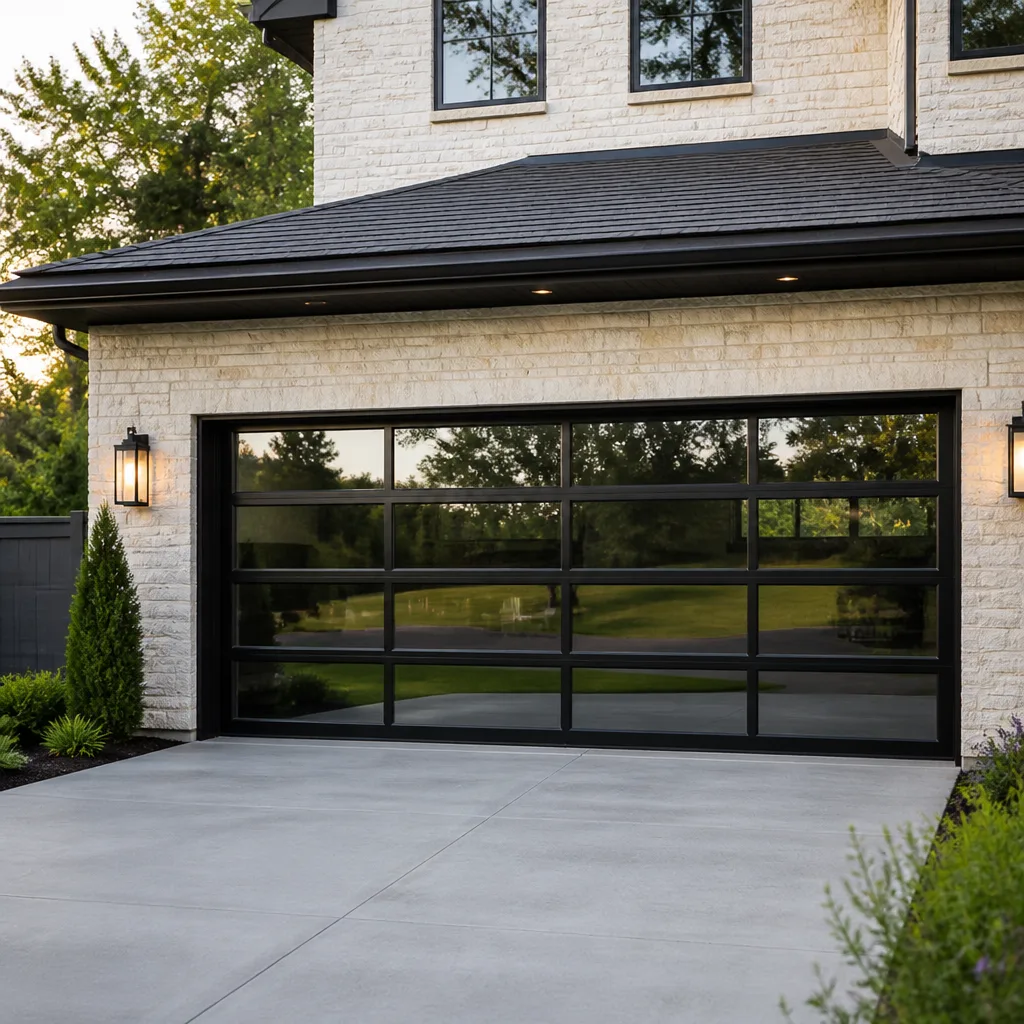 Full-view glass
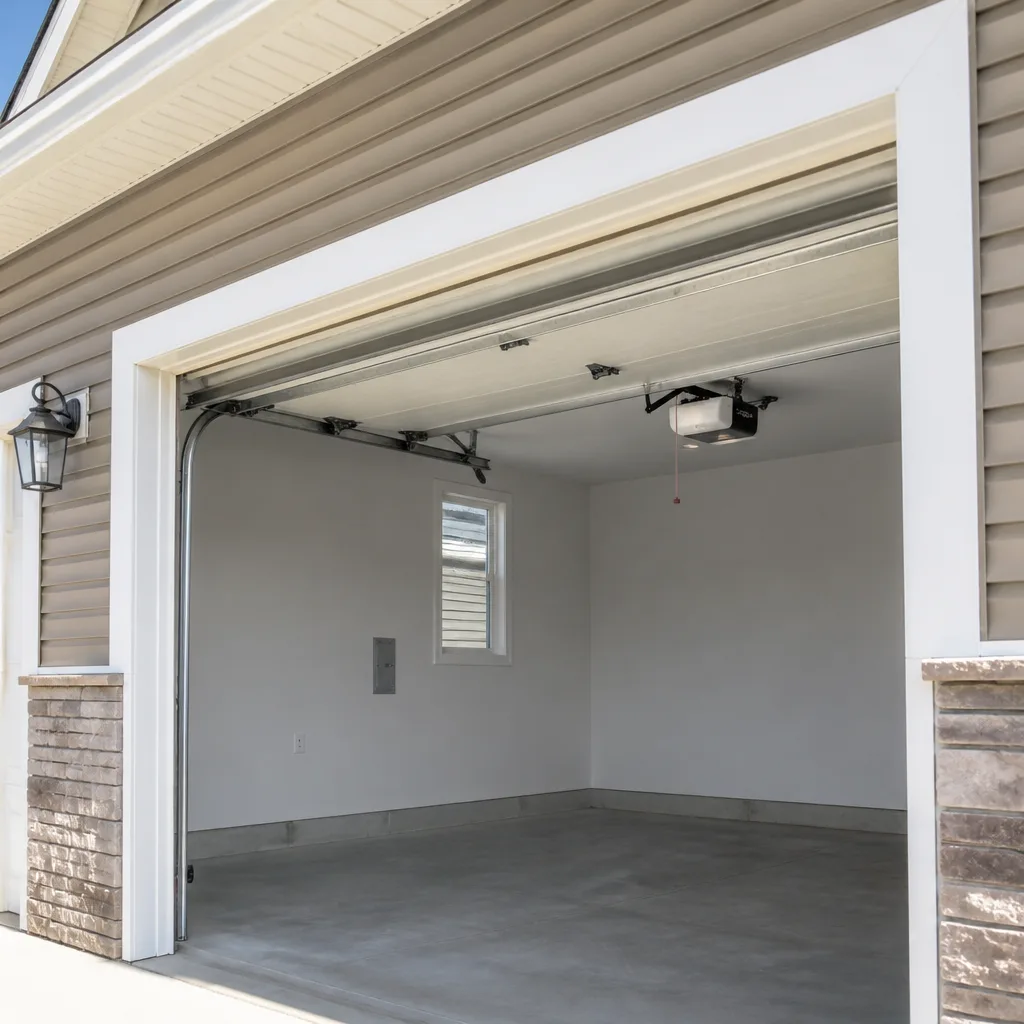 LiftMaster openers
 Chamberlain openers
Full 25-point door and opener safety check with every visit - springs, cables, rollers, tracks, and your LiftMaster or Chamberlain opener included
You get a price before we start. It does not change when the pro arrives.
Get your free estimateEmergency Garage Door Warning Signs Every Homeowner Should Know
A cable that is going to fail in the next 30 days looks different from a cable that has 18 months of life left. The difference is visible from the garage floor if you know what fraying actually looks like: a single broken wire standing off the braid, a thin tail of steel where the cable runs over the drum. Almost every emergency garage door call we run in Summerlin traces back to a warning sign that was already there days or weeks earlier. This guide teaches you the precursors by component, so a failure that would have been an emergency becomes a scheduled appointment instead.
Quick Answer
The clearest emergency warning signs are a snapped torsion spring, a frayed or kinked lift cable, a door that hangs crooked or jerks on one side, and a loud bang followed by a door that won’t lift. Any of these means stop operating the door and get a professional to look at it before someone gets hurt. Most true emergencies started as a smaller, visible problem: a stretched spring, a worn roller, a limit switch that was traveling slightly too far.
Styles & brands we work with
- Raised-panel steel
- Carriage house
- Modern flush
- Full-view glass
- LiftMaster openers
- Chamberlain openers
Table of Contents
- What a failing torsion spring looks and sounds like before it breaks
- How to read a cable that is close to failing
- Asymmetric movement: the earliest warning you can see from the driveway
- The manual balance test: what it catches and when to call
- The loud bang post-mortem: stuck door vs. unsafe door
- Opener warning signs in the 30-to-90-day window
- How to log and photograph warning signs so the tech has a progression
- When a warning sign is a stop-sign, not a to-do item
 Before
 After
What a failing torsion spring looks and sounds like before it breaks
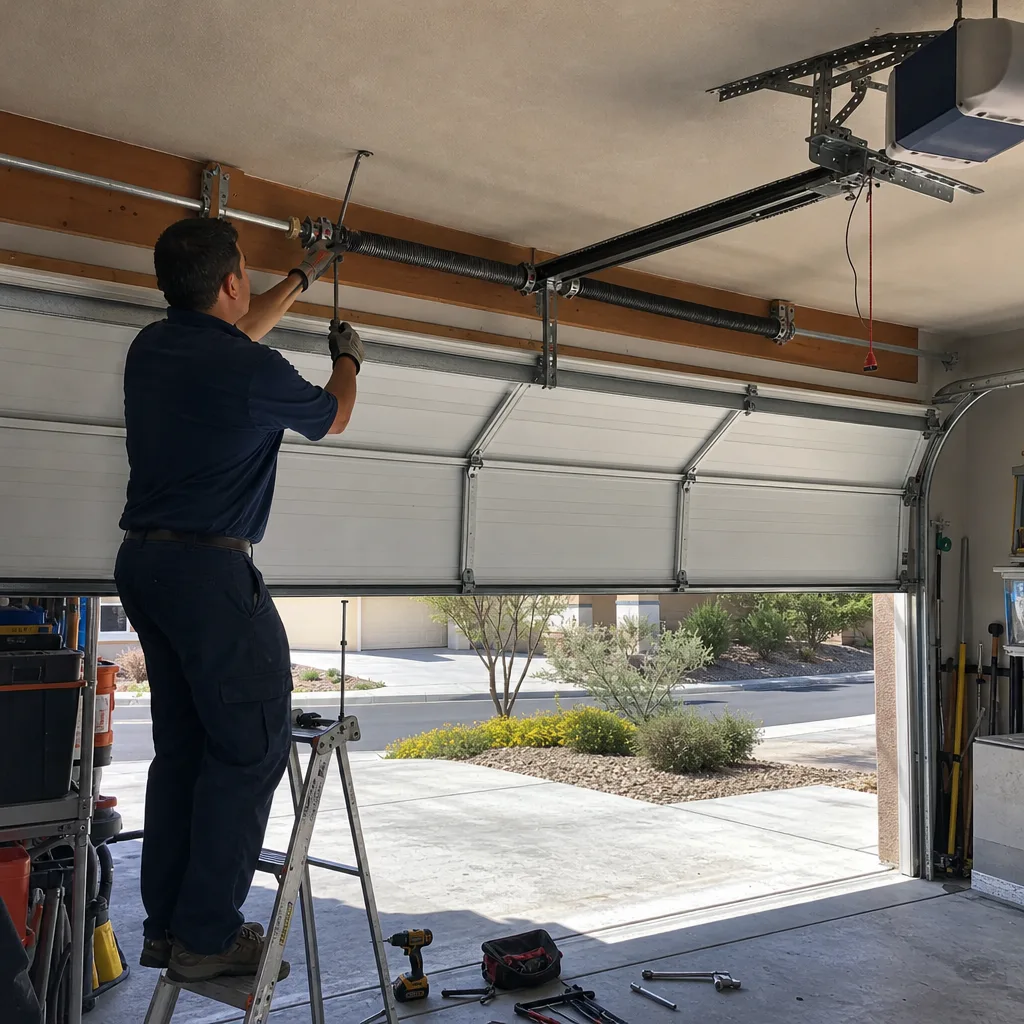
The torsion spring is the coiled steel bar mounted on the wall above the door. It stores the energy that lifts the door, and it winds and unwinds every time the door moves. Springs don’t just snap out of nowhere. They cycle toward failure, and the last 30 to 90 days of a spring’s life produce recognizable signs.
In Summerlin, the desert swing from a cool, dry winter to a 110-degree summer is hard on springs. The metal expands and contracts, and coils that were already near the end of their cycle count tend to break in the first real heat of late spring. This is why we ask homeowners to pay attention to spring noise in April and May. That’s when a spring that was fine in February starts talking.
Listen and look for these pre-failure signals:
- A gap in the coil. Run a flashlight along the spring. A hairline gap between coils that wasn’t there before is the spring stretching as it loses tension.
- Increased effort to lift. If the door feels noticeably heavier than it used to, the spring has lost some of its lift. That’s the spring telling you it’s low on stored energy before the break.
- A popping or clanking on open and close. This can be the spring binding or the cable starting to slip across the drum. Either is worth a look.
- A visible bend or shiny wear mark. A spring that is bent or shows a bright wear patch near one end is further down the road to failure.
Do not reach up and try to adjust or “unwind” a torsion spring yourself. These springs carry enough stored force to break a wrist or worse if they let go while a hand is near the winding cone. That’s a job for a trained technician with the right winding bars. Every spring failure is a mechanical event you can predict with a visual check, but never one you should try to prevent by hand.
If your spring is showing any of the signs above, a technician can measure it, confirm the cycle count, and tell you how much life is left. For a detailed walkthrough on repairs by component, see our page on garage door repair in Summerlin.
How to read a cable that is close to failing
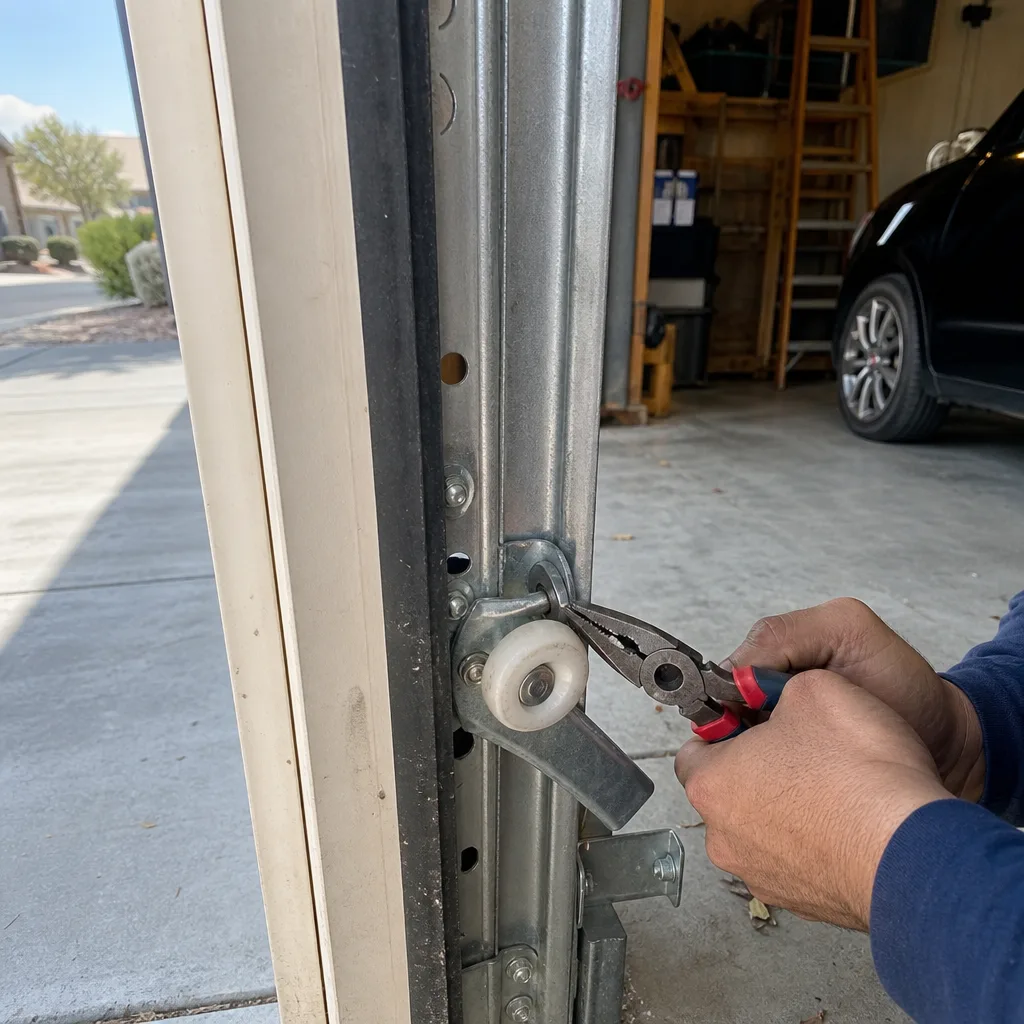
The lift cables run from the bottom corners of the door up over the cable drums at the top of the track. They carry the full weight of the door alongside the springs. When a cable fails, the door drops on one side, the spring unloads unpredictably, and the door can come off the track entirely. Cables give you more visual warning than springs do, if you know what to look for.
A cable with 18 months of life left looks smooth and silver, with a tight, even braid and no stray wires. A cable with 30 days left shows one or more of these:
- Broken filaments. Individual wires in the braid break and stand off the surface like tiny barbs. Even one broken wire is a sign the cable is near the end.
- A “birdcage” or kink. A section of cable that has kinked or twisted on itself. This usually happens when the cable came off the drum and got rewound badly, and it’s a structural weak point.
- Fraying at the drum or the bottom bracket. That’s where load concentrates. A frayed end is the most common early break point.
- Rust or discoloration. Rust compromises the braid. In Summerlin the dry air keeps rust at bay, but a garage with poor ventilation or a history of pooling water can still rust a cable.
A cable that looks bad is a cable that will fail. The fix is replacement on both sides at once, because a single new cable mated to an old one throws the load balance off. A qualified technician can also inspect the drum, the bottom bracket, and the track while they’re in there. We cover that kind of inspection in our guide on what a proper garage door repair actually includes.
Asymmetric movement: the earliest warning you can see from the driveway
Stand in the driveway and watch your door open from the outside. It should rise evenly, both sides tracking at the same height, at a steady speed. A door that lifts slightly crooked, or that jerks and shudders on one side, is telling you that one side is carrying more load than the other. That’s almost always a cable or spring problem developing, and it’s the single easiest warning sign to spot without any tools.
Asymmetric movement shows up in a few forms:
- One side lags behind. The gap between the bottom of the door and the floor differs from left to right as the door comes up. That’s a lift imbalance.
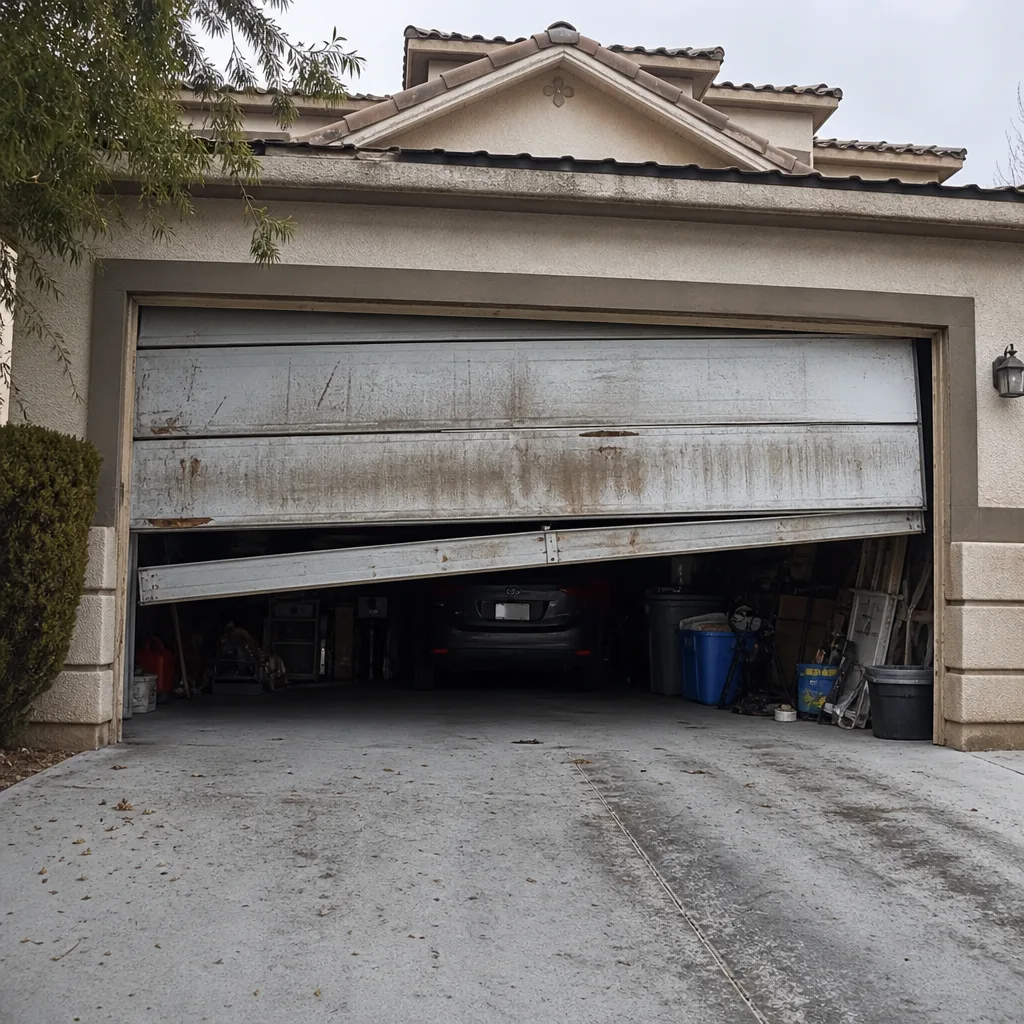
- The door hangs crooked when closed. One corner sits higher than the other. That can be a spring, a cable, or a bent track.
- Jerking or stuttering on the way up or down. That’s often a worn roller or a cable catching on a frayed section, and it can precede a break.
- A door that reverses for no clear reason. The opener’s safety system is telling you something feels off in the travel, and that’s a sign worth chasing down.
You don’t have to diagnose the cause. You just have to notice the pattern. A door that was even last week and is crooked this week is a door to stop operating until someone’s looked at it. That’s a “call soon, not urgent” situation, and it’s exactly the kind of warning that prevents a later emergency.
The manual balance test: what it catches and when to call
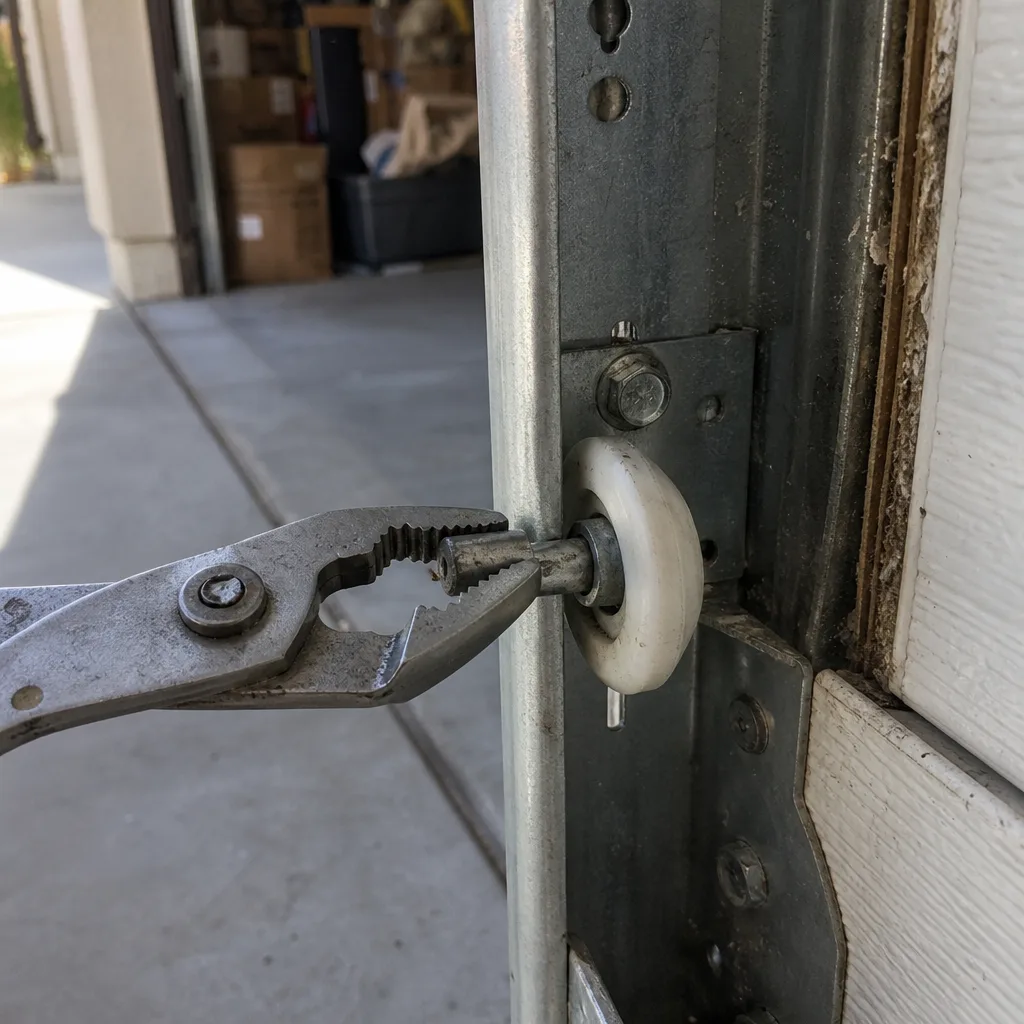
The manual balance test tells you whether the springs are still doing their job. It’s a safe check because you do it with the door disconnected from the opener and moved by hand, but there’s a firm rule: keep your hands clear of the hinges, rollers, and the bottom bracket. Pinch points are real.
Here’s how to run it:
- Close the door completely.
- Pull the red manual release handle to disconnect the door from the opener. The handle is usually hanging from the opener rail.
- Lift the door by the bottom edge to about waist height. A door with healthy springs should lift with moderate, even effort.
- Let go at waist height. A door that stays in place, or drifts only slightly, is balanced.
- Lower it back down, then re-engage the opener by pulling the release handle in the opposite direction, or by operating the opener once.
The result tells you which call to make. A door that holds at waist height passes the test. A door that sinks to the floor on its own, or that feels much heavier than it should, fails. That’s a “call soon” situation, not a “call now.” A door that won’t hold at all and falls fast, or that rises on its own, is a “call now,” because the spring system is either broken or dangerously over-tensioned. In our experience, the balance test catches a failing spring a week or two before the break.
The balance test isn’t a substitute for a technician’s inspection. It tells you if the door is balanced; it won’t tell you if a cable is frayed or a roller is coming apart. That’s why our garage door repair service in Summerlin starts with a component-level look at the whole door.
The loud bang post-mortem: stuck door vs. unsafe door
When a torsion spring breaks, it makes a sharp, loud bang that sounds like a gunshot inside the garage. Homeowners often describe it as something falling off the roof. If you’ve just heard that sound, here’s the first thing to know: the bang is the spring unwinding, and it’s almost never the door itself breaking.
What comes after the bang tells you how to respond. There are two outcomes:
- The door is stuck. The opener may still run but the door won’t lift, or it lifts a few inches and stalls. This is the case where the door is disabled, and you need a repair, but it’s not an immediate danger if you leave it alone and don’t force it.
- The door is unsafe. The door is sitting on the floor but one side is loose, the cable has jumped the drum, or the door is off its track. If any of those are true, do not operate the door with the opener or by hand. Don’t stand under it. A door that has lost its spring tension and its cable tension can drop without warning, and the weight of a two-car door coming down on a hand or a foot is a serious injury.
The safest move after a bang is to treat the door as unsafe until a technician confirms otherwise. Don’t pull the manual release if the door is open, because that disconnects the opener and lets the full weight drop. Don’t try to lift it to see if it’s working. And don’t let anyone stand in the doorway while you test the opener “just to check.”
Our trade’s rule of thumb is simple: a broken spring is a repair, a broken spring with a jumped cable or an off-track door is an emergency, and you can’t tell the difference by looking at the door from across the garage. That’s a call worth making, and in Summerlin we handle those around the clock. Our guide on emergency garage door situations walks through the same sequence.
Opener warning signs in the 30-to-90-day window
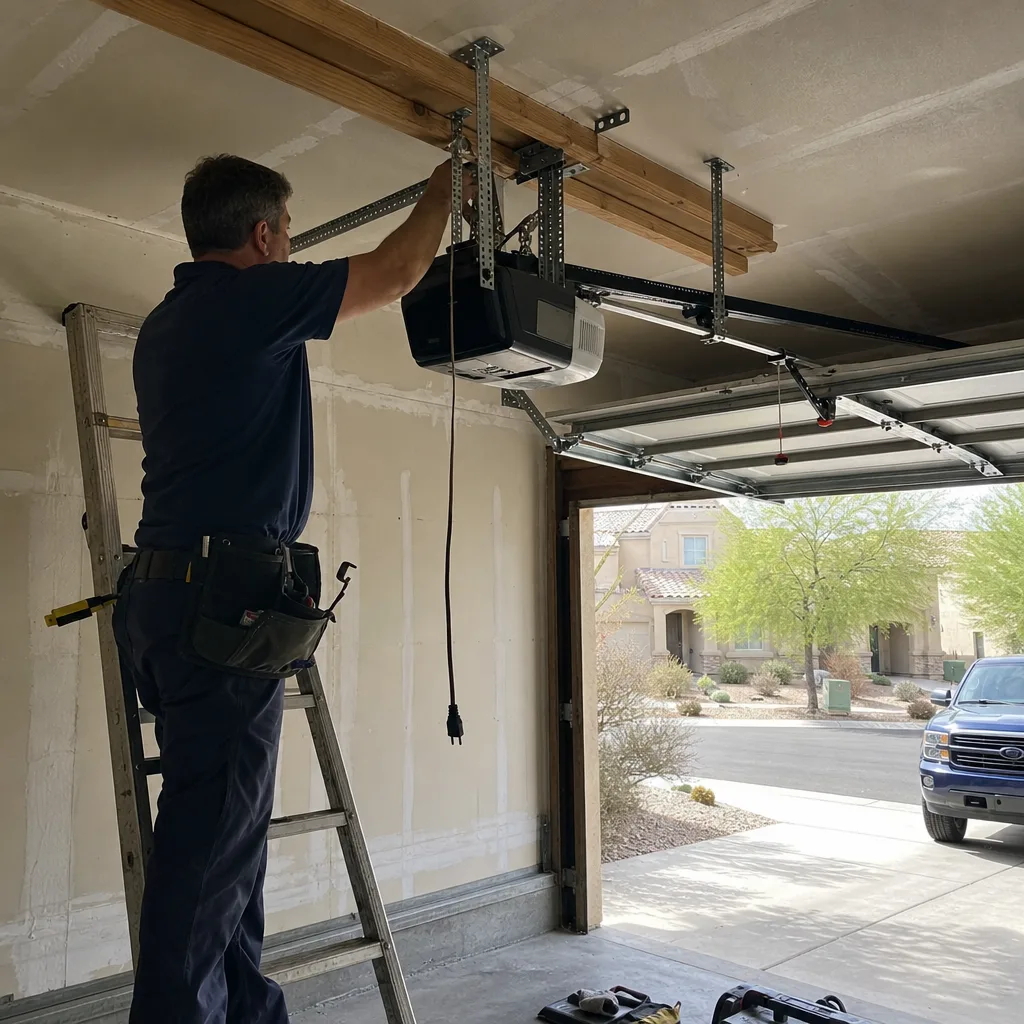
The opener is the part most likely to give you months of notice before it fails outright. Opener problems also tend to mimic door problems, so knowing the difference saves you a wasted service call. Brand by brand, the symptoms are similar: a LiftMaster or Chamberlain logic board that’s failing will behave differently from a generic unit, but the warning signs are recognizable across the board.
Watch for these opener-specific signals:
- Inconsistent travel. The door stops a little short one day and overshoots the next. That’s usually a limit switch drifting, and it’s a warning that the opener’s settings are out of adjustment.
- Grinding or groaning from the rail. A worn trolley carriage or a failing gear set makes noise before it stops working. If the rail sounds dry or gritty, the opener is telling you something’s wearing.
- The opener reversing on its own. A door that goes up and then comes back down without hitting anything can be a safety sensor issue, a limit switch, or a logic board problem. Whatever the cause, chasing it now beats a door that won’t close at 11 p.m.
- Remote or wall control cutting in and out. A failing logic board or a weak receiver can drop commands intermittently before failing completely. A Craftsman or Raynor unit that’s losing its remote signal is giving you a heads-up.
- A dull, distant hum with no movement. That’s often the motor turning while the trolley isn’t engaged. It can mean a stripped gear, and it’s a warning that the opener is nearly done.
A failing opener is usually a “schedule it” situation, not an emergency, unless the door is stuck open or can’t be closed at all. If you’re hearing a warning sign now, our page on garage door opener repair and installation in Summerlin covers what a proper diagnostic looks like.
How to log and photograph warning signs so the tech has a progression
A single data point is hard to work with. A photo from six weeks ago next to a photo from today is a documented progression, and that changes how a technician can help you. It also changes the repair: a problem that’s been getting worse for weeks is a different job from a problem that appeared overnight.
Here’s a simple logging routine that takes about five minutes a month:
- Photograph each component every 30 days. The torsion spring, the cable drums, the bottom brackets, and the rollers. Use the same angle each time so the photos line up.
- Note the date and any noise. A short note like “April 12 – spring quiet, door lifts even” is enough. Six weeks later, “May 24 – spring popping on open, door slightly crooked” tells a story.
- Keep a video of the door opening from the driveway. Ten seconds of video catches asymmetry and speed, which still photos miss.
- Save the photos in one album on your phone. When you call, you can send them ahead or show the technician on arrival.
That documented sequence is the difference between a vague description and a real diagnosis. It also fits the way we work. Clause 4 of The Haven Standard is the rule that we photograph the failed component before quoting a replacement, and a customer’s own photos complete that record. You’ll receive the same documented photo record of findings and completed work when the technician leaves. If you’ve got a written estimate from another company and you want a second set of eyes, we offer a free second opinion on any written estimate: bring the paperwork.
When a warning sign is a stop-sign, not a to-do item
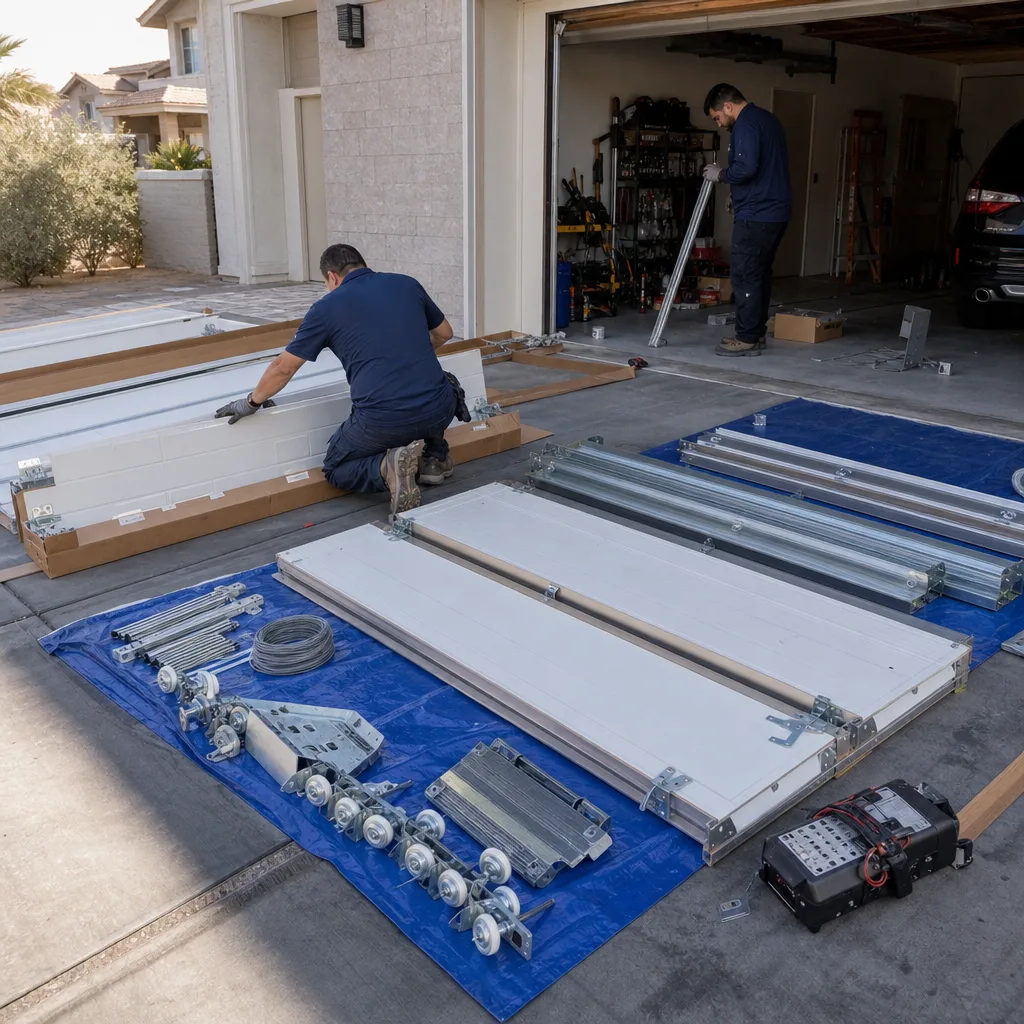
Some warning signs you can note and schedule. Others mean put down the tools and call. The line between the two is about stored force. Garage doors are one of the few things in a home that hold a large amount of energy in a spring and a cable all the time, and that energy is what makes the dangerous components dangerous.
Treat these as stop-signs and call a professional:
- A loud bang followed by an inoperative door, especially with a jumped cable or an off-track door.
- A frayed cable with broken filaments, or a cable that’s come off the drum.
- A door that falls quickly when released from waist height during the balance test.
- A door that is visibly off its track or hanging at an angle.
- A spring that has visibly broken or separated.
None of these are jobs for a homeowner with a ladder and a pair of gloves. Torsion springs and lift cables are under load whenever the door is in any position other than fully open or fully closed. A trained technician has the tools and the experience to work on them safely. Our own technicians have up to 11 years of experience, are background-checked, and every job is quoted in writing before any work starts, per Clause 1 of The Haven Standard. Our garage door repair in Summerlin page covers what a same-day repair looks like for the components above.
Common Mistakes to Avoid
- Forcing a crooked door with the opener. Running a door that’s hanging off balance wears the tracks, the rollers, and the opener at the same time. It’s the fastest way to turn a scheduled repair into an emergency.
- Replacing one cable instead of both. A new cable on one side and an old one on the other throws the load balance off. The old one fails sooner than it would have.
- Pulling the manual release on an open door. That disconnects the opener and lets the full weight of the door drop. Only release the door when it’s closed and the springs are intact.
- Assuming the opener is the problem. In Summerlin we’re often called for a “dead opener” that turns out to be a frayed cable or a failing spring. The opener gets blamed for a door problem it’s only reporting.
- Ignoring a single broken cable wire. One broken filament is the first sign of a cable that’s close to failing. Waiting for the whole cable to break is how a repair becomes an emergency.
- Trying to adjust a torsion spring with a wrench. Torsion springs require winding bars and a specific sequence. A spring that lets go mid-adjustment can cause serious injury.
- Running the manual balance test on an obviously broken door. If the door is already hanging crooked or a spring has snapped, skip the test and call. The balance test is for doors that still look and move normally.
See the difference
BeforeAfter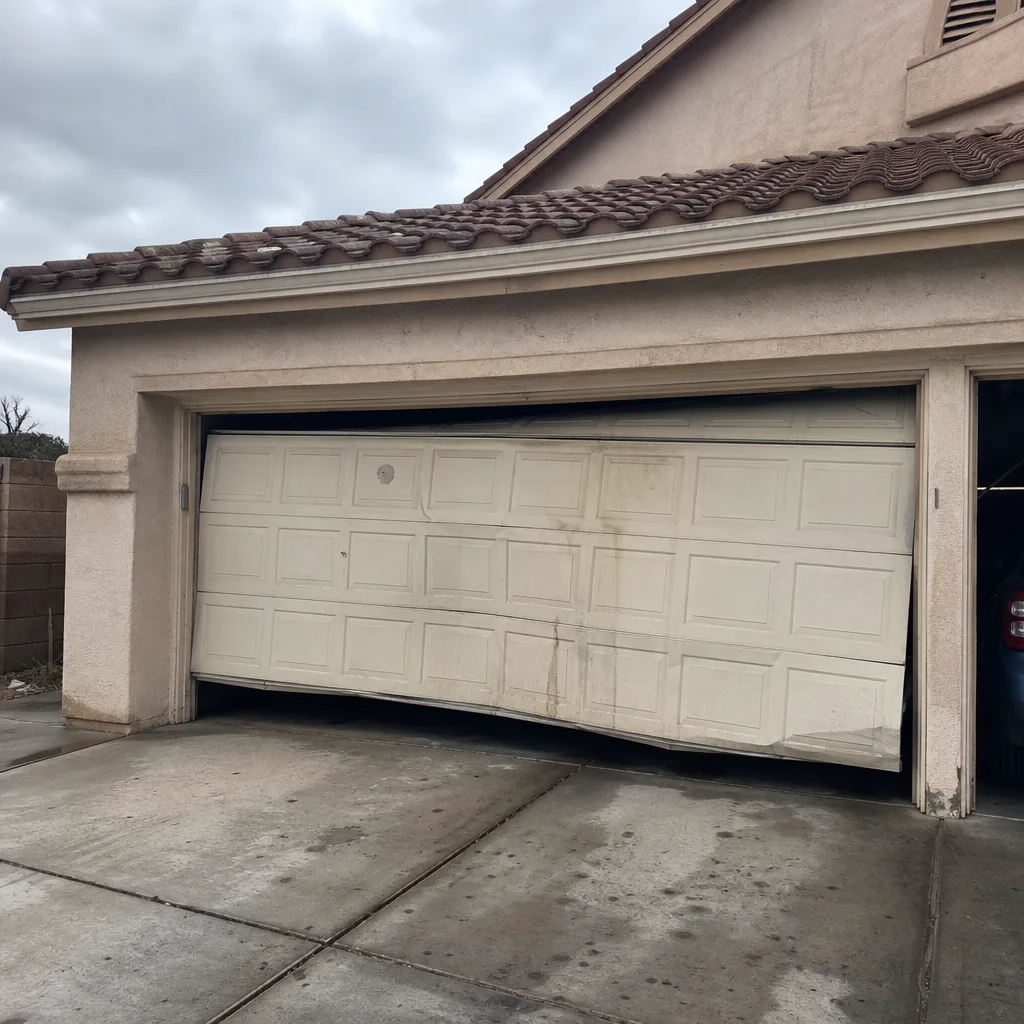 Before
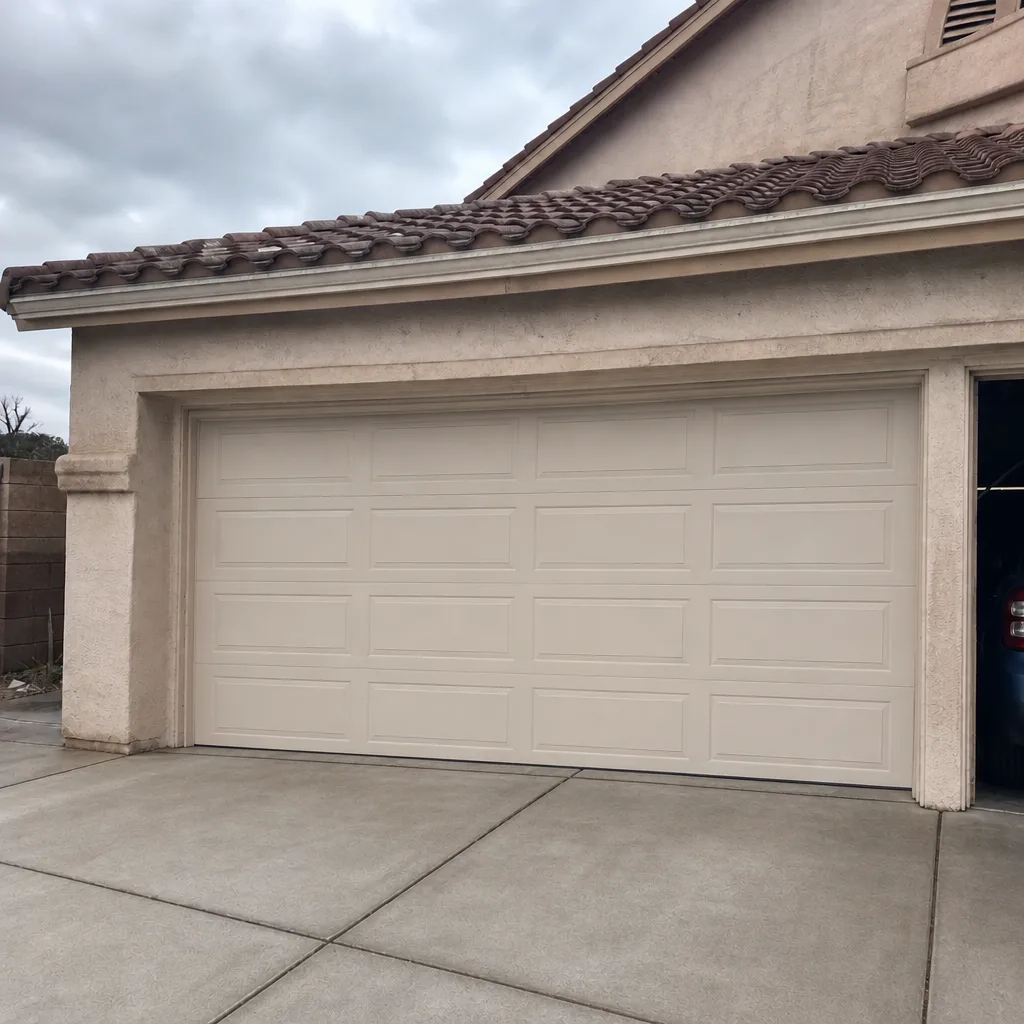 After
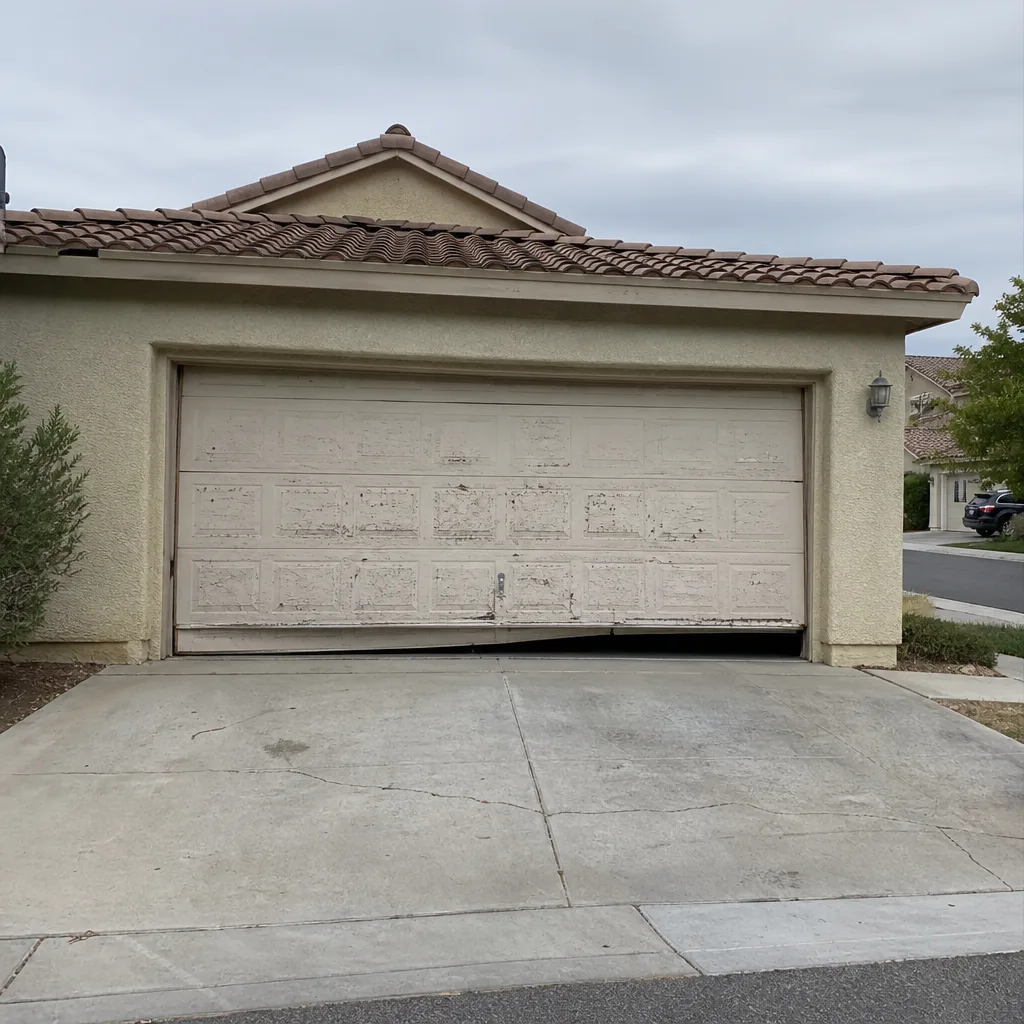 Before
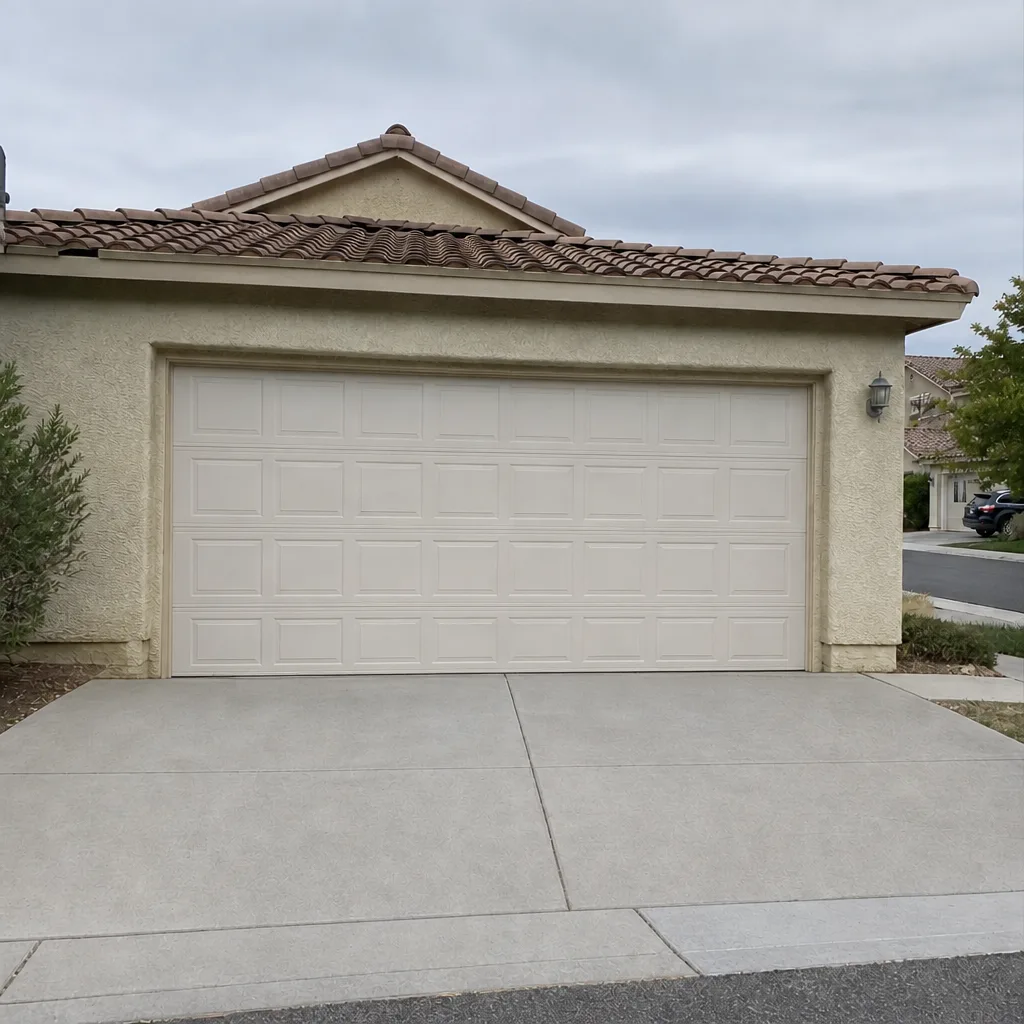 After
When to Call a Professional
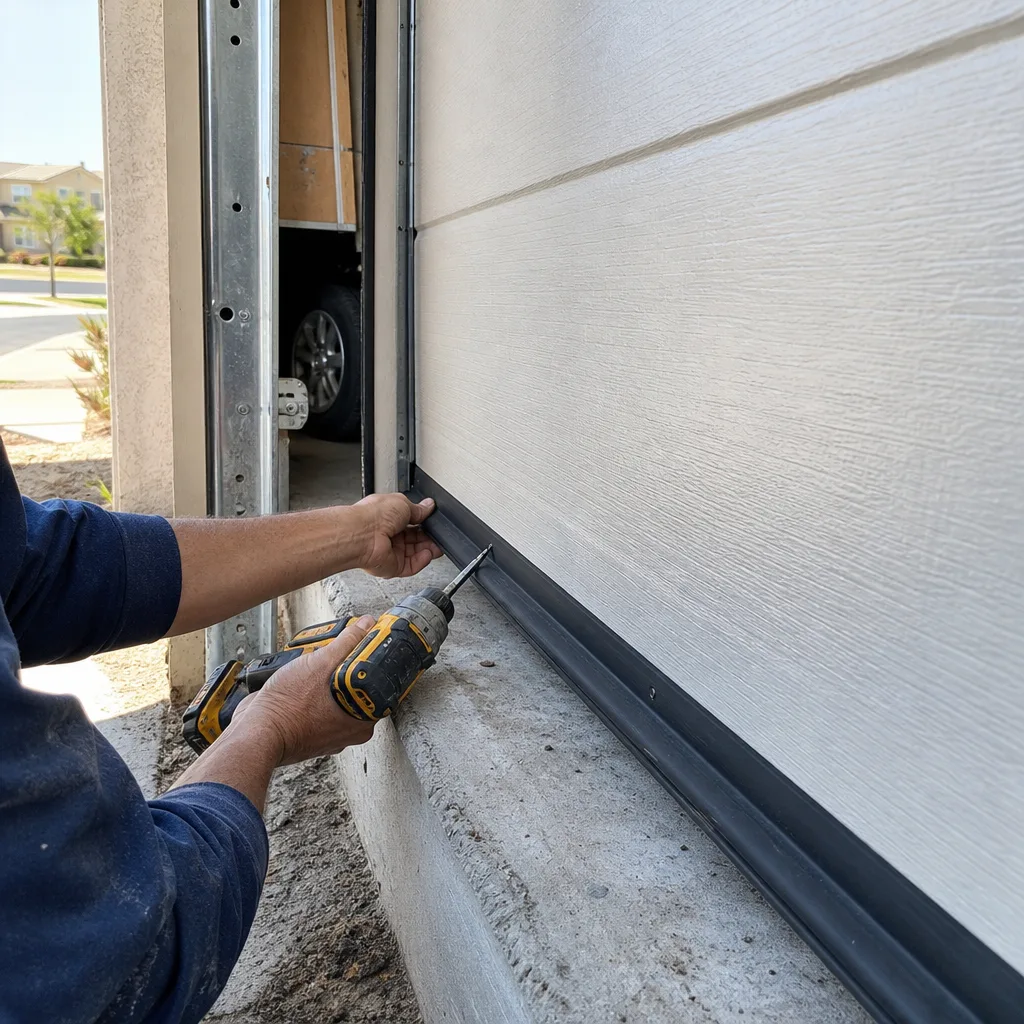
Call a professional when the warning sign involves a spring, a cable, a door off its track, or a door that fails the balance test and falls quickly. Those are the situations where stored force makes a DIY attempt genuinely dangerous. Call us when the door is stuck, crooked, or making a new sound you can’t name. Our technicians have up to 11 years of experience, are license-number-verified, and are background-checked. If you’ve got a documented progression of photos, bring them. Our Summerlin team handles emergency calls around the clock and answers with a live person, not a recording. A repair quote comes in writing before any work starts, and you’ll get a documented photo record when the technician leaves. Servo Garage Doors Summerlin offers free estimates in Summerlin. Call (844) 797-3654.
Frequently Asked Questions
Not usually. Almost every emergency failure of a spring, cable, roller, or opener has a visible or audible warning in the 30 to 90 days before it fails. The trick is knowing the specific signs by component, which is what this guide covers. A loud bang from a torsion spring is the final event, not the first one.
A cable close to failing usually shows broken filaments standing off the braid, a kink or birdcage in the cable, fraying at the drum or the bottom bracket, or rust on the braid. One broken wire is enough to treat the cable as near its end. A technician can inspect both cables and replace them together so the load stays balanced.
A spring about to break typically shows a gap in the coil, a shiny wear patch or a visible bend, a popping or clanking on open and close, or a door that suddenly feels heavier. In Summerlin the late-spring heat is hard on tired springs. If you’re seeing any of these, a technician can measure the spring and confirm how much cycle life is left.
A crooked door is a “call soon” situation, not usually an emergency, as long as the door is still moving and no cable has jumped. Stop operating it with the opener and get it looked at. If the door is hanging at an angle, has come off the track, or the cable is loose, treat it as an emergency and don’t run it.
No. Every job gets a flat, written price and a written scope before any work starts, per Clause 1 of The Haven Standard. You see the failed part photographed before a replacement is quoted, per Clause 4. If you’ve got a written estimate from another company, we’ll give you a free second opinion on it.
For emergency calls, yes: our phone lines are answered live around the clock, and a named technician is dispatched with an on-the-way text. For scheduled repairs and installations, we’ll book a time and deliver the written price up front. Call (844) 797-3654 for an exact quote, and estimates are free.
The Bottom Line
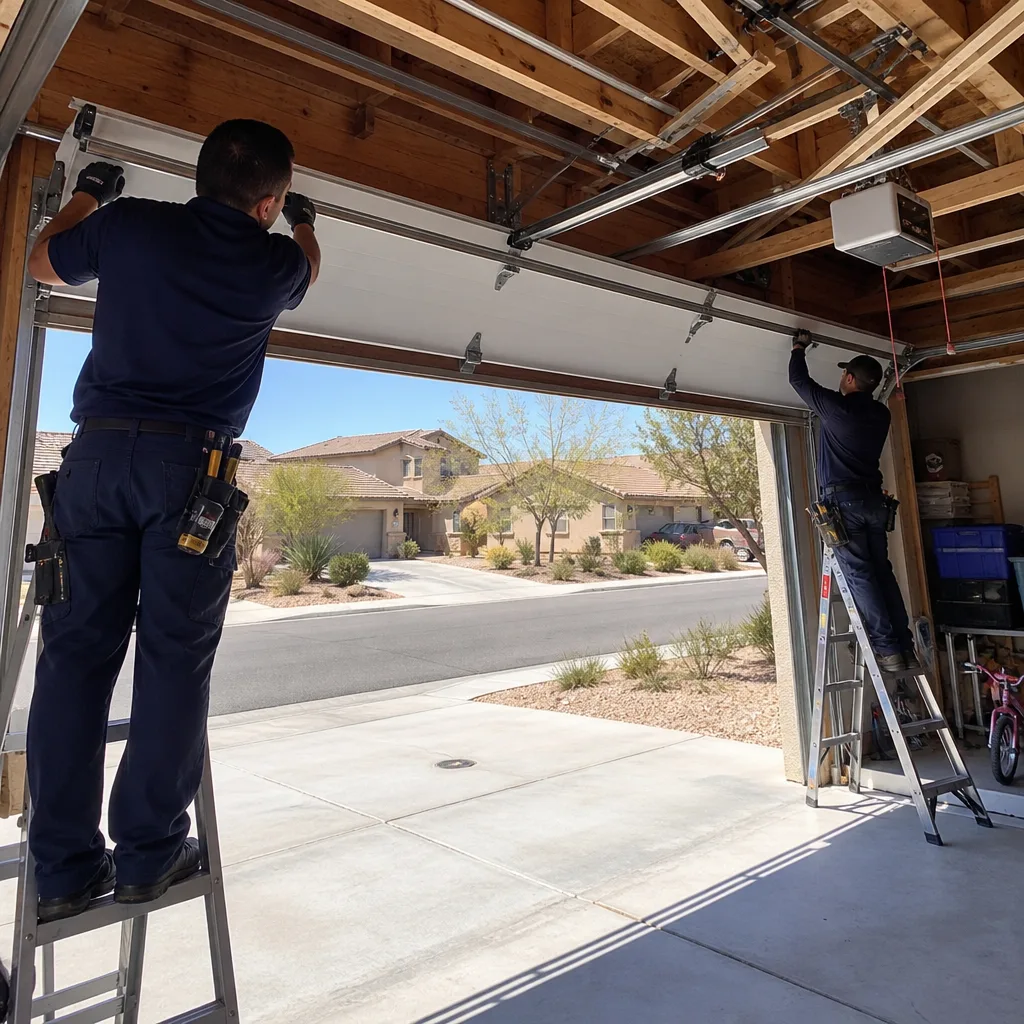
An emergency garage door failure almost always announced itself first. A spring with a gap in the coil, a cable with one broken wire, a door that hangs a little crooked, an opener that stops short, a new noise that wasn’t there last month: those are the signs you can see and hear from the garage floor if you know what you’re looking at. Check your door once a month, photograph what you find, and run the balance test when the door still looks normal. If a warning sign involves a spring, cable, or off-track door, call a professional and leave it alone. A documented progression of symptoms is the single most useful thing you can hand a technician. When it’s time, our team at Servo Garage Doors Summerlin is ready to help, and if you’re weighing a replacement door, our garage door installation in Summerlin page covers what a written measure and price looks like.
Call (844) 797-3654 for a free estimate. Our team serves Summerlin and the surrounding area, answers the phone around the clock, and quotes a written price before any work starts.
Written by the team at Servo Garage Doors Summerlin.