
Last updated November 17, 2026
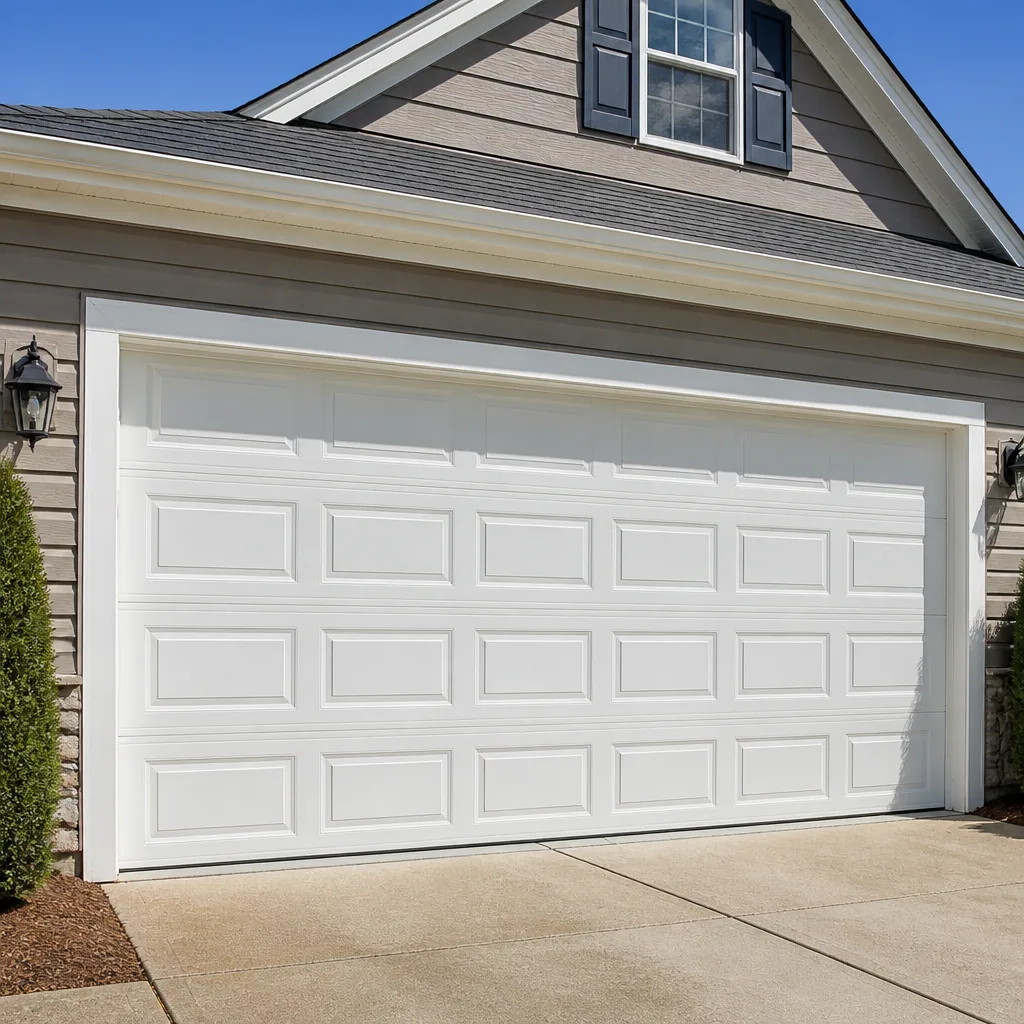 Raised-panel steel
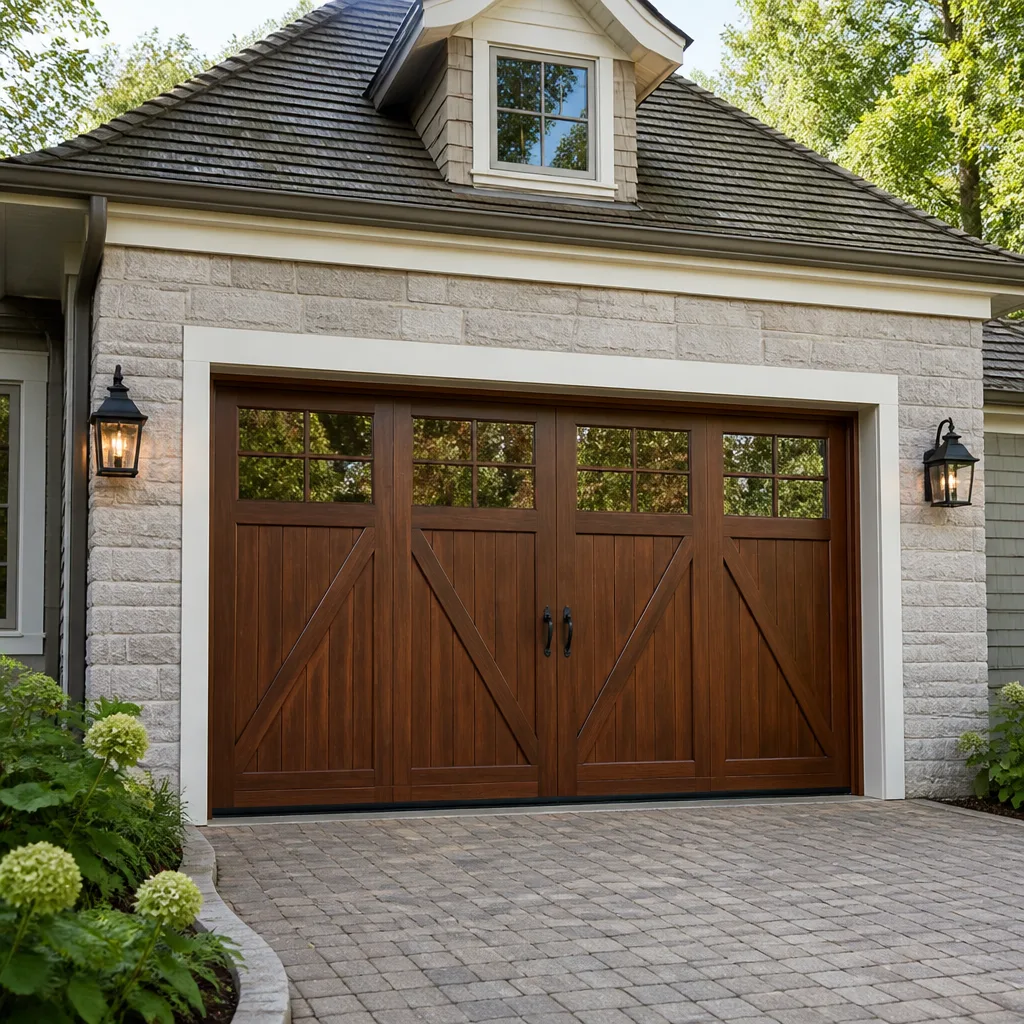 Carriage house
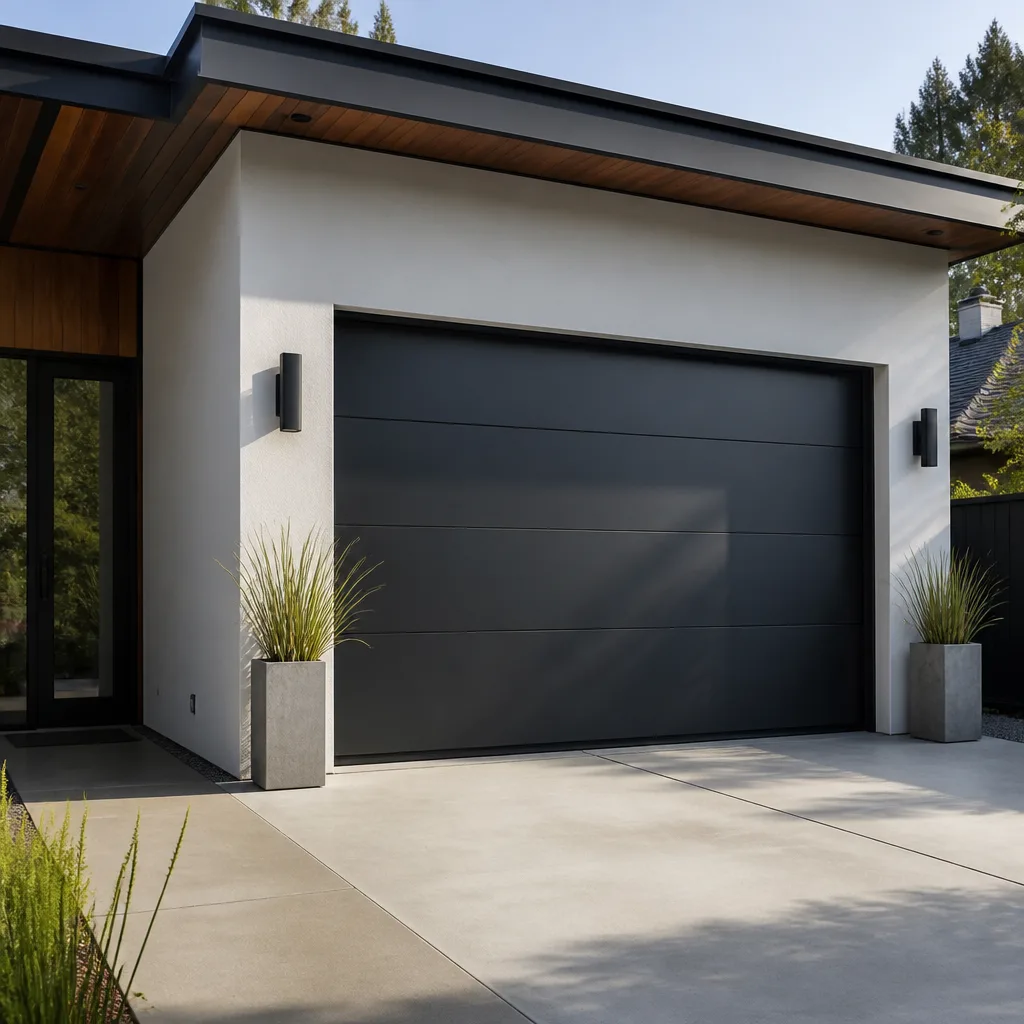 Modern flush
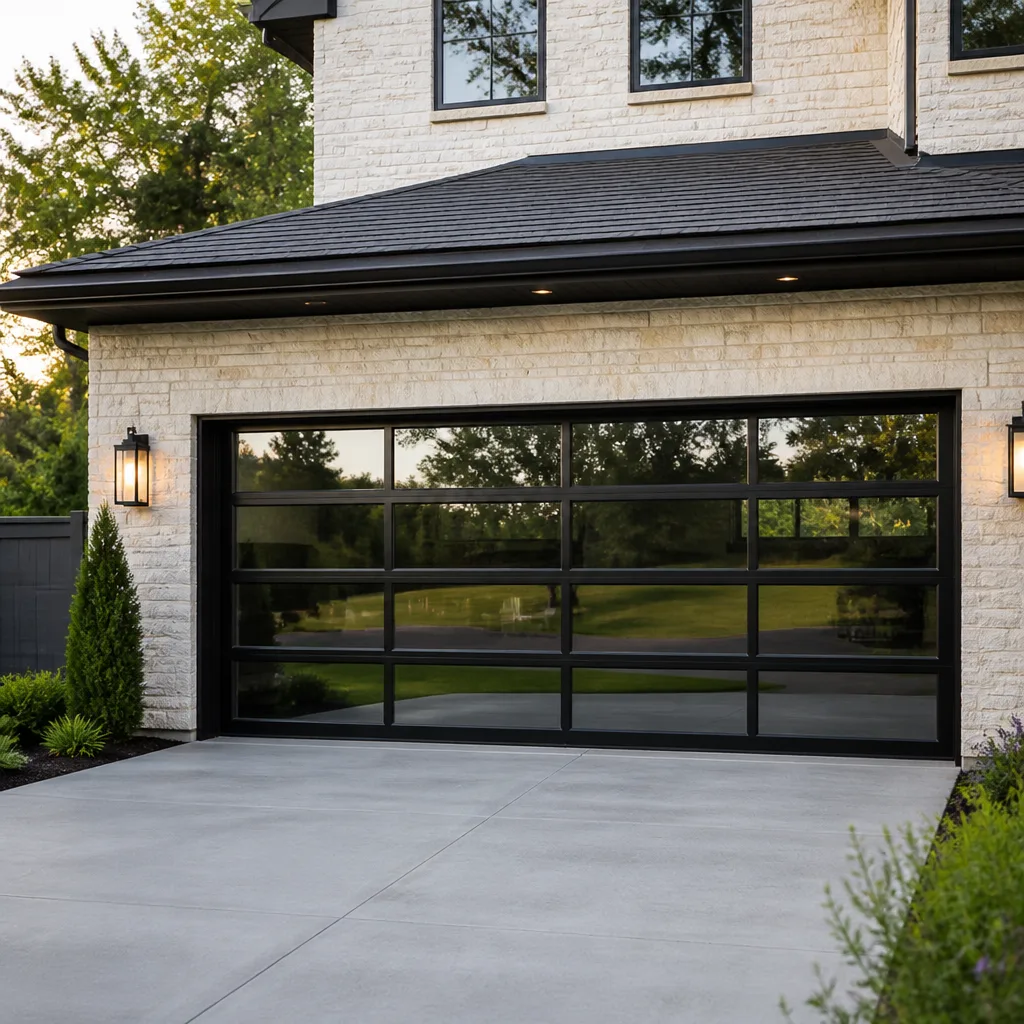 Full-view glass
 LiftMaster openers
 Chamberlain openers
Full 25-point door and opener safety check with every visit - springs, cables, rollers, tracks, and your LiftMaster or Chamberlain opener included
You get a price before we start. It does not change when the pro arrives.
Get your free estimateGarage Door Installation Maintenance Schedule: What to Do and When
New cable stretch is not a defect. It is an expected material property. A freshly wound torsion system can lose one to two turns of effective tension in the first 500 cycles as the cable seats itself onto the drum, and that settling shows up as a door that closes a little harder or sits a hair off level by month three. Most homeowners treat that as a warranty problem or, worse, ignore it. It is neither. It is a 90-day adjustment, and the homeowner who schedules one documented inspection in the first year catches those changes before they become repair bills. This guide lays out the full first-year and long-term schedule, calibrated for the heat cycle we work with here in Summerlin.
Quick Answer
A new garage door needs four scheduled touchpoints: a 30-day lubrication pass, a 90-day adjustment inspection (cables, spring tension, track gap, seal fit), a first-anniversary service, and an annual inspection from then on. In Summerlin, the 90-day inspection matters more than any other because the first summer heat cycle moves hardware more than the rest of the year combined. If you do one thing, book that 90-day visit.
Styles & brands we work with
- Raised-panel steel
- Carriage house
- Modern flush
- Full-view glass
- LiftMaster openers
- Chamberlain openers
Table of Contents
- The First Year: Why It Is the Highest-Value Window
- The 90-Day Inspection: What to Check and Measure
- Cable Stretch: Seated vs. Fraying
- Lubrication Protocol for a New Installation
- How Summerlin’s First Summer Resets Your Hardware
- Your Written Maintenance Log
- The Annual Service After Year One
- The Full Schedule at a Glance
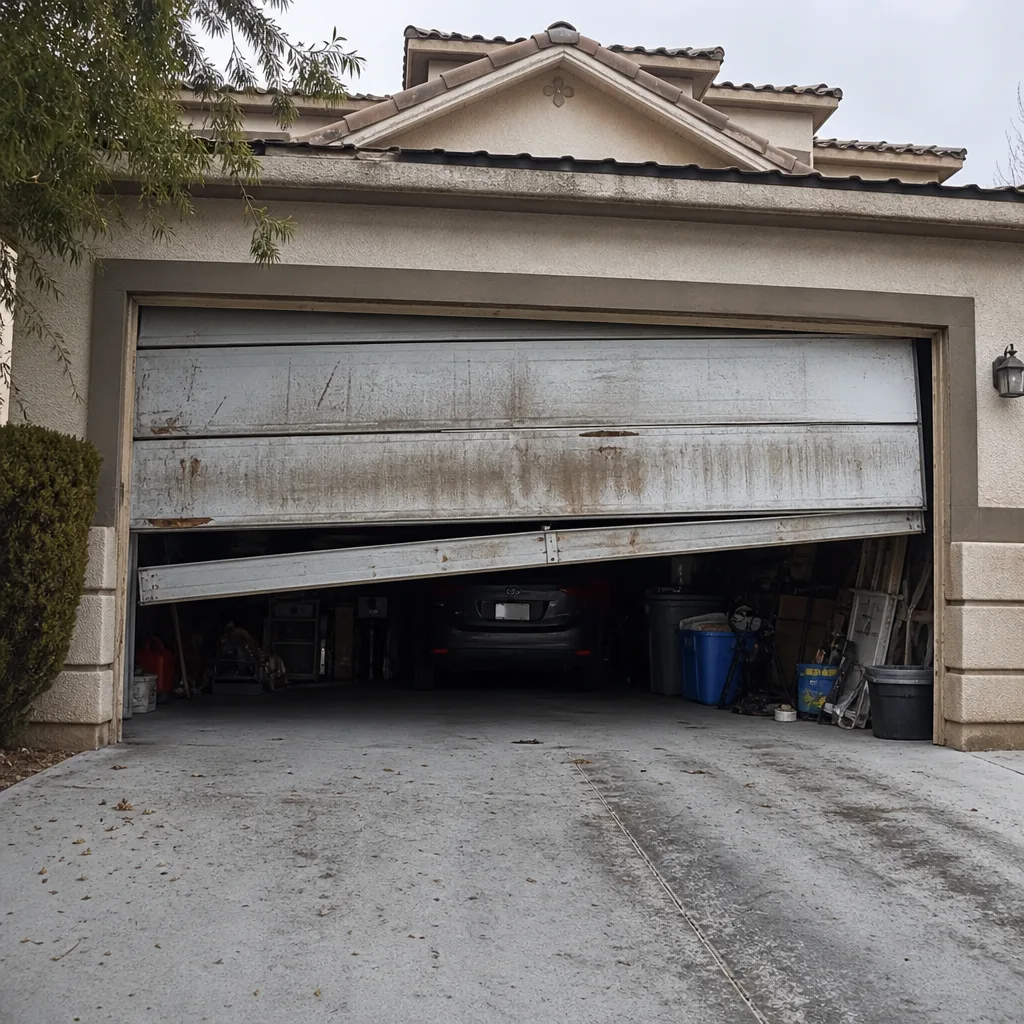 Before
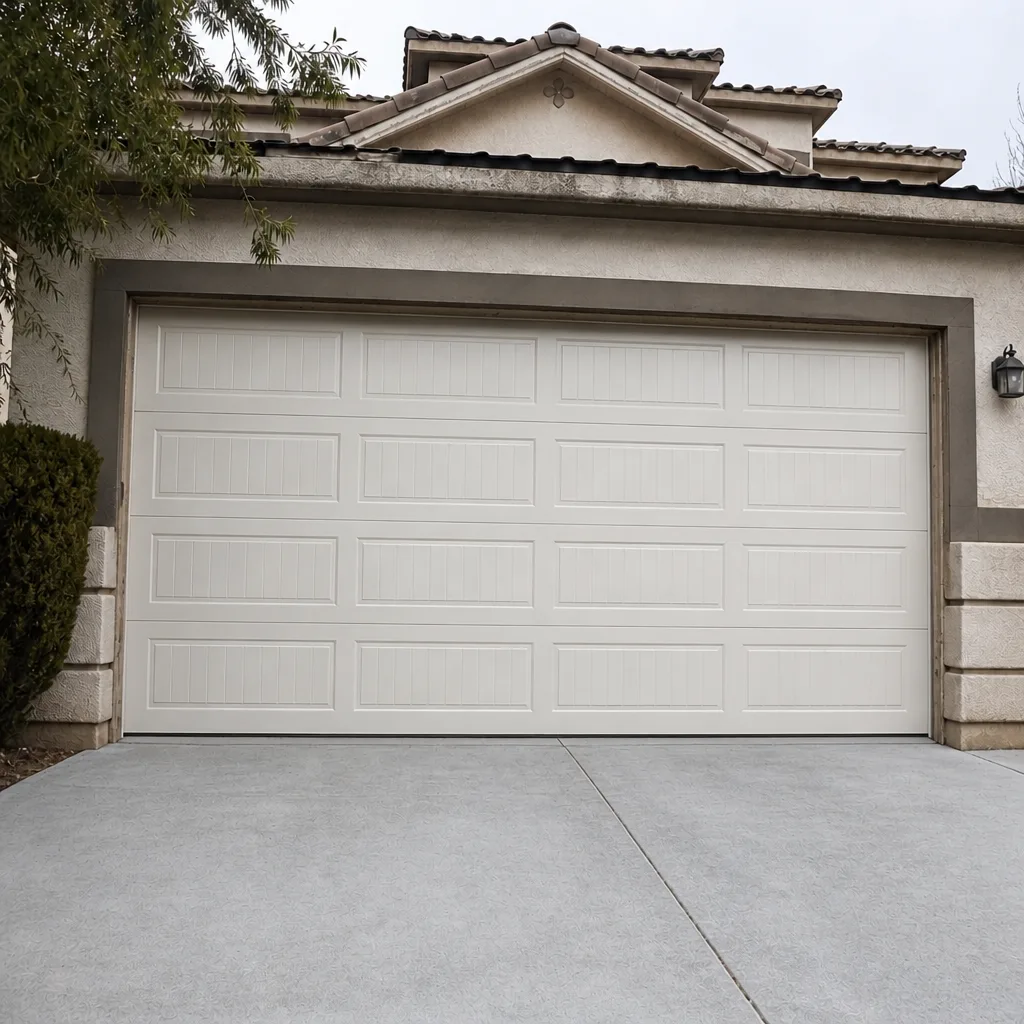 After
The First Year: Why It Is the Highest-Value Window
A garage door out of the box is not a finished machine. It is a set of parts in tension. The springs are wound, the cables are spooled, the panels hang on hinges, and the whole assembly is bolted to framing that may itself shift in the first year. Everything settles. Tracking tolerances that read perfectly on install day drift within a few hundred cycles. Weather seal that sat flush in February presses against concrete that expanded in July. During the first year after installation, the hardware is finding its real position, and a trained eye checking at 90 days sees these changes while they are still cheap to correct.
We’ve watched this play out across thousands of installs here in Summerlin. The doors that sail through their second and third years without a repair call almost always had a documented 90-day adjustment. The doors that develop a frayed cable or a snapped spring in year two usually skipped it.
What Settles and When
- Cables: seat onto the drum within the first 200 – 500 cycles, taking up slack and shifting lift height by a small but measurable amount.
- Torsion springs: normalize their tension as the coils take a set against the shaft. Effective lift torque drops slightly.
- Hinges and rollers: wear in against the track, changing the door’s lateral play and the effort needed to open it.
- Weather seal: compresses or lifts depending on the gap between the bottom panel and the floor slab, which itself moves with the seasons.
- Track: jamb brackets loosen a fraction and the gap tolerance away from the rollers changes.
None of these are failures. All of them are adjustments. The difference between a $150 tuning visit and a $450 repair call is usually whether someone looked at the right time.
The 90-Day Inspection: What to Check and Measure
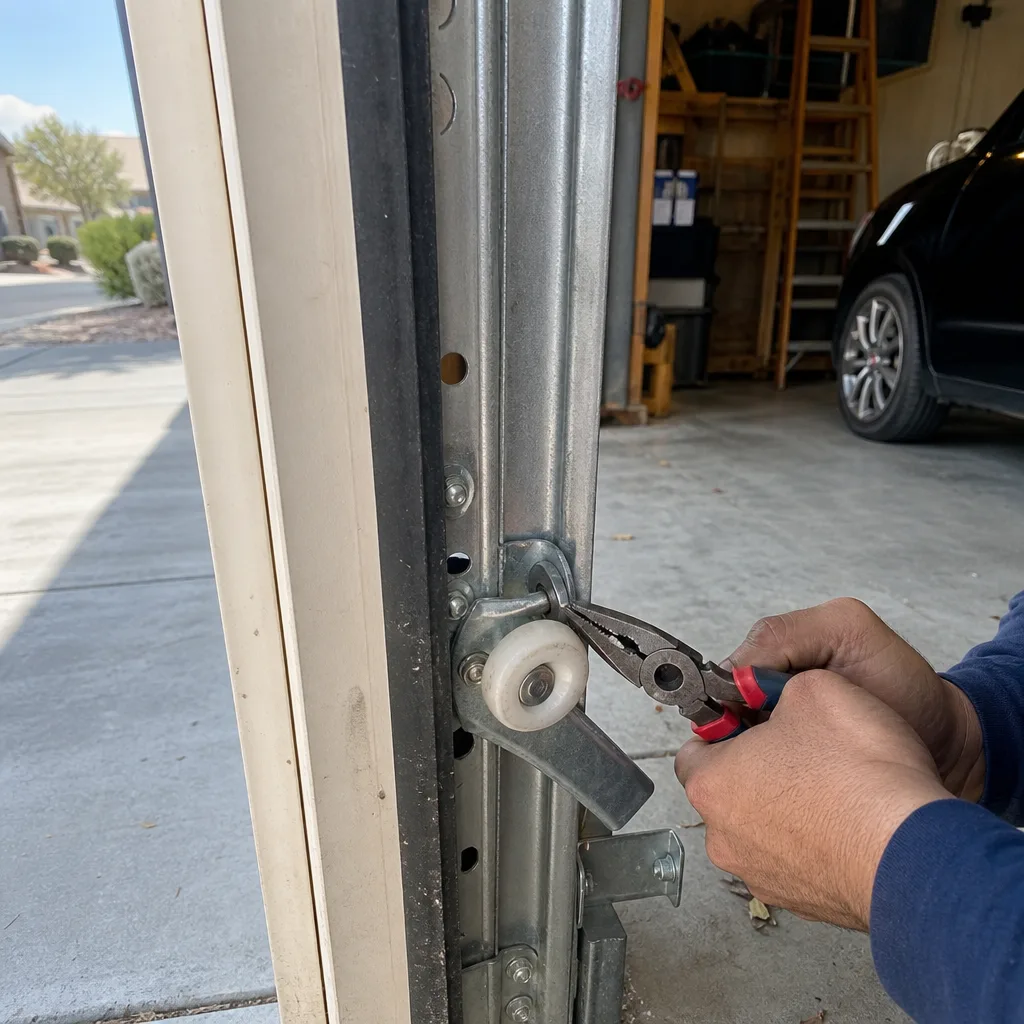
This is the visit that separates a real first-year inspection from a generic annual service. A standard annual check looks at balance, lubrication, and obvious damage. A 90-day first-year inspection looks at the specific things that settle in the first 500 cycles. Here is what should be on the list.
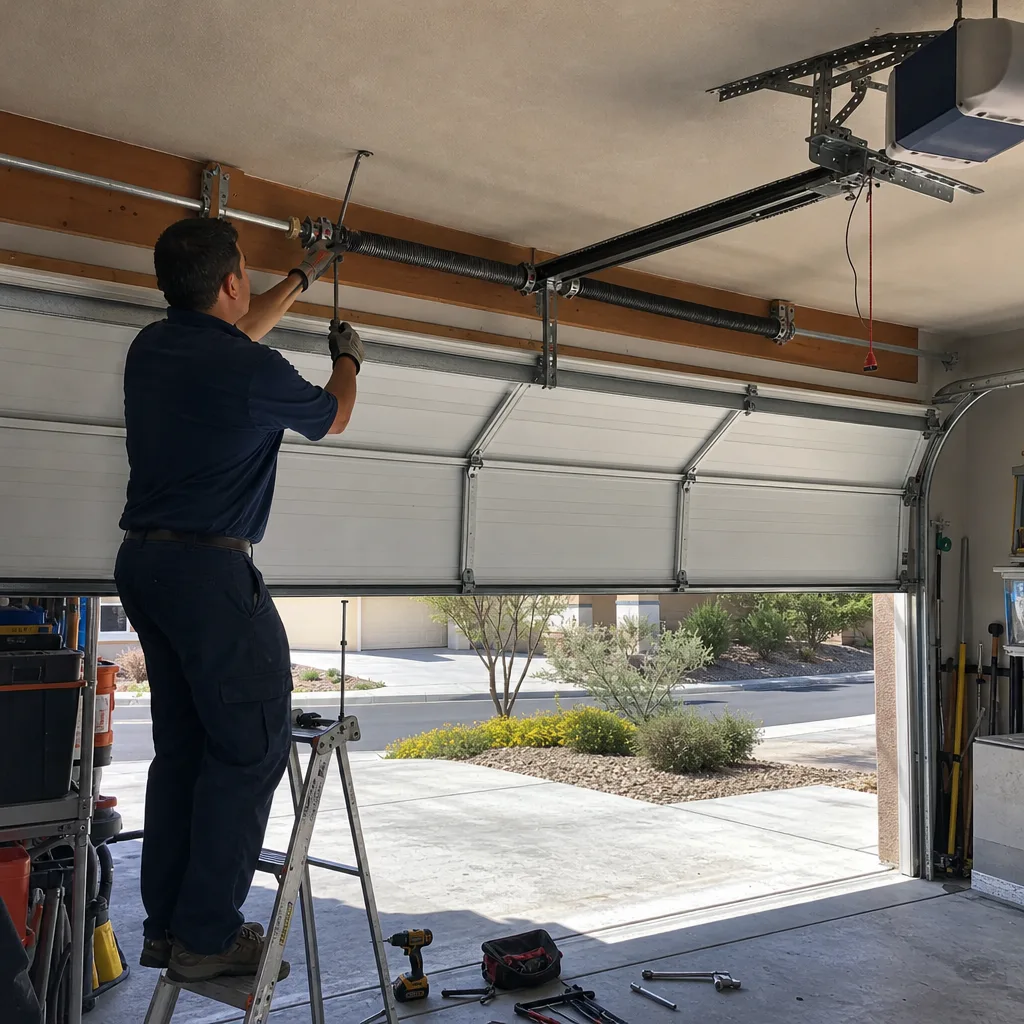
- Measure the torsion spring’s wire diameter and count the coils. Compare against the install record. This is how you know whether the spring has taken an expected set or is heading toward premature fatigue.
- Check cable tension on both sides. The cables should be equally tensioned with no slack at rest. Unequal tension is the most common sign of a cable that hasn’t seated evenly.
- Inspect where each cable winds onto the drum. A properly seated cable sits flush and flat. A cable crossing over itself is a problem to fix on the spot.
- Roll the door and check balance by hand. A balanced door should hold at any point when stopped. If it drops on its own, the spring tension has shifted.
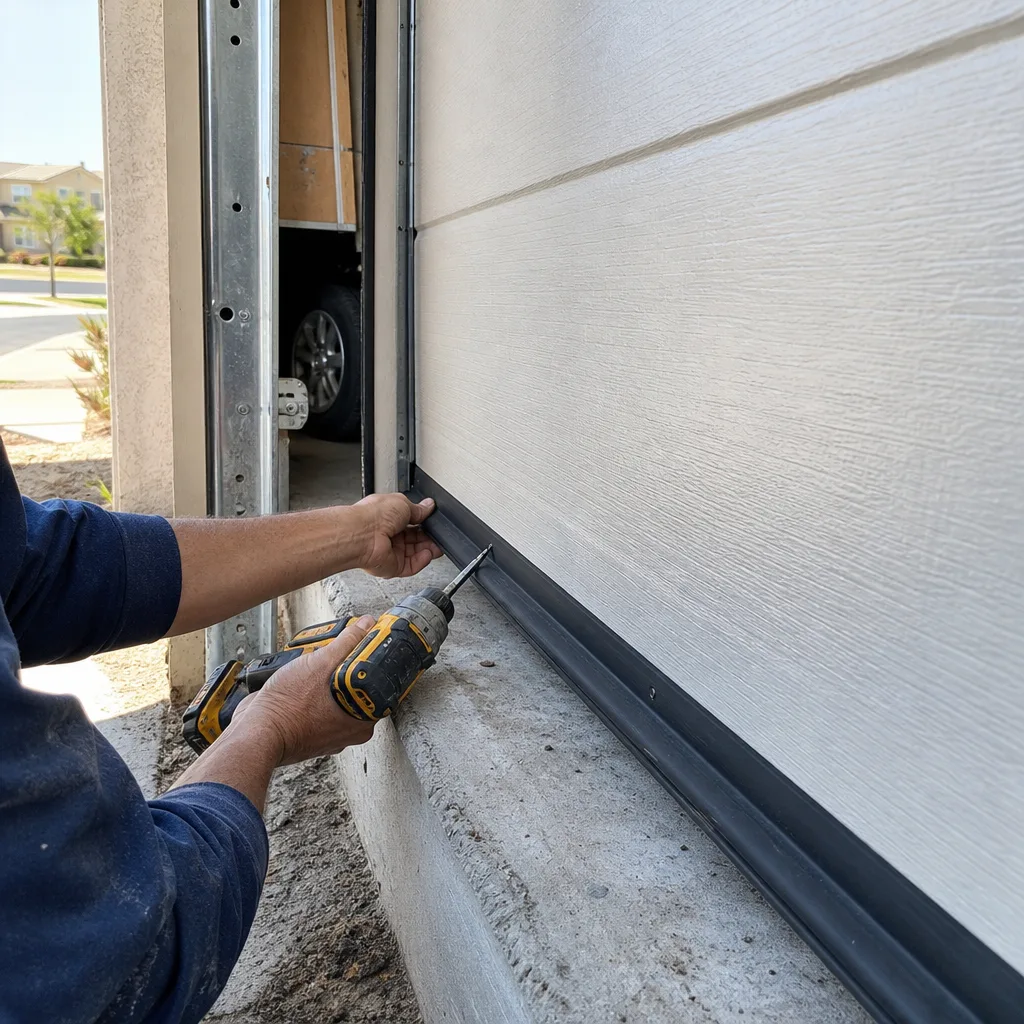
- Check the gap between the rollers and the track. Spec is usually about 1/2 inch of lateral play. Tighter means the track is out of alignment; looser means the brackets have worked loose.
- Inspect the bottom seal against the slab. Run a light or a hand along the bottom edge on a closed door. Any light or draft is a gap that will grow by next summer.
- Test the safety reverse and the wall control. Both should function without lag. This is also the moment to check the opener’s force settings, which need recalibrating on a new, still-tight door.
- Photograph and log everything. The written record is what makes the next visit faster and reveals any trend early.
The photo record matters as much as the numbers. Six months later, when a customer wonders whether the cable has really stretched further, we pull up the 90-day photos and we’re comparing measurement against measurement, not memory against impression.
Cable Stretch: Seated vs. Fraying
Cable definitions get confused, so let’s draw the line clearly. A cable that has seated is one whose strands have taken up the manufacturing slack. It sits flush in the drum groove, shows no slack at rest, and has shifted door height by a small amount during the first weeks. This is normal. You configure it with an adjustment, not a replacement.
A cable that is fraying has broken strands. You can see them as a fuzzy halo around the cable near the drum or the bottom bracket. It is a wear failure, not a stretch, and it means the cable is on a short path to a snap. Fraying cables are a stop-use-now problem because a snapped cable on a live torsion system is genuinely dangerous.
How to Tell Them Apart
- Seated cable: winding is even, surface is smooth, no slack at rest, door operates normally with a slight height change.
- Fraying cable: broken strands visible near the drum, bottom bracket, or where the cable passes over a pulley; occasional popping or snagging; door may drift off level.
- Crossed cable: the wind on the drum overlaps itself instead of lying flat, which causes the door to jerk and hang.
Cable work is not a homeowner task. A live torsion spring carries enough stored force to cause serious injury if it’s released without the correct winding bars and training. When we photograph a cable and it shows fraying, that photo goes in the customer’s record and the recommendation is a replacement, not a repair. When it shows only seating, the recommendation is an adjustment. The visual evidence tells you which one you’re looking at, and this is exactly why we photograph every failed component before quoting anything.
Lubrication Protocol for a New Installation
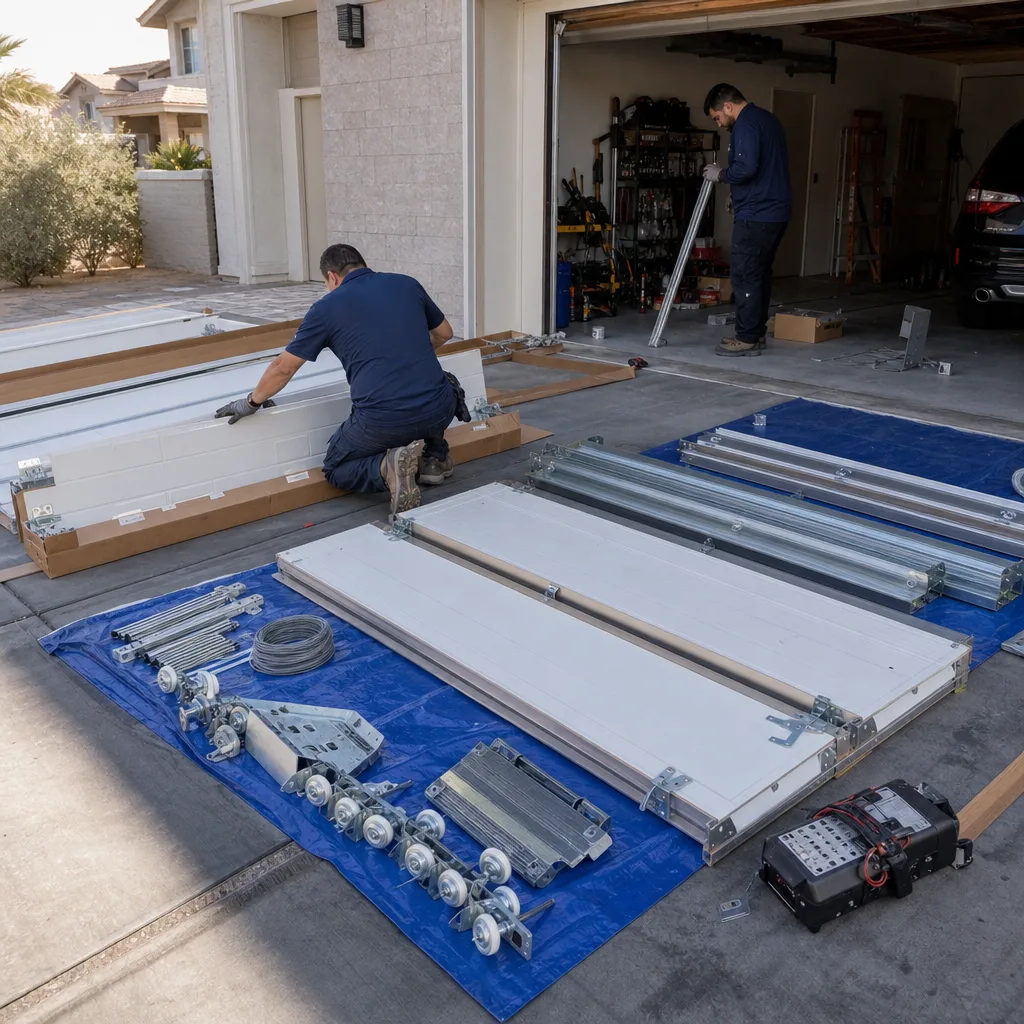
New hardware needs less lubrication than people think, and the wrong lube in the wrong place does real harm. The most common mistake we see on newly installed doors is a homeowner greasing every moving surface on day one. That is too much, too early.
The reason is that certain parts need a light break-in before they take lubricant. On a new installation, the interior of the vertical track should be left dry for the first month. The rollers need to wear into the track to seat properly, and a coated track changes that. Once the door has run a few hundred cycles, a light application of petroleum-free garage door lubricant on the hinges, roller shafts, and torsion spring coils keeps everything quiet and slows wear.
The Correct First-Year Lube Schedule
- Week one: no lubrication anywhere except the hinges if the door is noticeably noisy. Leave the track interior dry.
- Week two to four: light application of garage door lubricant (not WD-40, not grease) on hinges, roller shafts, and the torsion spring coils. Not the track.
- Month three: second light application on the same points. Check the springs for any dried or flaking coating.
- Every six months after: re-apply to hinges, roller shafts, spring coils, and the bearings at each end of the torsion shaft.
What never gets lubricated: the interior of the track, the cable, and the inside of the drum. Lubricant on those surfaces collects grit, causes the rollers to slide instead of roll, and accelerates wear instead of preventing it. On a Clopay or Amarr door with painted steel rollers, the same rules apply; branded hardware does not change the physics.
How Summerlin’s First Summer Resets Your Hardware
Summerlin’s summer is a stress test for a new door, and the first one is the hardest. An installation done in cooler spring weather has hardware sitting at one set of tolerances. Six weeks of sustained daytime highs in the triple digits and 60-plus-degree swings between day and night change every one of those tolerances. Steel expands. Concrete slabs move. Weather seal that hugged the floor in March can sit a half-inch off by August.
What we watch for after a Summerlin first summer:
- Bottom seal gaps. The most common issue. Seal that fit in April often needs replacement or adjustment by the end of July because the slab has grown just enough to break contact.
- Track gap tolerance. The jamb brackets work against the expanding framing. Rollers that had clean 1/2-inch play in spring can bind against the track by mid-summer.
- Panel bow. In extreme heat, steel panels can bow a fraction, especially on wide doors. Not visible to a casual eye, but measurable and worth logging.
- Opener force settings. A door that closed easily in March now needs more effort in August. The opener compensates by drawing more current, which shortens motor life. The force setting needs adjusting, not the opener replacing.
- Spring tension. Heat and cold move the spring, and the effective torque drifts. A 90-day check catches this before the door starts to feel heavy.
The good news: once the first summer settles, the door is stable through most of the following years. The first cycle is the hard one. The Garage Door Installation in Summerlin service we run always includes a seasonal recheck for that reason. The second summer rarely surprises anyone who did the 90-day and first-anniversary visits.
Your Written Maintenance Log
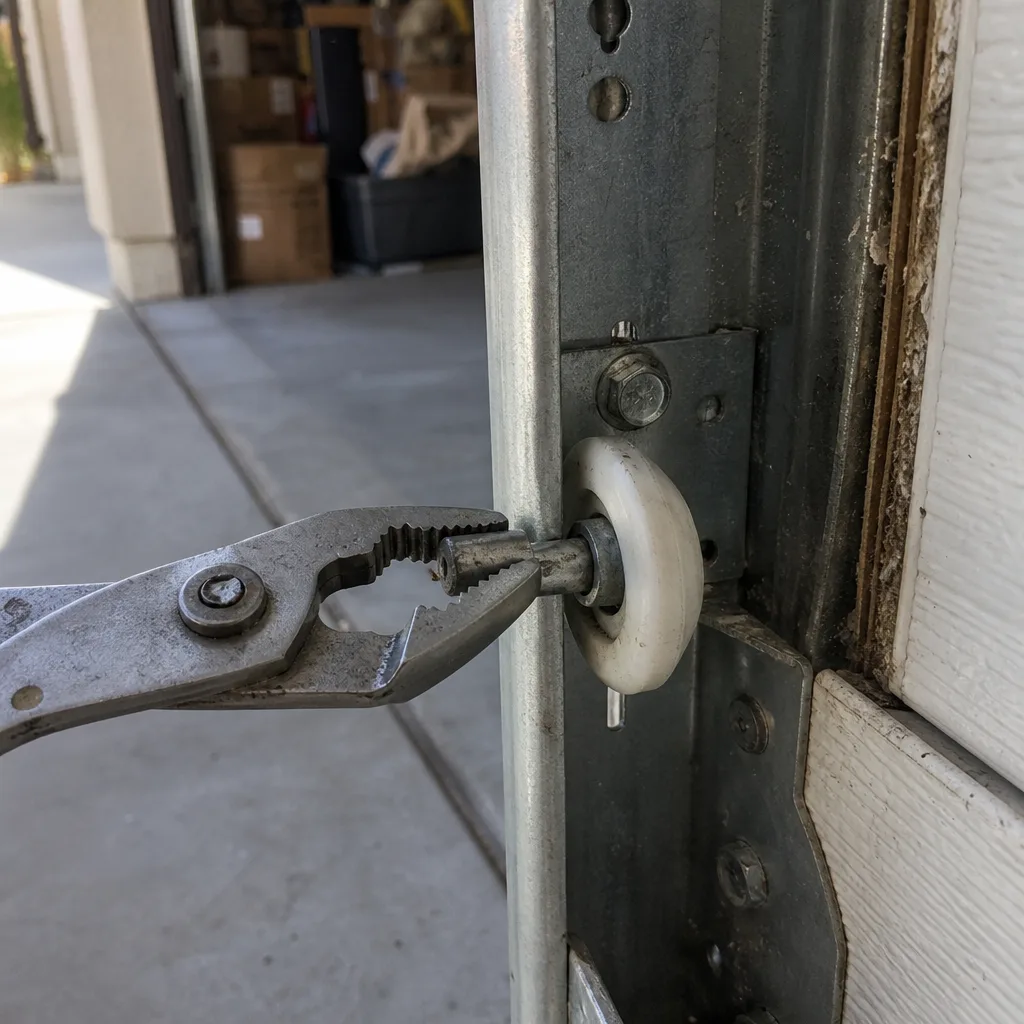
A written log turns a service call into a five-minute conversation instead of a 45-minute diagnostic. When a technician arrives with your record in hand, they already know the spring specs, the last lubrication date, the last balance test, and the exact gap you measured. Here is the template. Copy it into a notebook or a shared document and add a line every time something is done to the door.
Maintenance Log Template
| Date | Cycle Estimate | Service Performed | Lube Applied | Spring Torque / Balance | Cable Status | Seal / Track Notes |
|---|---|---|---|---|---|---|
A cycle is one open and one close. Most homes run 4 – 6 cycles a day, which works out to roughly 1,500 – 2,200 cycles a year. A torsion spring rated for 15,000 cycles is a spring that lasts about seven years of normal use, or a shorter life if the house is a busy family with four cars in and out. Writing the cycle estimate each month is the single most useful habit in the whole schedule because it tells you where you are against the spring’s rated life.
What to Log, in Order of Importance
- Cycle estimate each month. The most predictive number you can track.
- Last lubrication date and which components. A lube log tells you when the next pass is due.
- Photo reference for each adjustment. Save the photo filename or date so it can be pulled up.
- Balance test result from each inspection (balanced, drops, drifts).
- Technician name and service performed for any call. This is what our photo record ties back to.
When we leave a customer’s home we hand over a documented photo record of what we found and what we did, tied back to Clause 4 of The Haven Standard: the customer sees the failed part before anyone quotes a replacement. Your log is the homeowner’s half of that same idea, and it earns its keep the day the door starts to feel heavy and you know exactly how far into the spring’s rated life you are.
The Annual Service After Year One
Once the first year and first Summerlin summer are behind you, the schedule simplifies. The annual service becomes the anchor, and everything else is monitoring.
- Once a year, in spring: full inspection of springs, cables, rollers, hinges, tracks, and the balance test. This is the same visit that a 90-day first-year inspection covers, just without the “measure the settle” part.
- Twice a year, in spring and fall: lubrication pass on hinges, roller shafts, and spring coils. Check the bottom seal for gaps.
- Monthly, all year: cycle estimate in the log. Visual check of cables through the drum area. Listen for new noises on the first open of the morning.
- Every 7 to 10 years (or when the cycle count suggests): spring replacement. Torsion springs are consumables. They wear out on a known curve, not at random.
If your opener is a modern LiftMaster, Chamberlain, or Genie unit, the diagnostic LED on the motor is also worth a glance each visit. A red or amber code that was not there before is often the earliest sign that a door has drifted out of balance and the opener is absorbing the strain. The Garage Door Opener Repair & Installation in Summerlin page covers what those codes mean in detail; for the maintenance side, just note the color in the log.
The Full Schedule at a Glance
| Timeframe | Task | Who Does It |
|---|---|---|
| Week 1 | Test safety reverse, listen for new noises, log cycle estimate | Homeowner |
| Week 2 – 4 | First lubrication pass (hinges, roller shafts, spring coils only; track interior stays dry) | Homeowner |
| Day 90 | Documented adjustment inspection: cable tension, spring measure, track gap, seal fit, balance test, photo record | Technician |
| Month 6 | Second lube pass, seasonal seal check, cycle log review | Homeowner |
| Month 12 | First-anniversary full service, post-summer seal and track recheck, photo record | Technician |
| Every 6 months after | Lubrication, seal inspection, cycle log update | Homeowner |
| Every 12 months after | Full inspection and balance test, photo record | Technician |
| Year 7 – 10 | Plan spring replacement by cycle count, not by failure | Technician consult |
If something in the door ever feels heavier than it should, or the door jerks on the way up, that’s a signal to inspect immediately, not wait for the next scheduled visit. The Garage Door Repair in Summerlin service exists for exactly that; a mid-schedule call is not a failure of the plan, it’s the plan working.
Common Mistakes to Avoid
- Treating first-year cable stretch as a warranty claim. It is a normal material property, not a defect. Filing a claim for it wastes everyone’s time and a claim in the file can hurt you on the next service conversation.
- Greasing the interior of the track on a new door. The rollers need friction with the track to seat correctly in the first month. Coating the track traps grit and wears the rollers faster.
- Skipping the 90-day visit because “it’s new.” The first-year window is when adjustments are cheapest and least disruptive. After the first Summerlin summer, the door may have shifted past the easy-adjust stage.
- Ignoring a bottom seal gap after the first August. A seal that lifts off the slab after the first heat cycle lets in desert dust, scorpions, and the April wind. It is a $30 – $80 replacement, not a $400 job.
- Not tracking cycle count. A spring wears on a curve you can estimate. If you never log cycles, you only find out your spring was near end-of-life when it snaps on a Sunday morning.
- Using a three-in-one oil or WD-40 on the spring. Those are solvents, not lubricants, for garage door hardware. They strip the factory coating and accelerate wear. Petroleum-free garage door lubricant only.
- Adjusting spring tension yourself. Torsion springs store enough energy to break an arm. If the balance test ever shows the door drifting or dropping, that is a call-us situation, not a tighten-it-yourself moment.
See the difference
BeforeAfter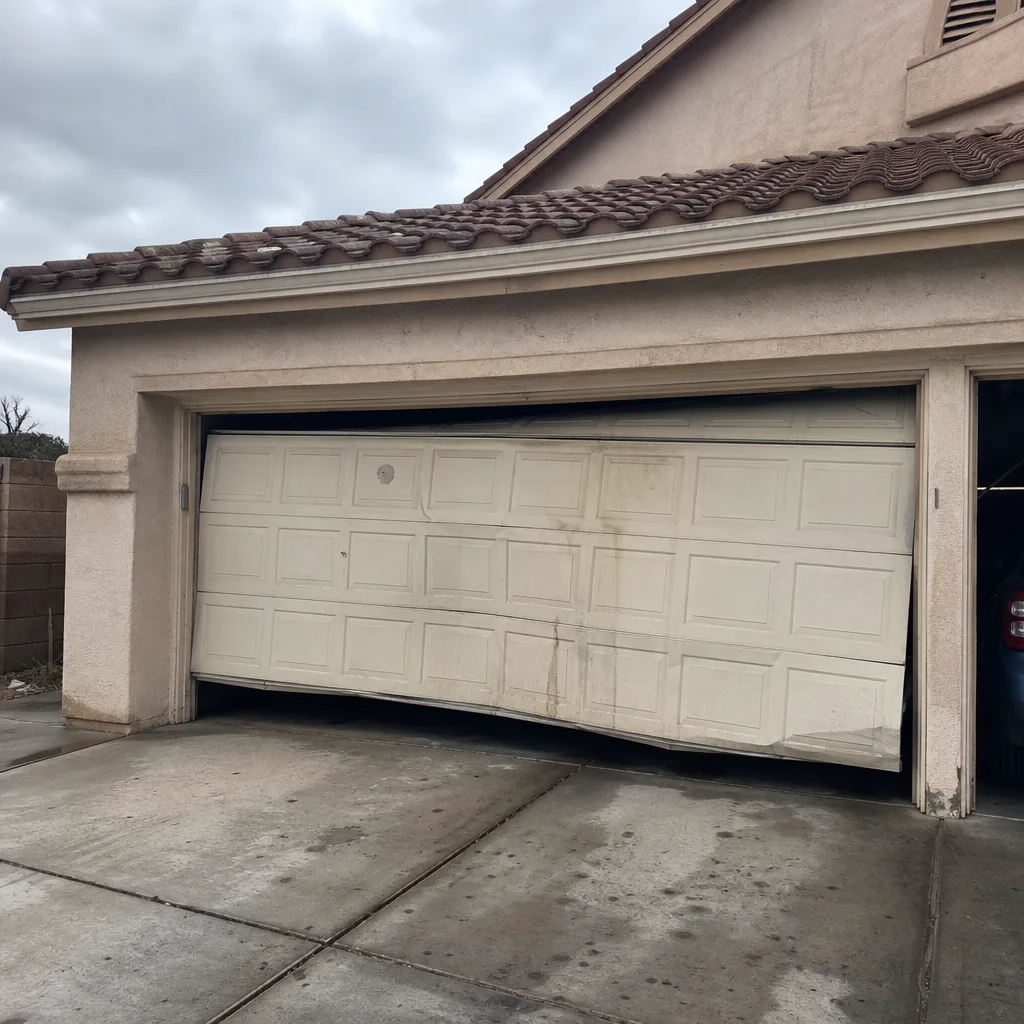 Before
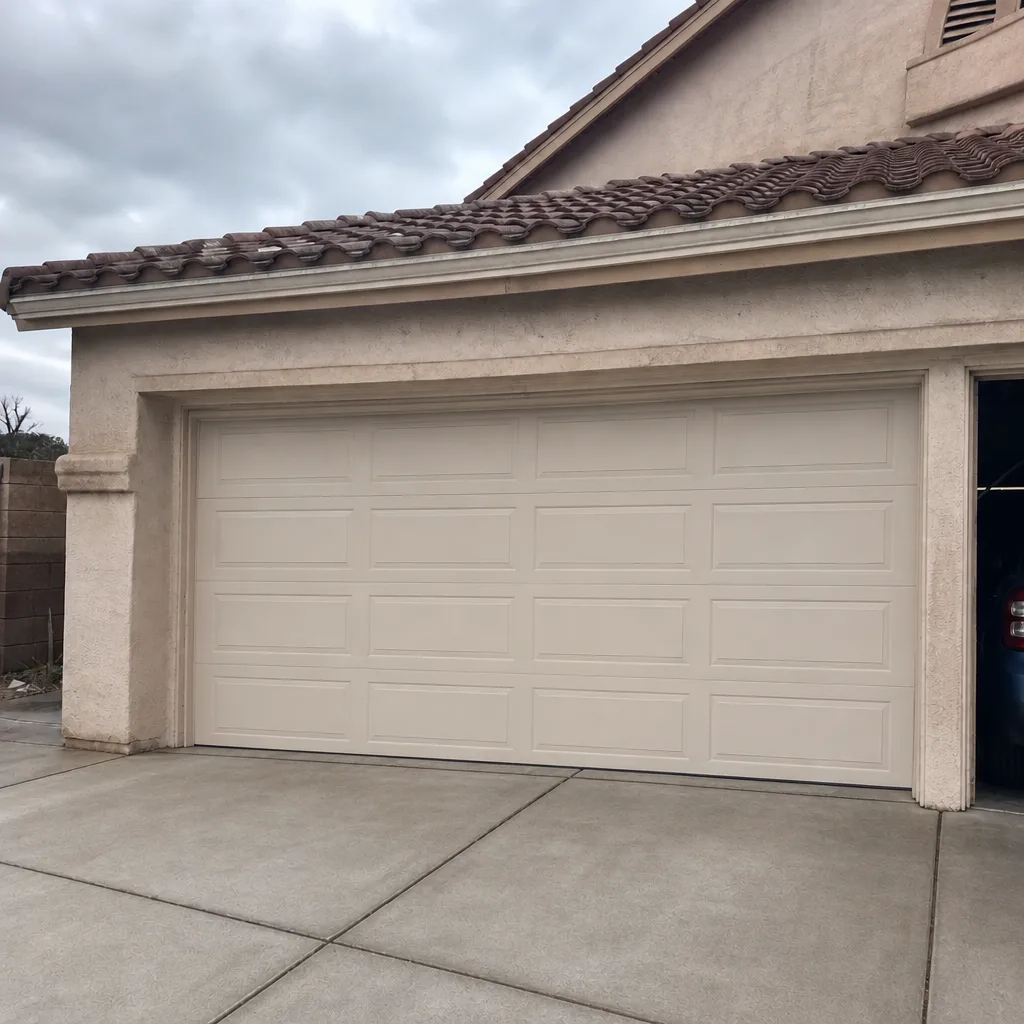 After
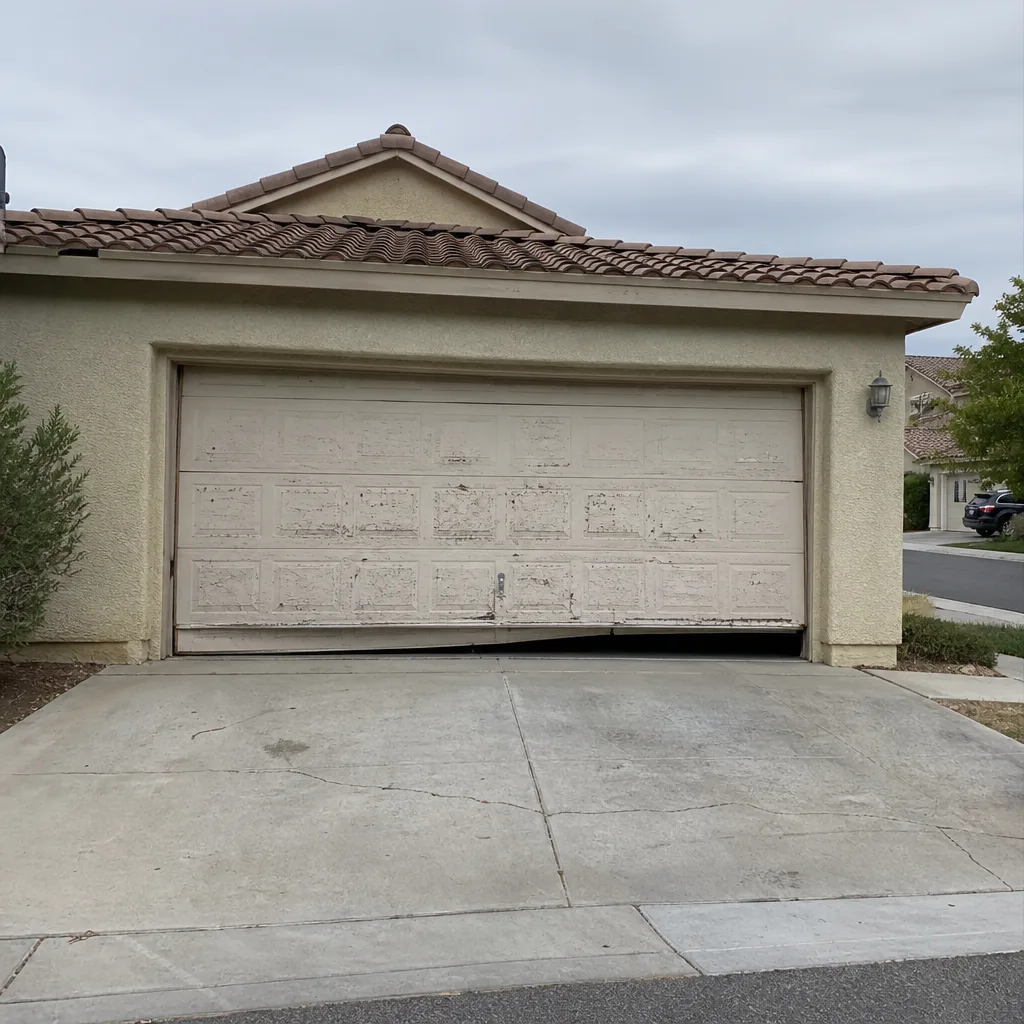 Before
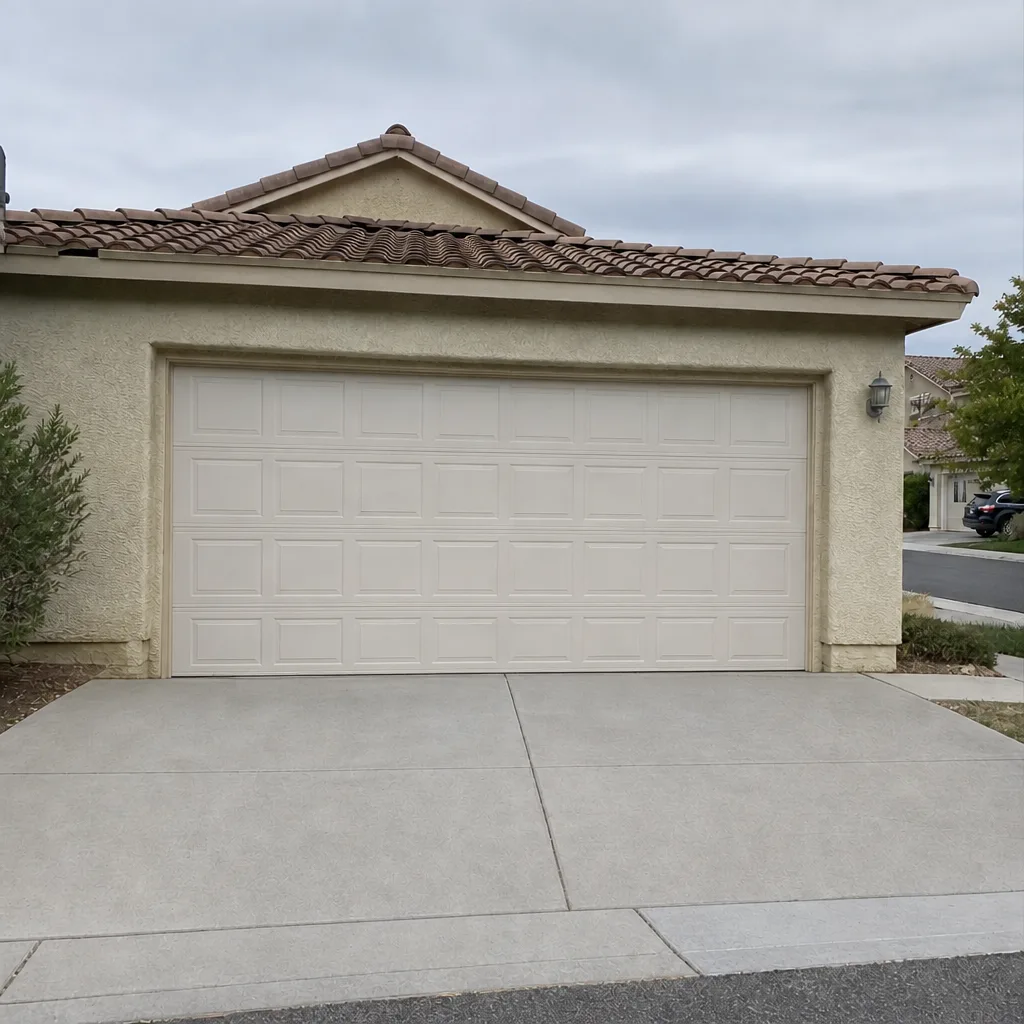 After
When to Call a Professional
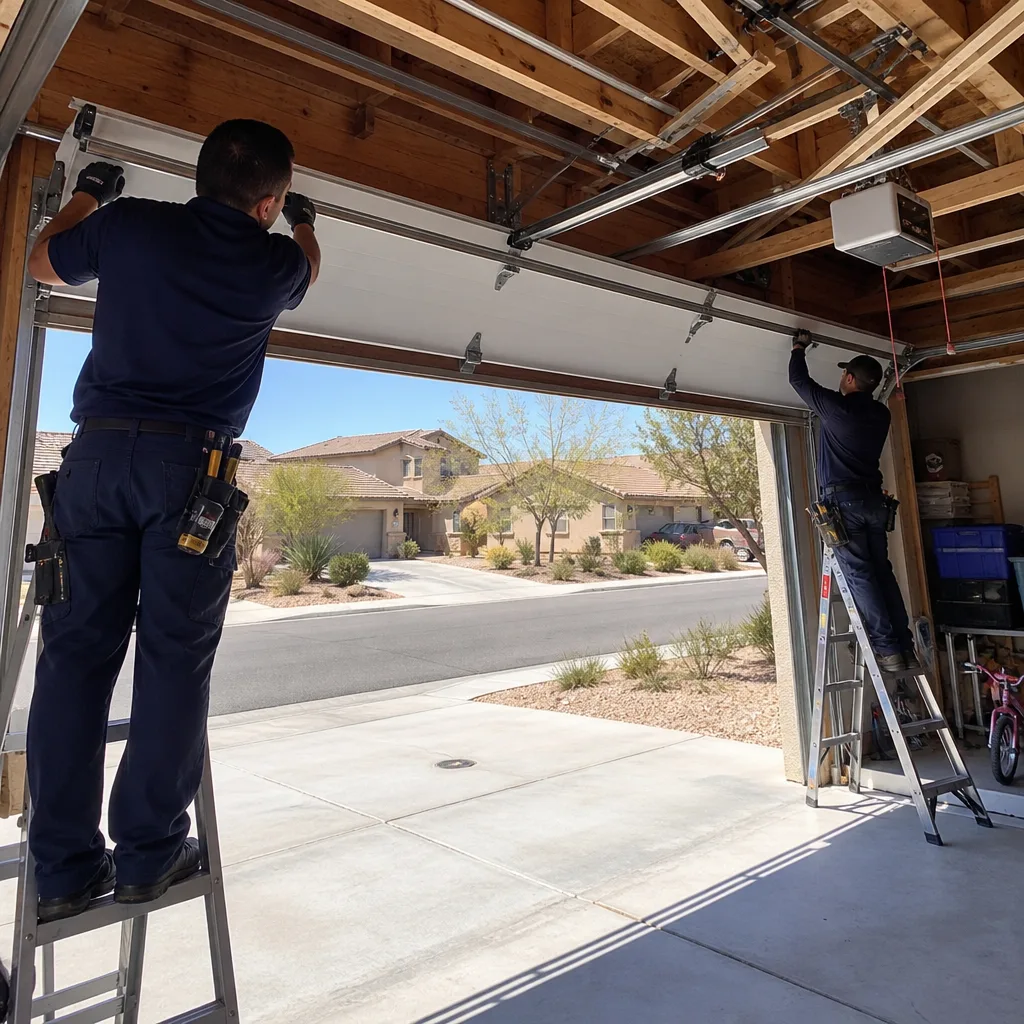
Call us for anything involving the torsion spring, the cables, or the opener’s internal adjustments. Those components carry stored energy or mains voltage, and a mistake on either can seriously hurt you. Call also if the door drops on its own during the balance test, if you see broken strands on a cable, if a roller has come off the track, or if the door operates with a jerk or a bind you can’t trace to a visible obstruction. Any 90-day or anniversary inspection belongs with a trained technician who can photograph and measure properly. Servo Garage Doors Summerlin offers free estimates in Summerlin. Call (844) 797-3654. Our technicians have up to 11 years of experience, every job gets a flat written price and written scope before any work starts (Clause 1 of The Haven Standard), and the visit closes with a documented photo record you keep.
Frequently Asked Questions
Ninety days. That is when the cables have seated, the springs have taken their set, and the door has run roughly 400 – 600 cycles, which is enough for the settling changes to show. Book the 90-day visit early because it is the highest-value appointment on the entire schedule. Call (844) 797-3654 to get it on the books.
Not usually, because cable stretch is not a manufacturing defect. Cables are steel strands that take up slack as they load for the first time; the stretch is a material property, not a flaw. A manufacturer may replace a broken cable, but the normal settling in the first 500 cycles is an adjustment, not a claim. If you would rather not guess, we can inspect and confirm which one you are looking at for free.
Every six months once the door is past its first month, on the hinges, roller shafts, bearings, and spring coils. Never on the interior of the track, never on the cable. Summerlin’s dust load means a slightly heavier schedule than wetter climates; the fall pass before the dry winter matters as much as the spring pass.
Yes, and more than most homeowners expect. The first summer heat cycle moves the steel panels, the concrete slab, and the framing the door is bolted to, all in the same direction. Bottom seal gaps and track-gap drift are the two most common first-summer findings in Summerlin, and both are cheap to correct in July and expensive to ignore until winter.
You can do some of them. A homeowner can safely check the balance, inspect for visible cable fraying, apply lubricant to the correct components, and run the safety reverse test. What a homeowner should not do is adjust torsion spring tension, replace a cable, or force-adjust a track. Those carry genuine injury risk. Call (844) 797-3654 for the parts that need a technician.
Typically $150 to $275 for the full documented visit: cable measurement, spring check, track gap check, seal check, balance test, photo record, and any minor adjustments included. If adjustments turn into a bigger repair, the flat written price for that repair is agreed before we touch anything, and the cost of the inspection counts toward the decision. Call (844) 797-3654 for an exact quote on your door; estimates are free.
The Bottom Line
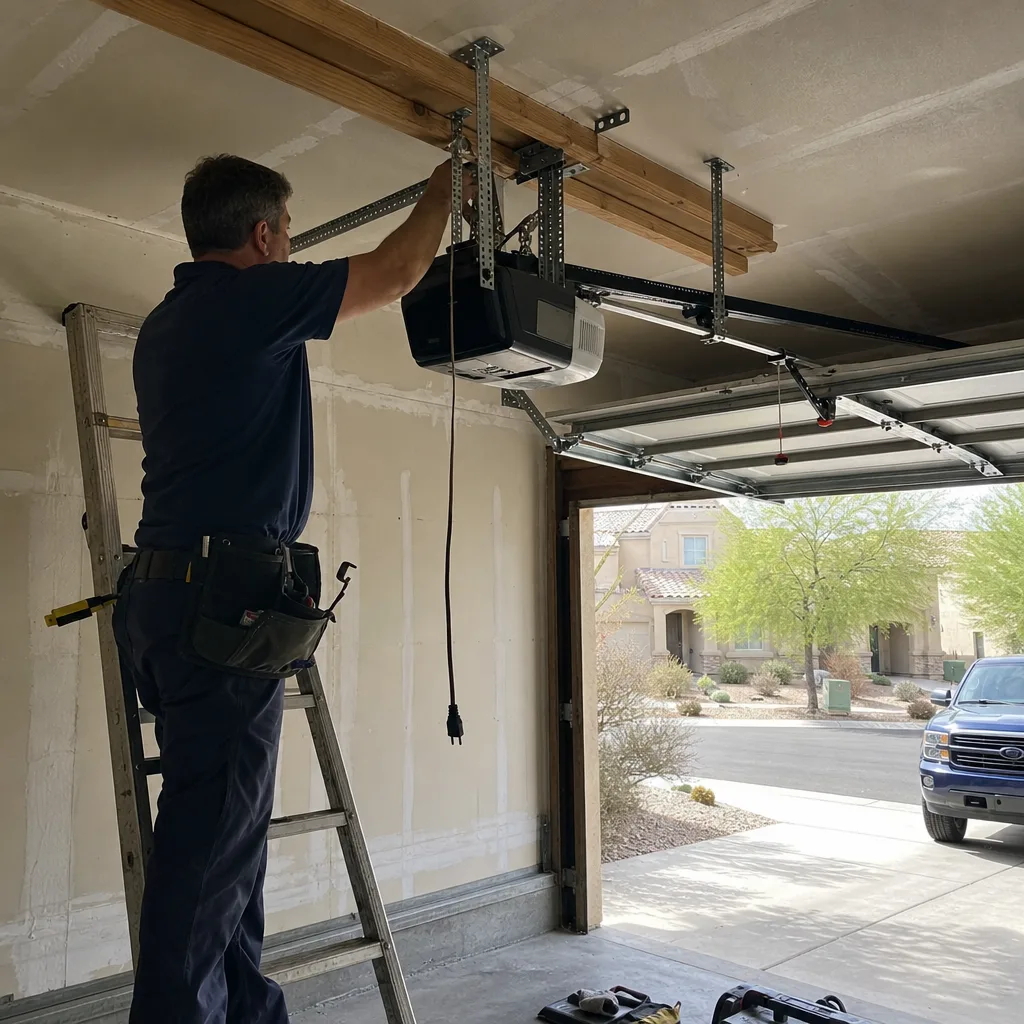
The first year after installation is the cheapest year to maintain and the most expensive year to ignore. Do the 90-day inspection. Get the cable tension, spring measure, track gap, and seal fit on paper with photos. Lubricate the right parts at the right time and leave the track interior alone. Log your cycles. Let the first Summerlin summer do its work, then recheck the door in the fall. Everything after year one is easier because the door is settled and you have a record of where it started. That record is what makes the next call five minutes instead of an hour, and it is the reason we photograph every component before anyone quotes a replacement.
If you are within the first year of a new install, or you have no record of the last inspection and want a baseline, we can help. Servo Garage Doors Summerlin offers free estimates in Summerlin, and we service LiftMaster, Chamberlain, Genie, Clopay, Amarr, Wayne Dalton, Craftsman, and Raynor hardware. Head back to our Servo Garage Doors Summerlin home for the full list of what we do, or call (844) 797-3654 for a free estimate and a written price before any work begins.
Written by the team at Servo Garage Doors Summerlin.