
Last updated November 17, 2026
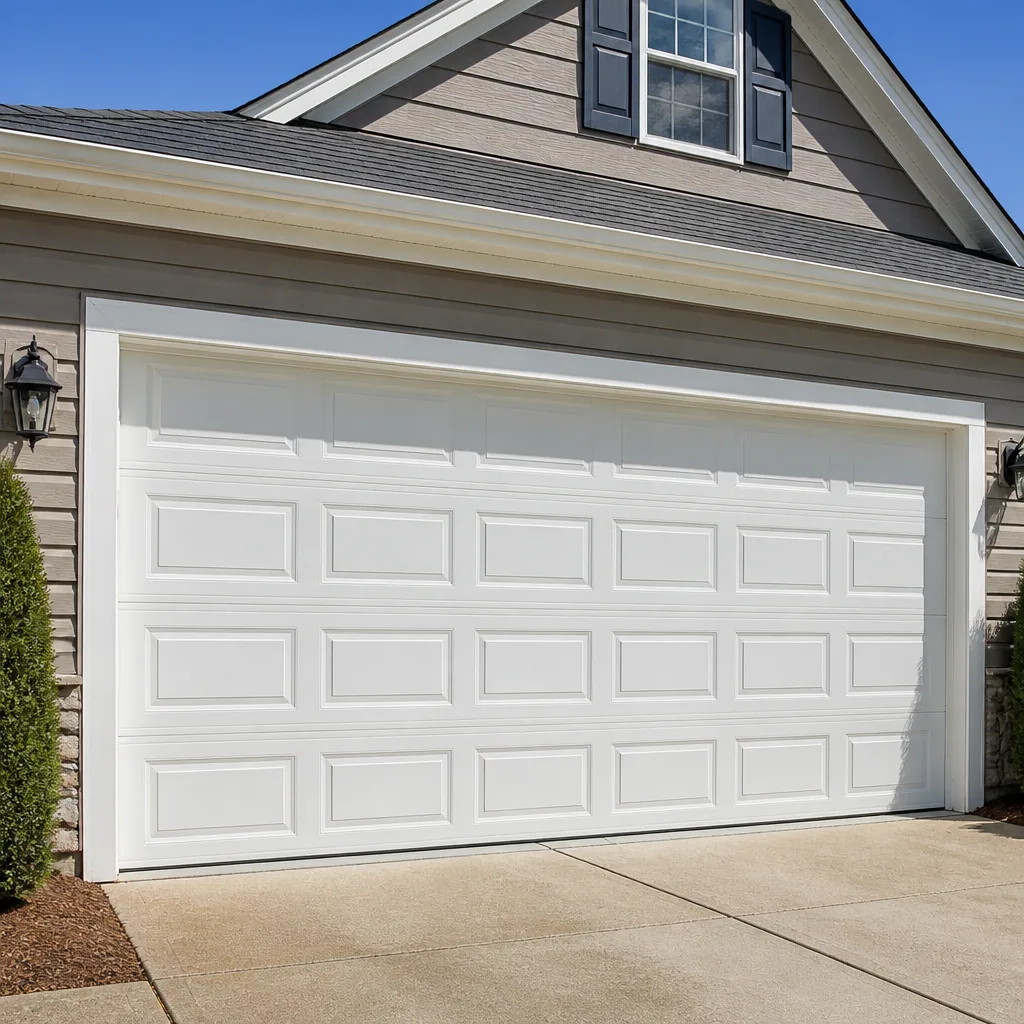 Raised-panel steel
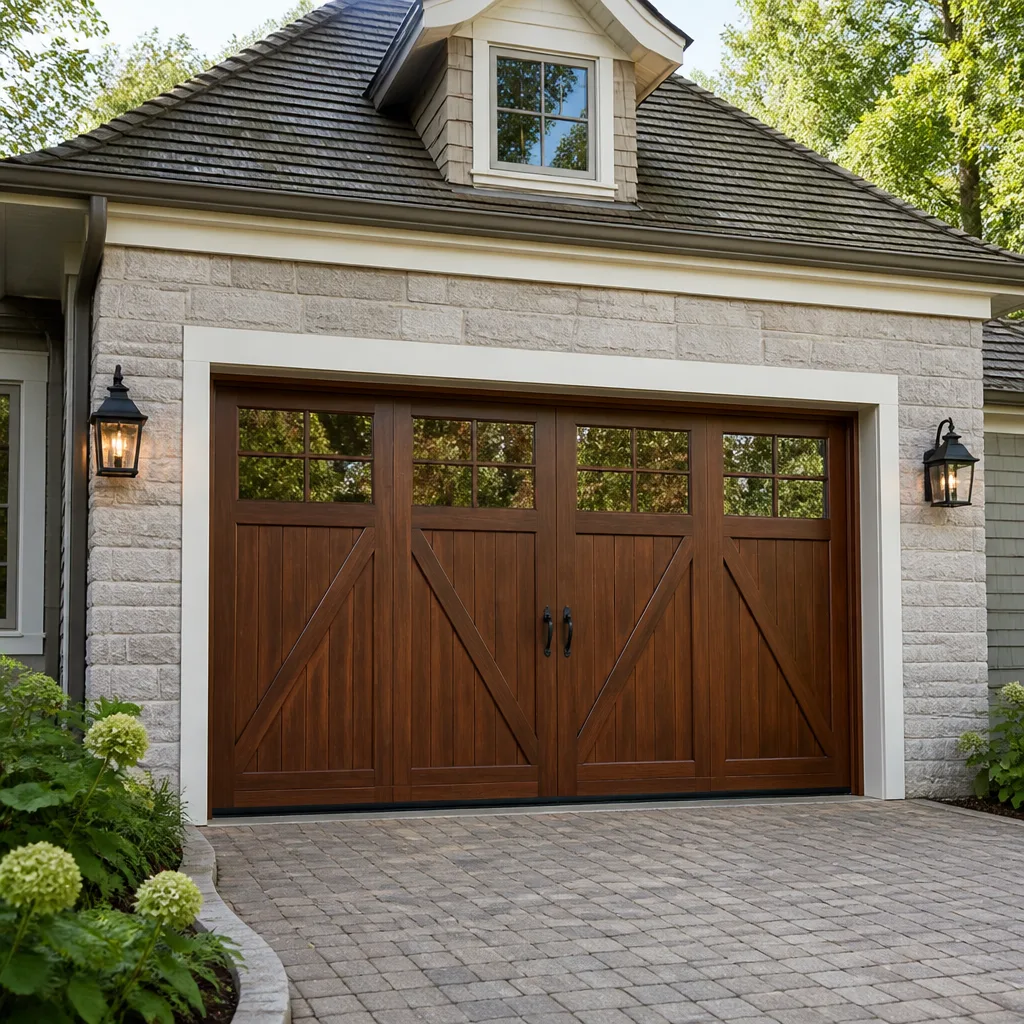 Carriage house
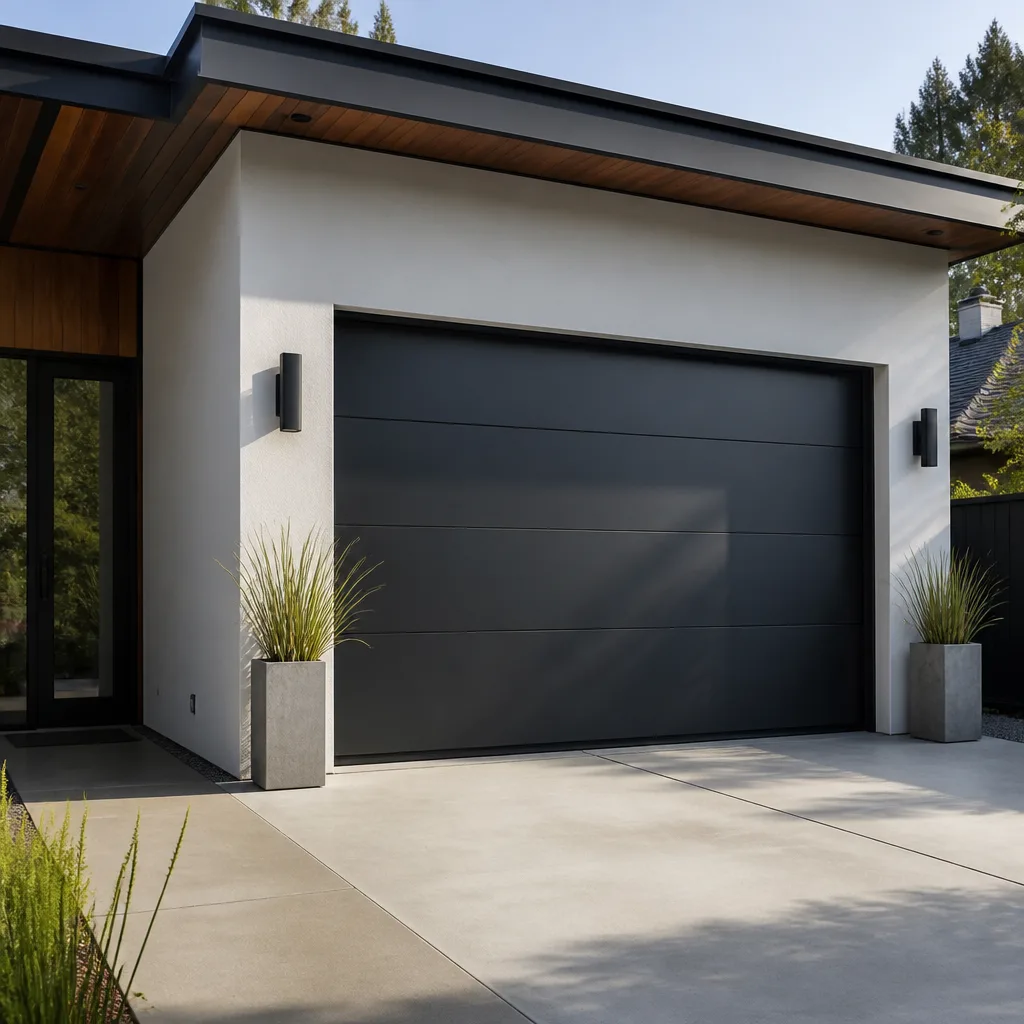 Modern flush
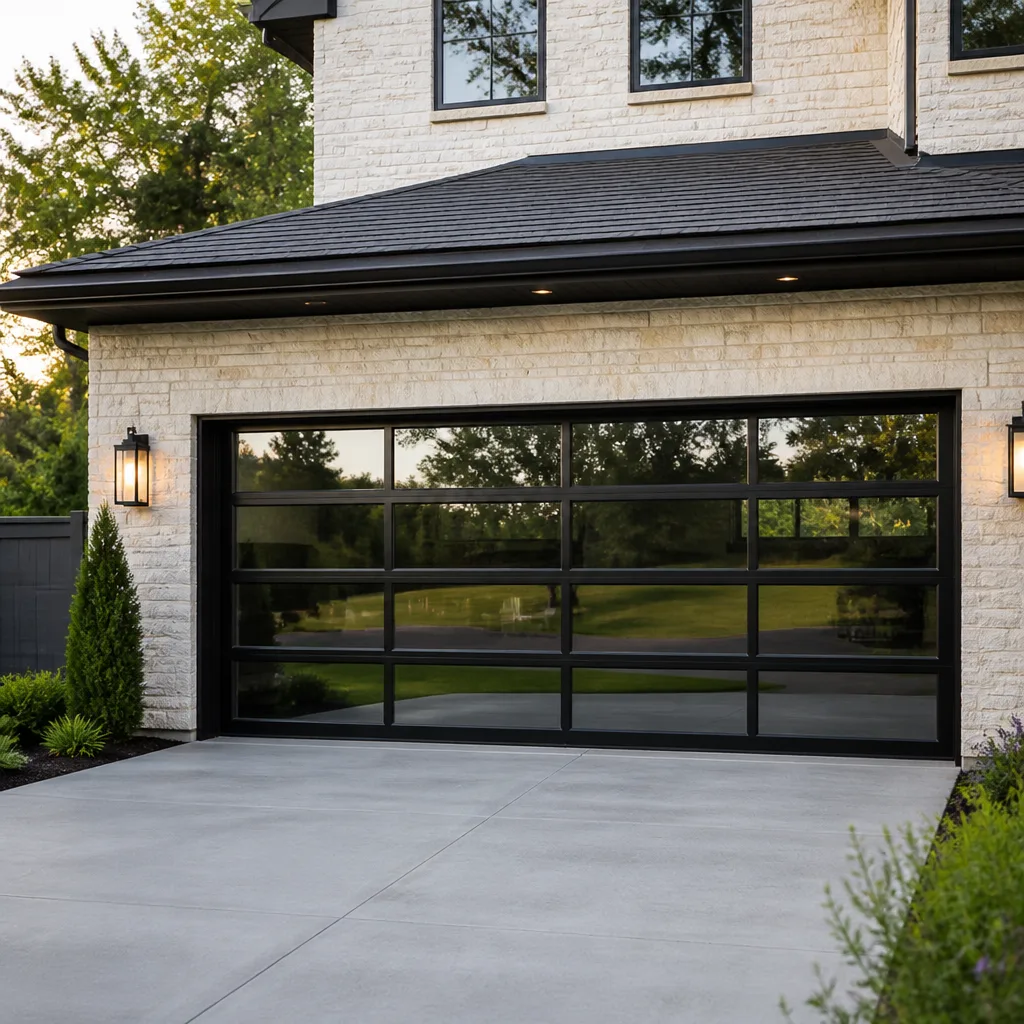 Full-view glass
 LiftMaster openers
 Chamberlain openers
Full 25-point door and opener safety check with every visit - springs, cables, rollers, tracks, and your LiftMaster or Chamberlain opener included
You get a price before we start. It does not change when the pro arrives.
Get your free estimateGarage Door Parts Maintenance Schedule: What to Do and When
A snapped torsion spring costs $150 to $350 to replace. The quarterly lubrication that forestalls most of those failures costs about $6 in white lithium grease. The math isn’t subtle, yet most homeowners in Summerlin never touch their door until something loud happens. Here’s the part the generic checklists skip: every maintenance task protects one specific component and prevents one specific repair bill. This guide maps each task to the part it saves, sets intervals tuned to the 115°F summers that punish Summerlin doors harder than the national schedules assume, and gives you a log so the work leaves a paper trail.
Quick Answer
Lubricate springs, hinges, and rollers quarterly; inspect cables, pulleys, and the bottom seal monthly; and have a technician check spring tension and balance once a year. In Summerlin, heat accelerates grease evaporation and seal cracking, so spring for quarterly seal checks and treat lubrication as non-negotiable rather than optional. The schedule below ties every task to the component it protects and the failure it prevents.
Styles & brands we work with
- Raised-panel steel
- Carriage house
- Modern flush
- Full-view glass
- LiftMaster openers
- Chamberlain openers
Table of Contents
- Torsion and Extension Springs: The Quarterly and Annual Tasks
- Rollers, Hinges, and Tracks: What You Lubricate and What You Inspect
- Cables and Pulleys: Inspect Only, Never Adjust
- Weather Seal and Bottom Seal: A Summerlin-Specific Interval
- Opener, Safety Reverse, and Photo Eye: The Monthly Two-Minute Test
- Building a Maintenance Log With a Paper Trail
- Which Tasks Reset a Part’s Service Life and Which Only Slow the Decline
- The Full Schedule at a Glance
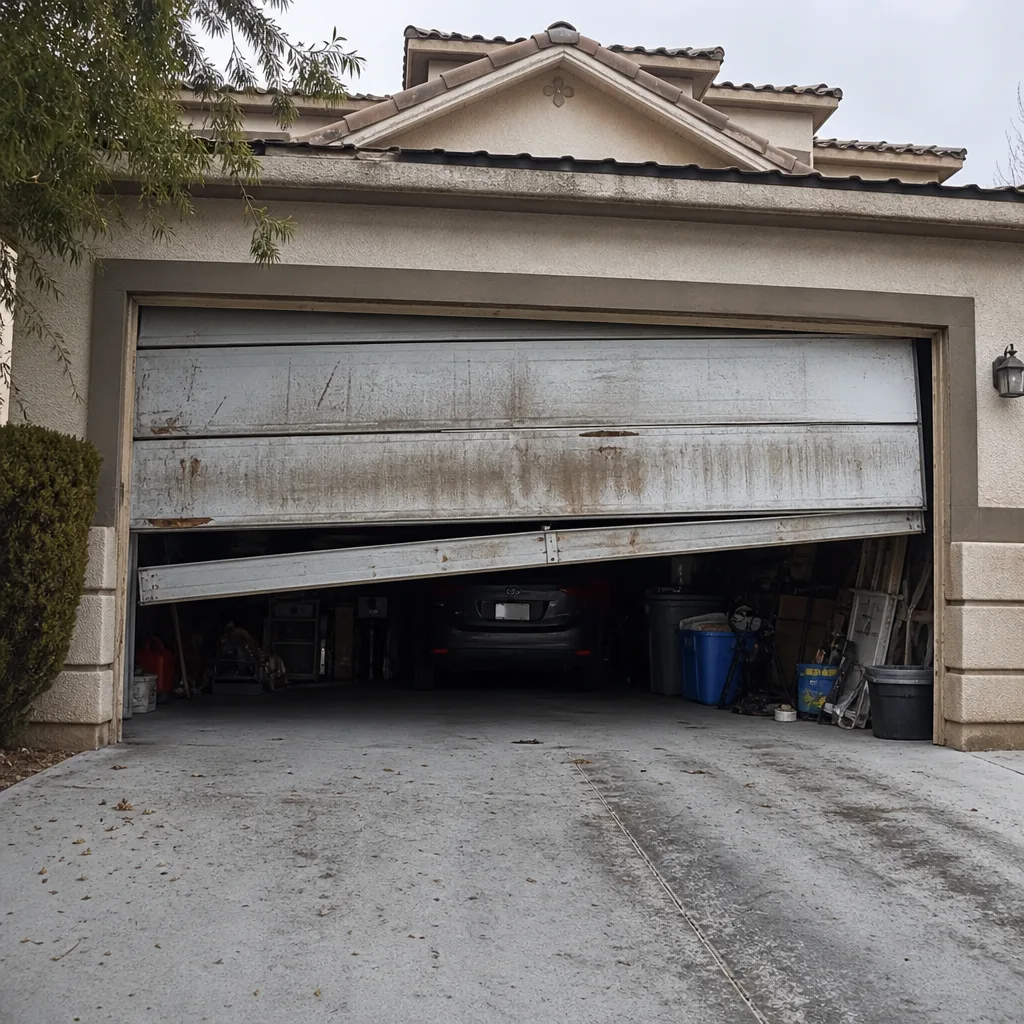 Before
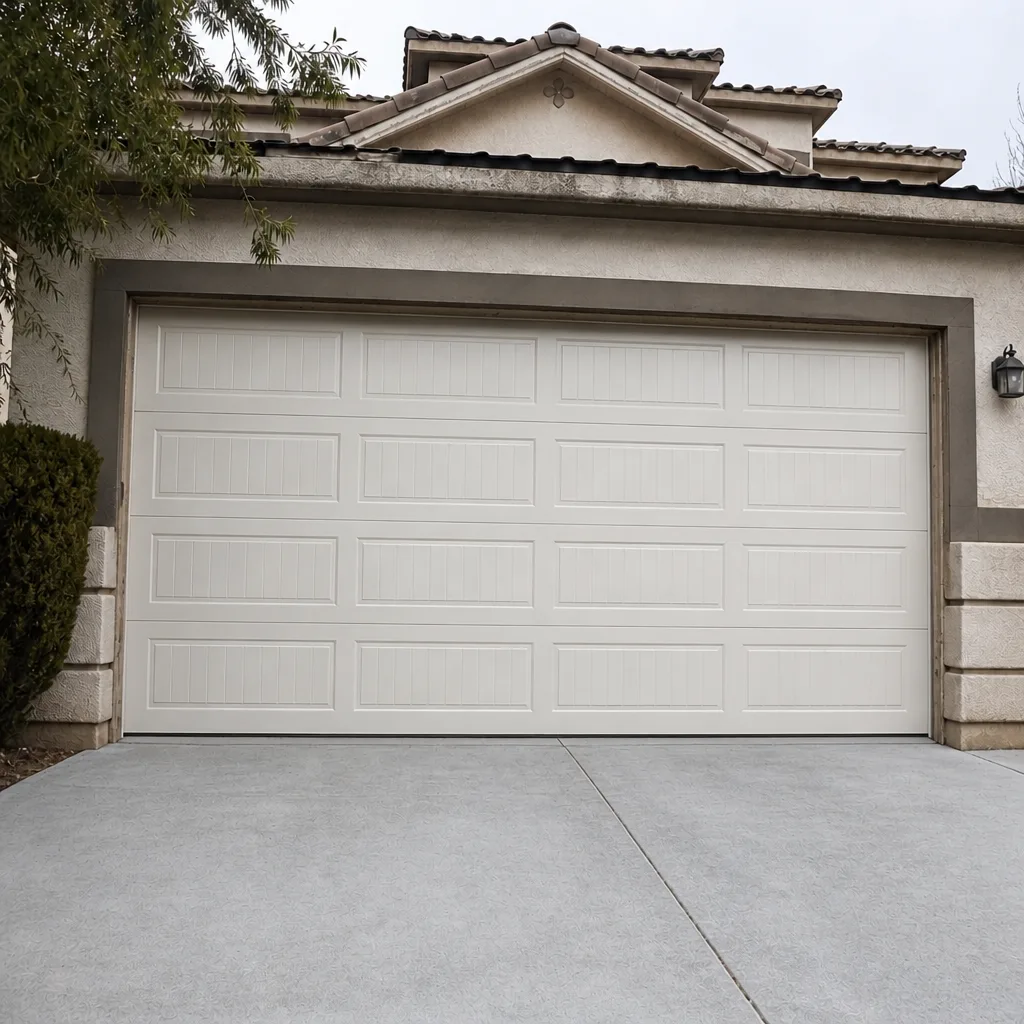 After
Torsion and Extension Springs: The Quarterly and Annual Tasks
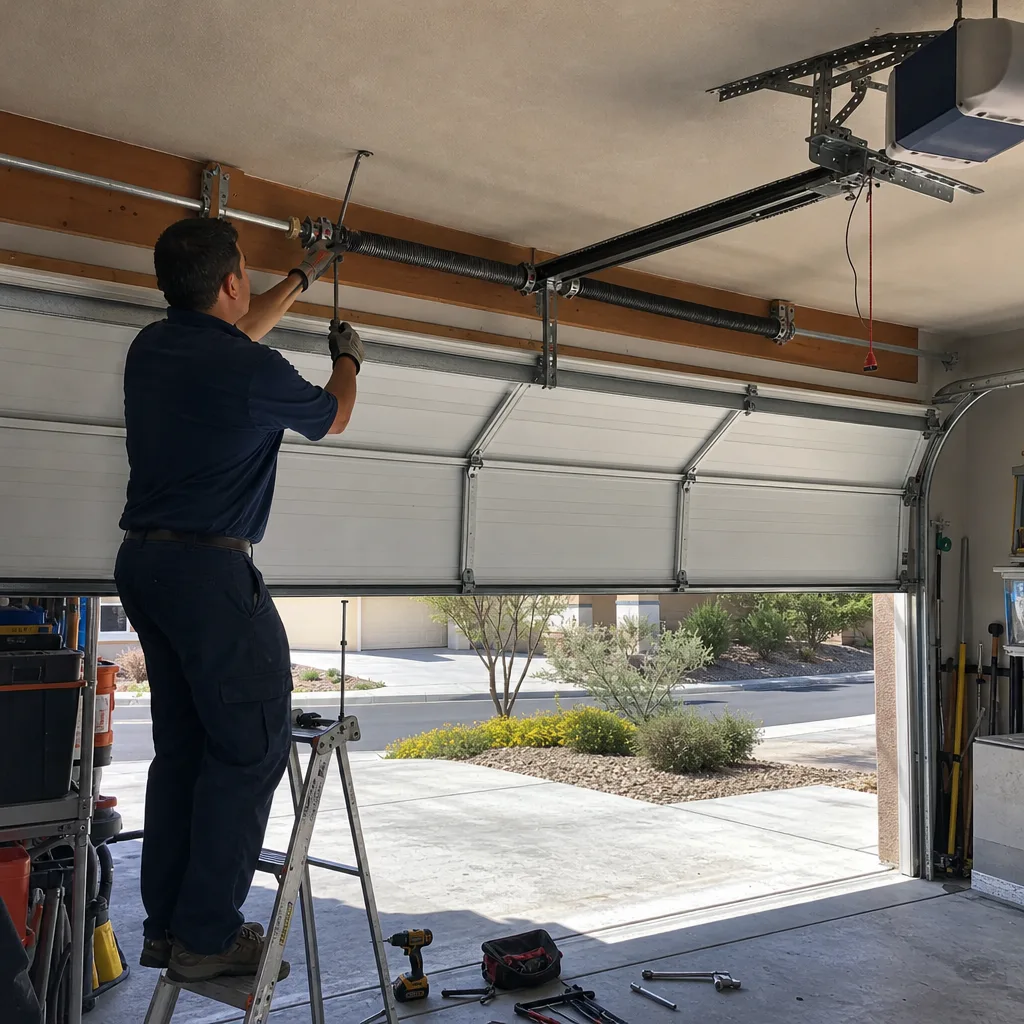
The torsion spring is the coiled steel bar above the door that counterbalances its entire weight. When it snaps, the door becomes a 150-pound slab you can’t safely lift. On a Summerlin door facing west, that spring cycles through wide temperature swings daily, and heat fatigue is the slow killer.
What you do to the spring is almost nothing, and that’s the point. You lubricate it and you look at it. You never adjust it. Winding or unwinding a torsion spring requires winding bars and a specific number of quarter-turns matched to the door’s weight, and a slip can break a wrist or worse.
- Quarterly: Spray a light coat of white lithium grease along the full length of the torsion spring coils, then wipe the excess. This reduces coil-on-coil friction and slows corrosion.
- Monthly: Look at the spring(s) above the door with the door closed. You’re checking for a visible gap in the coil (a clean break), rust blooms, or a spring that looks stretched compared to itself.
- Annually: Have a technician measure wire diameter and count coils to confirm the spring still matches the door’s weight and check balance by hand.
In our experience across Summerlin, springs on doors that get direct afternoon sun tend to fail earlier than the same spring on a shaded north-facing door. That’s a climate fact national schedules don’t account for. Clause 4 is why we photograph the failed part before quoting a replacement, so you see whether it’s a clean break or a fatigue crack.
Rollers, Hinges, and Tracks: What You Lubricate and What You Inspect
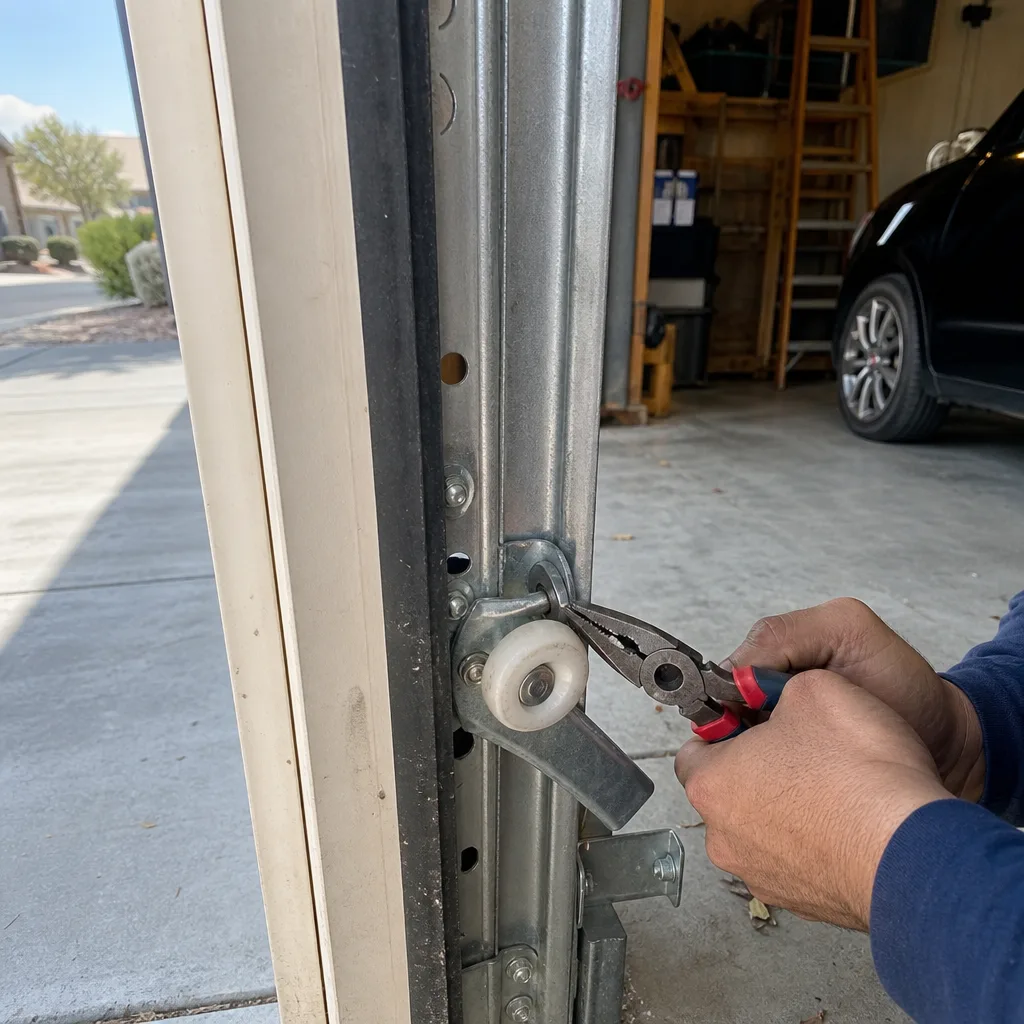
Rollers are the wheels that ride in the track. Hinges are the joints between door panels. Tracks are the steel channels the rollers travel in. These three are the noisiest components and the easiest to maintain, which is why skipping them is the most common self-inflicted repair bill we see.
- Rollers (quarterly): Lubricate the roller stems and bearings, not the wheels themselves. A dry roller grinds and eventually flat-spots, and flat-spotted rollers chew the track.
- Hinges (quarterly): A drop of lubricant in each hinge pivot quiets the door and reduces metal fatigue at the joint.
- Tracks (monthly visual): Look for dents, bends, or debris. A bent track forces the roller off-line and can throw the door out of alignment. Never bend a track back by hand; a misaligned track needs a technician.
- Bolts and brackets (annually): Check that hinge and bracket bolts are snug. Vibration loosens them over a year of daily use.
Use a silicone-based lubricant on rollers and hinges rather than heavy grease, which attracts grit in dusty Summerlin conditions and turns into a grinding paste. A door that’s suddenly louder is usually telling you a roller bearing is dry, not that the door is “getting old.”
Cables and Pulleys: Inspect Only, Never Adjust
The lift cables run from the bottom corners of the door up to the drums, and they’re under extreme tension at all times. A frayed or snapped cable can whip with enough force to cause serious injury. This is the one section of the schedule where your only job is to look and call.
- Monthly: With the door closed, look at each cable where it wraps the drum and where it attaches at the bottom bracket. You’re checking for fraying strands, kinks, or rust.
- Monthly: Confirm the cables sit evenly in the drum grooves. A cable riding out of its groove is a failed door waiting to happen.
- Annually: A technician checks cable tension and drum condition as part of a tune-up.
Cables, like springs, are a trained-professional component. We don’t publish step-by-step adjustment instructions because the risk isn’t theoretical. If you see fraying, stop operating the door and call. Our Garage Door Repair in Summerlin service covers cable replacement and can often be handled same-day.
Weather Seal and Bottom Seal: A Summerlin-Specific Interval
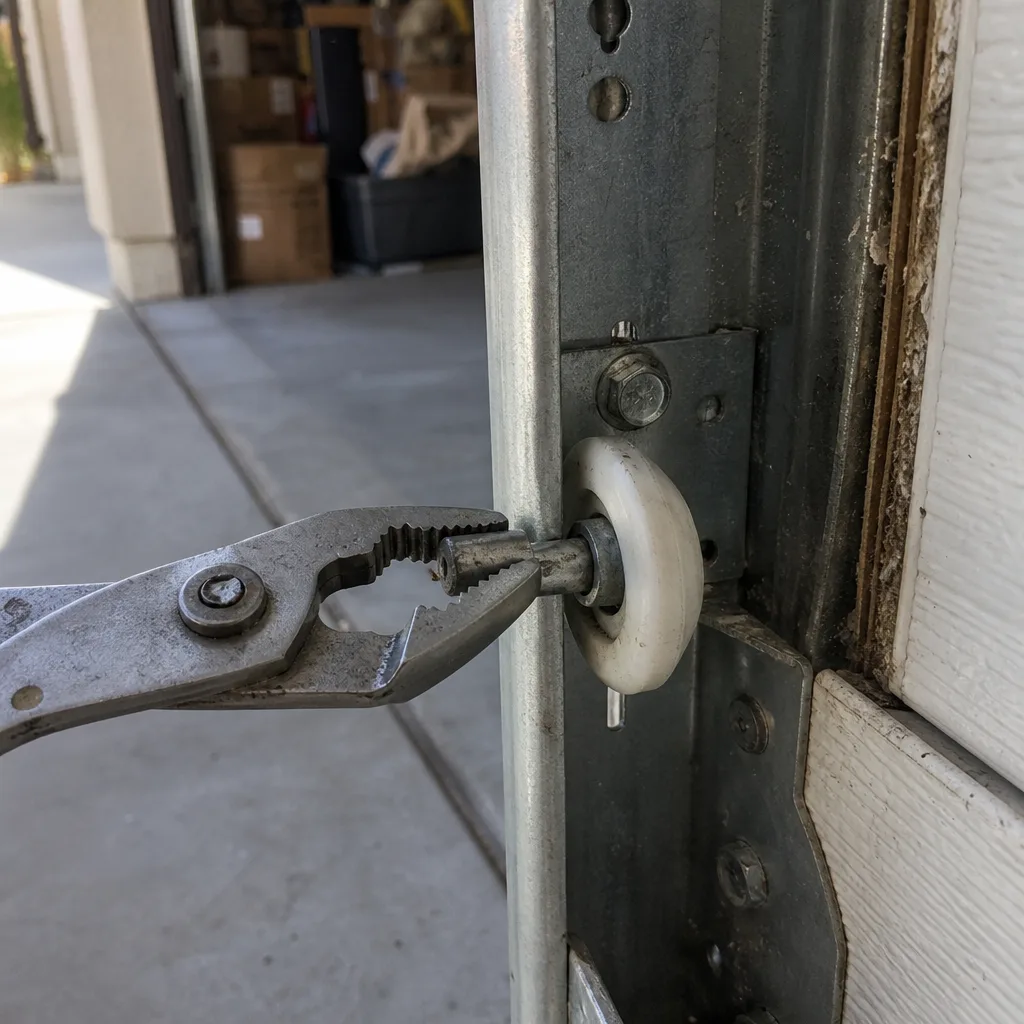
The bottom seal is the rubber strip along the door’s lower edge that keeps out wind, water, and pests. Here’s where Summerlin’s climate rewrites the standard schedule: the 115°F summer afternoons crack and harden rubber far faster than the moderate-climate intervals most guides assume. A seal that lasts two years in a mild climate can fail in one Summerlin summer.
- Monthly (May through September): Run a hand along the bottom seal and check for cracks, hardening, or gaps when the door is closed. This is peak heat-cracking season.
- Quarterly: Check the side and top seals and any weatherstripping around the frame.
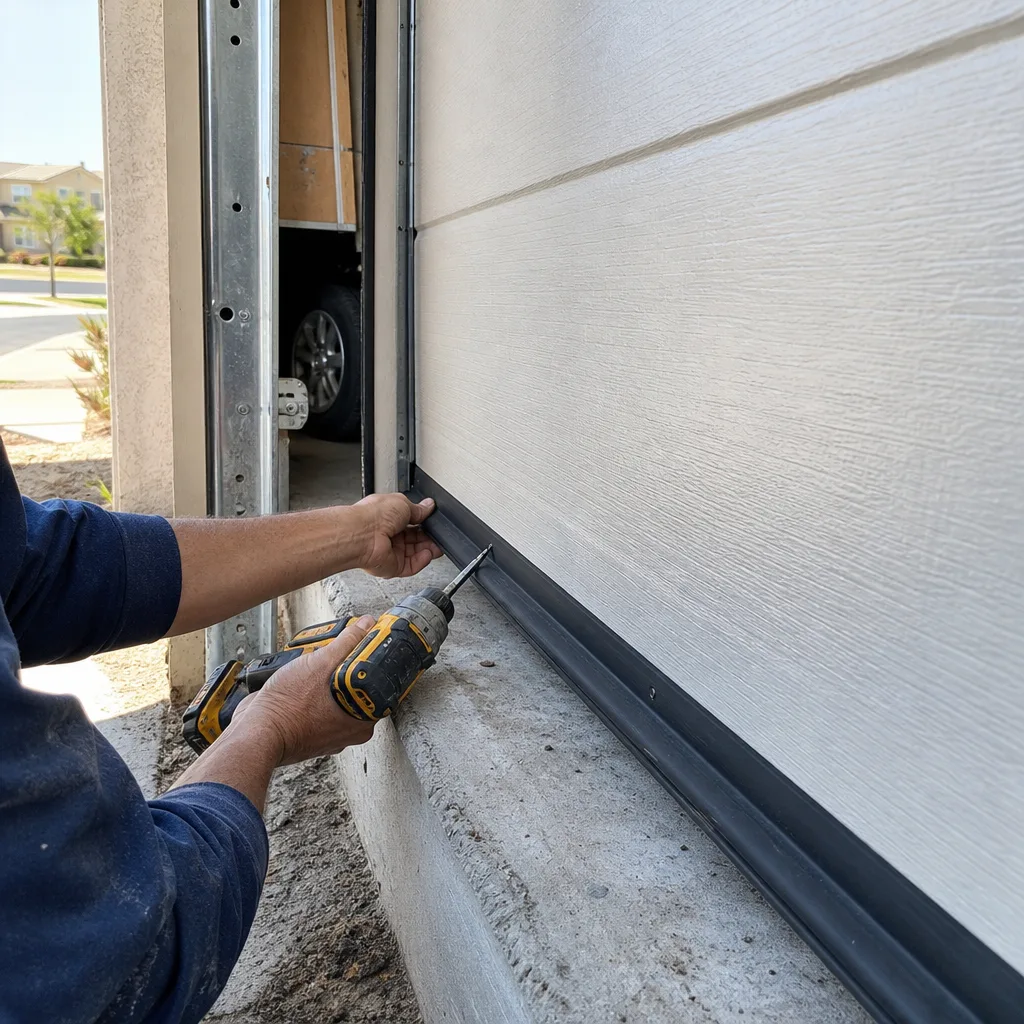
- Annually: Replace the bottom seal if it’s brittle, torn, or no longer making contact with the floor. In Summerlin, plan on a replacement cadence of roughly every one to two years depending on sun exposure.
A hardened seal lets in dust and heat, and in the inner suburbs around The Ridges and Red Rock it also invites pests. Replacement is inexpensive and one of the few tasks a confident homeowner can do alone. The door brand matters little here; Amarr and Wayne Dalton both use standard seal profiles.
Opener, Safety Reverse, and Photo Eye: The Monthly Two-Minute Test
Your opener is the motor and logic board that lifts the door, and its most important job is safety, not convenience. The photo eye is the sensor pair near the floor that reverses the door if something crosses its beam. Both need a monthly check, and both fail quietly.
- Safety reverse test (monthly): Place a 2×4 flat on the floor under the closing door. The door should reverse on contact. If it doesn’t, the opener’s force limit is set too high, and that’s a genuine hazard.
- Photo eye test (monthly): With the door closing, wave an object across the beam. The door should reverse immediately. Wipe the eye lenses; Summerlin dust clouds them.
- Balance test (annually): Disconnect the opener (pull the release handle) and lift the door halfway by hand. It should hold there. If it drifts down, the springs need attention, not the opener.
A door that reverses for no reason or stops halfway usually has a logic board or limit switch issue. Our Garage Door Opener Repair & Installation in Summerlin service handles LiftMaster, Chamberlain, Genie, and Craftsman units. Lubricate the opener chain or screw drive annually with the manufacturer’s specified lubricant.
Building a Maintenance Log With a Paper Trail
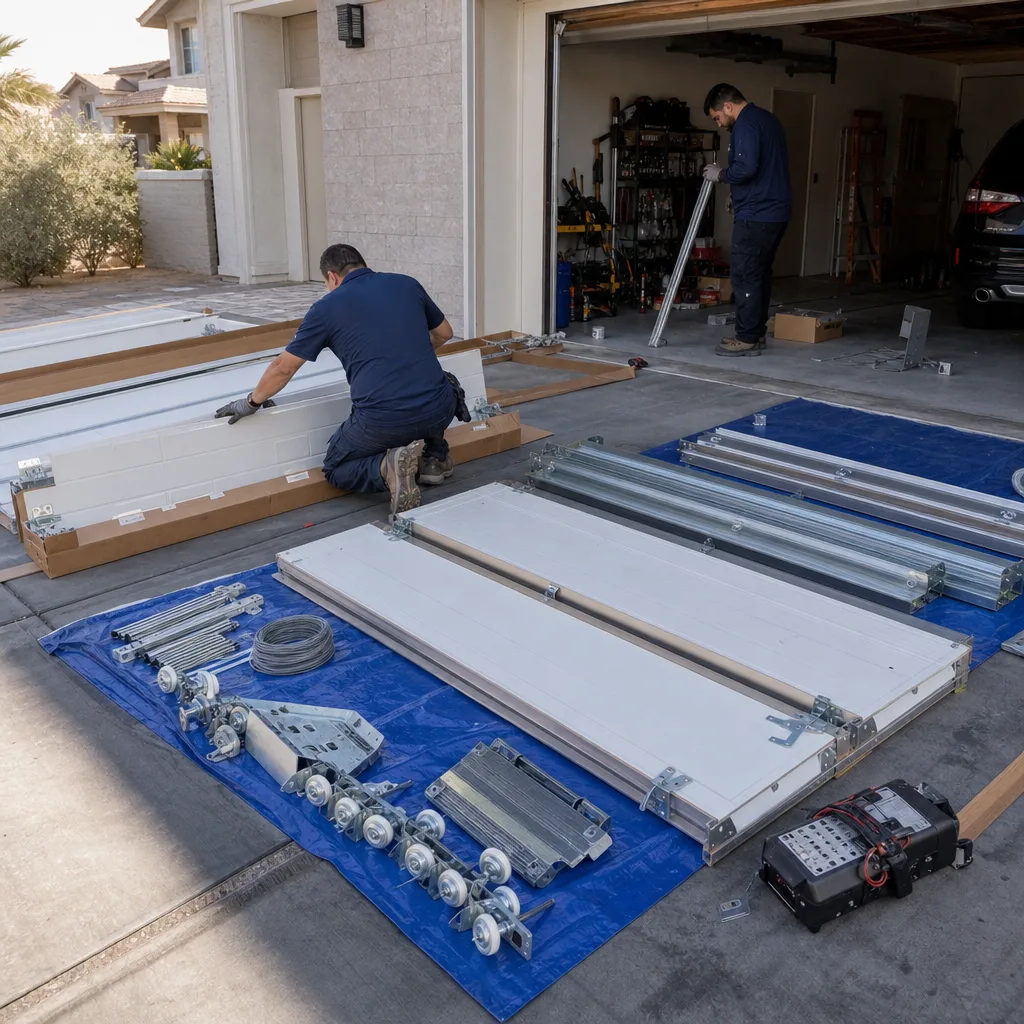
A schedule you can’t document is a schedule you’ll forget. We build documentation into every job, and you can apply the same logic at home with a simple printed log. Keep a one-page sheet taped inside the garage with columns for date, task, and notes.
- Date and task: “6/14, lubricated springs and hinges, seal checked, no cracks.”
- Findings: Note anything you saw but didn’t fix, like slight rust or a small seal gap.
- Professional visits: Keep the written scope and photo record from any technician visit in the same folder.
Why bother? Because when you sell the home, a maintenance log shows the door was cared for, and when you call for service, the history tells the technician what’s already been done. It’s the same principle behind every Servo visit: you receive a documented photo record of what was found and what was done. You can set up your whole-home garage maintenance plan around our Servo Garage Doors Summerlin home page and the Garage Door Installation in Summerlin team when the door reaches the end of its life.
Which Tasks Reset a Part’s Service Life and Which Only Slow the Decline
Not all maintenance is equal, and knowing the difference keeps you from over-trusting a lubricated part that’s actually near failure. Some tasks restore a component’s clock. Others just buy time.
- Resets the clock: Replacing a worn bottom seal, swapping a flat-spotted roller, and replacing a frayed cable all restore full service life, because you’ve put in a new part.
- Slows the decline: Lubricating springs and hinges, wiping photo eyes, and snugging bolts reduce wear but don’t reverse fatigue already present in the metal.
- Neither: A visual inspection that finds nothing wrong doesn’t extend life; it just confirms the part is still within tolerance.
The torsion spring is the clearest example. Lubrication slows corrosion and friction, but a spring has a finite cycle count (the number of open-close cycles before fatigue fails it). No amount of grease resets that count. When your log shows the door cycling heavily for years, the spring is on borrowed time regardless of maintenance, and a technician’s measurement tells you where it stands.
The Full Schedule at a Glance
| Interval | Task | Component Protected | Repair It Prevents |
|---|---|---|---|
| Monthly | Visual check springs, cables, pulleys | Torsion/extension springs, lift cables | Sudden spring or cable failure |
| Monthly | Safety reverse and photo eye test | Opener, safety sensors | Crush hazard, phantom reversals |
| Monthly (summer) | Bottom seal check | Weather seal | Heat cracking, pest entry |
| Quarterly | Lubricate springs, hinges, rollers | Springs, hinges, rollers | Premature fatigue, roller wear |
| Quarterly | Side and top seal check | Frame weatherstripping | Drafts, water intrusion |
| Annually | Spring measurement, balance test, bolt check | Springs, hardware | Out-of-balance door, loose fittings |
| Annually | Opener chain/screw lubrication | Opener drive | Motor strain, premature opener failure |
This is the schedule we hand to Summerlin customers, tuned for the heat and dust that national checklists ignore. The Garage Door Repair in Summerlin team can run the annual tasks and hand you the written findings.
Common Mistakes to Avoid
- Greasing the tracks. Tracks aren’t meant to be lubricated; grease collects grit and gums up the rollers. Keep lubricant on the roller stems, not the channel.
- Adjusting a torsion spring yourself. This is the most dangerous mistake on the list. A slip can cause serious injury, so leave spring tension to a trained technician.
- Ignoring the bottom seal through summer. In Summerlin heat, a cracked seal fails fast. Checking only in cooler months means you catch it after pests are already in.
- Using heavy motor oil on rollers. It attracts dust and turns to paste. Silicone spray is the right choice in a dusty climate.
- Skipping the safety reverse test. A door that won’t reverse on contact is a hazard, and the test takes two minutes.
- Calling it “maintained” without a log. Without a record, you can’t tell whether a part is fresh or near failure. Keep the paper trail.
- Assuming a lubricated spring will last. Lubrication slows decline; it doesn’t reset cycle count. A tired spring is still tired.
See the difference
BeforeAfter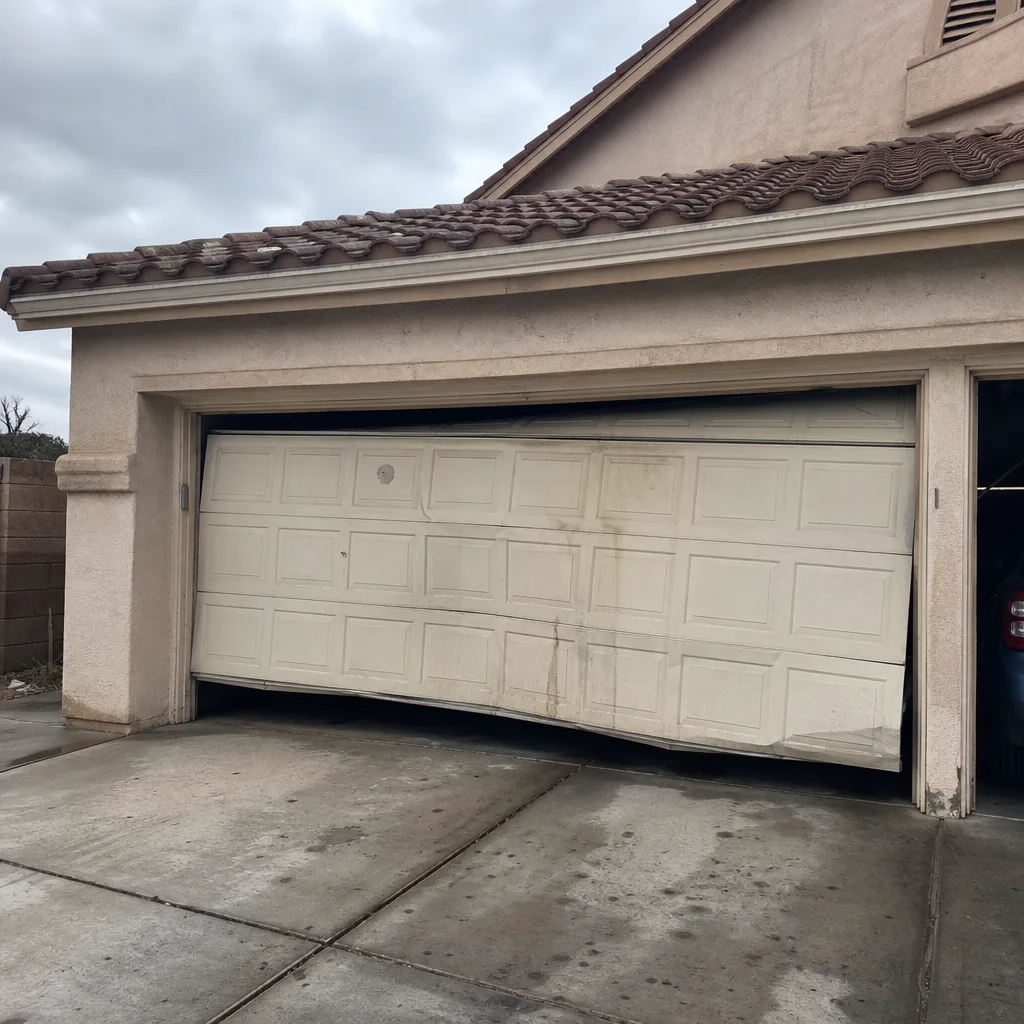 Before
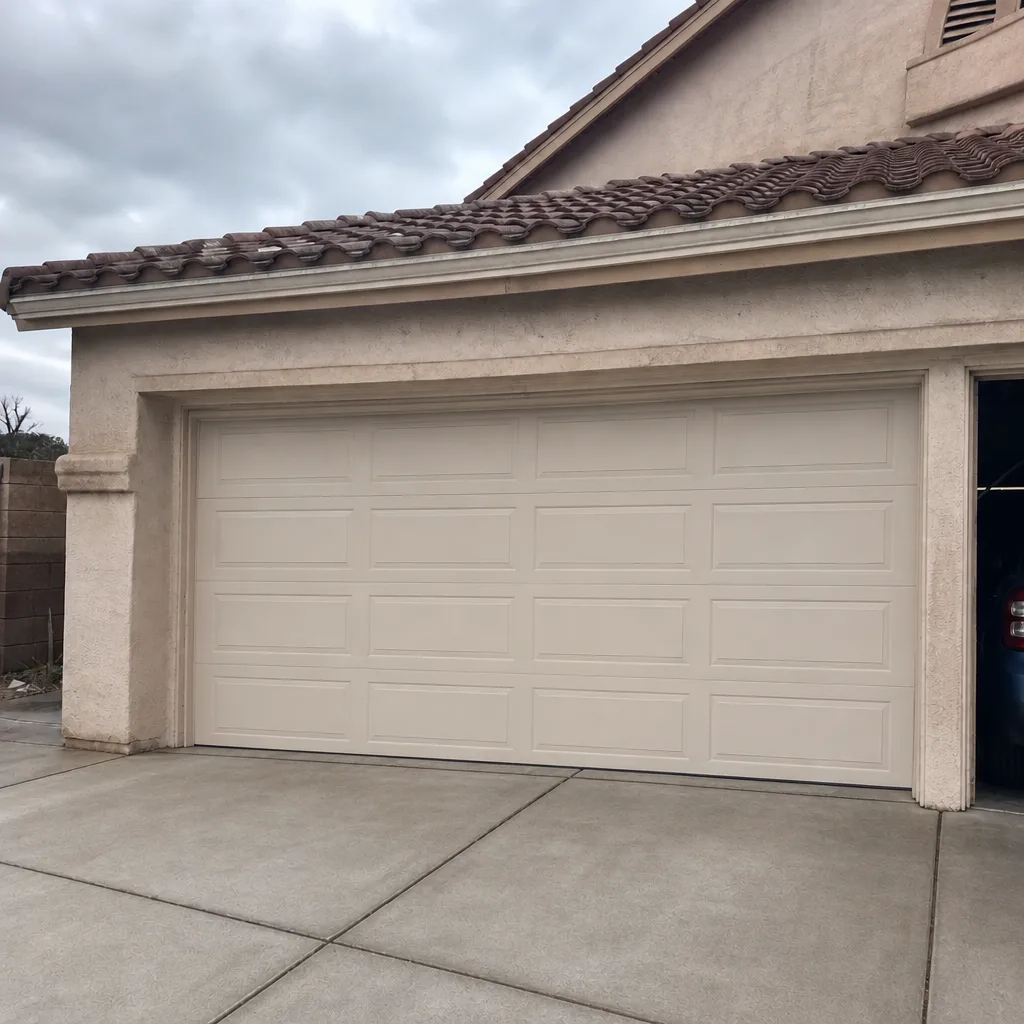 After
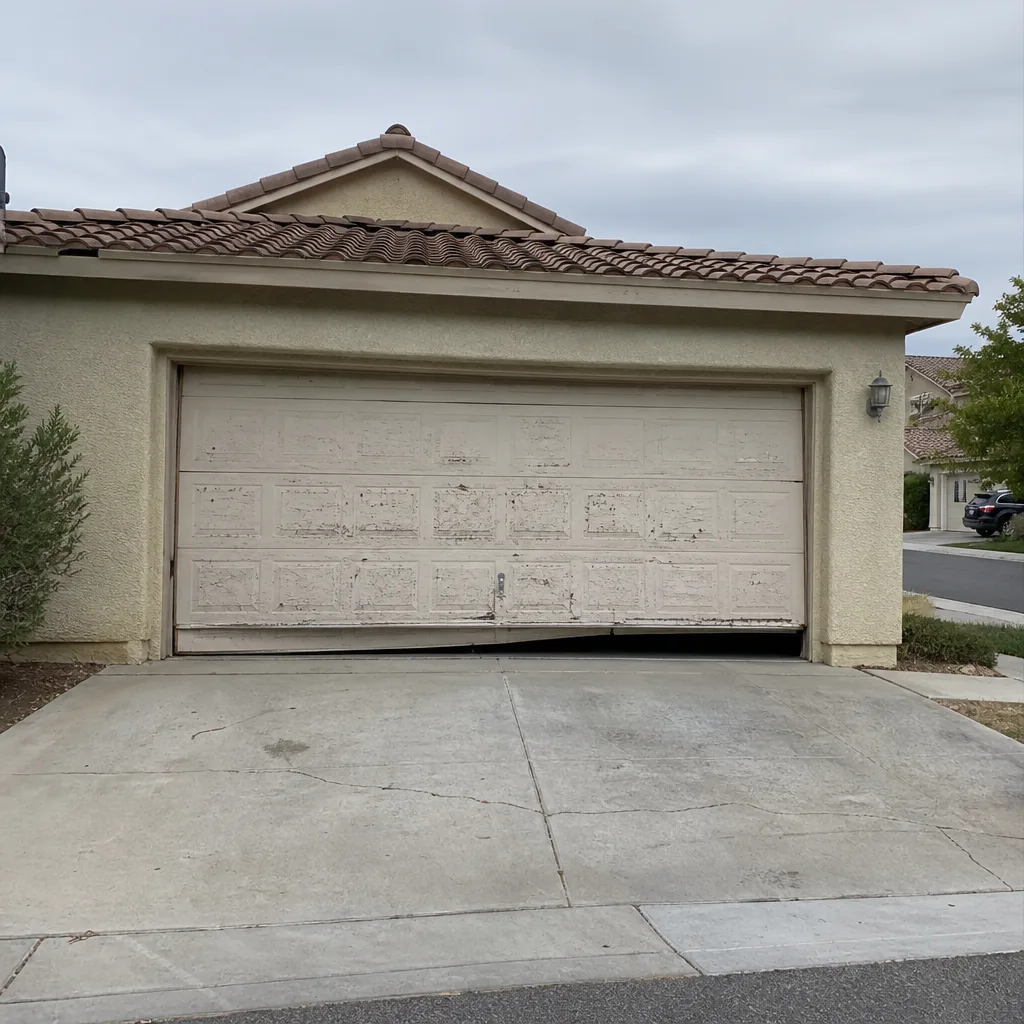 Before
 After
When to Call a Professional
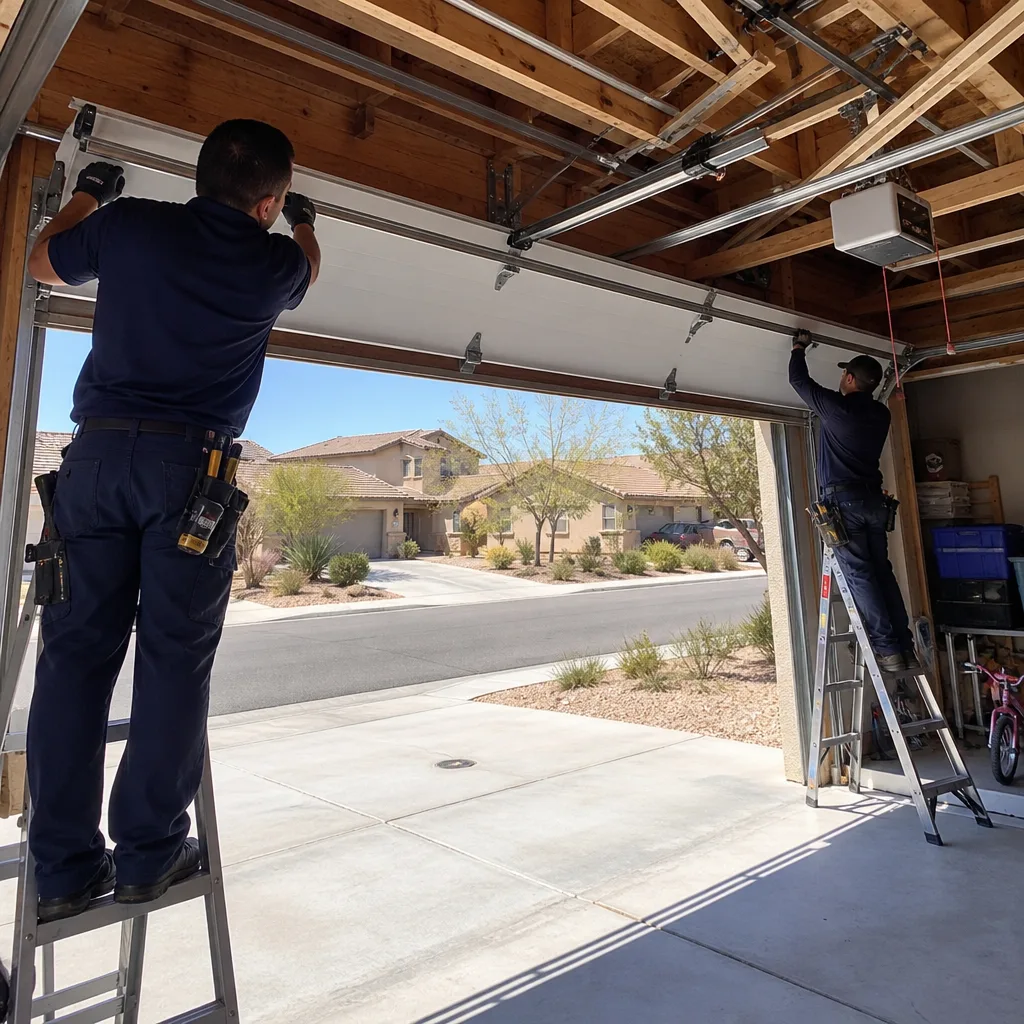
Some tasks belong to you and some belong to a trained technician. Call us if you notice a visible break or gap in a spring, a frayed or snapped cable, a door that reverses for no reason, a door that drifts down when half-open, a bent track, or a spring that looks stretched. These signal imminent or active failure, and the risk of handling them yourself is real. Servo Garage Doors Summerlin offers free estimates in Summerlin, with a flat written price and written scope before any work starts, documented photo record on every visit, and background-checked, uniformed technicians. Call (844) 797-3654. We also offer a Free Second Opinion on any written estimate from another company; just bring the paperwork.
Frequently Asked Questions
Lubricate springs, hinges, and rollers every three months, and more often if the door is used heavily or sits in direct summer sun. In Summerlin heat, grease evaporates faster, so quarterly is a floor, not a stretch. Call (844) 797-3654 for a free estimate on a professional tune-up.
No. Torsion spring adjustment requires winding bars and precise quarter-turns matched to the door’s weight, and a slip can cause serious injury. Lubricate and inspect the spring yourself, but leave tension and replacement to a trained technician.
Replacing a snapped torsion spring typically runs $150 to $350 depending on the spring and door. We quote a flat written price before any work starts, so the number you agree to is the number you pay. Call (844) 797-3654 for an exact quote; estimates are free.
Summerlin’s 115°F summer afternoons harden and crack rubber far faster than moderate climates, so seals here can fail in one to two years instead of the three or more a national schedule assumes. Check the seal monthly through summer and replace it when it turns brittle.
No. We deliver a flat written price and written scope before any work begins, per Clause 1 of The Haven Standard, so you never get an invoice bigger than the quote. Bring a competing written estimate and we’ll give you a free second opinion.
Yes. Our technicians are background-checked and uniformed, with up to 11 years of experience, and the local business holds its own license and insurance. We document every visit with a photo record of what we found and what we did.
The Bottom Line
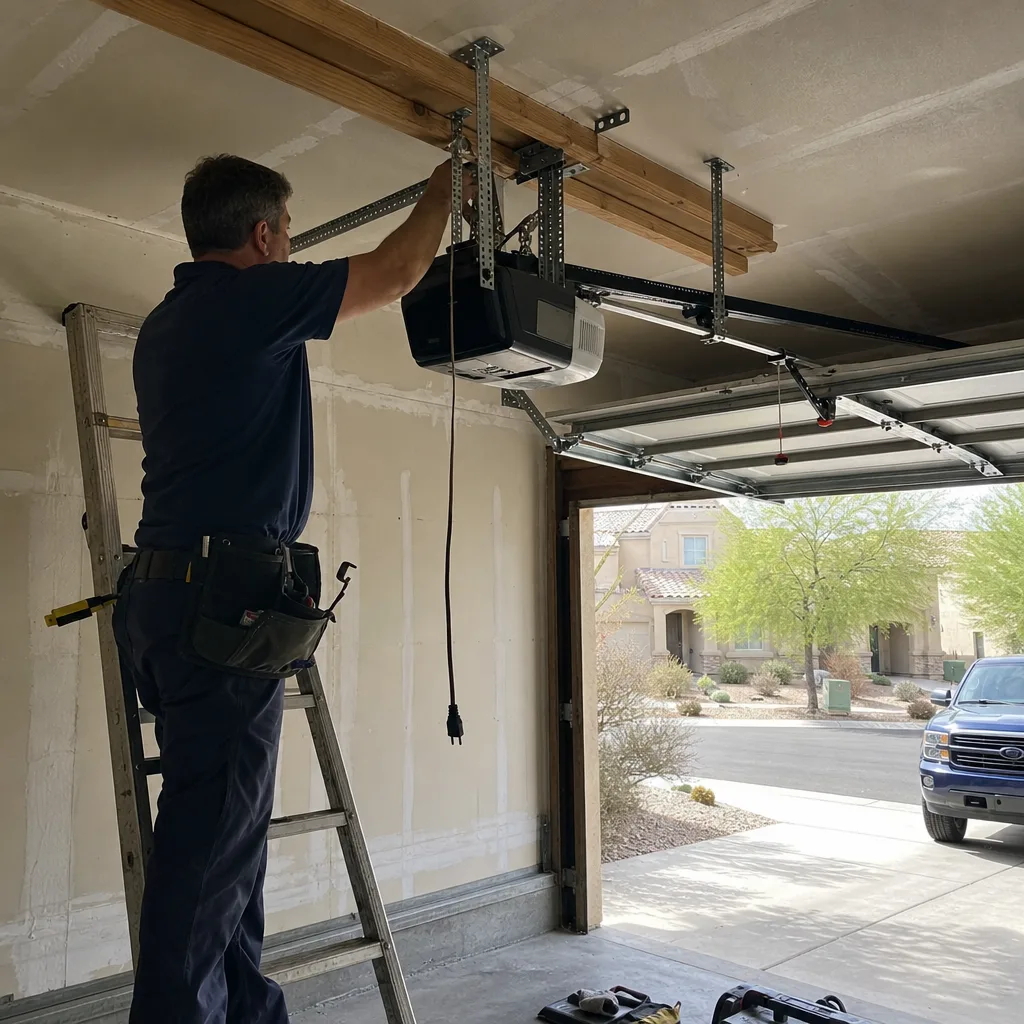
Maintenance works when you can connect each task to the part it protects. Lubricate springs, hinges, and rollers quarterly. Inspect cables monthly and never adjust them yourself. Check the bottom seal every summer month in Summerlin heat, where it cracks faster than any national schedule predicts. Run the safety reverse test monthly. And keep a log, because the paper trail is how you know what’s fresh and what’s fading. The $6 of grease versus the $150-to-$350 spring replacement is the whole argument in one line. If any inspection turns up fraying, a broken spring, or a door that won’t balance, stop and call. Servo Garage Doors Summerlin provides free estimates, written pricing before work starts, and a documented photo record on every visit. Call (844) 797-3654.
Written by the team at Servo Garage Doors Summerlin.