
Last updated November 17, 2026
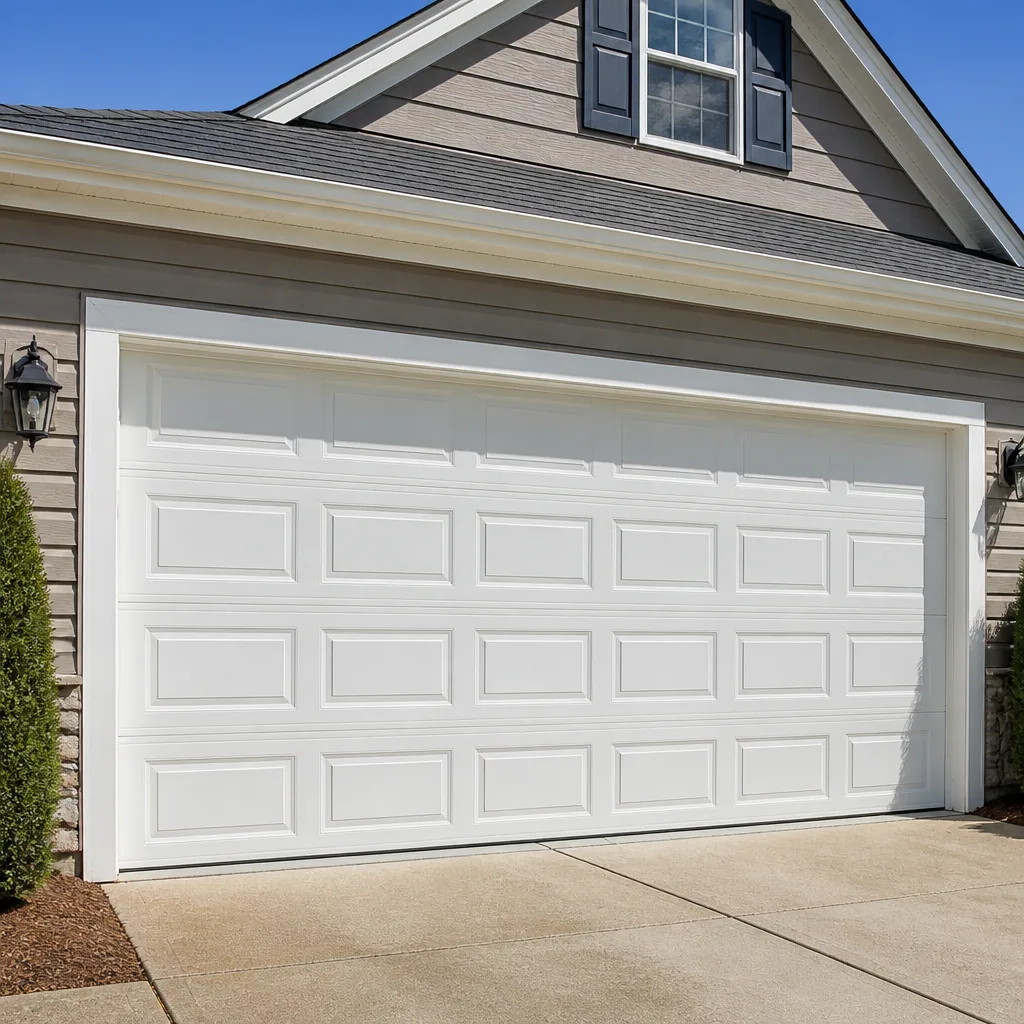 Raised-panel steel
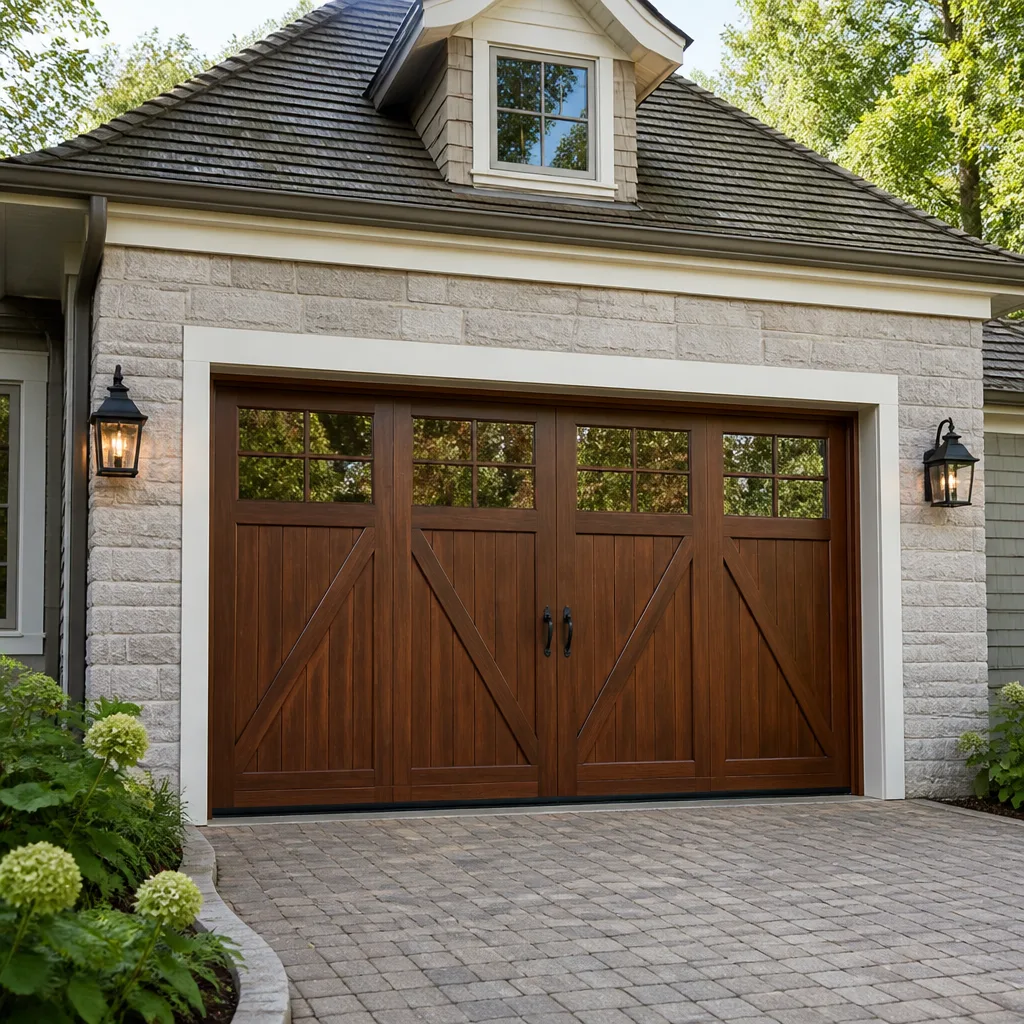 Carriage house
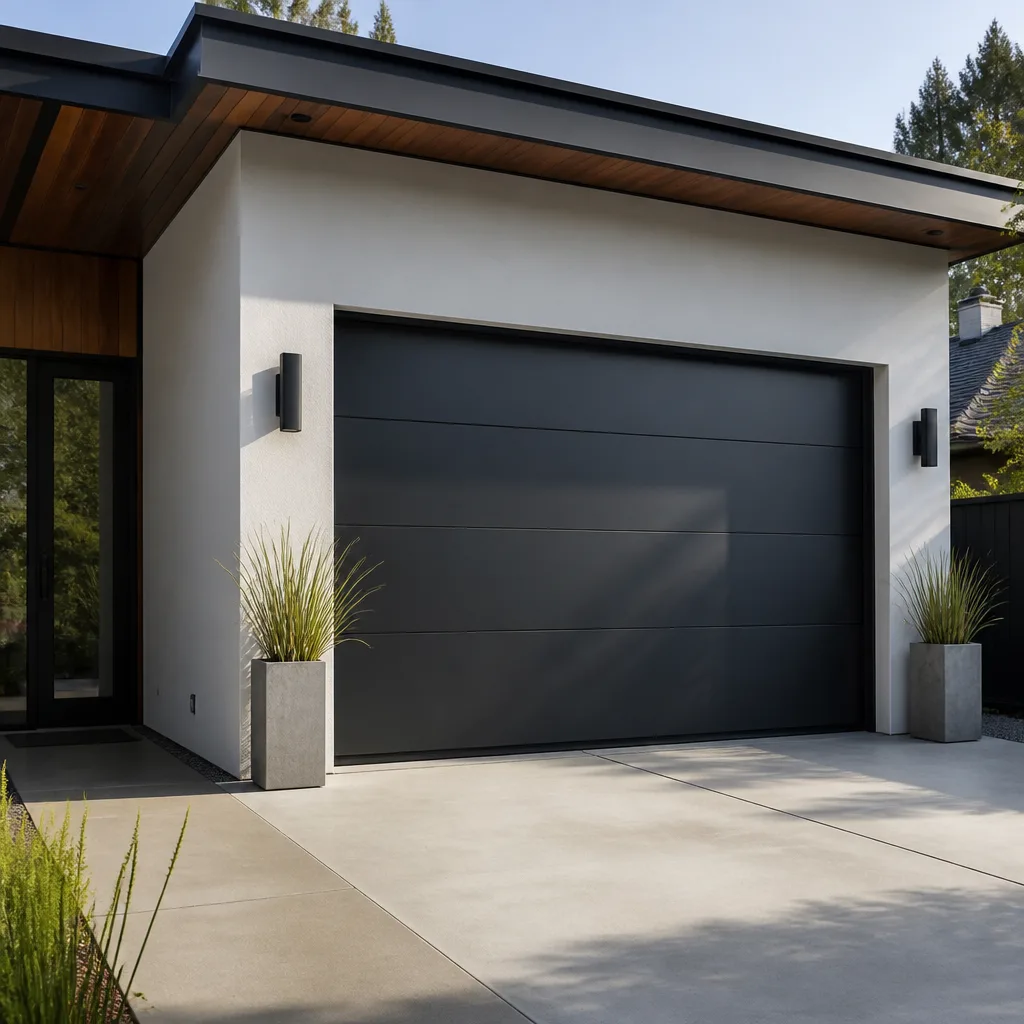 Modern flush
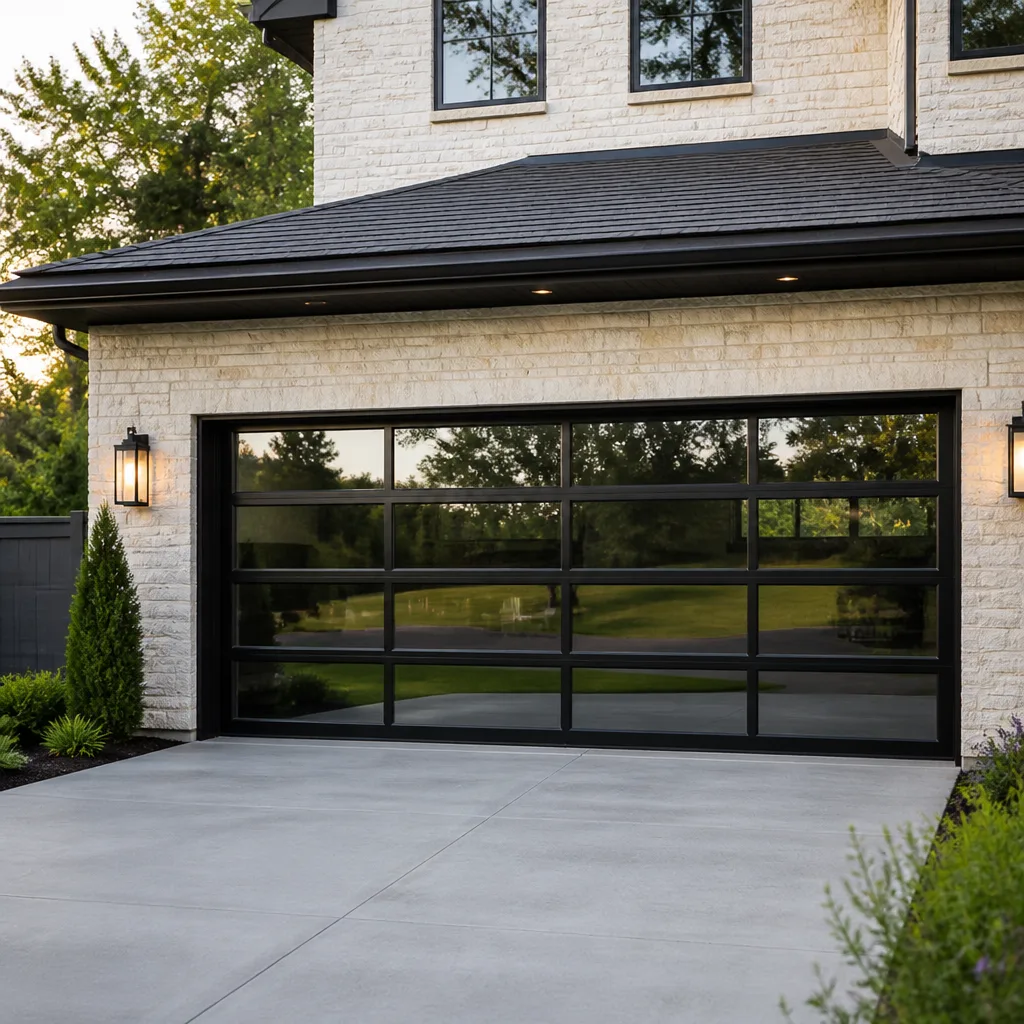 Full-view glass
 LiftMaster openers
 Chamberlain openers
Full 25-point door and opener safety check with every visit - springs, cables, rollers, tracks, and your LiftMaster or Chamberlain opener included
You get a price before we start. It does not change when the pro arrives.
Get your free estimateGarage Door Parts Troubleshooting: Common Problems and How to Fix Them
A snapped lift cable looks like the problem. In most cases it isn’t. When we open a door in Summerlin that dropped on one side, the broken cable is the last link in a chain that started months earlier, usually with a cable drum whose grooves wore smooth or a bottom bracket that had been binding under load. Replace only the cable and the new one fails in the same spot within a year. This guide maps five common symptoms back through the mechanical sequence to the part that actually failed, using the same diagnostic order our technicians follow in Summerlin, so you can tell a root cause from a downstream casualty before you spend money on the wrong repair.
Quick Answer
Most garage door failures trace back to one worn component that puts extra load on the parts around it, so the visible damage (a broken cable, a stripped gear) is often the third or fourth thing to go, not the first. Diagnose by working backward from the symptom through the mechanical chain: balance, then rollers and track, then hinges and brackets, then the opener. In Summerlin, the dry desert air accelerates roller and cable wear, so a symptom that reads like an opener problem often starts at the door hardware.
Styles & brands we work with
- Raised-panel steel
- Carriage house
- Modern flush
- Full-view glass
- LiftMaster openers
- Chamberlain openers
Table of Contents
- Why Garage Door Failures Are Cause Chains, Not Single Parts
- Door Won’t Open: Tracing the Cause Back Through the Chain
- Door Opens Crooked or Sags on One Side
- Grinding Noise: Roller, Track, or Hinge Diagnostics
- Door Falls Faster Than It Should: The Spring Balance Test
- Door Binds at a Specific Height
- Opener Hums but Won’t Move: Stripped Gear vs. Dead Motor
- The Photograph-Before-Disassembly Rule
 Before
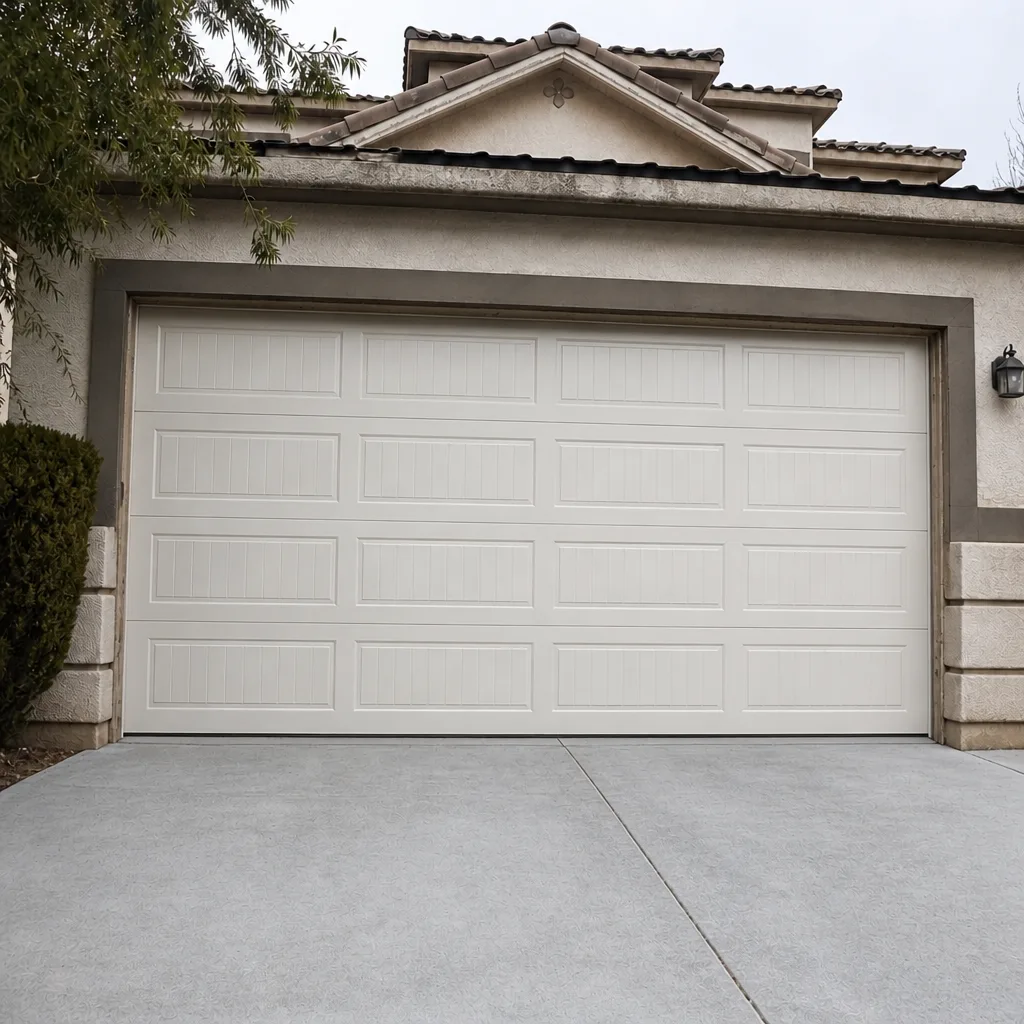 After
Why Garage Door Failures Are Cause Chains, Not Single Parts
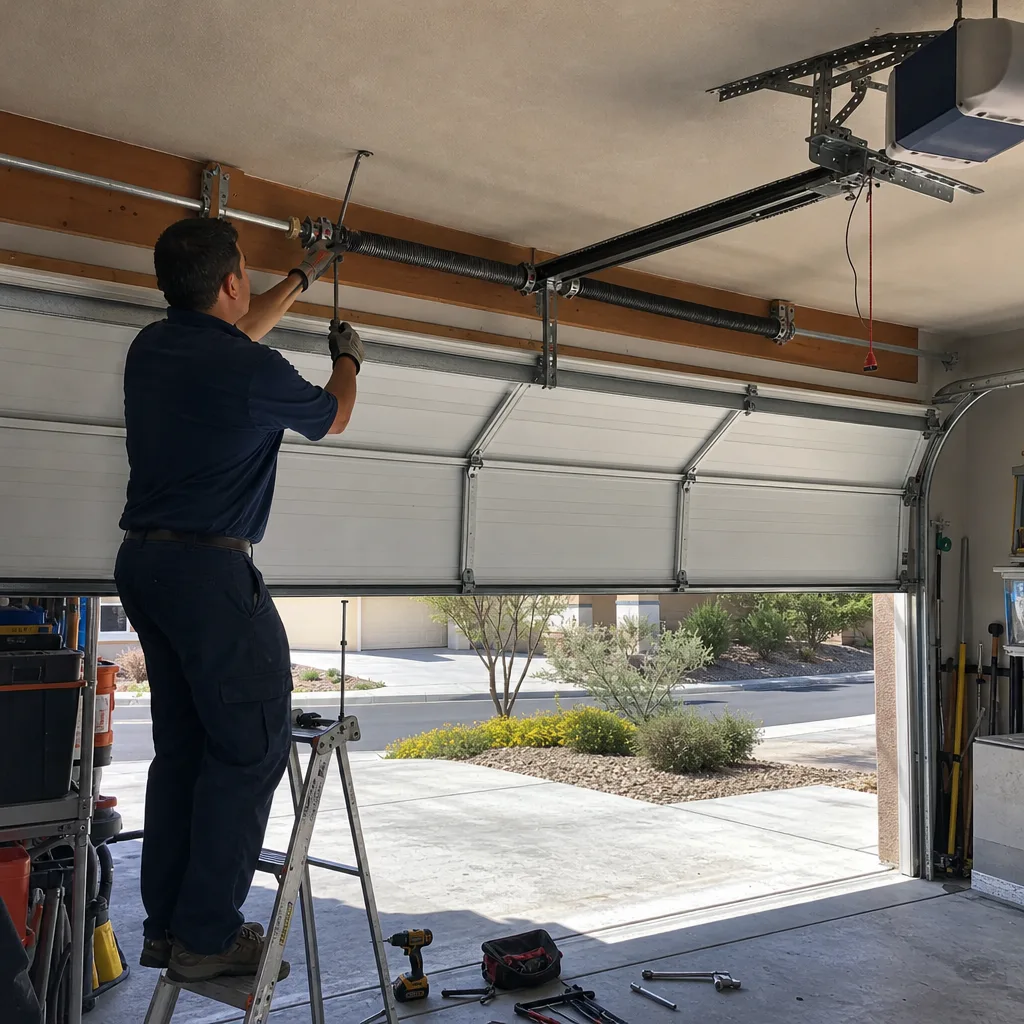
A sectional garage door is a system under constant tension. Torsion springs hold the door’s weight in balance, cables transfer that tension through drums to the bottom corners, rollers run in tracks, and the opener only nudges a door that is already balanced. When one part wears, the load shifts to its neighbors. A binding bottom bracket, for example, forces the cable to drag across a worn drum groove, which frays the cable, which snaps under a load it was never designed to carry. The snap is loud and obvious. The bracket was the cause.
We see this pattern constantly in Summerlin, where doors face intense UV exposure and low humidity for most of the year. Heat and dry air harden nylon rollers, dry out lubricant, and make cables more brittle. A homeowner calls about a door that “just stopped working,” and the actual timeline is six to nine months of a binding roller quietly stressing a hinge until the hinge cracked.
The takeaway: troubleshoot the symptom, then keep asking what produced it. Three questions help:
- What is the visible damage, and what part does it touch?
- Which adjacent components carry load from the failed part?
- Is there wear or binding on those neighbors that predates the failure?
Answer those and you’re diagnosing a chain instead of patching a symptom. That’s the difference between a repair that lasts and one that comes back. If the chain points to a component we handle regularly, our Garage Door Repair in Summerlin service page covers what a full diagnostic visit looks like.
Door Won’t Open: Tracing the Cause Back Through the Chain
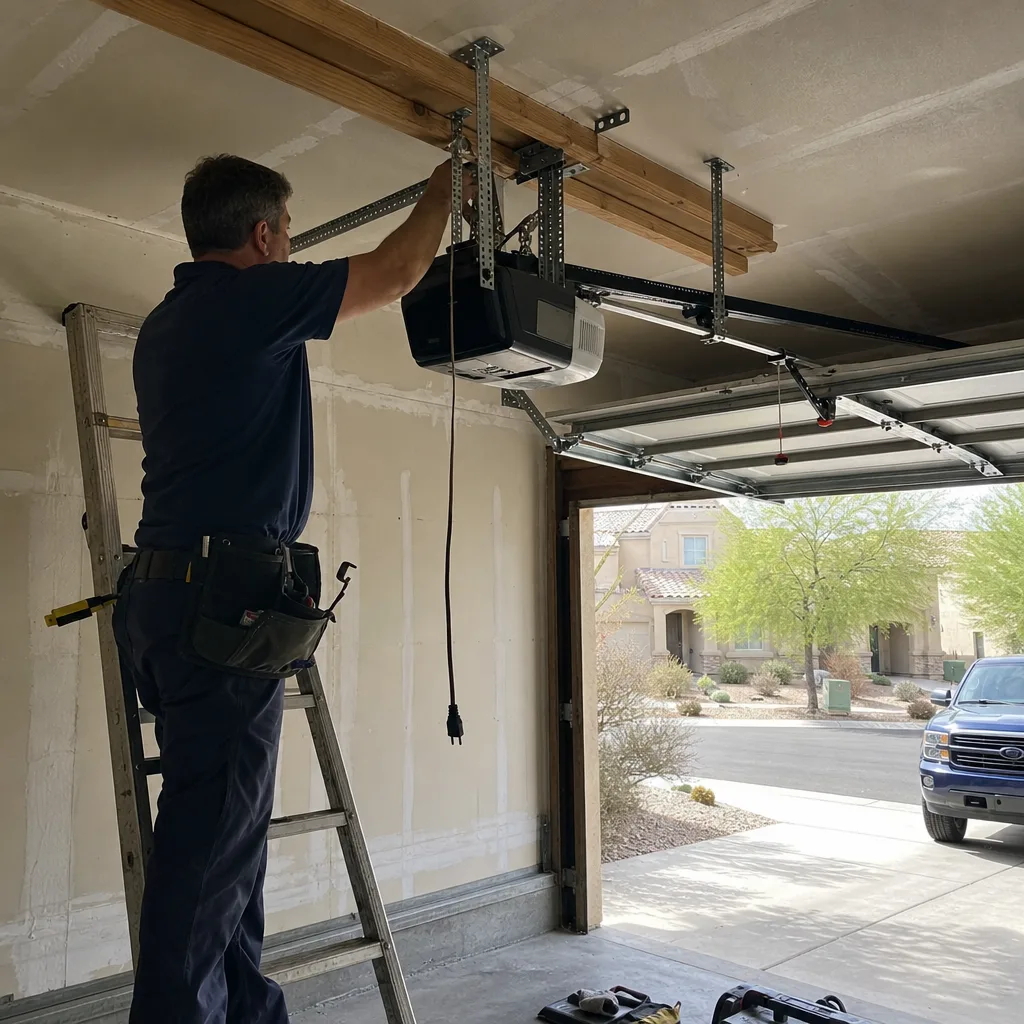
A door that won’t open can fail at any point from the opener to the spring. Start at the opener and work toward the door. First, check whether the opener runs at all. If it hums but doesn’t move the door, the drive gear is likely stripped (more on that below). If the opener runs but the door doesn’t, the trolley carriage may have disengaged from the rail or the manual release may be pulled.
If the opener is fine, the problem is at the door. Pull the manual release (with the door down and no one underneath) and try lifting the door by hand. This single test tells you which half of the system is failing:
- If the door lifts easily and stays put, the springs and balance are healthy, and the fault is in the opener or the drive connection.
- If the door is very heavy and won’t hold itself up, the springs have lost tension or one has broken, and the opener is straining to lift a door it was never meant to lift. Stop using the opener.
- If the door won’t move at all by hand, a roller is jammed in the track or a hinge has locked up. Inspect the track line for a roller that’s popped out or a bent section.
In Summerlin’s newer builds, we often find doors where the opener’s force settings were turned up to compensate for weak springs, which masks the real problem and burns out the motor over time. If you’ve been nudging the force dial up for months, the springs are the cause, not the opener.
Door Opens Crooked or Sags on One Side
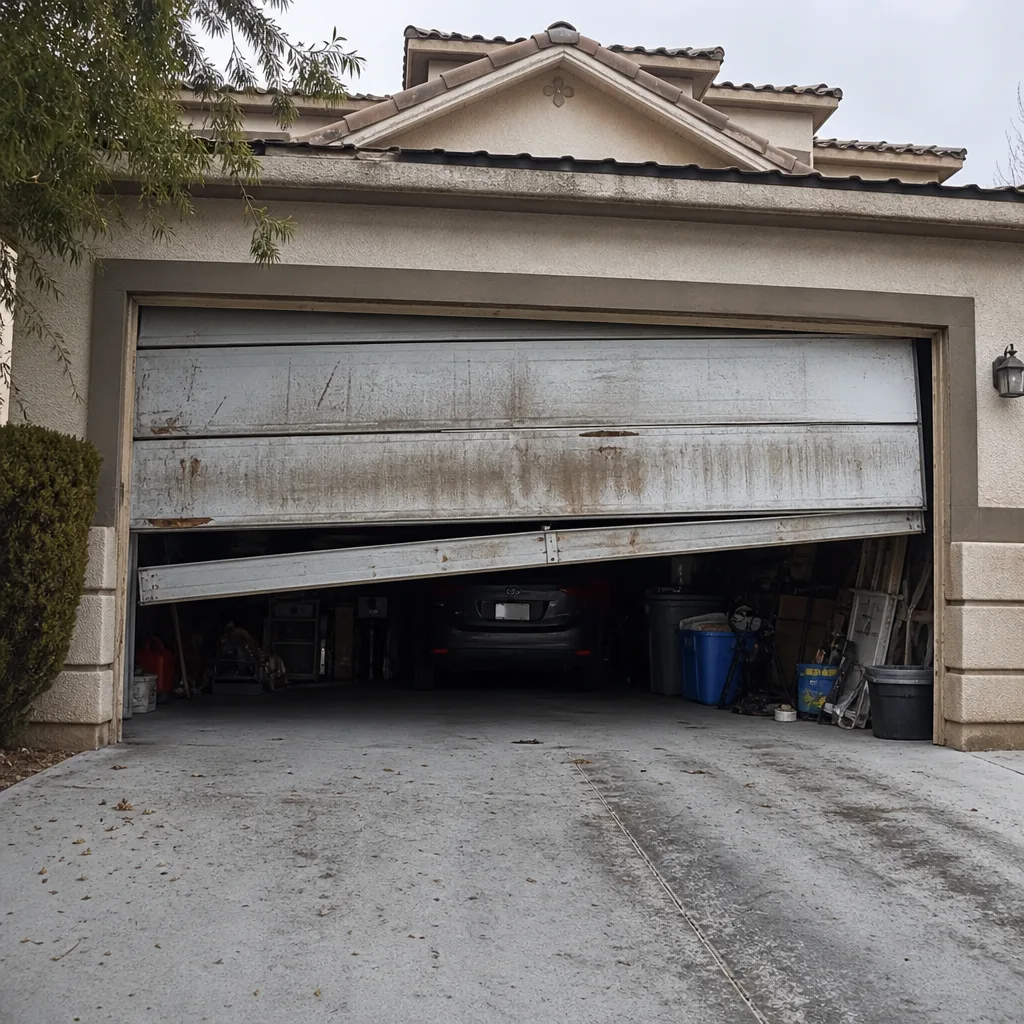
A door that rises unevenly, with one side lagging, is almost always a cable or spring problem on one side. Because most residential doors use a single torsion spring assembly across the top, a broken spring usually drops the door evenly, but a snapped or slipping cable on one side drops one corner. Here’s the order to check:
- Cable condition: Look for fraying, kinks, or a cable that has come off its drum. A cable off the drum on one side drags that corner.
- Drum grooves: If the cable is intact but the door still lags, the drum’s grooves may be worn smooth, letting the cable slip under load.
- Bottom bracket: A binding or cracked bottom bracket on one corner means that corner isn’t tracking true, which shows up as uneven lift.
- Track alignment: A track knocked out of plumb on one side makes one set of rollers bind.
This is the classic case where replacing only the cable misses the cause. If the drum that carries the cable has worn grooves, the new cable wears fast in the same place. In Summerlin’s dry climate, we see cable drums wear faster than homeowners expect because the cable itself is stiffer and less forgiving of a poor groove. The repair that lasts addresses the drum and the cable together, and often the bottom bracket too.
Grinding Noise: Roller, Track, or Hinge Diagnostics
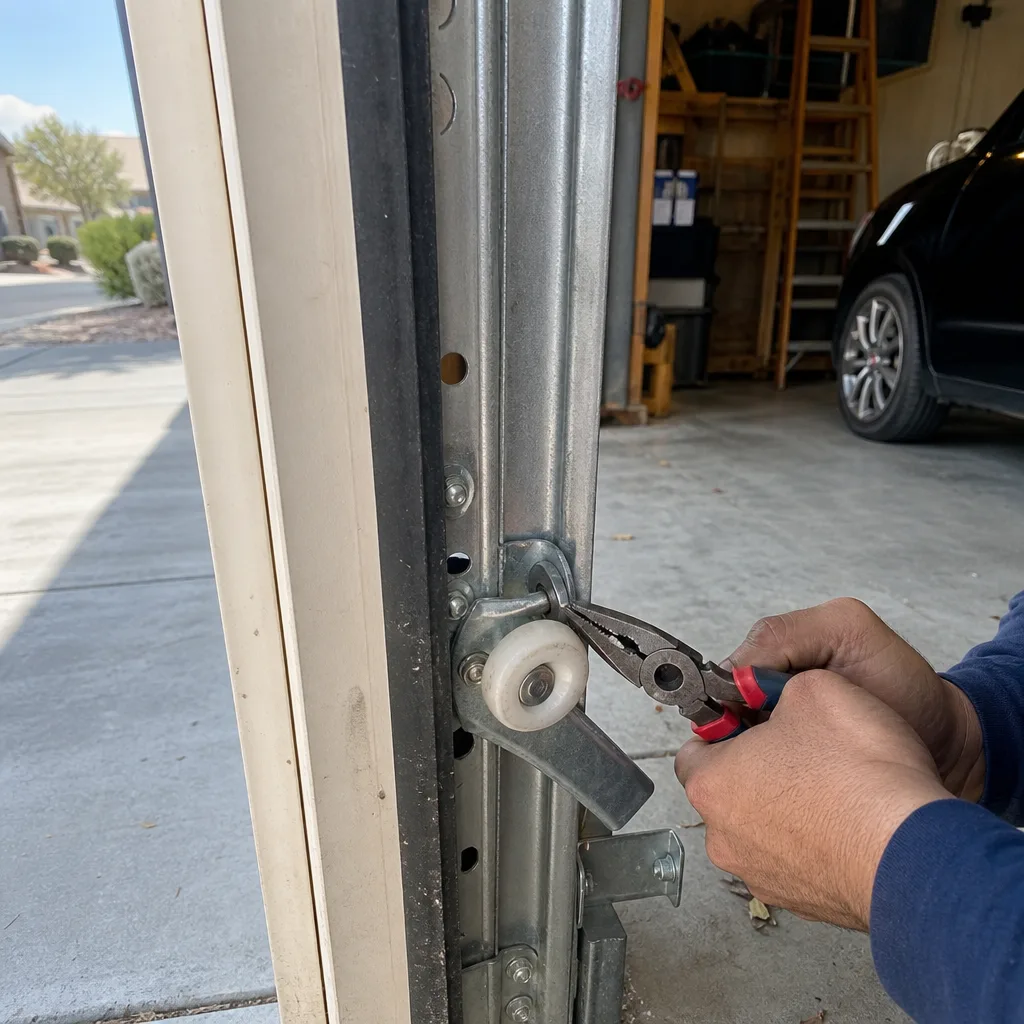
Grinding during operation has three common sources, and they sound similar but cost very different amounts to fix. Work through them in this order.
Rollers. Steel rollers run on bearings and can seize; nylon rollers wear flat spots. A seized steel roller grinds as it drags along the track. Rollers are inexpensive to replace and are the most frequent grinding cause. If the rollers are old and dry, a lubricant on the stems and track can quiet them for a while, but worn rollers should be replaced.
Track. A bent or misaligned track makes even good rollers grind because the roller is fighting the rail. Look down the length of the track for a kink, especially near the curve where horizontal and vertical sections meet. A track that’s been backed into or hit by a car will show a visible dent.
Hinges and panel flex. A cracked hinge lets a panel flex out of alignment, and the edge of that panel can rub the track as the door moves. This is the hardest of the three to spot because the hinge may look fine until you flex it by hand. In Summerlin, where doors go through hot days and cool nights, hinge metal and its fasteners expand and contract, and a hinge that was slightly loose can work itself into a crack over a season.
Same grinding symptom, three different parts, three different price ranges. That’s exactly why a proper diagnostic starts with the parts that are cheapest and most likely to fail, then works up.
Door Falls Faster Than It Should: The Spring Balance Test
There’s a simple, no-tools test that tells you a lot about the spring system. Close the door, pull the manual release so the opener is disconnected, and lift the door by hand to about halfway up. Then let go and step back. What happens next points to which component to inspect:
- The door stays put at halfway. A balanced door. Springs are holding the weight correctly; the fault is elsewhere.
- The door falls. The springs have lost tension or one has broken. The door’s weight is unsupported, which means the opener is doing work it shouldn’t. Stop using the opener.
- The door rises on its own. The springs are over-tensioned, pushing the door up past balance. This stresses cables and the opener and will wear parts fast.
A door that falls quickly usually means a broken torsion spring or a snapped cable on one side. A door that rises on its own means the springs were wound too tight, often during a prior repair. Both are spring-system problems, and both are dangerous to work around.
A safety note we take seriously: torsion springs and their cables are under extreme tension. A wound torsion spring can store enough energy to cause serious injury, and a cable under load can whip if released incorrectly. This is not a component to adjust, rewind, or cut without training and the right tools. If the balance test tells you the springs are the cause, the right move is to have a trained technician handle it, including the cable routing behind it.
Door Binds at a Specific Height
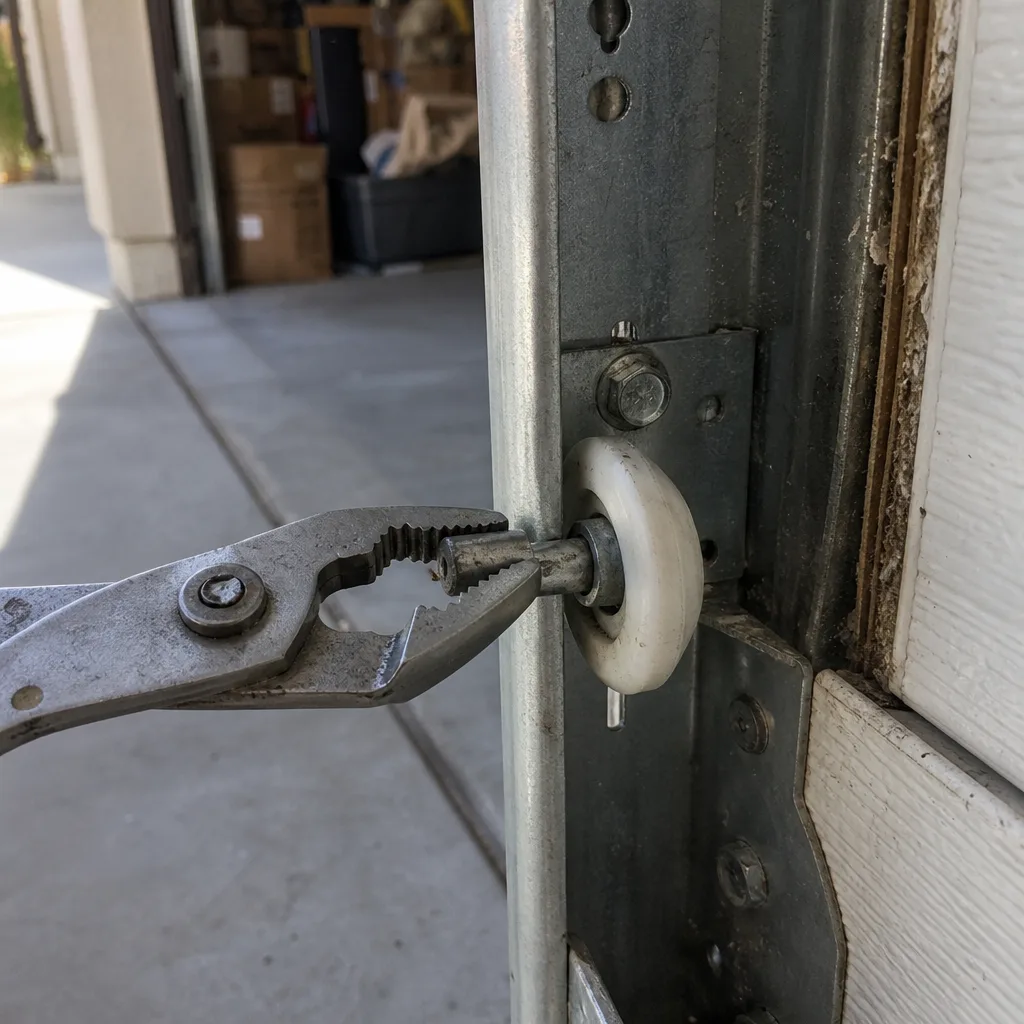
A door that moves smoothly except at one narrow range of travel points to a mechanical conflict at a specific point, not a general balance problem. Common causes:
- A damaged track section. A dent or bend at the height where the bind occurs will catch rollers as they pass. The fix is to repair or replace the affected track section, not the whole rail.
- A misaligned roller stem. A roller that has slipped in its stem, or a stem that’s bent, causes the roller to dive into the track at one height. Replace the roller.
- A hinge that’s cracking. A cracked hinge allows a panel edge to move, and it catches the track only where the panel flexes farthest. Replace the hinge.
- An uneven panel joint. If a panel was replaced and not shimmed correctly, the joint between sections can catch the track.
- Debris in the track. Sometimes it really is a small object, a bit of gravel, or a build-up of hardened lubricant sitting in one spot.
The reason this matters financially: a bent track section and a worn roller stem and a cracked hinge all produce “door binds at one height,” but the repairs cost different amounts. A technician who only sees the symptom and replaces the whole track spends your money unnecessarily. In Summerlin, where several neighborhoods have tight garages with low-clearance doors, we regularly find binds caused by a low-clearance hinge that’s been slightly bent and needs replacement.
Opener Hums but Won’t Move: Stripped Gear vs. Dead Motor
An opener that hums but doesn’t move the door is one of the most misdiagnosed problems in garage doors. In most residential openers, the drive train includes a nylon gear that connects the motor to the drive shaft. That nylon gear, not the motor, is the part that fails first, and it typically lasts years before it wears through. When it strips, the motor hums because it’s spinning, but the drive never engages, so the door doesn’t move.
The distinction is worth real money. Replacing a stripped drive gear is a small part and a short repair. Replacing the whole opener because someone assumed the motor was dead is a much larger bill for the same result. Here’s how the diagnosis usually goes:
- Hum, no movement, no door travel: suspect the drive gear. On most LiftMaster and Chamberlain units, this is the nylon main gear.
- Hum, light works, door doesn’t move: the gear or the drive connection, not necessarily the motor.
- No hum at all, no light: could be a logic board, a power issue, or a dead motor, which is a different repair.
- Opener runs but door jams: the gear is fine; the fault is at the door, and you’d have found it with the manual-release test above.
We can often tell a stripped gear from a dead motor by sound and by opening the housing, and it’s the kind of check our Garage Door Opener Repair & Installation in Summerlin service handles routinely. It’s also why a technician who photographs the failed part before quoting has the evidence to explain the difference instead of asking you to take it on faith.
The Photograph-Before-Disassembly Rule
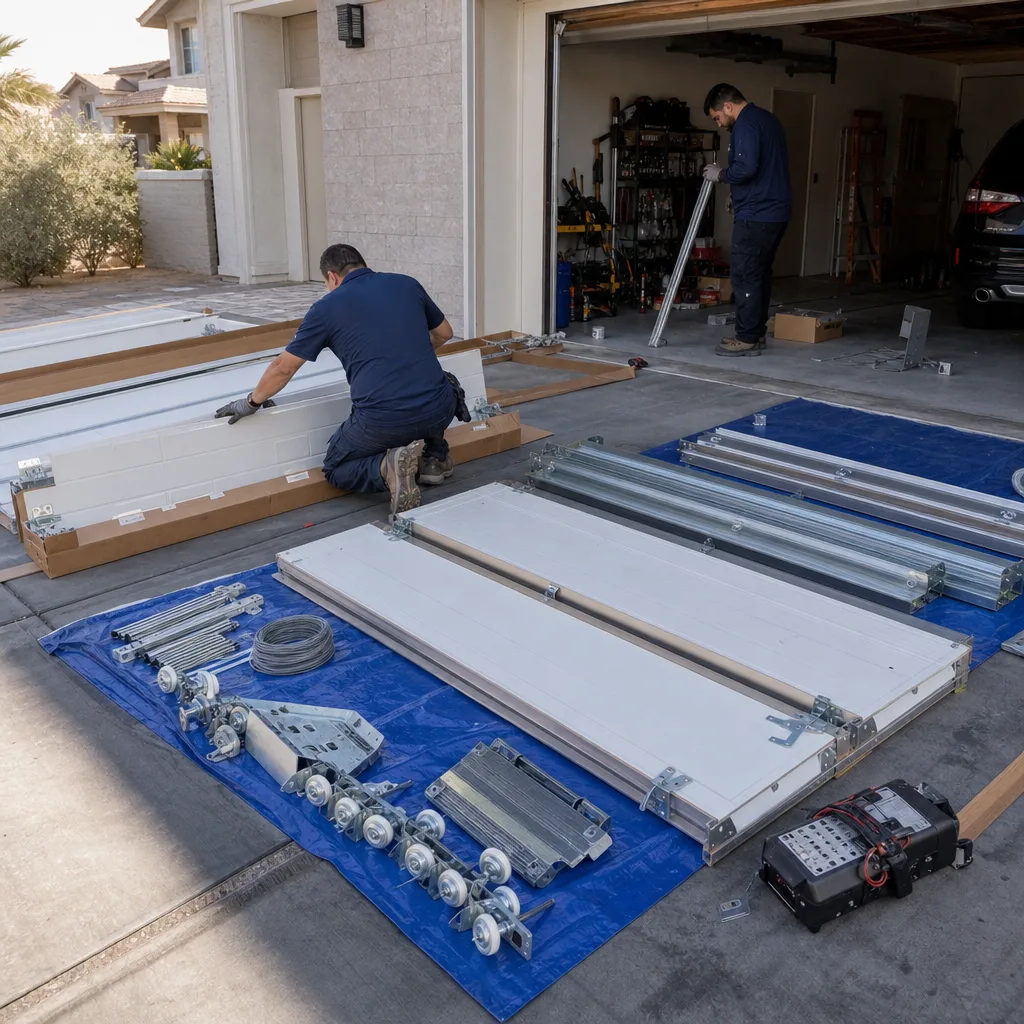
Before a technician removes any part that has a right and a wrong way to go back, they should photograph it in place. This is one of the simplest habits in garage door repair and one of the most underused. Cable routing, spring winding direction, and bracket orientation are all easy to get wrong from memory and easy to restore correctly from a dated photograph.
Here’s why it matters to the homeowner, not just the tech:
- Cable routing changes from model to model, and a cable run through the wrong path wears and fails early.
- Spring winding direction (left-wound vs. right-wound) affects how the door balances; a wrong direction shortens spring life and can cause uneven lift.
- Bracket orientation determines how the door hangs, and a bracket put back backwards can cause a bind that wasn’t there before.
On every job, Servo’s technicians photograph the failed component before quoting a replacement, and the customer receives a documented photo record of what was found and what was done. That’s a founding rule of how we work, and it’s the evidence behind Clause 4 of The Haven Standard. It’s also why we offer a free second opinion on any competing written estimate: bring the paperwork, and we’ll show you what we find. If you’re weighing repair against replacement, our Garage Door Installation in Summerlin page walks through when a new door genuinely beats a repair.
Common Mistakes to Avoid
- Replacing the cable without checking the drum. If the drum that carries the cable has worn grooves, the new cable wears fast in the same place. Address both.
- Turning up the opener’s force setting to overcome a heavy door. This masks weak springs and burns out the motor. In Summerlin, where springs take a beating from heat, we see this a lot.
- Treating a hum as a dead motor. Usually it’s a stripped nylon drive gear, a small repair, not a full opener replacement.
- Ignoring a bind at one height. A binding roller or a bent track section that only catches at one point gets blamed on the opener and left to wear out a hinge.
- Using a general lubricant on rollers and springs. The wrong lubricant attracts grit and hardens in Summerlin’s dusty air. Use the type recommended for the part.
- Adjusting or cutting a torsion spring yourself. The stored energy is dangerous. This is one of the few garage door parts a homeowner should never touch.
- Skipping the photo record. If a tech doesn’t document the original routing before disassembly, they’re working from memory, and that’s how a door comes back two months later.
See the difference
BeforeAfter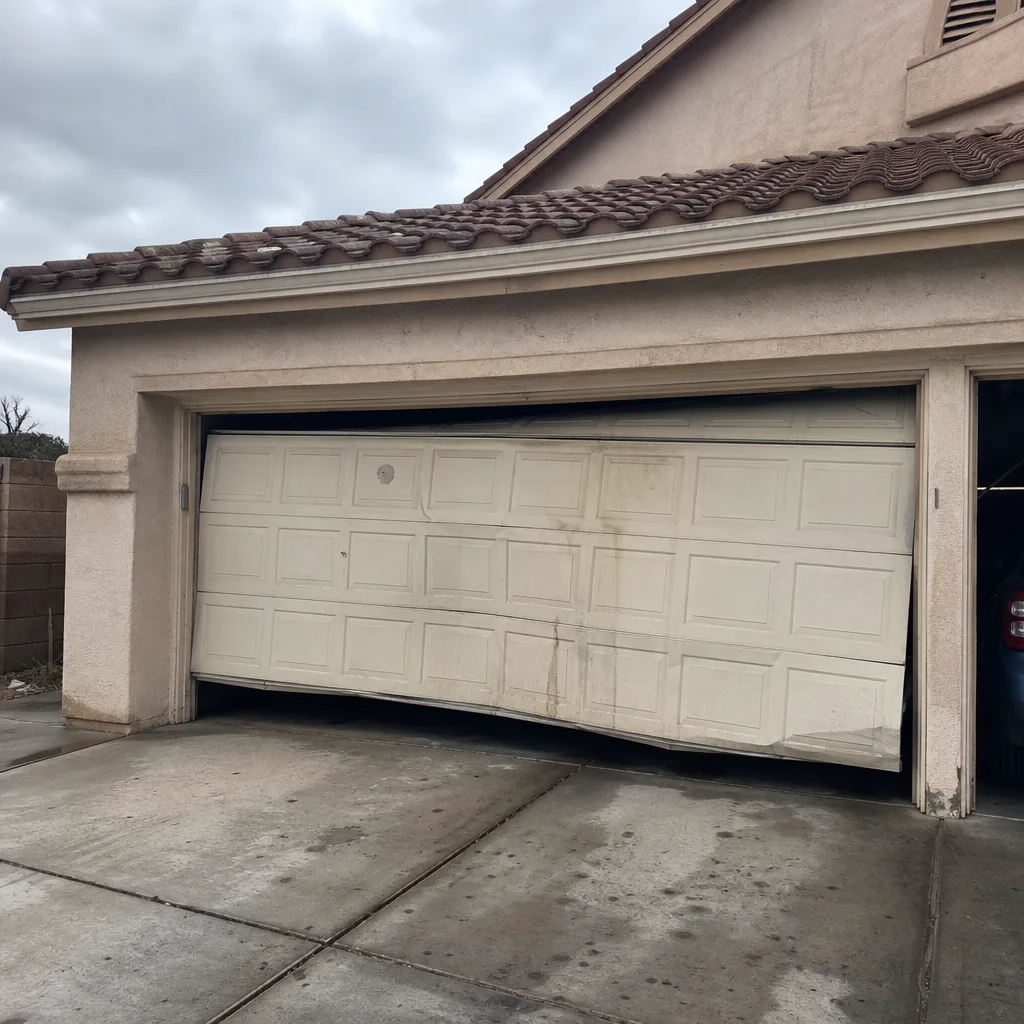 Before
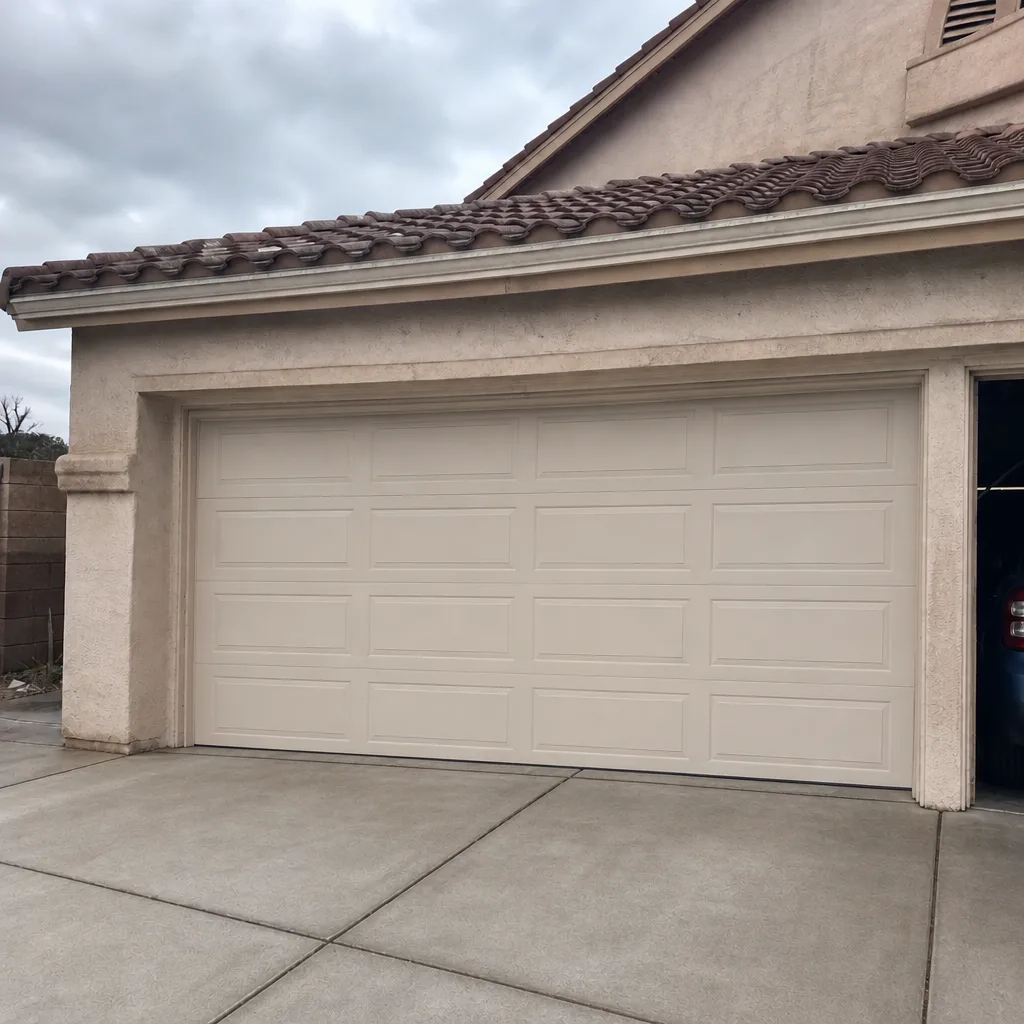 After
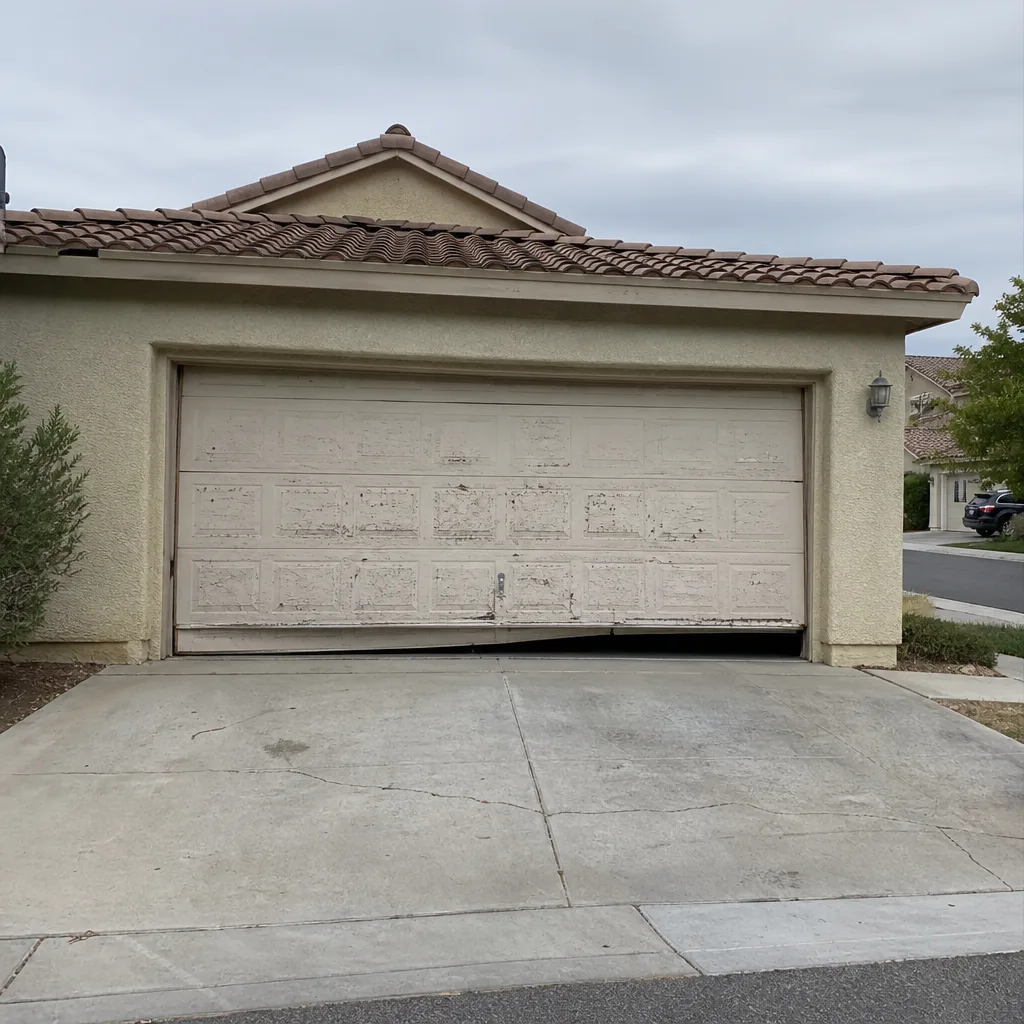 Before
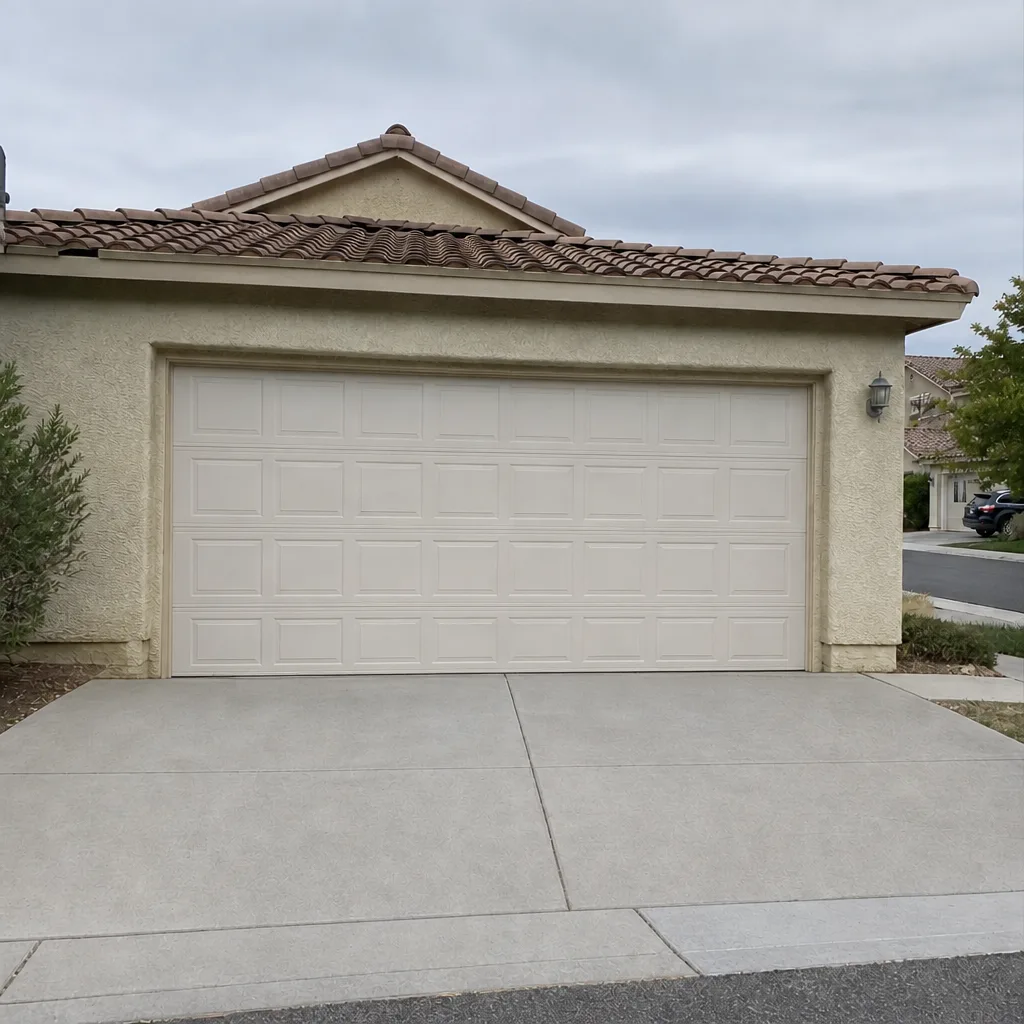 After
When to Call a Professional
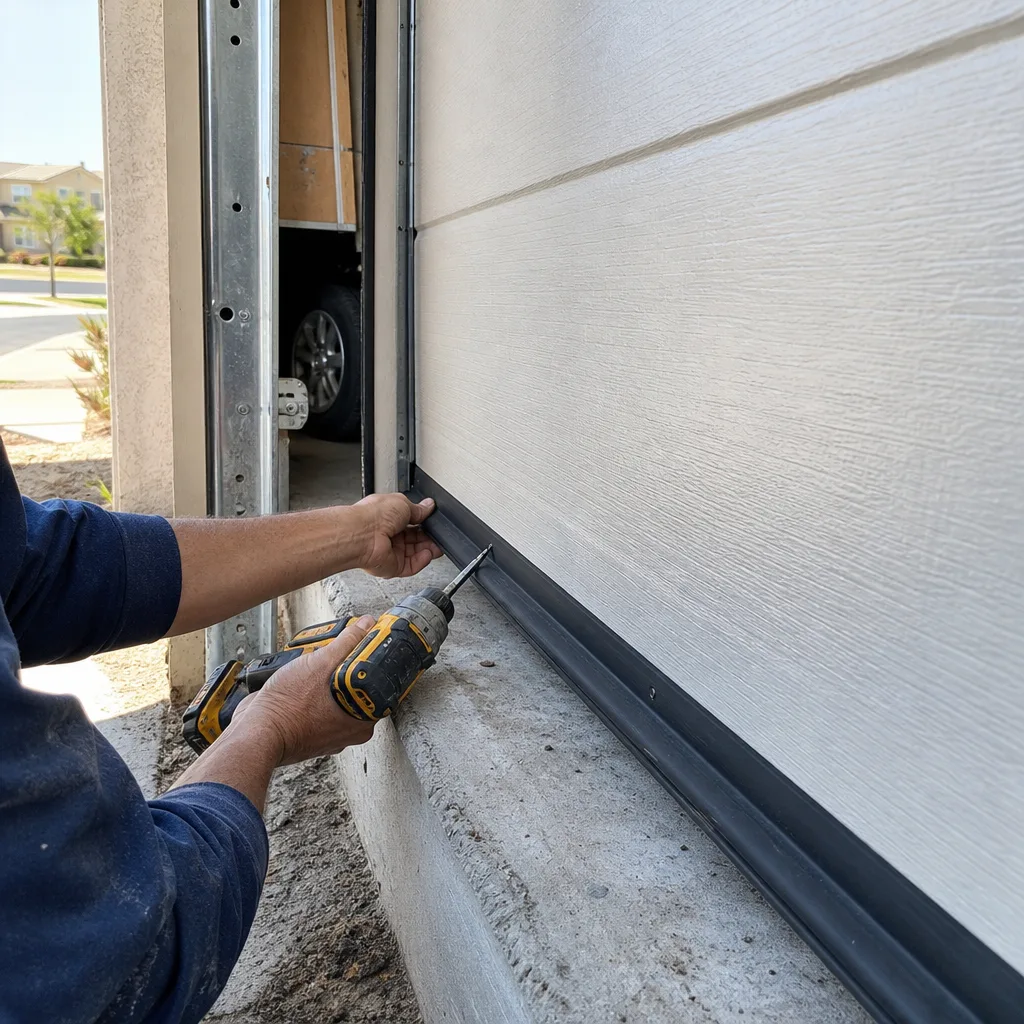
Most of the diagnostics in this guide are safe to do yourself: the manual lift test, inspecting rollers and track, and watching how the door moves. The moment you suspect the spring system, stop. A broken or over-tensioned torsion spring, a cable off its drum, or a door that falls on its own are all jobs that belong to a trained technician. The same is true if you’ve found a dead motor or logic board and aren’t sure which. Servo Garage Doors Summerlin offers free estimates in Summerlin. Call (844) 797-3654, and a live person will answer day or night. We quote a flat, written price and scope before any work starts, and every visit closes with a documented photo record.
Frequently Asked Questions
Most garage door repairs in Summerlin fall between $180 and $340 for common parts like rollers, cables, and hinges, with spring replacement and opener gear repair in a higher range depending on the component. The exact figure depends on what the diagnostic finds. Call (844) 797-3654 for a written quote; estimates are free and the price is agreed before any work begins.
A hum without movement usually means a stripped nylon drive gear, not a dead motor, and it’s a common repair on most residential openers. The gear is a small part that wears out over years, and replacing it is far cheaper than replacing the opener. Call (844) 797-3654 and we’ll confirm the diagnosis before quoting.
No. A door that drops under its own weight has a spring-system problem, and the springs and cables store dangerous energy. Stop using the door and the opener, and don’t adjust the springs yourself. Call (844) 797-3654 and we’ll handle it safely.
We don’t recommend it. The cable is under extreme tension from the spring system, and a cable that whips or a spring that releases can cause serious injury. The safer path is to have a trained technician replace the cable and check the drum and bottom bracket at the same time, which is what our written quote covers. Call (844) 797-3654 for an estimate.
A bind at one specific height usually points to a bent track section, a worn roller stem, or a cracked hinge that lets a panel flex into the track. Those are three different parts and three different repairs, which is why a proper diagnostic matters before replacing anything. Call (844) 797-3654 and we’ll find the cause first.
Yes. We service all major brands, including LiftMaster, Chamberlain, Genie, and Craftsman, along with Clopay, Amarr, Wayne Dalton, and Raynor doors. In Summerlin, our technicians have up to 11 years of experience diagnosing which part actually failed. Call (844) 797-3654 to book a time.
The Bottom Line
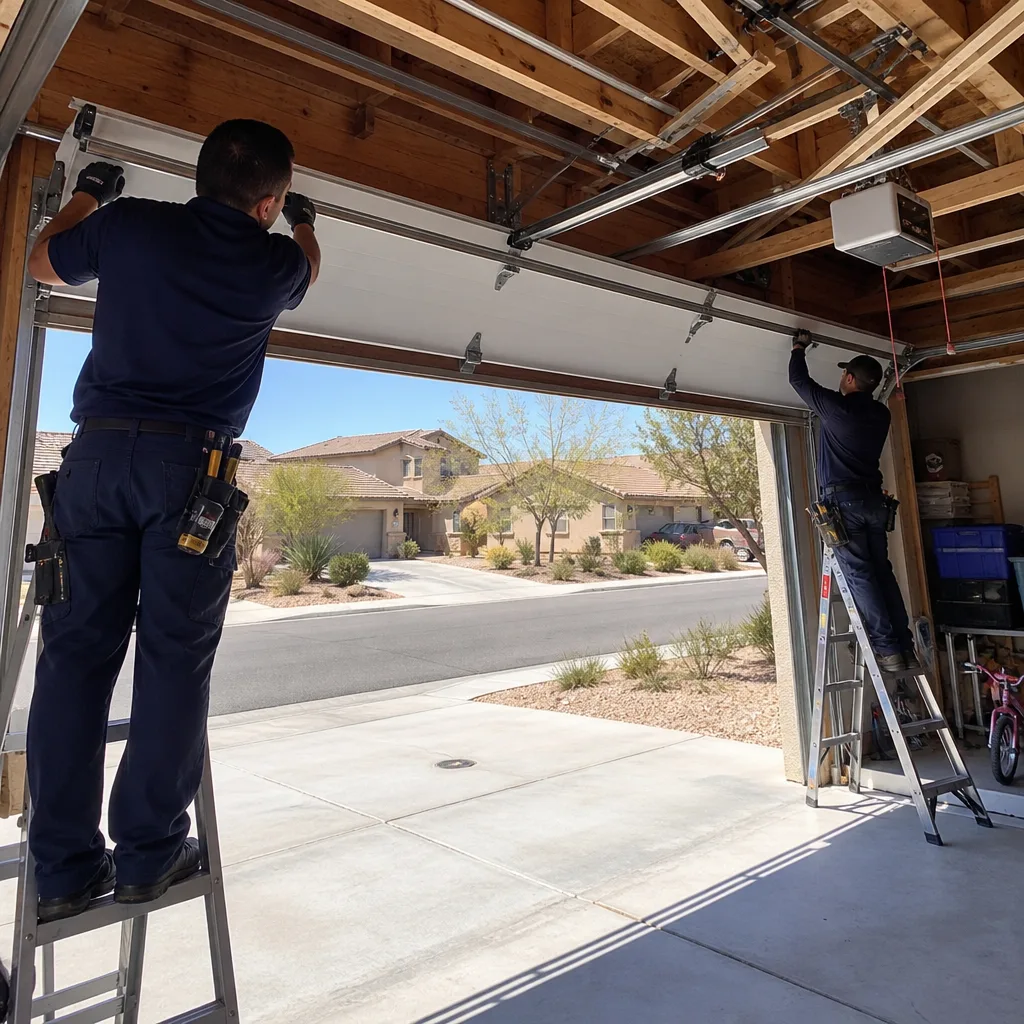
Garage door problems are cause chains. The part that broke is rarely the part that started the trouble, and chasing the symptom alone means repeat failures within months. Diagnose in order: balance test first with a manual lift, then rollers and track, then hinges and brackets, then the opener. A door that falls quickly is a spring problem, not an opener problem, and it’s a job for a trained technician. A hum without movement is usually a stripped gear, not a dead motor. Document the original configuration before touching anything. When the chain points to a repair you shouldn’t do yourself, call us at (844) 797-3654 for a free estimate, and we’ll show you the evidence before we quote a fix.
Servo Garage Doors Summerlin is independently owned and operated under The Haven Standard. Every job comes with a written price before work starts, a documented photo record, and the 365-Day Done Right Promise. To learn more, visit Servo Garage Doors Summerlin home, or explore how we handle Garage Door Repair in Summerlin. For a free estimate, call (844) 797-3654 and a live person will answer.
Written by the team at Servo Garage Doors Summerlin.