
Last updated November 17, 2026
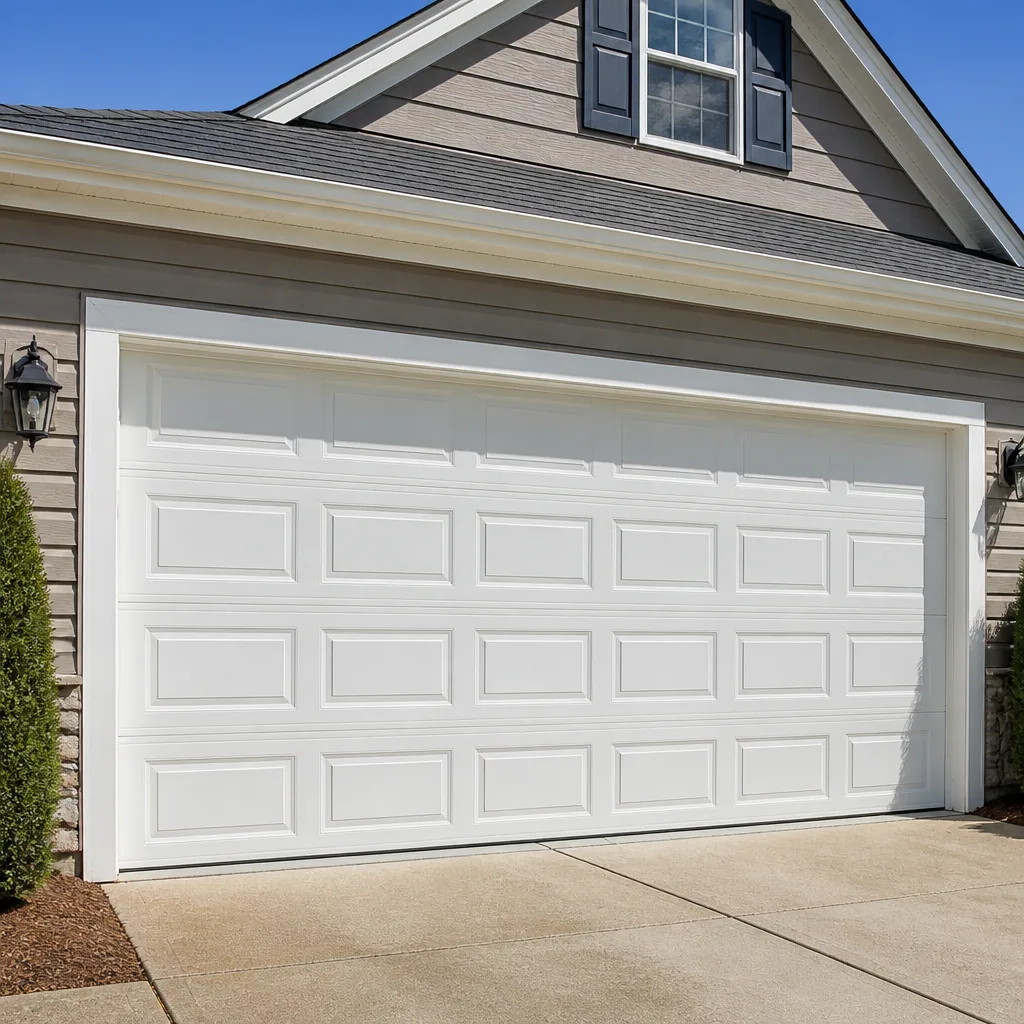 Raised-panel steel
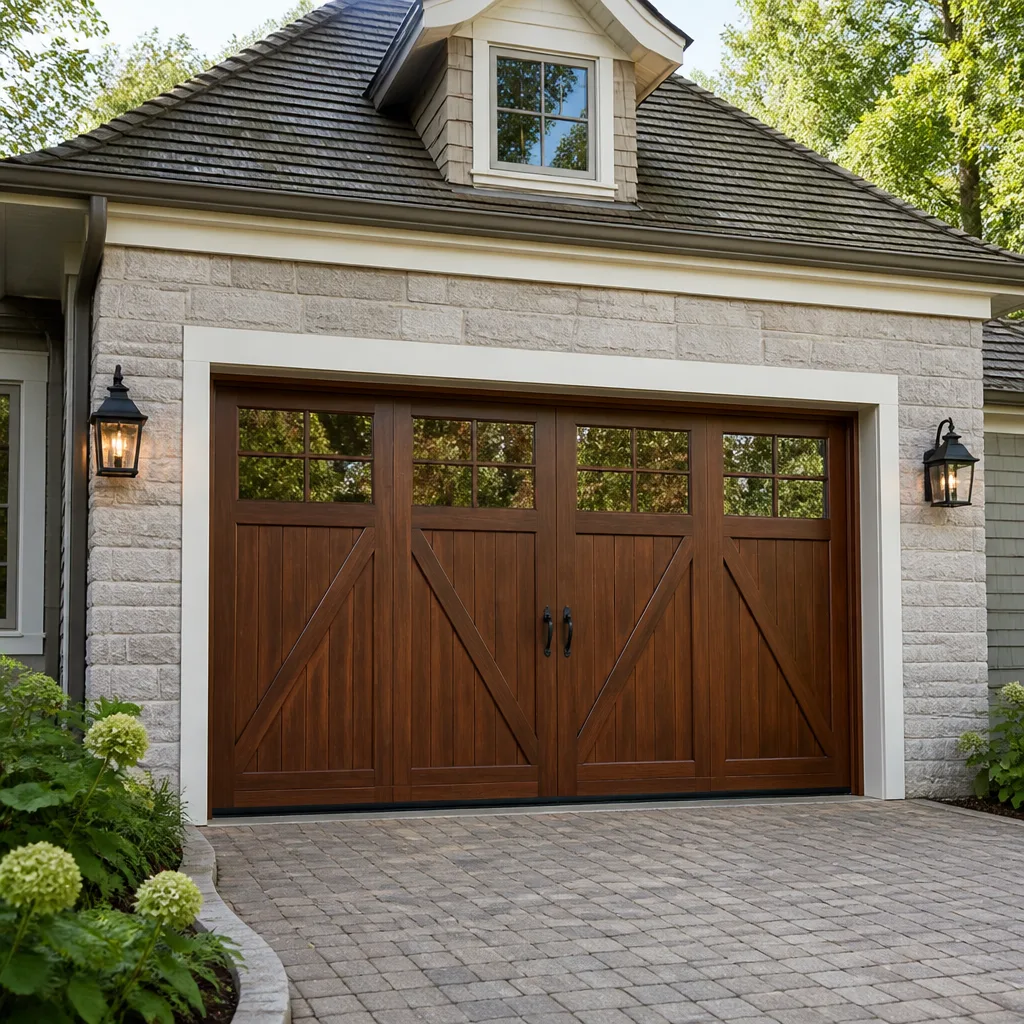 Carriage house
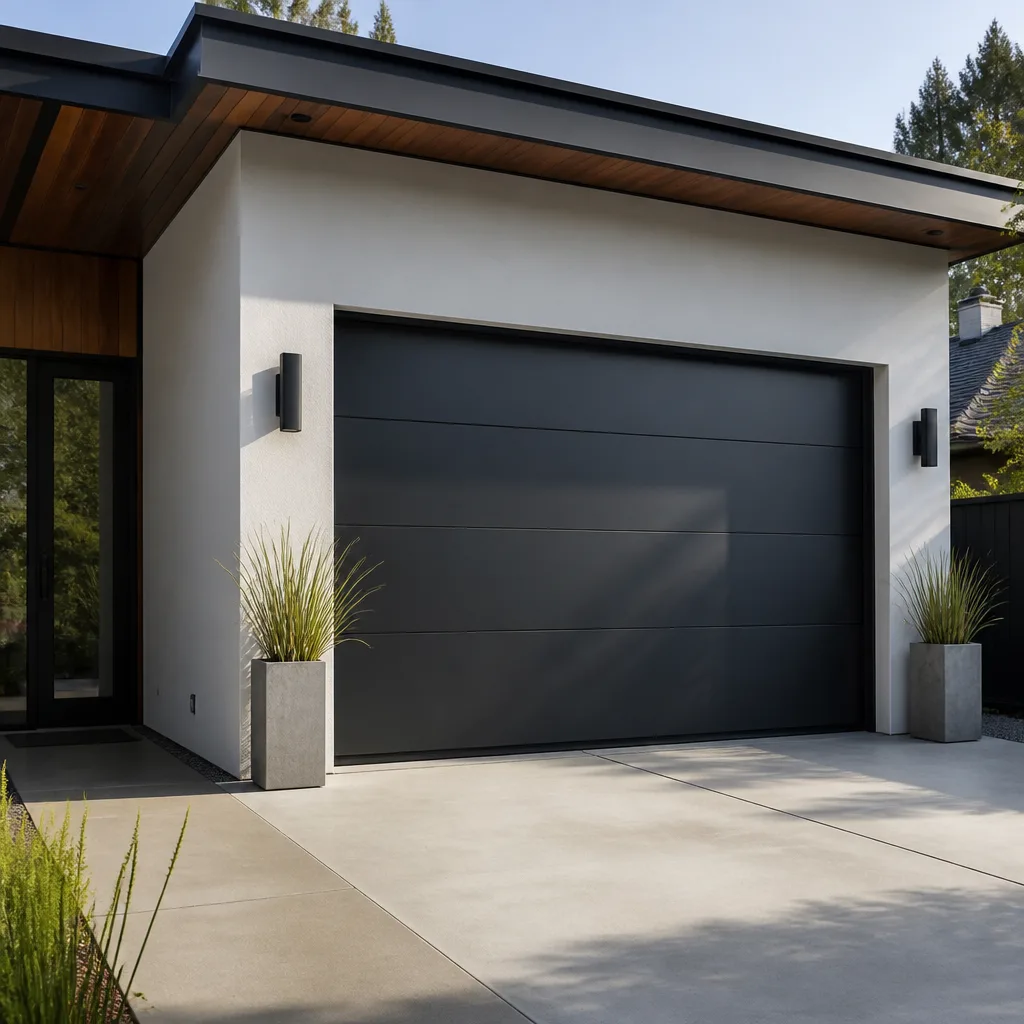 Modern flush
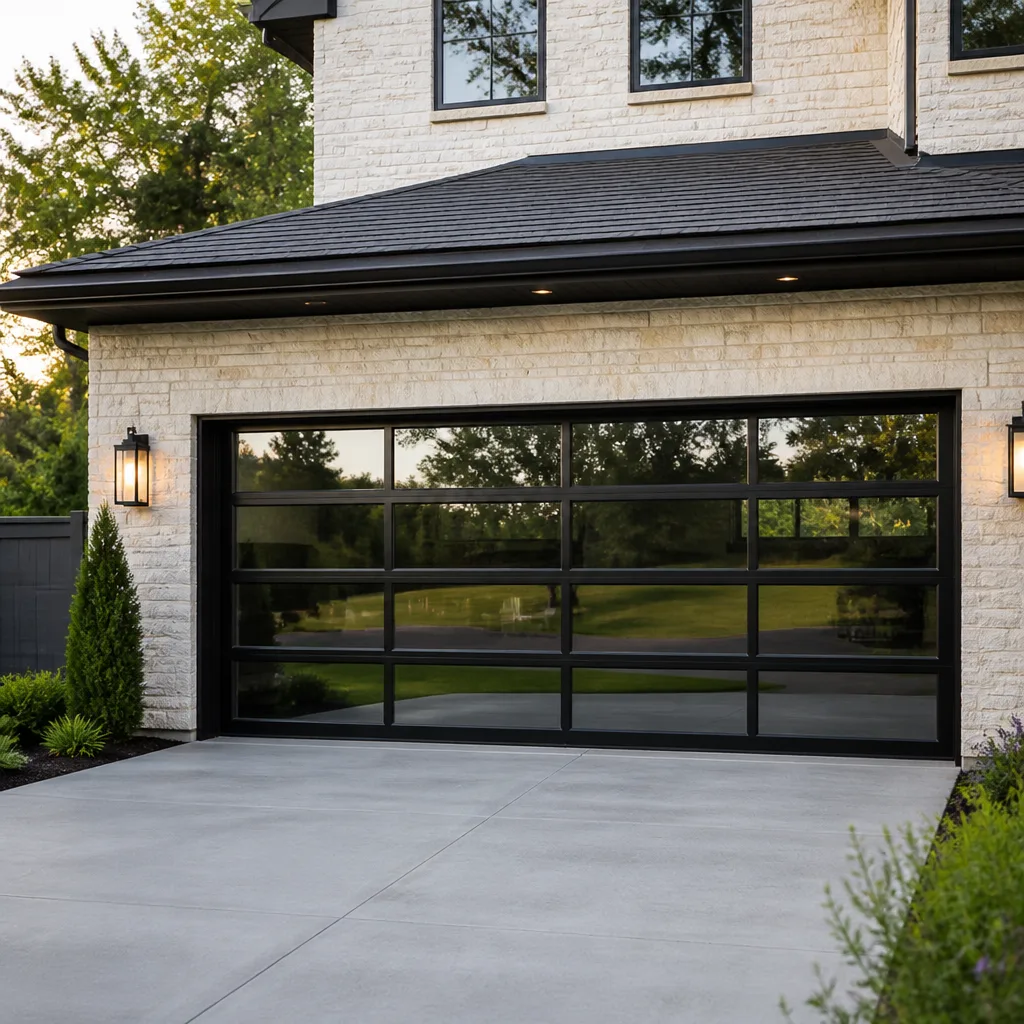 Full-view glass
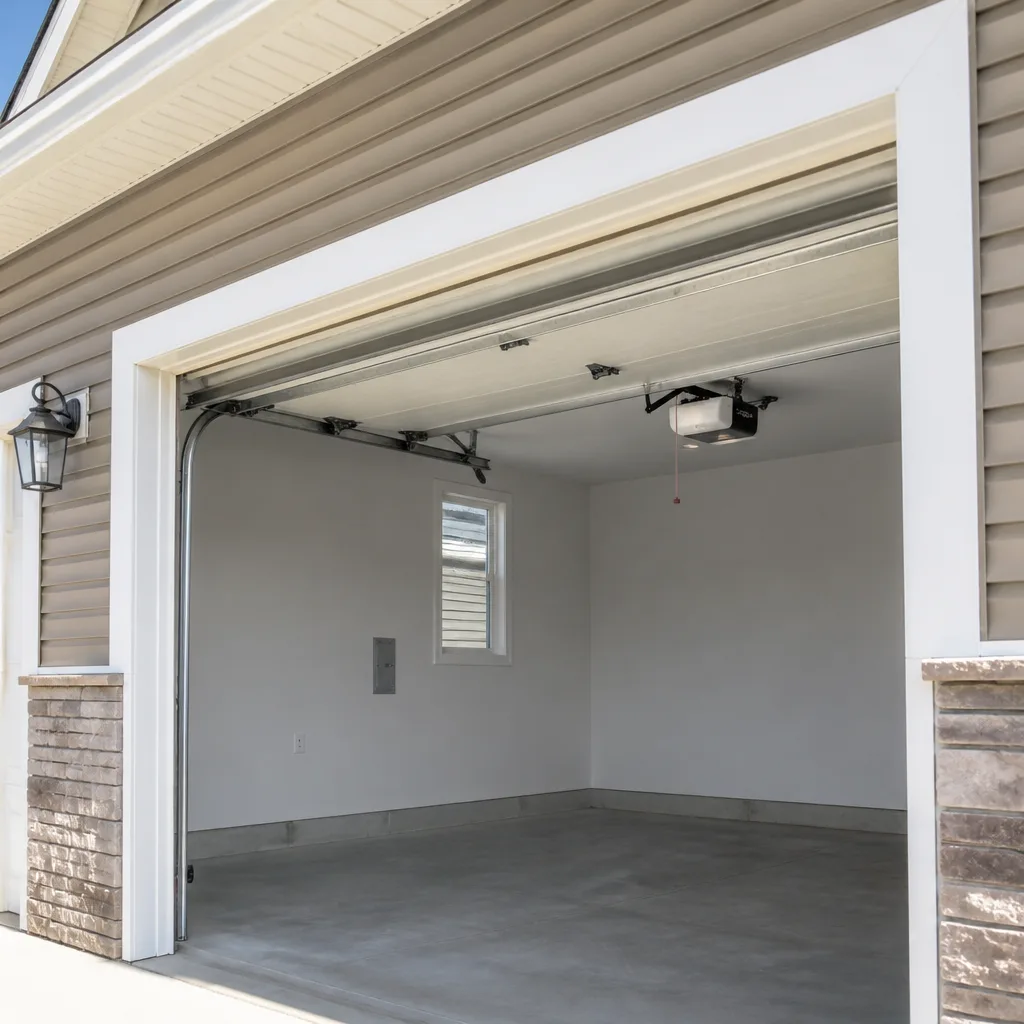 LiftMaster openers
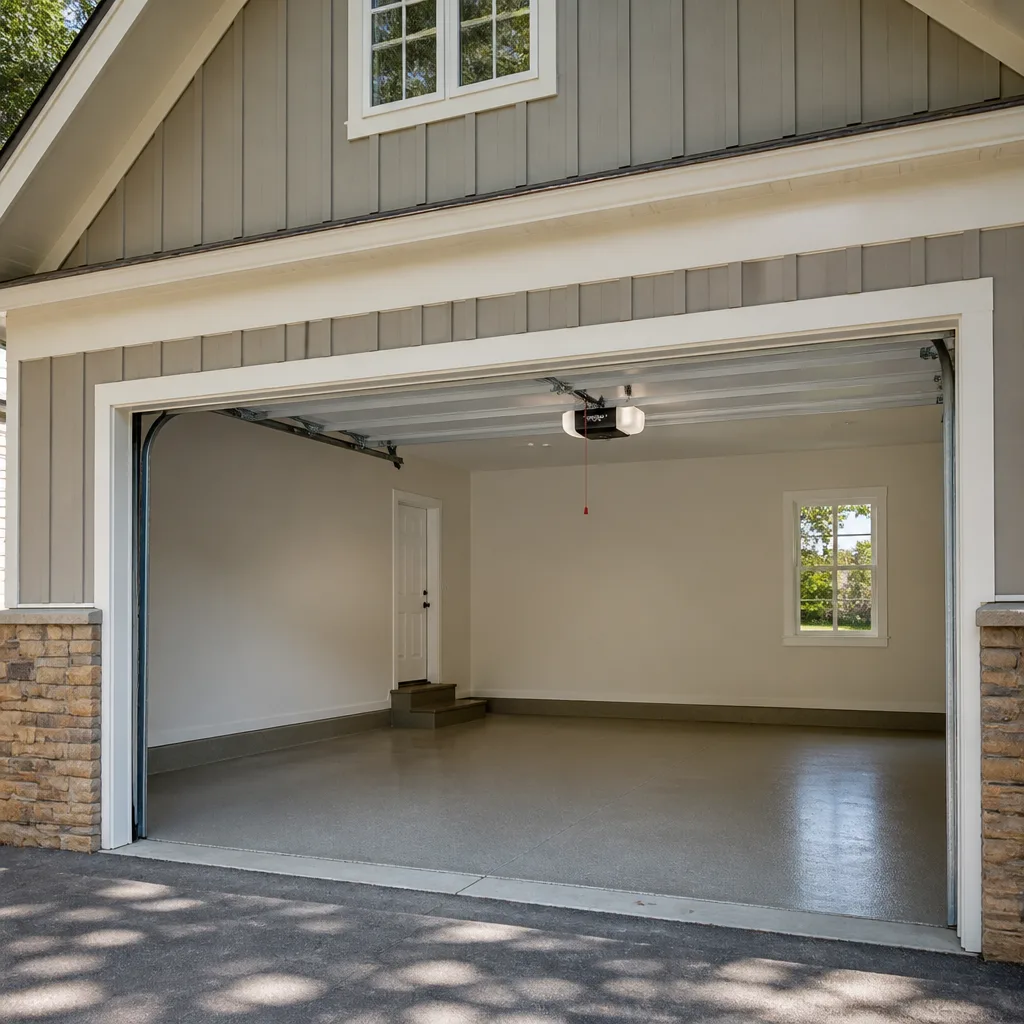 Chamberlain openers
Full 25-point door and opener safety check with every visit - springs, cables, rollers, tracks, and your LiftMaster or Chamberlain opener included
You get a price before we start. It does not change when the pro arrives.
Get your free estimateGarage Door Repair Maintenance Checklist for Summerlin Homeowners
The most common cause of unplanned garage door service calls in the Las Vegas Valley isn’t skipped maintenance. It’s maintenance done with the wrong lubricant. WD-40, the can most homeowners reach for first, strips the residual moisture from nylon rollers and accelerates wear in dry desert heat. We’ve seen rollers in Summerlin fail at three years that should have lasted eight, and the spray can in the garage is usually the reason. This checklist maps Summerlin’s real failure calendar month by month, names the correct lubricant for each component and explains why, shows you how to run a balance test and read the result, and gives you a documentation log a technician can scan in thirty seconds.
Quick Answer
A garage door maintenance checklist for Summerlin should be built around thermal cycling, not generic spring-and-fall labels: inspect rollers, hinges, and the balance test in May and October, check spring condition and track alignment in the June-through-September heat band, and verify weather seals and safety-reverse function before the cooler months. Lubricate springs and hinges with a lithium- or silicone-based product, use silicone spray on nylon rollers, and never use WD-40 on moving door components. In summerlin, the two highest-value checks are the balance test and a visual pass on the torsion spring, because heat-fatigue failures cluster there.
Styles & brands we work with
- Raised-panel steel
- Carriage house
- Modern flush
- Full-view glass
- LiftMaster openers
- Chamberlain openers
Table of Contents
- Why Summerlin Doors Fail on a Different Schedule
- The Month-by-Month Checklist
- The Right Lubricant for Each Component
- How to Run a Balance Test and Read the Result
- Visual Inspection: What Normal Wear Looks Like
- Building a Maintenance Documentation Log
- Safety Gear and What Not to Touch
- Opener and Safety-Reverse Checks
 Before
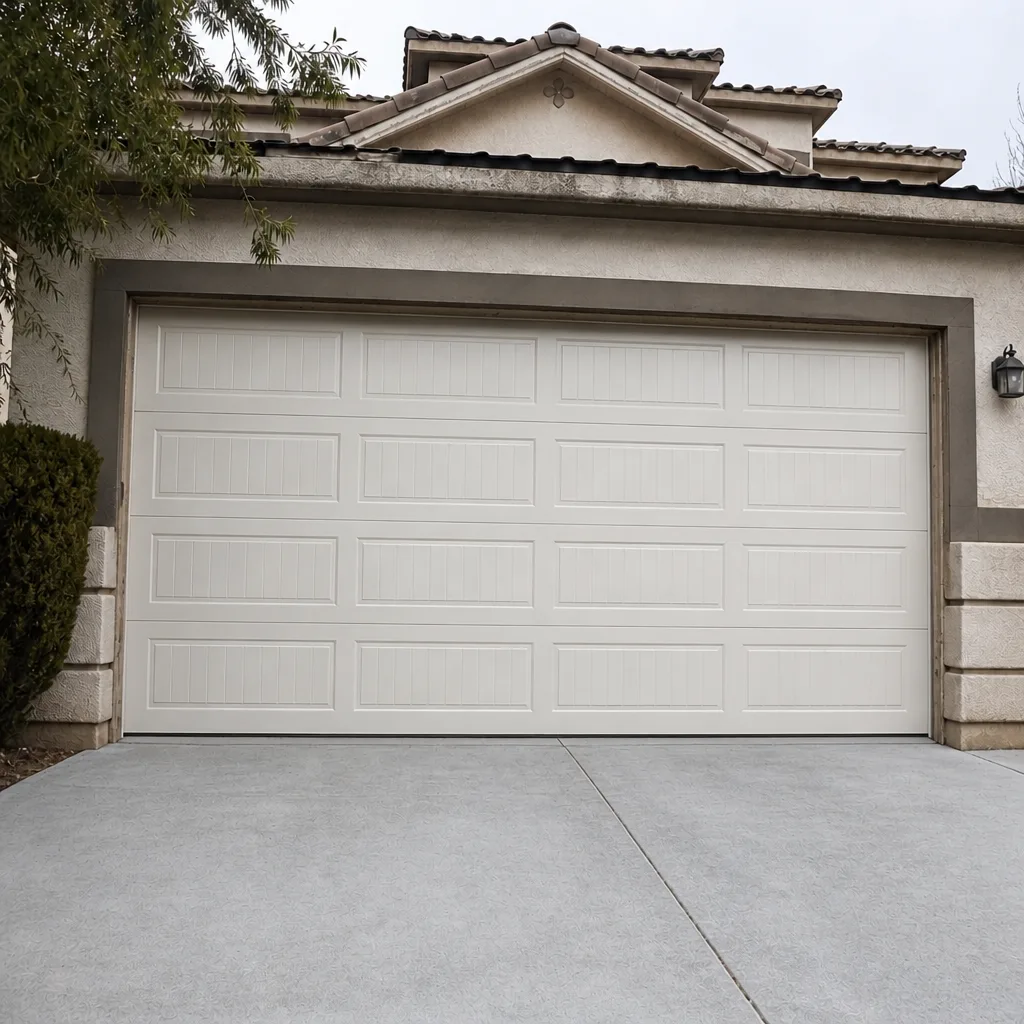 After
Why Summerlin Doors Fail on a Different Schedule
Summerlin sits in a thermal band that most maintenance guides weren’t written for. The 89134 and 89135 zip codes see summer afternoon highs that bake a west-facing garage door for six or seven hours a day, then cool twenty-five to thirty degrees overnight. That daily swing is the real wear driver. Steel panels expand and contract, torsion springs cycle through thousands of load changes a year, and nylon rollers soften and harden in the same rhythm. A door in Summerlin that sees direct western sun will age faster than the identical door on a shaded street three blocks away.
There’s a second local factor worth naming: dust. Summerlin’s landscaping, the open desert edges around Red Rock and the Santa Fe, and spring wind events push fine grit into tracks and roller races. Grit acts like sandpaper on a surface that’s supposed to glide. We see roller flat-spotting and track scoring in Summerlin homes that have never been lubricated on schedule, and the fix isn’t a new door. It’s a cleaning and a correct lubricant.
So the checklist below isn’t organized by “spring and fall.” It’s organized by which components are most stressed in each temperature band, because that’s what actually predicts failures in Summerlin.
The Month-by-Month Checklist
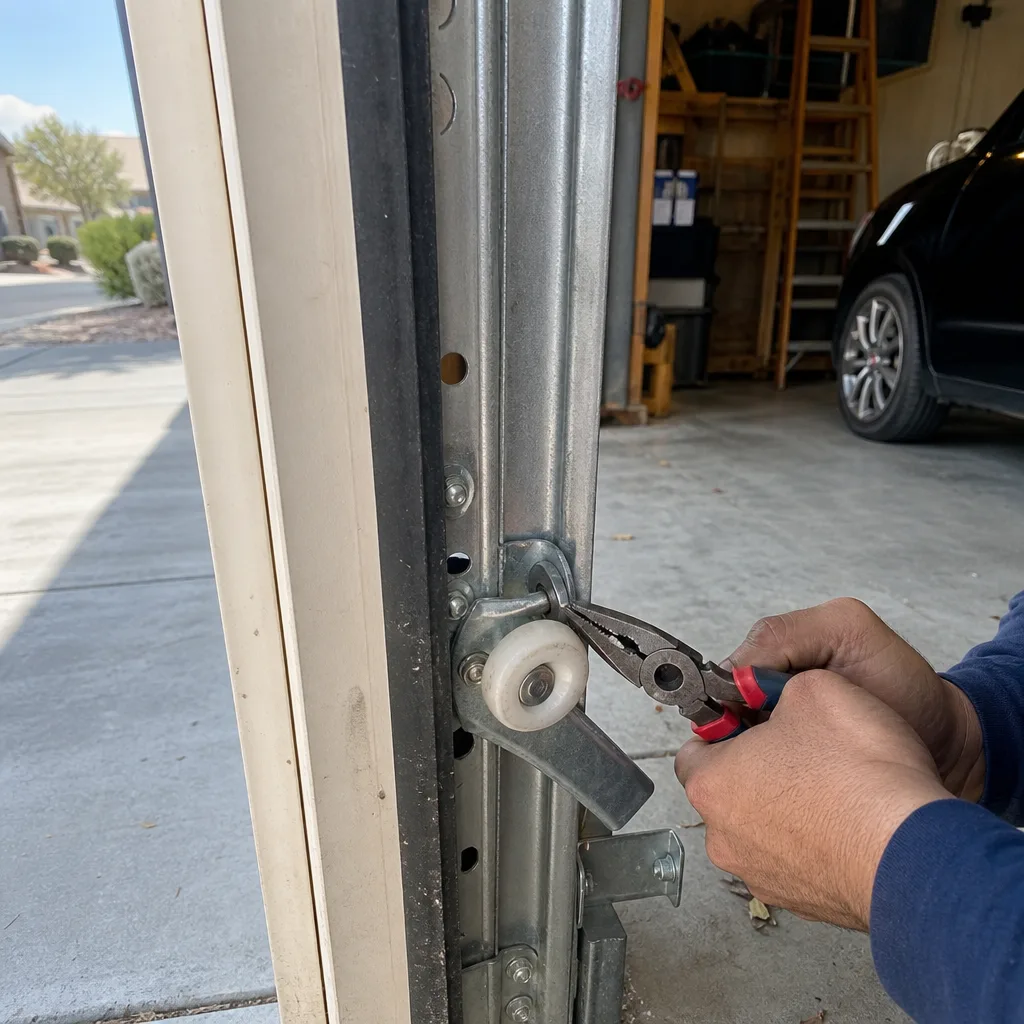
Print this and stick it inside the garage door frame. The tasks shift with the season because the stresses shift.
May (Pre-Summer Prep)
- Clean tracks with a dry cloth and a soft brush; remove grit before heat season.
- Lubricate hinges and the torsion spring with lithium or silicone spray.
- Apply silicone spray to nylon rollers. Never grease rollers.
- Run the balance test (see below) and record the result.
- Test the safety-reverse function with a block of wood.
June through September (Heat Band)
- Monthly visual pass on the torsion spring for rust, gaps, or a visible coil break.
- Listen for new squeaks; high-heat lubricant breakdown shows up as sound first.
- Check panel seams for popping paint or distortion that suggests heat stress.
- Wipe down hinges if you see dust buildup.
October (Pre-Cooling Prep)
- Repeat the May list in full.
- Check weather seals around the bottom and sides for cracking.
- Confirm the opener’s safety sensors still trigger at the correct point.
November through April (Mild Months)
- Inspect cables for fraying where they wrap at the drums.
- Check panel alignment by sighting along the door edge with the door closed.
- Confirm the documentation log is current so a technician can read the history at a glance.
We’ve seen Summerlin failures cluster in July and August when springs weaken through repeated daily cycling, and again in January when a hairline crack from the previous summer finally propagates. If your door hasn’t had a scheduled look this year, this is the season to do it.
The Right Lubricant for Each Component
“Use white lithium grease” is the advice you’ll find on most sites, and it’s not wrong, but it isn’t the whole story. Match the product to the component and you’ll get years more life out of the hardware.
- Torsion and extension springs: Lithium grease or a spring-specific silicone spray. Springs operate under constant load and friction; a durable film reduces the surface wear that leads to coil breakage. Apply a light coat, not a heavy one.
- Hinges: Lithium grease. Hinges see repeated pivoting under load, and lithium stays put at Summerlin summer temperatures where thinner oils flash off.
- Nylon rollers: Silicone spray only. This is the piece most homeowners get wrong. Nylon relies on a small amount of retained moisture for its resilience, and WD-40 strips it. Silicone protects without stripping. One short burst per roller, wiped clean.
- Steel rollers: A light lithium grease on the bearing, not the wheel surface.
- Tracks: None. Tracks run dry. Grease attracts dust, dust turns into grit, and grit scores the metal. Clean them, don’t lubricate them.
- Trolley carriage and opener rail: Follow the opener manufacturer’s spec. Most modern units use a factory-applied lubricant that needs no reapplication.
The single change that saves the most money for Summerlin homeowners is this: stop spraying WD-40 on rollers, hinges, and springs, and keep a can of silicone and a can of lithium grease on the shelf instead. The names are similar; the jobs are different.
How to Run a Balance Test and Read the Result
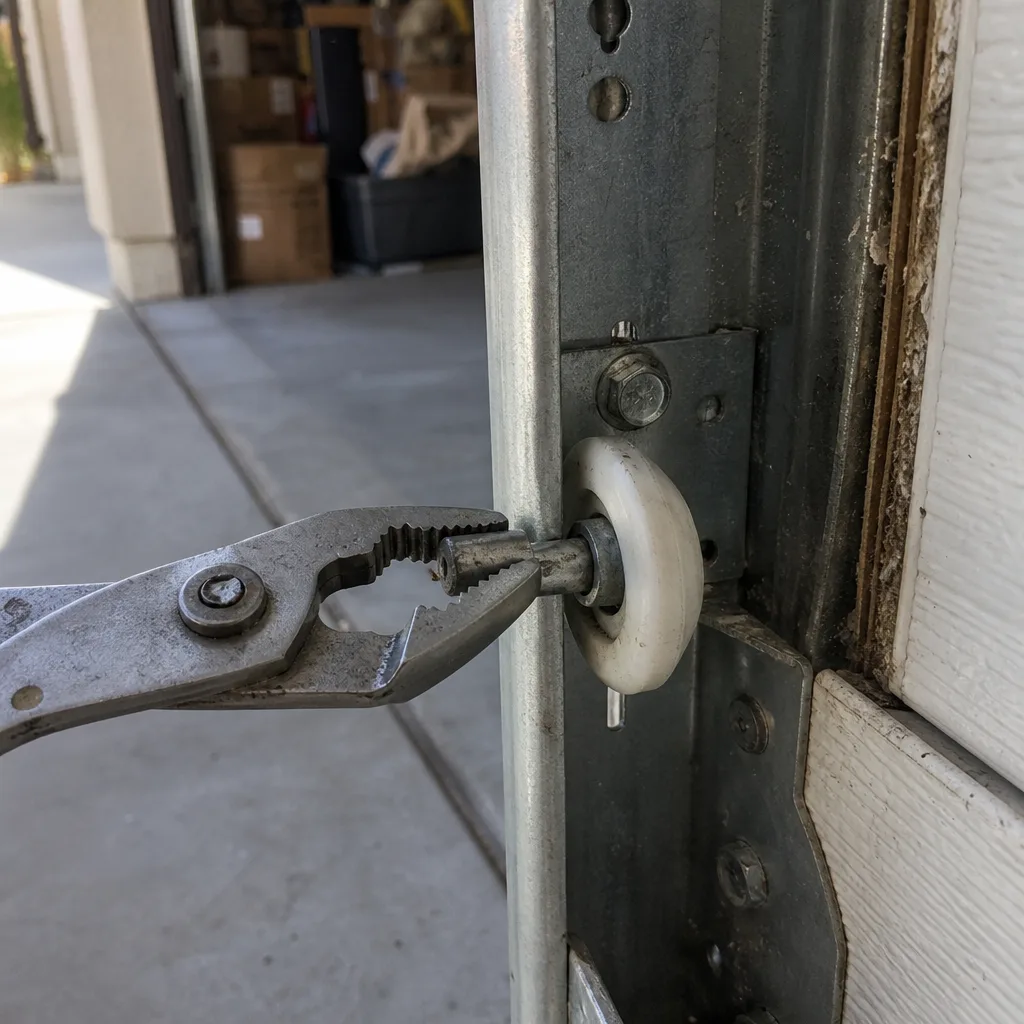
The balance test tells you whether the door’s lifting force is still working with the springs, or whether the opener motor is carrying weight it was never meant to carry. Do it once a season, and after any panel replacement.
- Close the door fully. Pull the emergency release cord to disconnect the opener. This is the red handle hanging from the trolley.
- Lift the door by hand to the halfway point, roughly waist height.
- Let go and step back.
- Observe what the door does over the next three seconds.
Reading the Result
- Pass: The door holds its position within a few inches of half-open with no drift.
- Fail, door drops: The springs are weak. The motor is compensating and will wear faster.
- Fail, door rises: Spring tension is too high. This is a spring adjustment, not a DIY job.
- Fail, door is jerky or stiff throughout the travel: Rollers, hinges, or track alignment are the likely culprits before the springs.
Reconnect the opener only after you’ve recorded the result. If the door failed the balance test, call for service before you cycle the motor again. Each cycle on weak springs stresses the opener’s logic board and the trolley carriage, and replacement costs add up fast.
Visual Inspection: What Normal Wear Looks Like
You don’t need special tools for a visual pass. You need to know what “normal” looks like, so you can spot the difference.
Springs
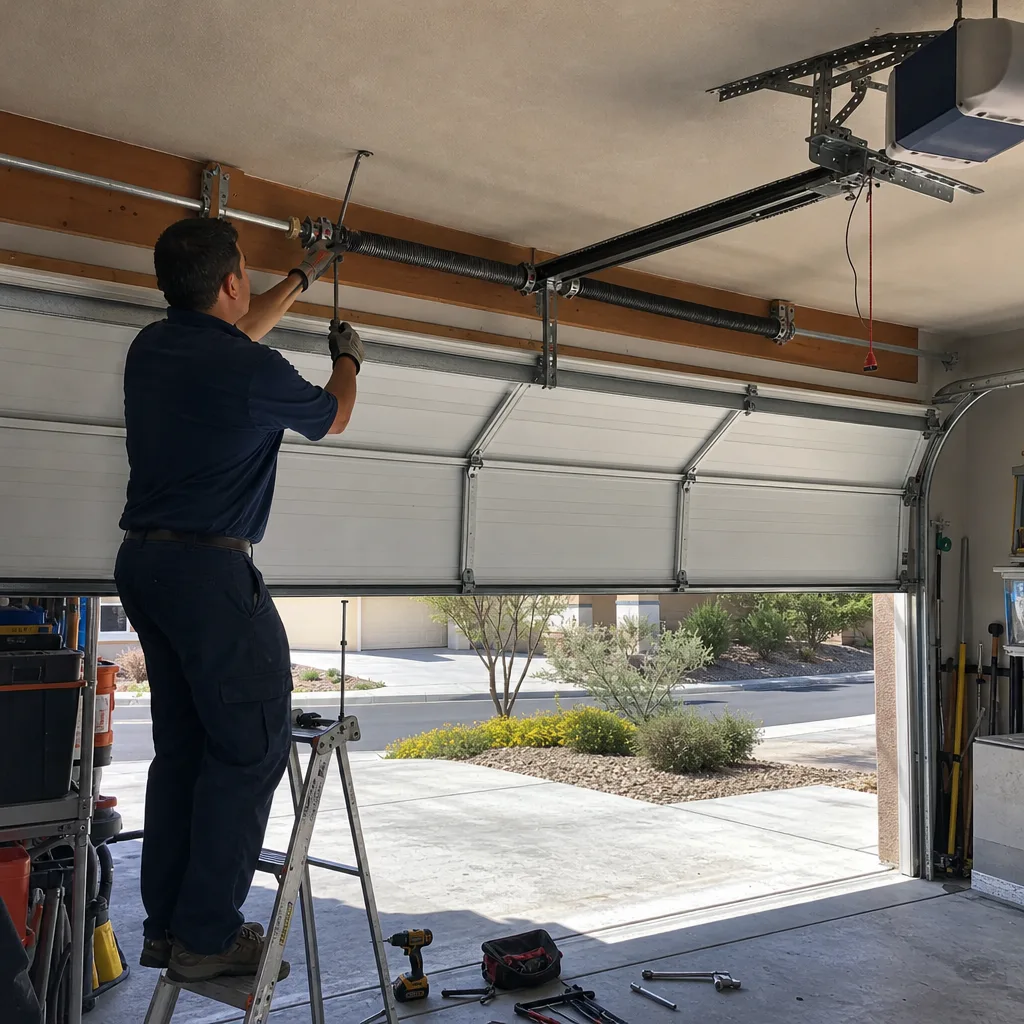
Normal: A thin, even surface rust, and a closed coil with no visible gaps. Service call: A gap between coils, a visible kink, or a clean break at one end. Torsion springs are under extreme tension and can cause serious injury if handled without proper tools. Do not attempt to remove, adjust, or wind a spring yourself, no matter how clear the YouTube video looks. Leave this to a trained technician.
Rollers
Normal: Round, smooth wheels with no flat spots. Service call: Flat-spotting (a small flat face on the roller), cracking at the hub, or a wheel that wobbles visibly on its stem.
Cables
Normal: Tightly wound, uncorroded steel that runs cleanly into the drum. Service call: Fraying, a single strand poking out, or loose tension. Cables are also under high tension and should be serviced only by a trained technician.
Tracks and Panels
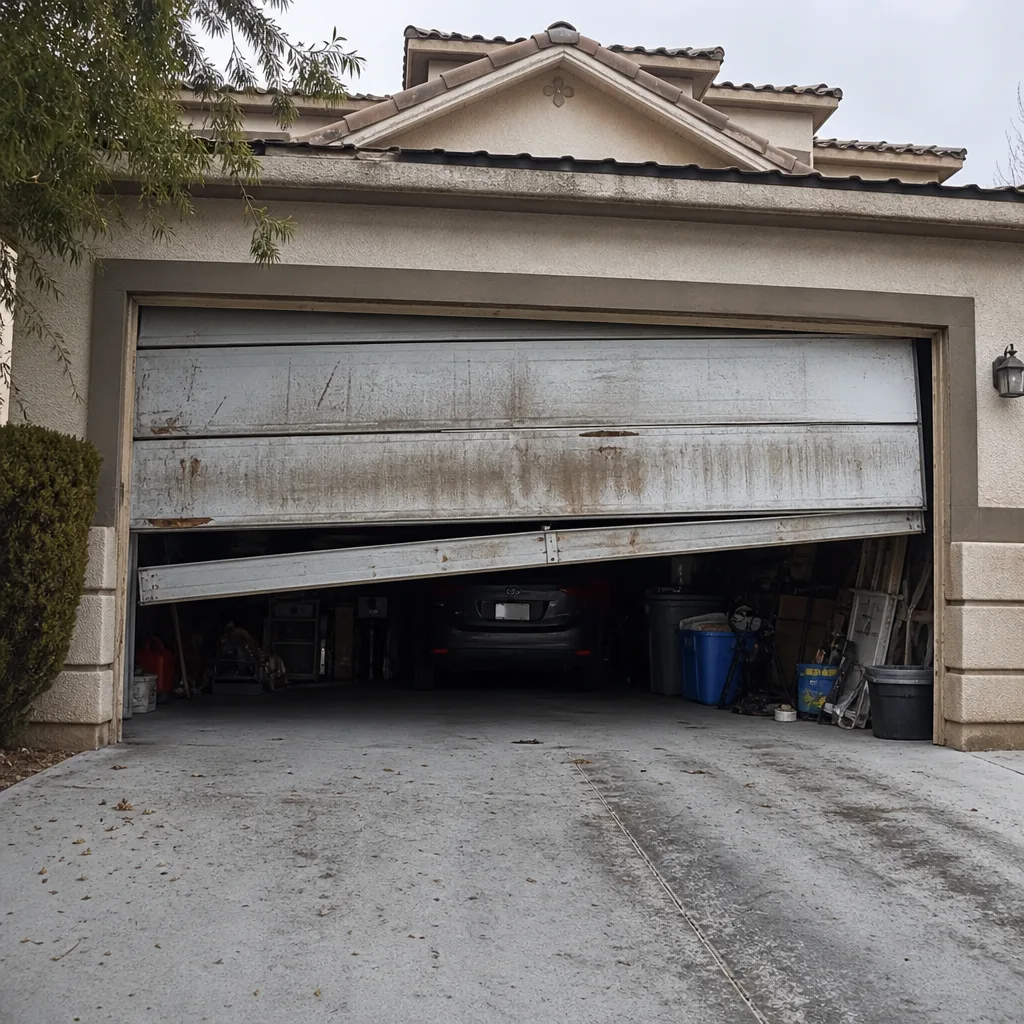
Normal: Even track spacing, panels flush with each other. Service call: Bent track, a panel that’s out of alignment, or visible denting that suggests impact.
Weather Seals
Normal: Flexible rubber or vinyl. Service call: Cracking, curling, or daylight visible under the door when closed.
If you’ve never looked closely at these components, our team keeps a photo record on every visit precisely because a picture is faster than a description. On a service visit, you see the failed component before anyone quotes a replacement.
Building a Maintenance Documentation Log
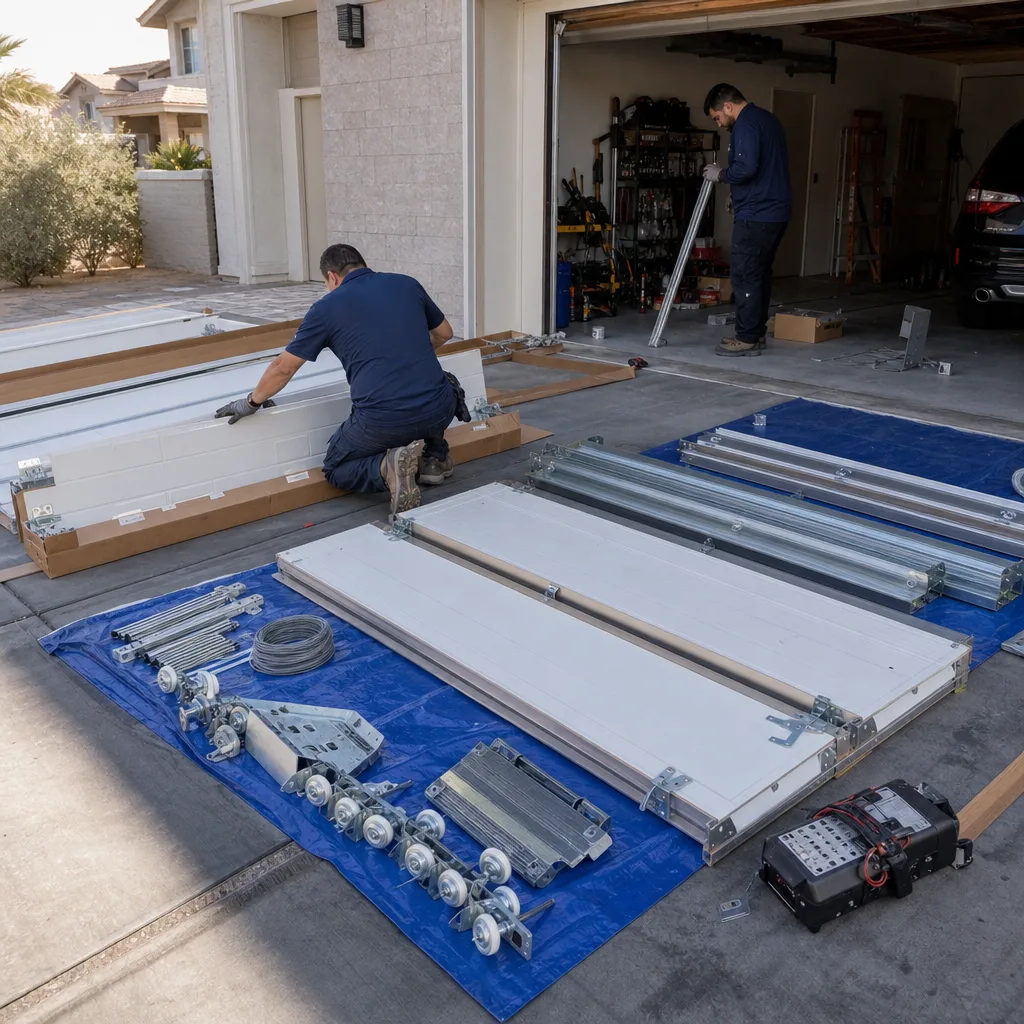
A log is the most underrated piece of garage door maintenance. It takes two minutes per check and it saves a technician twenty minutes of diagnosis when something fails, which often translates into a smaller invoice.
What to Record After Each Inspection
- Date and outdoor temperature band (cool, warm, or heat band).
- Balance test result: pass, drift, or failed.
- Spring condition: normal, surface rust, gap, or broken.
- Rollers: count of rollers, condition of each.
- Lubrication applied: which component, which product.
- Opener behavior: smooth, jerky, or slow.
- Safety-reverse test result.
- Any sound or visual anomaly, however minor.
Keep the log (a small notebook on a hook near the door works fine). When a technician arrives, they can read the history at a glance and know instantly whether the door is trending toward a spring failure, an opener repair, or a roller replacement. If you have a written estimate from another company and want a second opinion, our free second opinion on any written estimate lets you bring the paperwork and have it read against your own log. That’s Clause 4 at work: the evidence is what persuades, not a sales pitch.
Safety Gear and What Not to Touch
Some tasks are homeowner-grade. Some are technician-only, and the line between them is not flexible.
Homeowner-Safe Tasks
- Cleaning tracks, hinges, and rollers.
- Applying the correct lubricants as specified above.
- Running the balance test and the safety-reverse test.
- Visual inspection with a flashlight.
- Testing the manual release and confirming the door travels by hand.
Technician-Only Tasks
- Adjusting, winding, or replacing torsion springs. These store enormous energy and can release it suddenly.
- Adjusting or replacing cables and drums.
- Repairing or replacing panels that carry spring load.
- Any electrical work on opener wiring beyond the wall switch.
If a task requires loosening a bolt that holds a spring or cable under tension, stop and call. The savings between a service call and an emergency room visit aren’t close.
Opener and Safety-Reverse Checks
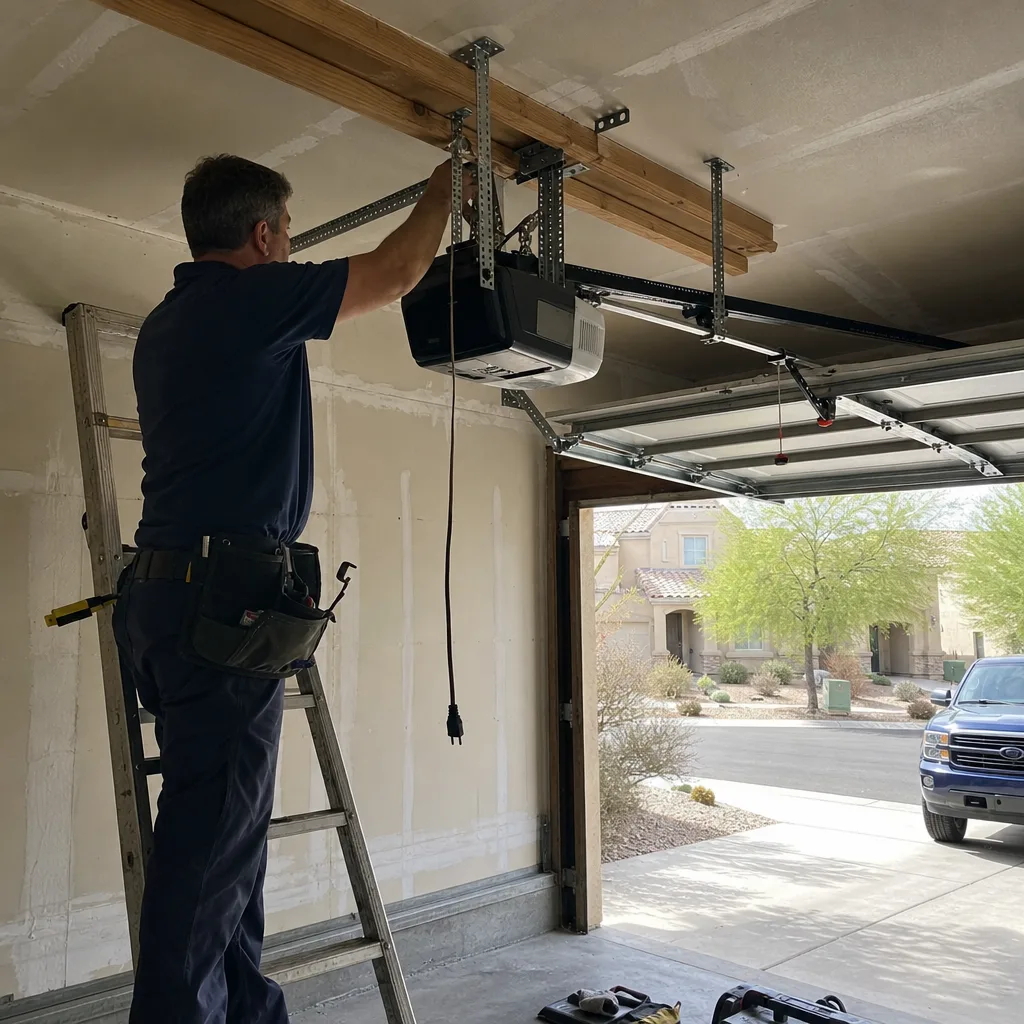
The opener is what most people think of as “the garage door,” but it’s really the motor on the end of a mechanical system. It works harder when the door is out of balance. Keep the mechanical side in shape and the opener will last years longer.
Monthly Checks
- Listen for changes in motor sound during travel.
- Confirm the wall switch and both remotes operate the door.
- Check that the safety sensors at the bottom of the track are aligned, with a solid LED on each side.
Seasonal Checks
- Place a block of wood (2×4 works) flat on the floor in the center of the door’s path.
- Press the wall switch to close the door.
- Verify that the door reverses on contact with the block.
- If it doesn’t reverse, stop using the opener and call for service.
We service all eight major opener brands, including LiftMaster, Chamberlain, Genie, and Craftsman, and we handle logic boards, trolley carriages, limit switches, and safety sensor replacements as part of a documented visit. If your opener is more than a decade old and has run without a service check, an inspection is worth more than a replacement, at least until we’ve confirmed the mechanical side is sound. For a full list of what we handle, see Garage Door Opener Repair & Installation in Summerlin.
Common Mistakes to Avoid
- Spraying WD-40 on rollers and springs. It strips the nylon and thins at high heat. In Summerlin’s summer band, that means faster wear, not slower.
- Greasing the tracks. Grease attracts desert dust, and the resulting grit scores the metal track. Tracks should be cleaned and left dry.
- Skipping the balance test. A door that fails the balance test is quietly killing the opener motor, one cycle at a time.
- Adjusting spring tension yourself. This is the single most dangerous DIY garage door task. The springs on a standard Summerlin door hold enough stored energy to cause serious injury if released without proper tools.
- Ignoring a slow-turning roller. One stiff roller drags the whole door and accelerates wear on the others. Fix it early.
- Letting a minor panel dent sit through a full summer. Heat cycling on a dented panel can spread distortion and eventually affect track alignment.
- No documentation. Without a log, every service call starts from zero, and small trends (a slowing opener, a roller starting to flat-spot) go unnoticed until something fails.
See the difference
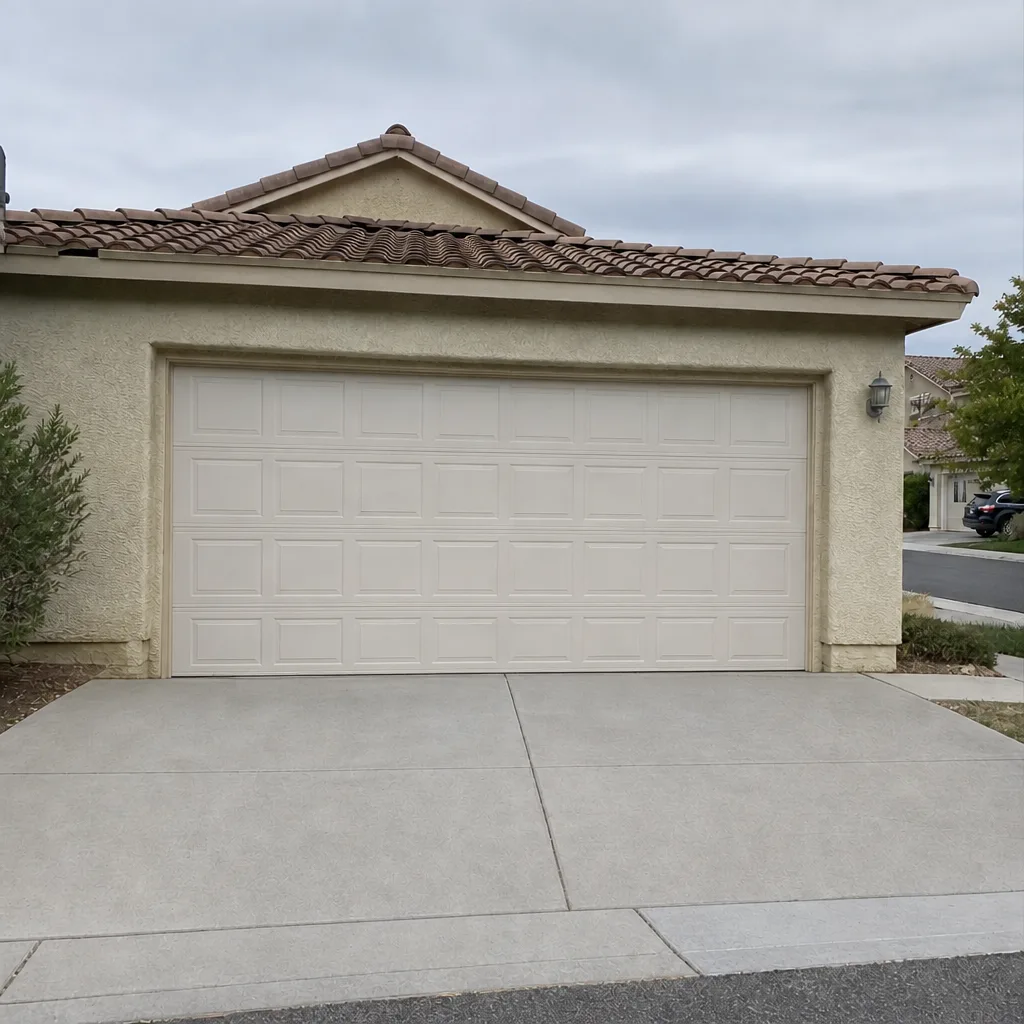
BeforeAfter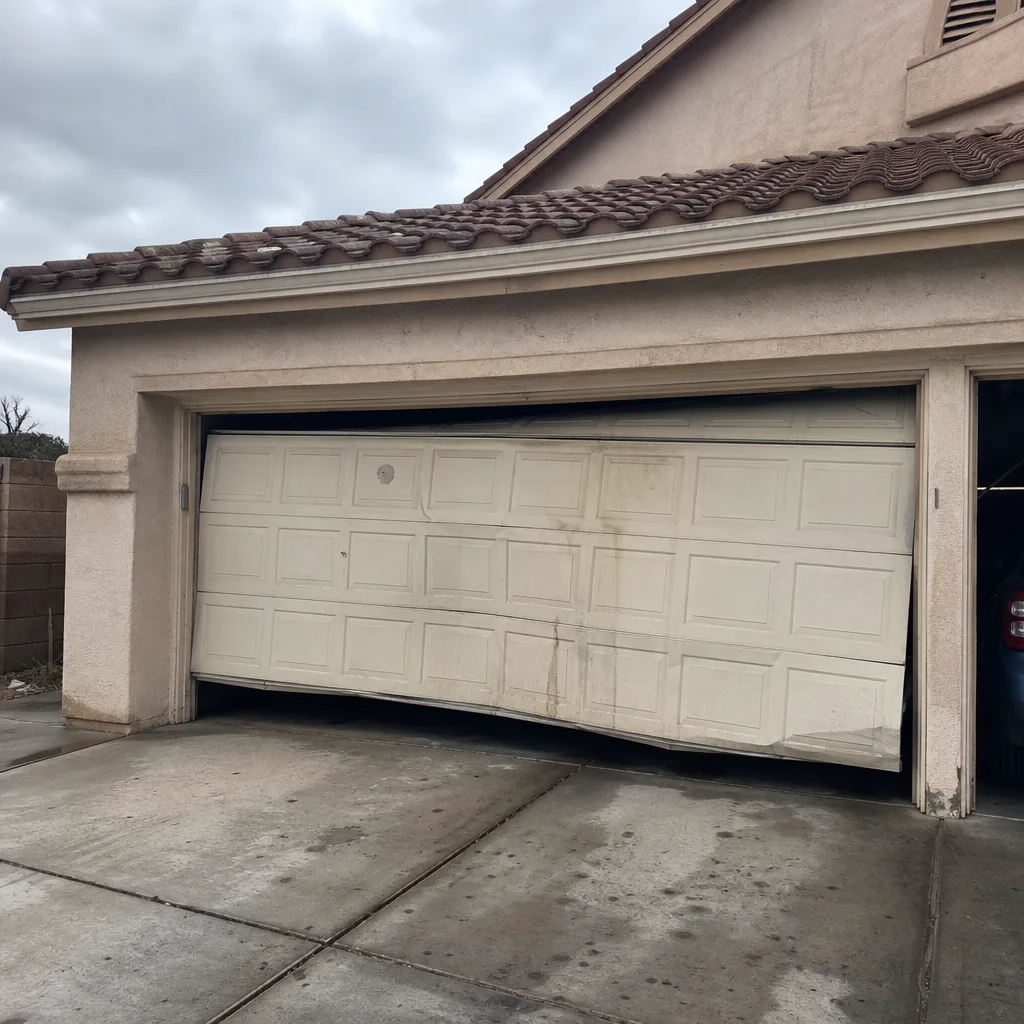 Before
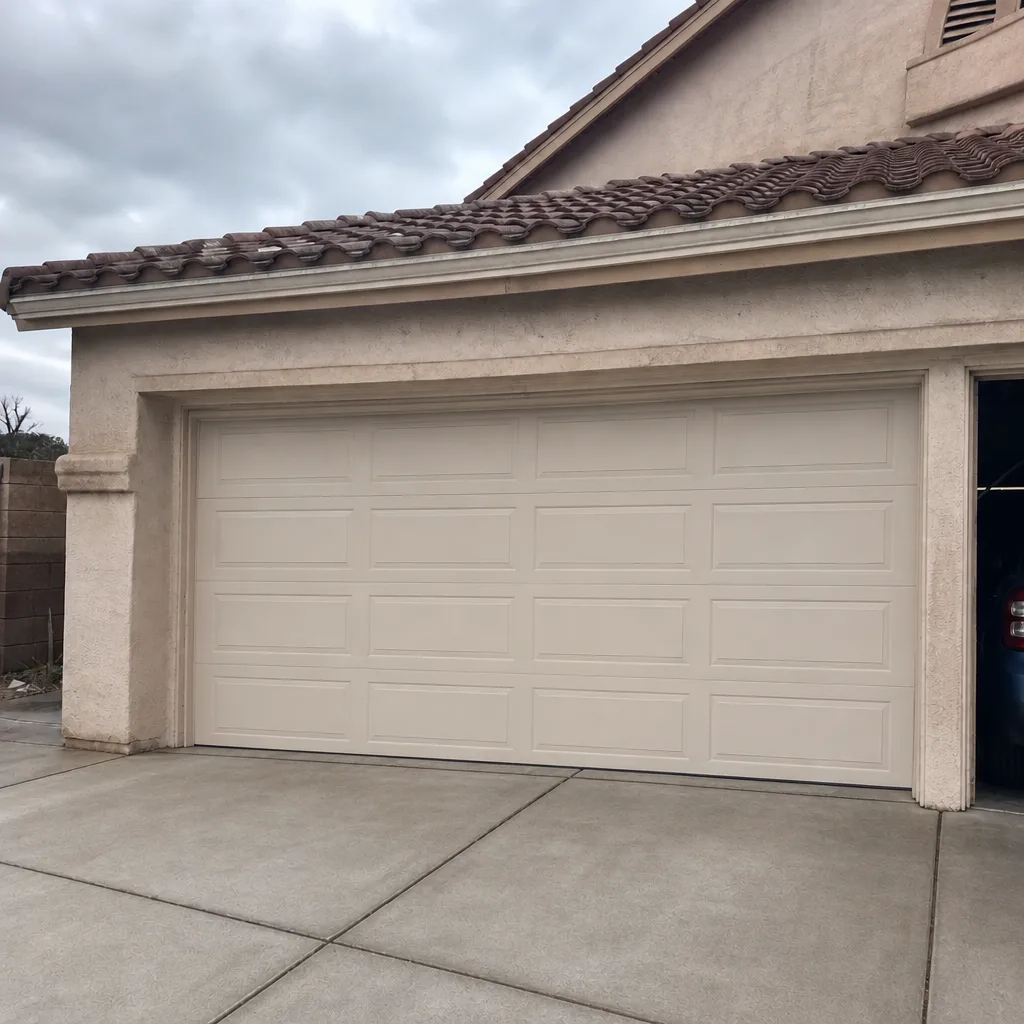 After
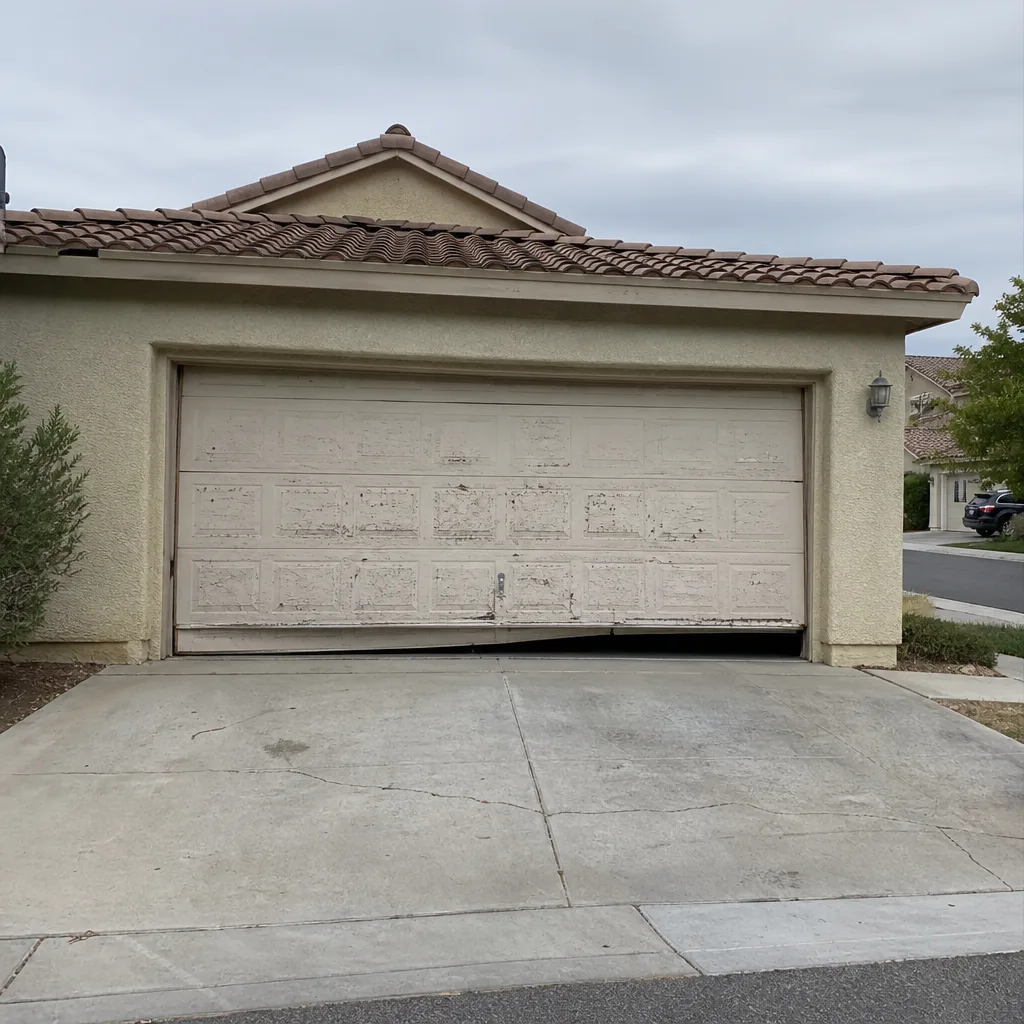 Before
 After
When to Call a Professional
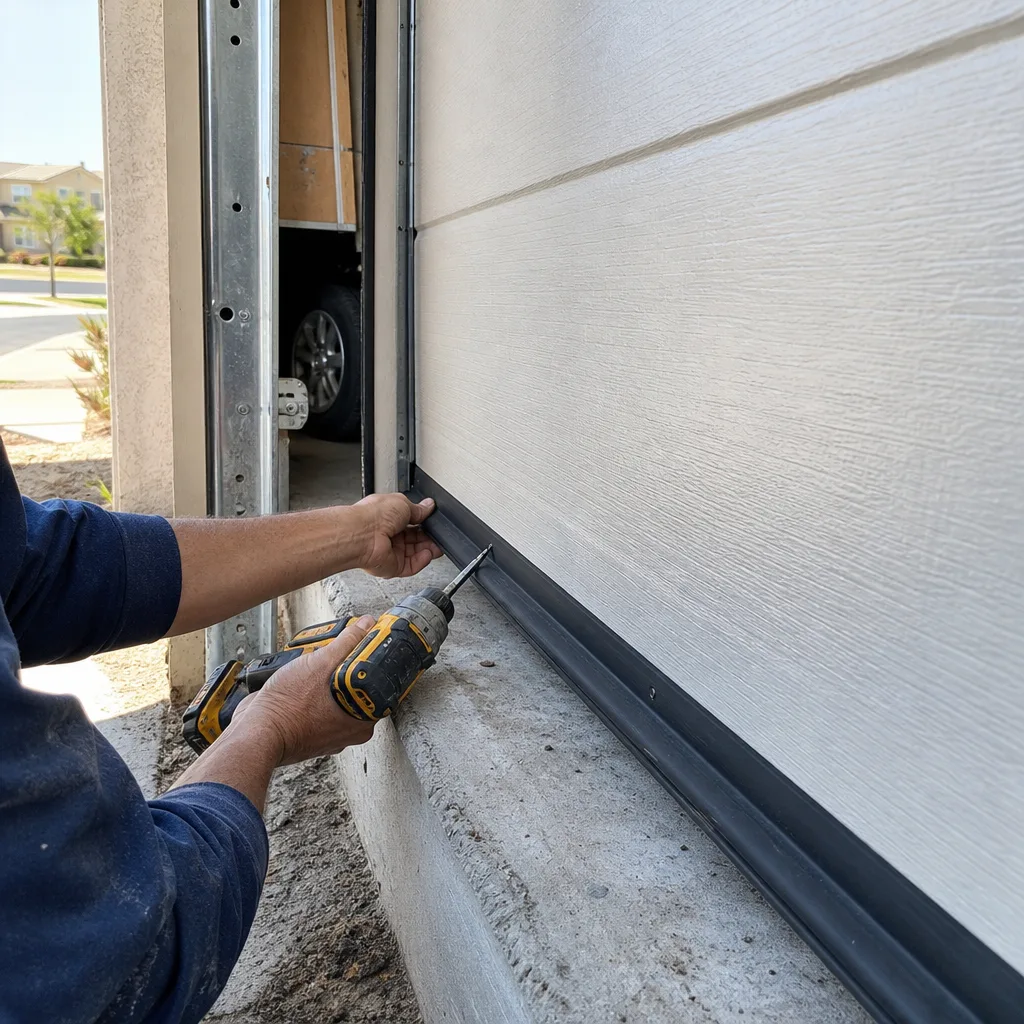
Call for service if the balance test fails, if you see a gap in the torsion spring or a visible break, if the door reverses erratically or not at all, if a cable is frayed or slack, if the track is bent or the door is out of alignment, or if the opener motor has started to sound different. If your door hasn’t had a scheduled inspection in more than a year and you live in Summerlin, add it to the calendar. Servo Garage Doors Summerlin offers free estimates in Summerlin. We quote a flat, written price and written scope before any work begins, per Clause 1 of The Haven Standard, and you’ll see the failed component in a photo record before anyone quotes a replacement. Call (844) 797-3654, and a live person will answer, including in an emergency.
If you’re comparing estimates, our free second opinion on any written estimate from another company applies here too. Bring the paperwork and we’ll read it against your documentation. For a full scope of repair work, see Garage Door Repair in Summerlin. If you’re considering a replacement rather than a repair, our Garage Door Installation in Summerlin page covers the brands we install, including Clopay, Amarr, and Wayne Dalton, and the free measure that starts a replacement project. New door installations are measured, ordered, and scheduled. They aren’t same-day, and we won’t suggest they are.
Frequently Asked Questions
Once a year for a full inspection, plus the spring and roller checks twice a year (May and October), because Summerlin’s thermal cycling is more aggressive than in most US climates. Doors on west-facing walls in 89134 and 89135 benefit most from the twice-a-year pass. If you’re not comfortable doing the checks yourself, call (844) 797-3654 and we’ll schedule one visit that covers the full list.
Not for lubrication, no. WD-40 is a penetrating spray that displaces moisture, and on nylon rollers it strips the small amount of retained moisture the material relies on. Use silicone spray on rollers, lithium grease on hinges and springs, and leave tracks dry. If you’ve already used WD-40 on rollers, they should be inspected for premature wear.
Watch for a visible gap between coils, a kink, or a clean break at one end, and listen for a loud pop from the garage. A door that visually lifts unevenly or feels too heavy when you raise it by hand is telling you the spring is weak. If you see any of these signs, stop cycling the opener and call for service. The spring is dangerous to handle, and we’d rather inspect it for you than have you loosen the wrong set screw. Call (844) 797-3654 for an exact quote; estimates are free.
A south- or west-facing garage door in Summerlin can reach surface temperatures well above 130°F in July, and the daily twenty-five-degree cool-down in the evening drives expansion and contraction on every panel and spring. Steel doors and aluminum doors handle this differently, and the material matters for how often the door should be inspected. Our technicians have up to 11 years of experience gauging this material-specific wear and can tell you within a few minutes of looking whether your door is doing fine or running hot.
No. Clause 1 of The Haven Standard means a flat, written price and written scope are delivered before any work begins, and the price you agree to is the price you pay. If a repair turns out to be bigger than the original scope, we stop, show you the photograph of what was found, and quote the revised scope before continuing. Call (844) 797-3654 for an exact quote; estimates are free.
Yes. Every job is performed by a background-checked, uniformed technician, and the business holds its own license and insurance. Servo Garage Doors Summerlin is independently owned and operated under The Haven Standard, which contributes the documentation system and the standard our technicians agree to work to. Every visit ends with a documented photo record of findings and completed work. Call (844) 797-3654 for an exact quote; estimates are free.
The Bottom Line
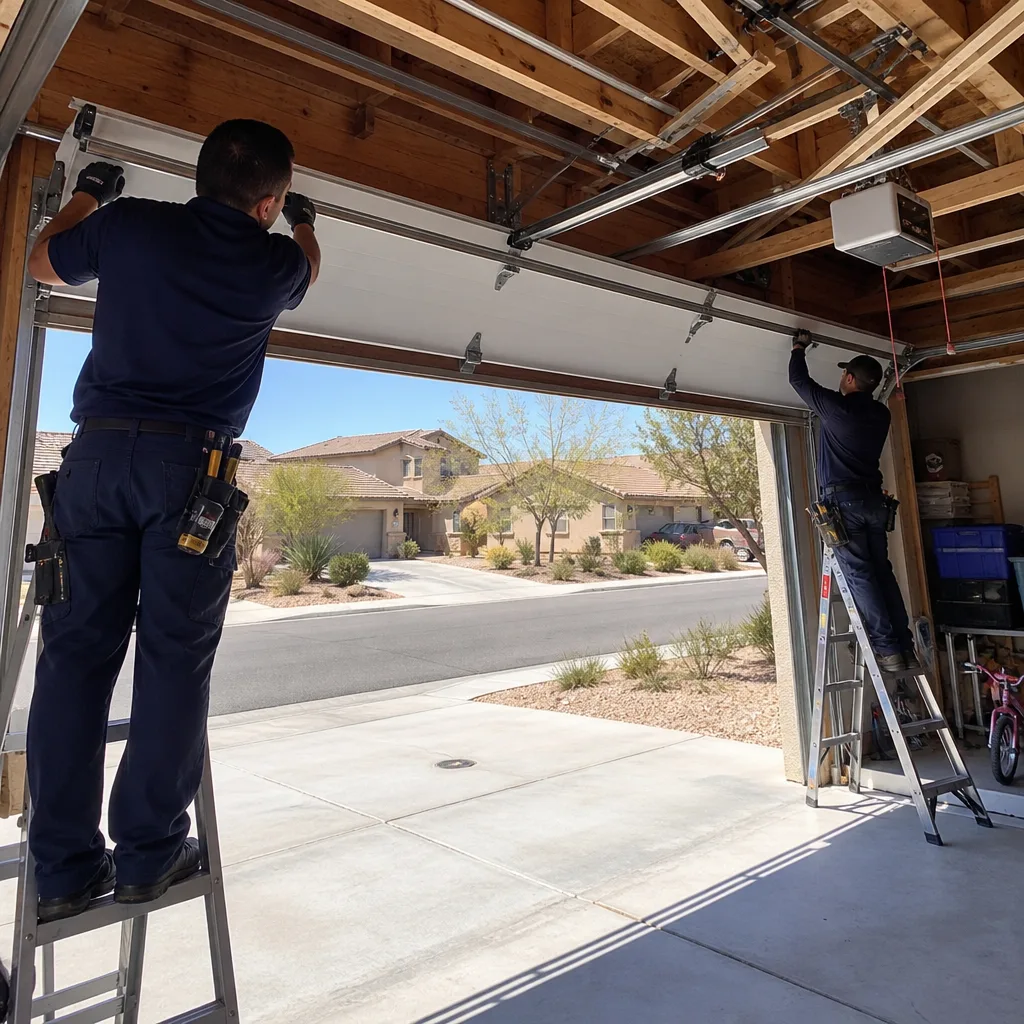
Maintenance in Summerlin isn’t about a generic spring-and-fall list. It’s about thermal cycling, desert grit, and matching the right lubricant to each component. Do the balance test twice a year, keep WD-40 away from the moving parts, use silicone on rollers and lithium on springs and hinges, and keep a log. When something fails – a torsion spring, a frayed cable, a weak opener – a trained technician with the right tools is the right call, not a YouTube tutorial. Our technicians have up to 11 years of experience, and every repair starts with a written price and ends with a documented photo record. Start from the Servo Garage Doors Summerlin home page if you’d like to see how we work, or call (844) 797-3654 for a free estimate. We answer live, 24 hours a day.
Written by the team at Servo Garage Doors Summerlin.