
Last updated November 17, 2026
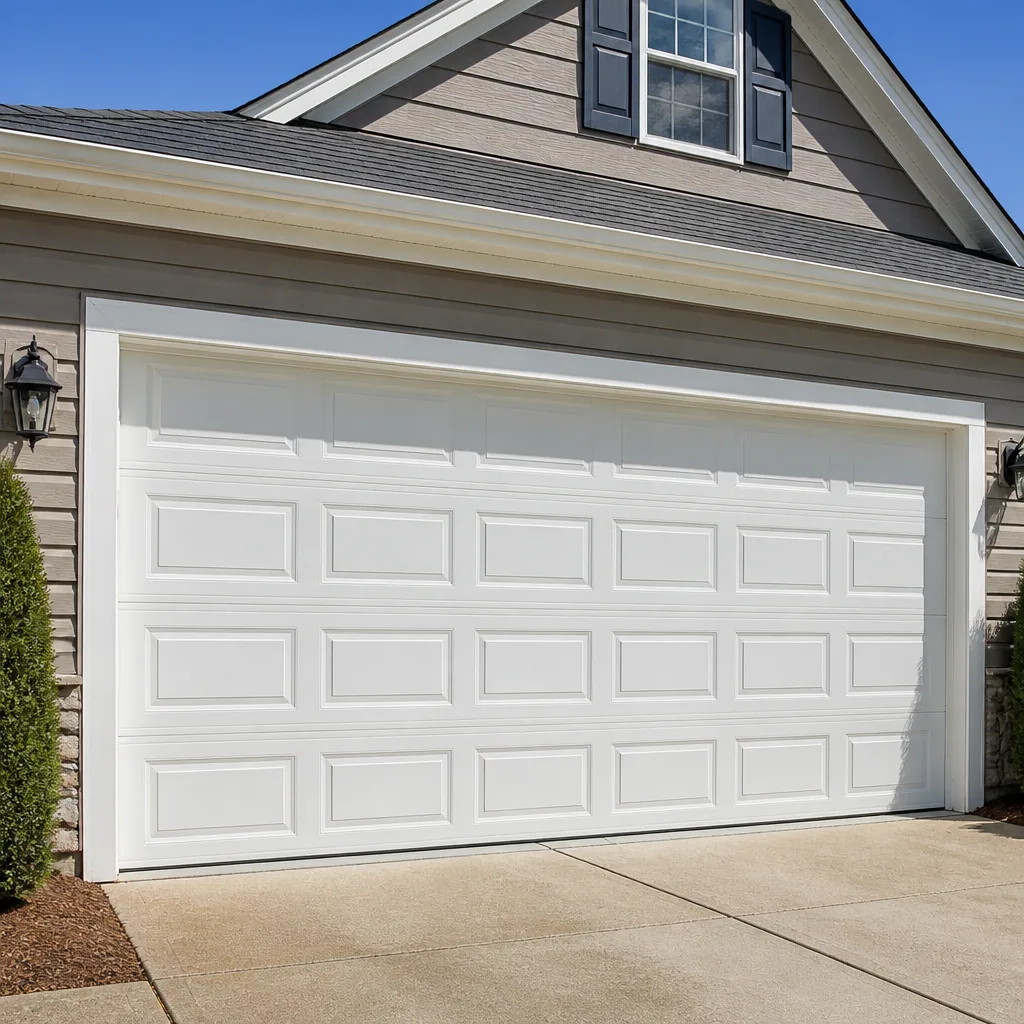 Raised-panel steel
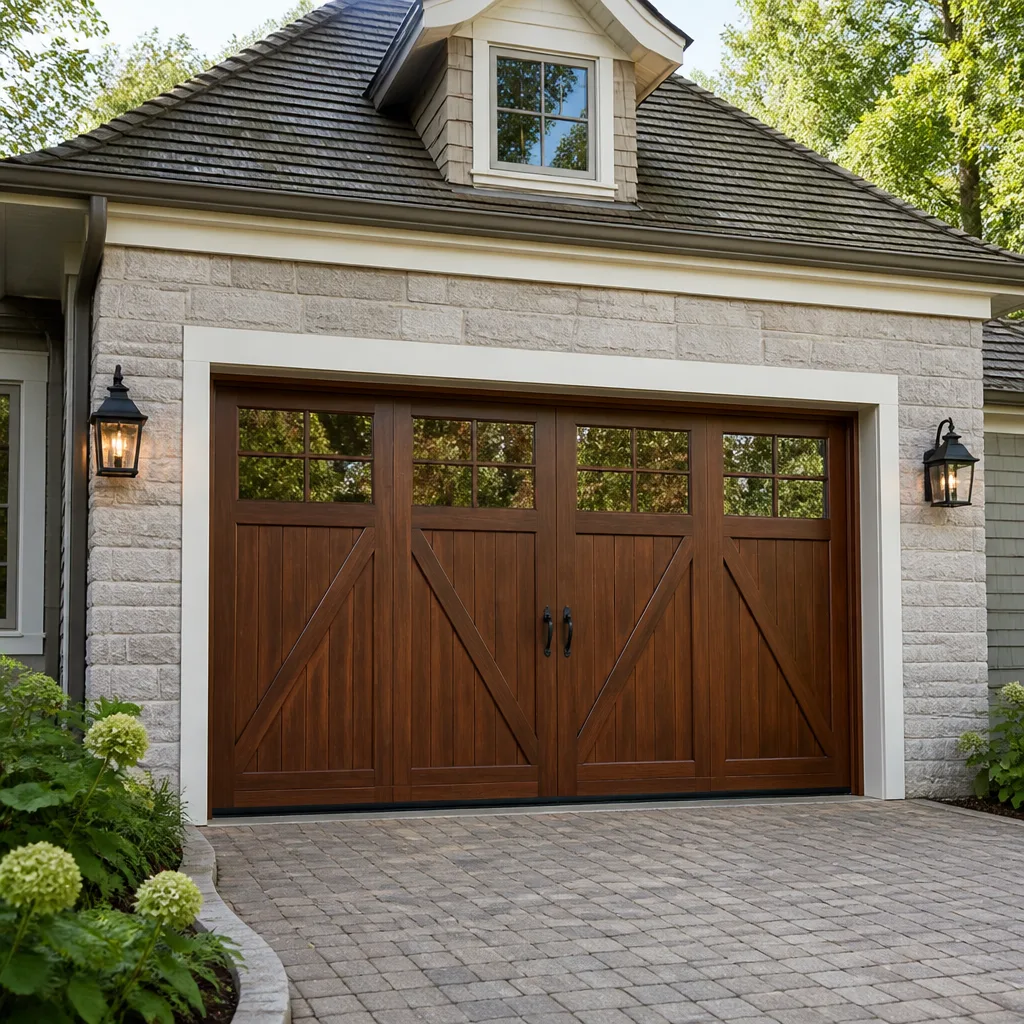 Carriage house
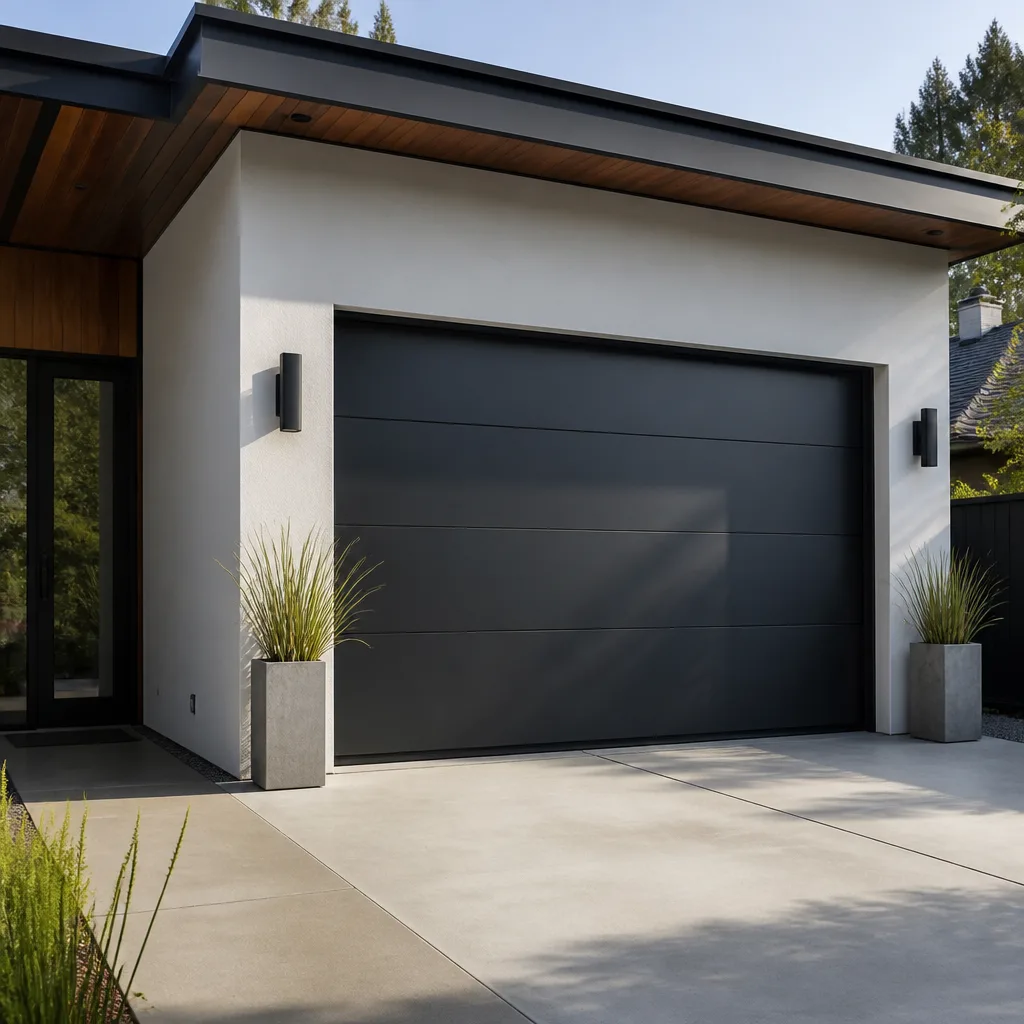 Modern flush
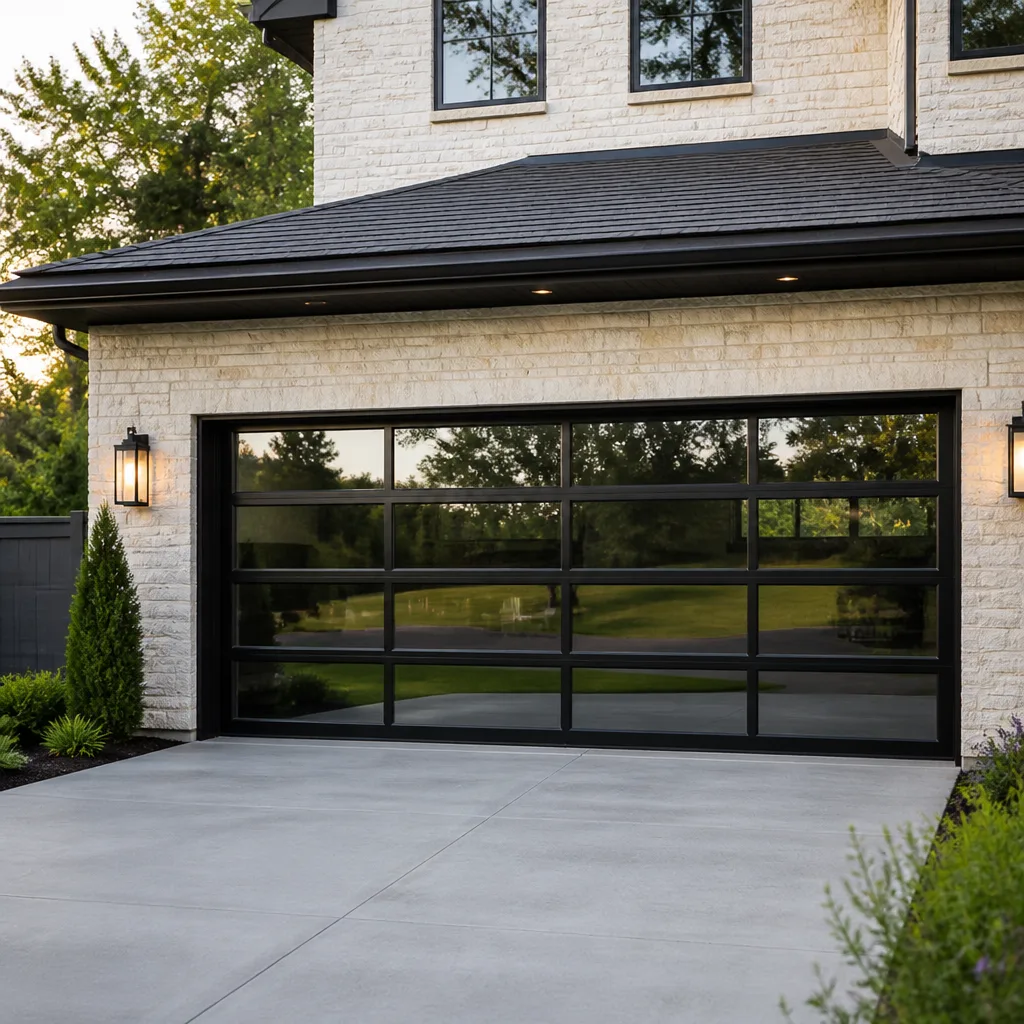 Full-view glass
 LiftMaster openers
 Chamberlain openers
Full 25-point door and opener safety check with every visit - springs, cables, rollers, tracks, and your LiftMaster or Chamberlain opener included
You get a price before we start. It does not change when the pro arrives.
Get your free estimateEmergency Garage Door Maintenance Schedule: What to Do and When
Cables don’t fail randomly. They fail at the bottom of their wear cycle, and that wear cycle is visible six to twelve months before the strand snaps, if you’ve looked. The same is true of torsion springs, opener logic boards, and trolley carriages. A maintenance schedule doesn’t prevent every failure; it moves failures from the emergency column to the scheduled column. In Summerlin, where metal expands through a 100°F July and contracts in a 40°F January, the timing of when you look matters as much as what you look at. This guide covers which tasks actually prevent 11 PM-Sunday calls, which just extend life, and the seasonal window that matters most here.
Quick Answer
A failure-prevention maintenance schedule for a garage door has two annual tasks (spring cycle count and cable inspection) plus quarterly tasks (balance test, lubrication, safety reversal test, hardware torque check). In Summerlin, the highest-value maintenance window is fall, before temperatures drop and steel contracts. Cosmetic maintenance like wiping panels and painting does nothing to reduce emergency call probability.
Styles & brands we work with
- Raised-panel steel
- Carriage house
- Modern flush
- Full-view glass
- LiftMaster openers
- Chamberlain openers
Table of Contents
- Cosmetic vs. Failure-Prevention Maintenance
- The Triage Schedule: Two Annual Tasks, Four Quarterly Tasks
- Cable and Spring Inspection: What Advance Warning Looks Like
- Summerlin Seasonal Timing: Why Fall Is the Highest-Value Window
- How an Inspection Log Cuts Diagnostic Time and Cost
- What to Do When It Fails Anyway
- What You Should Never Check Yourself
- Common Mistakes to Avoid
 Before
 After
Cosmetic vs. Failure-Prevention Maintenance
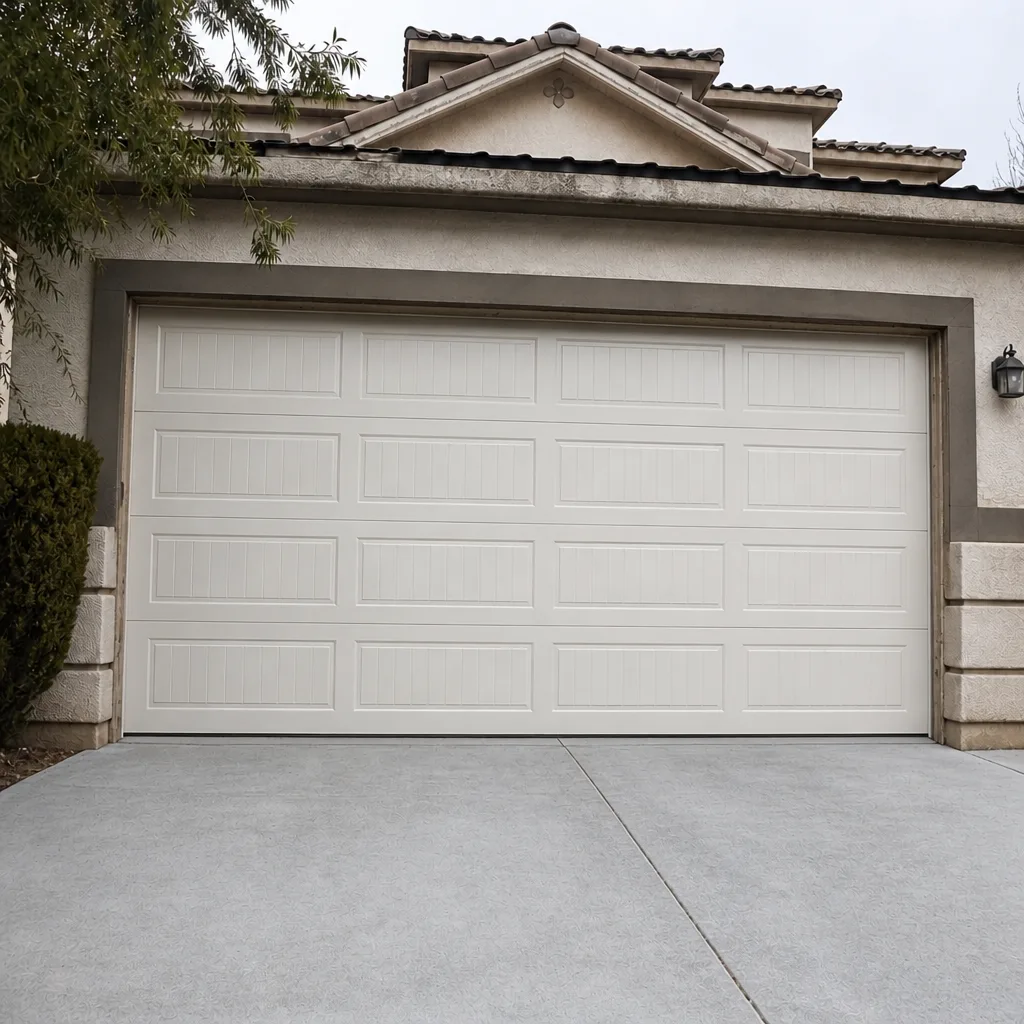
Most garage door “maintenance” advice on the internet is cosmetic. It tells you to wash the panels, touch up paint chips, wipe the weather seal, and clear debris from the tracks. All fine. None of it reduces the probability that you’ll be calling an emergency line at 10:40 on a Sunday night. That probability is driven by four components: the torsion spring, the lift cables, the opener’s drive system, and the door’s balance. Everything else is housekeeping.
The distinction matters because time is finite, and homeowners who spend their garage door attention on the visible, easy tasks end up skipping the two that matter most. A painted panel buys nothing. A cable inspection that catches a frayed strand buys you a scheduled Tuesday appointment instead of a Sunday-night emergency call. In our experience across Summerlin neighborhoods like The Ridges, Red Rock Country Club, and Summerlin West, the failures we respond to at odd hours are almost never cosmetic. They’re mechanical, and the warning was visible weeks or months earlier.
Failure-prevention maintenance means asking one question about every task: does this reduce the chance that a component fails under load? If not, it’s cosmetic. For a full walkthrough of what a real prevention visit looks like, see garage door repair in Summerlin.
The Triage Schedule: Two Annual Tasks, Four Quarterly Tasks
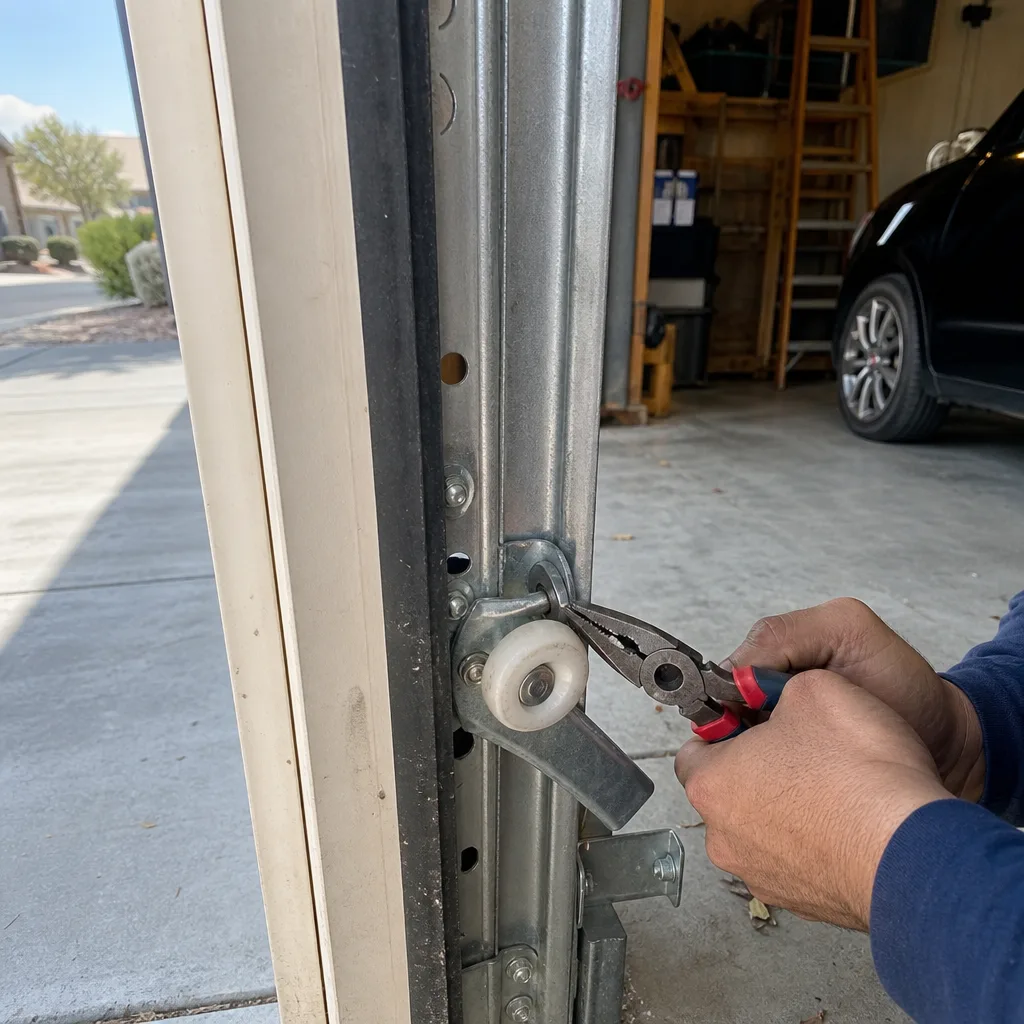
If you only do two things a year, do these. They prevent the majority of emergency calls we see in Summerlin:
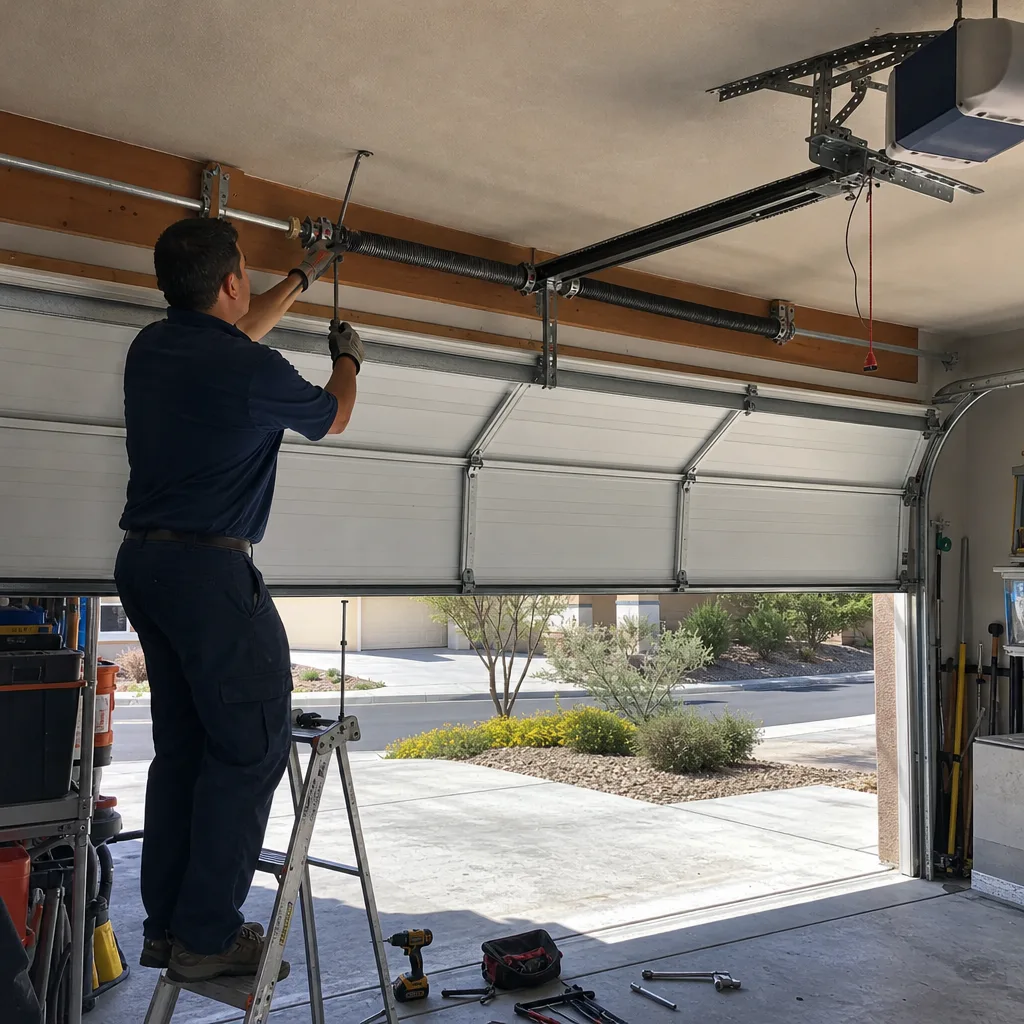
- Annual spring cycle count and visual check. A standard torsion spring is rated for roughly 10,000 cycles (one open-and-close is one cycle). Count your daily cycles, multiply, and you’ll know where you are in the wear cycle. A 4-cycle-per-day household hits 1,460 cycles a year; that’s a spring nearing its design life inside seven years. Visual check: look for a visible gap in the coil (a clean break), rust bloom, or a spring that’s lost tension.
- Annual cable inspection by a technician. Lifting cables are under continuous tension and are the single most common cause of sudden door-drop emergencies. Frayed strands, kinks, and rust at the drum are all advance warnings. A trained eye catches them; a homeowner often misses them because the wear is on the underside of the cable at the drum wrap.
Then, quarterly, add these four. None of them prevents an emergency on their own, but together they extend component life by years:
- Balance test: disengage the opener, lift the door halfway, release. A balanced door holds position. One that drops or rises sharply means a spring or cable problem.
- Safety reversal test: place a 2×4 flat under the closing door. The door should reverse on contact. If it doesn’t, the opener’s safety system needs service before you use the door again.
- Lubrication: a light coat of garage door lubricant on hinges, rollers, and the torsion bar bearings. Not on the tracks. Never on the tracks.
- Hardware torque check: hinges, brackets, and the track bolts. Vibration loosens them over months; a loose bracket is a noisy door today and a misaligned door later.
Cable and Spring Inspection: What Advance Warning Looks Like
The specific signals we look for on a cable are the ones that show up six to twelve months before a snap. On the drum end, where the cable wraps, look for:
- Broken strands (single wires poking out from the braid; even one broken strand is a warning)
- Kinks or a “memory” kink from a previous jam
- Rust bloom on the wire, especially in the lower loop that sits near a humid garage floor
- Discoloration at the drum where a cable has been slipping
On the spring side, the signals are quieter. A clean break is obvious and means the door is already down or unsafe. What to catch before it breaks: a visible gap opening between coils under load, a rust bloom on the wire (rust is a stress riser and springs fail at the rust), and a door that has begun to feel heavier to lift by hand than it did a year ago. That last one is the earliest warning and the most overlooked. A spring loses tension over its life cycle before it breaks.
We photograph the failed component before any replacement is quoted. That’s not marketing; it’s Clause 4 of The Haven Standard. The customer sees the failed part before they see a price, and the photo record is theirs when the job is done. If you want to know what your door is actually doing right now, a free second opinion on any written estimate from another company is the fastest path, and you don’t need a coupon to use it.
Summerlin Seasonal Timing: Why Fall Is the Highest-Value Window
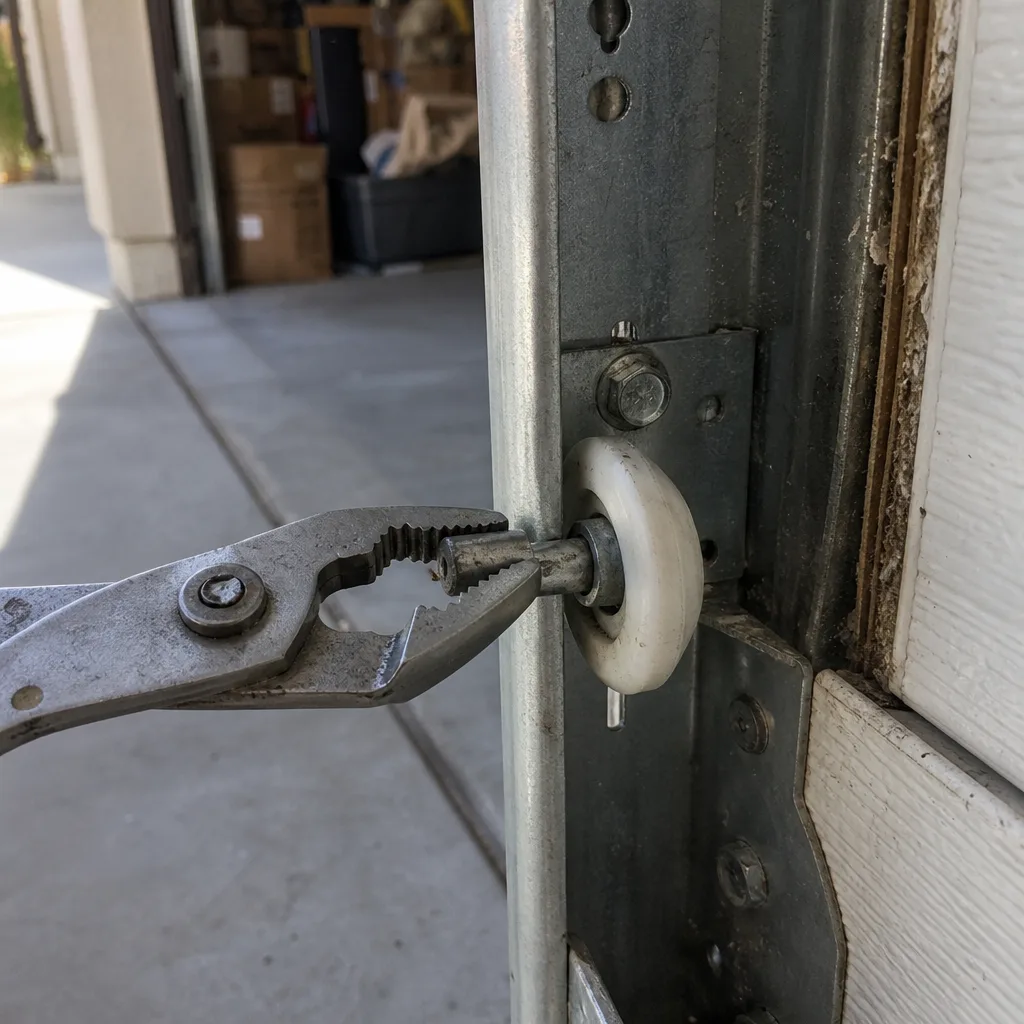
The highest-value maintenance window in Summerlin is September through November. Reasons are physical, not promotional. Through July and August, garage interiors in Summerlin routinely run past 110°F, and the steel in a door grows measurably. A spring that sat at near-maximum tension through July relaxes as temperatures drop in October. Cables that stretched in the summer heat contract. Bolts that vibrated loose over the hot months get their first real test when the door is cycling under cooler, tighter tolerances.
Whatever was marginal in August is what fails in December if you don’t check it in October. This is why fall maintenance outperforms any other season here. A technician doing an October visit sees the door at the beginning of its cool-weather operating window and can catch a cable at 80% wear, a spring at the end of its cycle count, or a loose bracket; all of which would show up as an emergency in the middle of a holiday weekend if left alone.
Spring check (March through May) is second-best, but it shares the calendar with a lot of other home maintenance and it catches problems after cool-weather stress rather than before. Winter, in this climate, is the season that turns “slightly worn” into “failed under load.” For a door that’s already having trouble, scheduled Summerlin garage door repair in October is dramatically cheaper than the same repair done as an emergency in January, because the failure modes are entirely different in scope.
How an Inspection Log Cuts Diagnostic Time and Cost
An inspection log is one page, kept in the garage, and it changes what happens if you do have an emergency. It records four things: date, task performed (or found), what was observed, and who did it. A column for a photo taken from your phone is enough for documentation. The log lives next to the wall button so it can’t get lost.
Here’s why it matters. When we arrive on an emergency call, the first ten minutes are diagnostic. What’s the door’s age? What’s the opener model? When was the last lubrication? Did the door have a prior balance issue? Without a log, that’s questions we have to ask on the phone or work out onsite. With a log, we open it and we know. That cuts diagnostic time, and it lets us tell you on the phone whether it’s a five-minute fix or a full spring replacement before we ever leave.
We service all major brands, including Clopay, Amarr, Wayne Dalton, and Craftsman as well as LiftMaster, Chamberlain, Genie, and Raynor. Each has its own failure modes and its own parts, but every one of them diagnoses faster with a documented history. That’s the second half of what a documented photo record does for you: on the first visit it proves what we found, and on the next visit it tells the technician where the last one left off. If you’re considering a new door rather than a repair, the same principle applies, and the Summerlin garage door installation process starts with a measure that reads the same log.
What to Do When It Fails Anyway
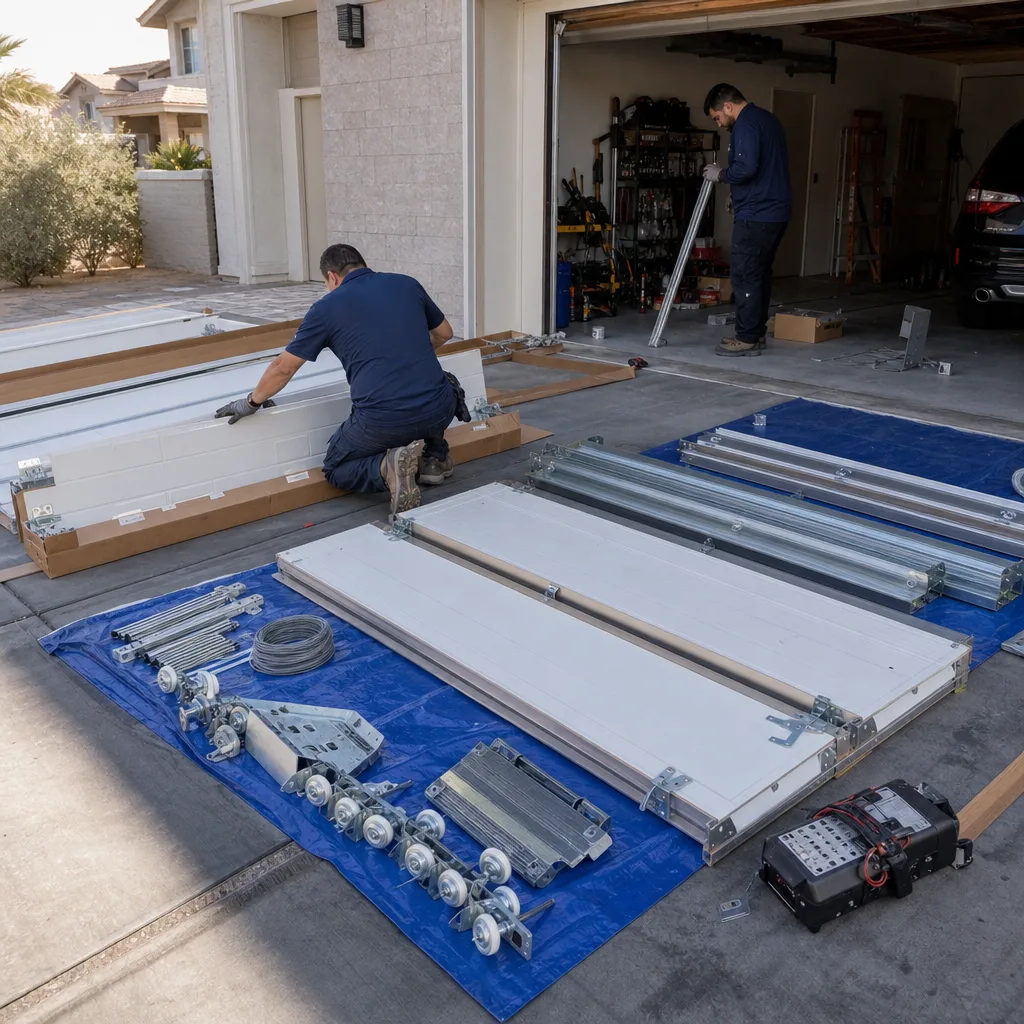
Scheduled maintenance doesn’t eliminate emergency calls. It reduces them. When one happens, the response matters less than the sequence. Follow these in order:
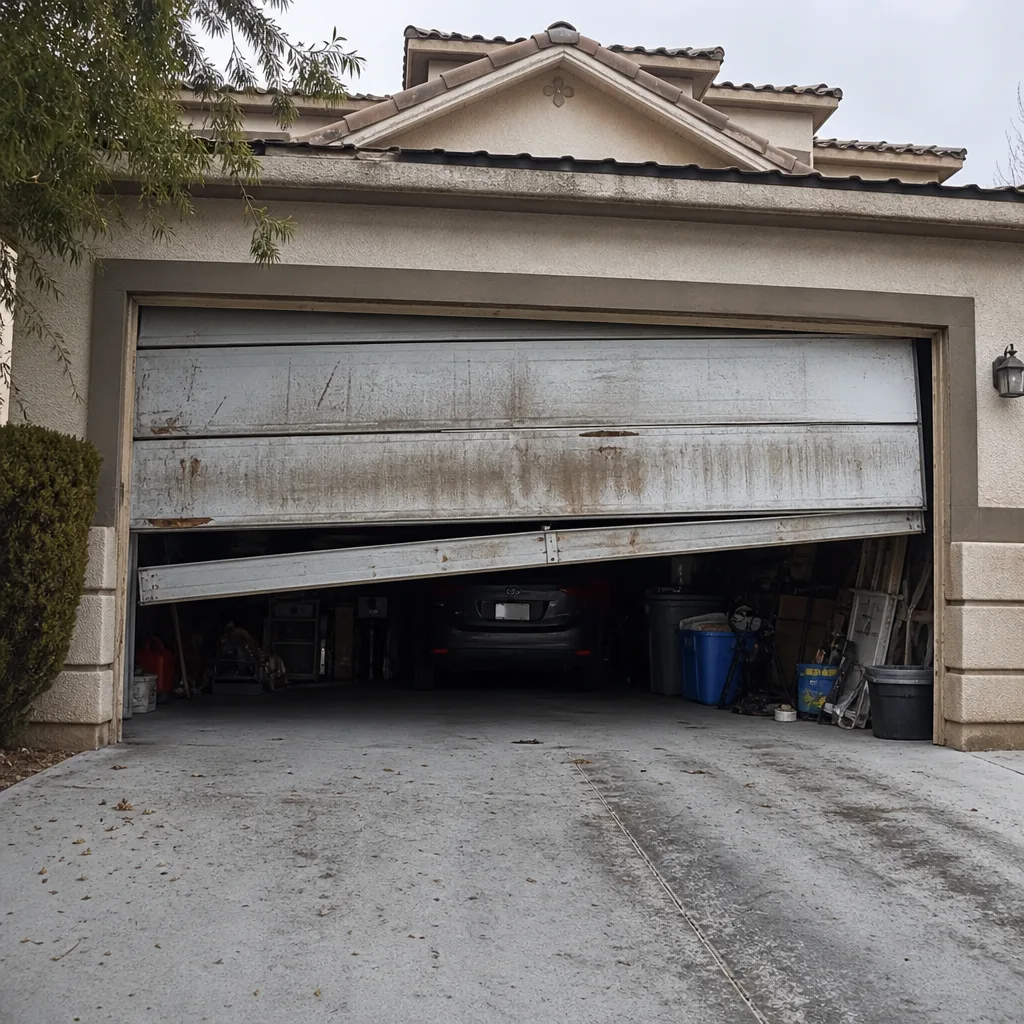
- Stop cycling the door. A spring break or cable snap under load can drop the door hard enough to damage the opener and, in the worst case, injure anyone standing under it.
- Disengage the opener using the red manual release handle (pull down and toward the door) only if the door is fully closed and stays closed. If the door is up and the spring is broken, do not release it. Call for a technician.
- Secure the area. Keep kids, pets, and cars clear. Do not attempt to prop the door open with a stick or a ladder.
- Call a live person, not a callback window. Our phone line answers 24/7, including holidays. You get a named technician and an on-the-way text rather than a four-hour window.
- Have your log ready so the phone call can narrow the failure before the technician is dispatched.
A schedule buys you the option to choose your technician and your appointment time. An emergency doesn’t. That’s the trade, and it’s why the fall window in Summerlin is worth protecting.
What You Should Never Check Yourself
A torsion spring holds enough stored energy to injure or kill. So does a lift cable under tension. Two things you should never do, no matter how handy you are: adjust or replace a torsion spring by hand (the winding bars required are not a weekend project, and the released energy is real), and cut or re-terminate a lift cable. Both are the exact components the annual inspection is designed to catch before they fail. Checking a spring for a visible gap is safe. Touching it with a wrench is not. If your inspection turns up a broken spring or a frayed cable, the correct next step is a phone call, not a hardware store run.
Our technicians have up to 11 years of experience and are background-checked and uniformed. They’re the ones who should be doing anything involving the spring, the cable, or the opener’s high-voltage side. If your door’s opener is the problem, see garage door opener repair & installation in Summerlin. If you’re weighing a new door because of repeated failures, Summerlin garage door installation starts with a measurable, written scope, not a sales visit.
Common Mistakes to Avoid
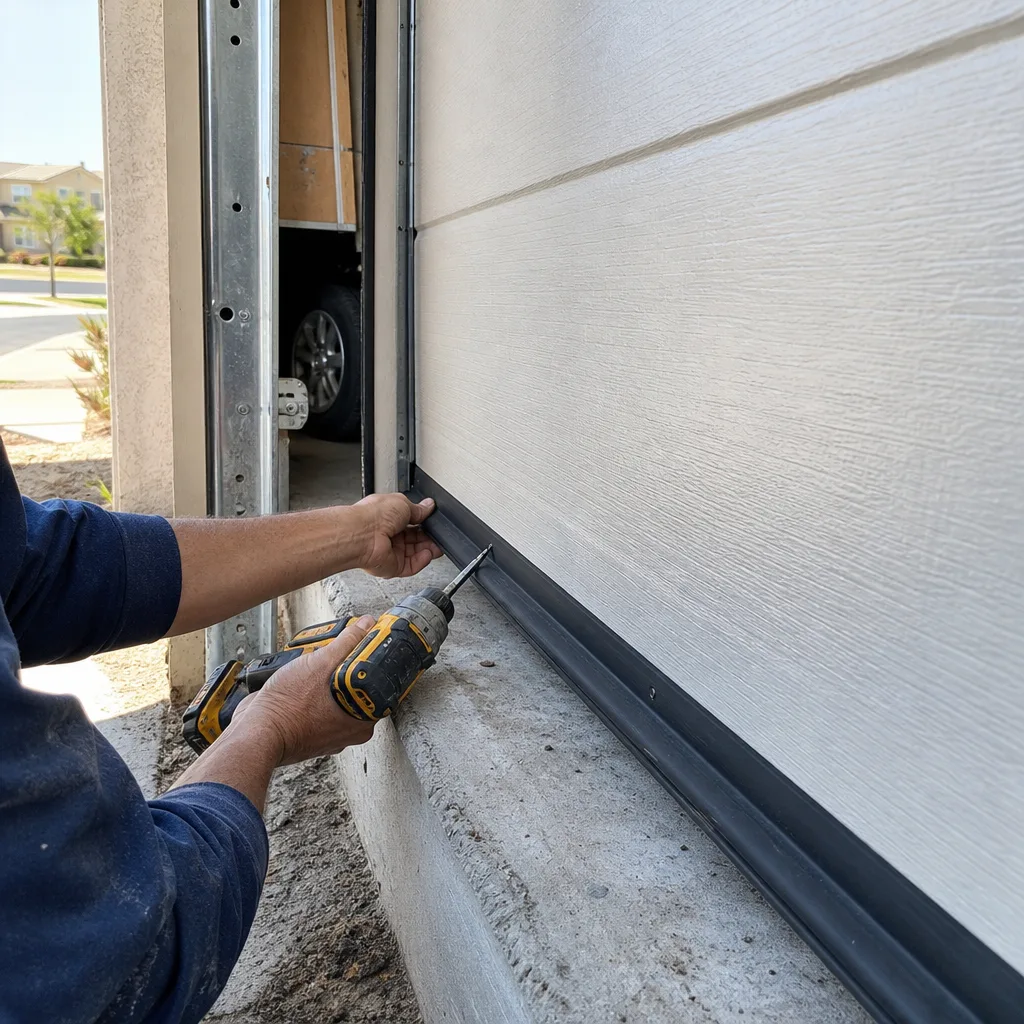
- Lubricating the tracks. Tracks are meant to be dry. Lubricant attracts dust, dust packs into the rollers, and the door starts binding. Keep the rollers oiled, keep the tracks clean and dry.
- Skipping the fall window because the door “seems fine.” In Summerlin, most failures show up in December and January. If you only check in spring, you’re checking after the failure window, not before it.
- Replacing a spring with an unmatched cycle rating. A discount spring rated for 5,000 cycles on a door that cycles 4,000 times a year will fail in about 14 months. Ask for the cycle rating on any replacement and it should be on the written scope.
- Ignoring a door that “feels heavier.” That heaviness is the earliest available warning of spring fatigue. It’s the cheapest failure to prevent and the most expensive to ignore.
- Running the opener without the safety reversal test. The 2×4 test takes 30 seconds and it’s the difference between a door that stops on a child’s toy and one that doesn’t.
- Calling an emergency line for a maintenance task. A scheduled appointment in October is measurably cheaper and quieter than the same visit on a Sunday night in January. Plan the fall visit; don’t wait for the failure to schedule it.
- Keeping no record. Without a log, every repair starts from zero diagnosis. With one, the technician walks in already knowing the door’s history.
See the difference
BeforeAfter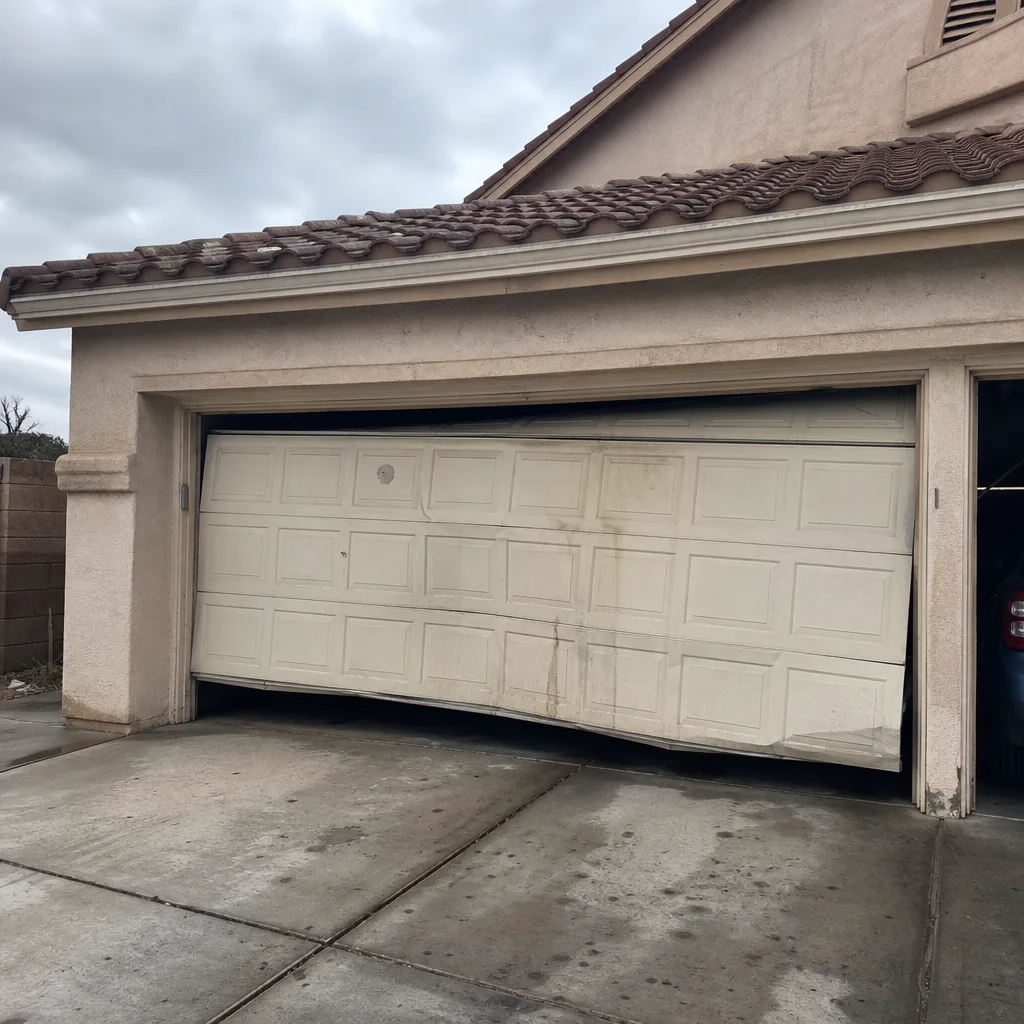 Before
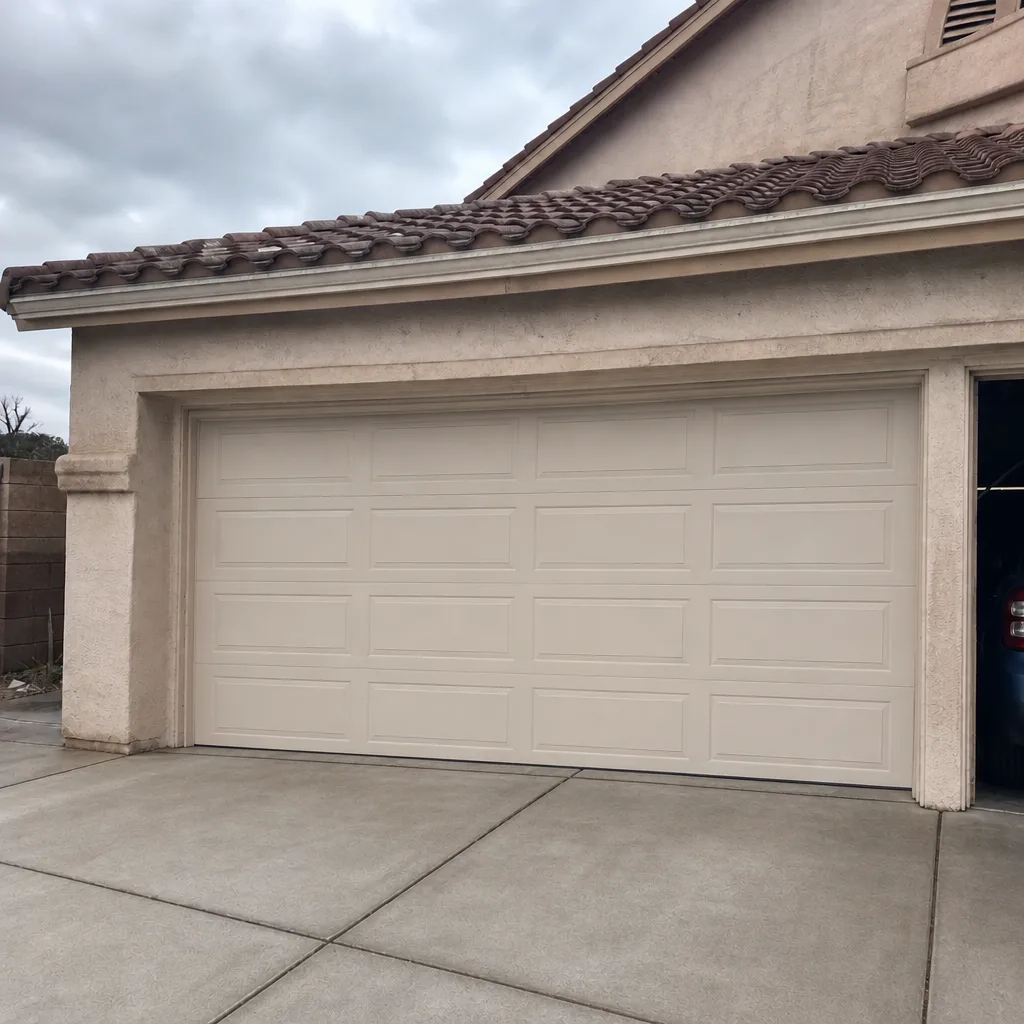 After
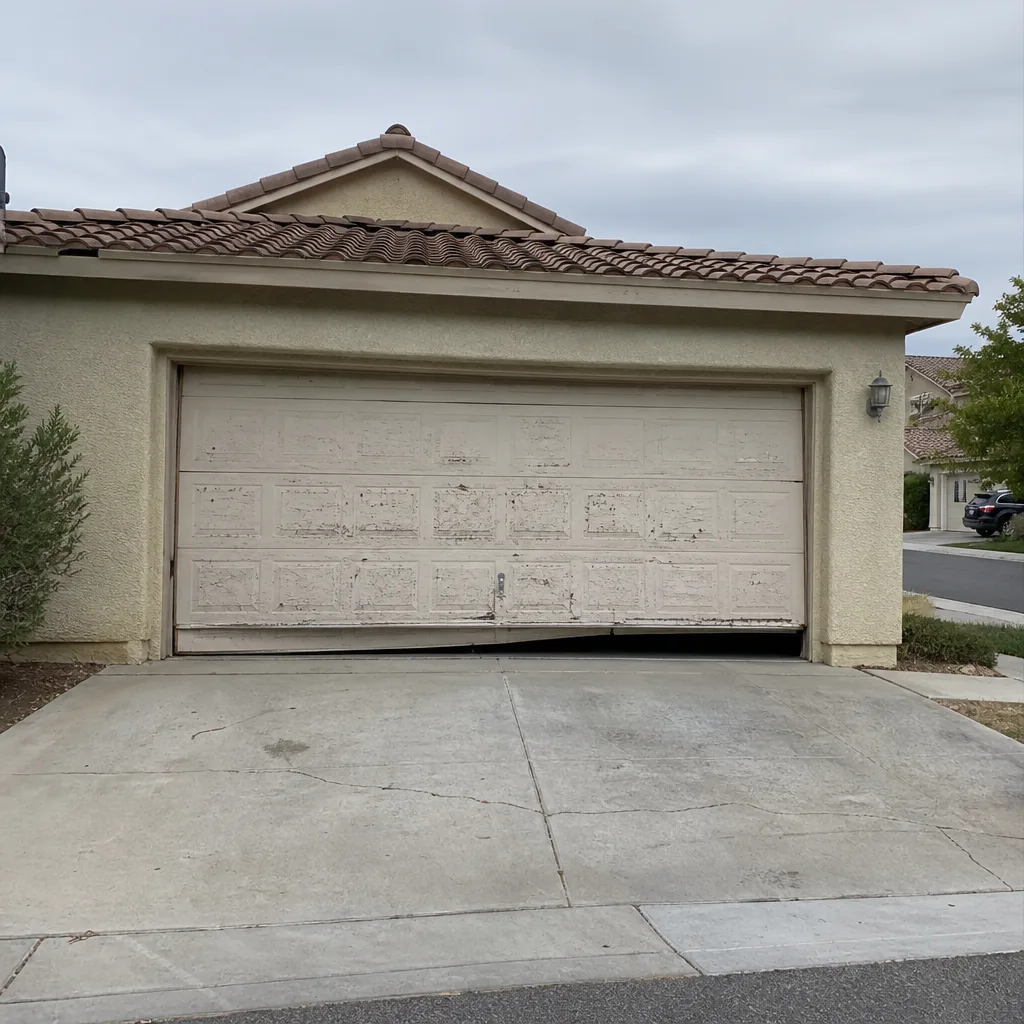 Before
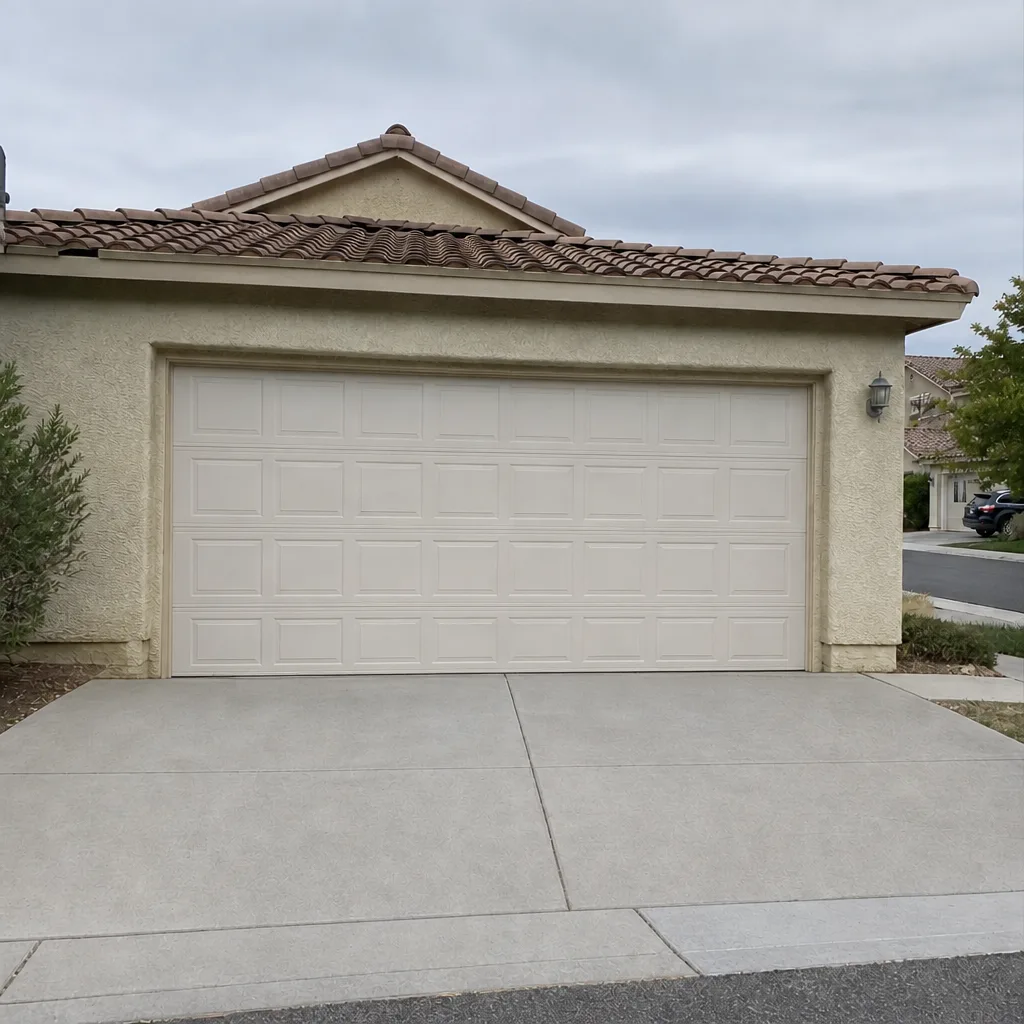 After
When to Call a Professional
Call a professional for any broken spring, any cable that shows a broken strand or a kink, an opener that cycles but the door doesn’t move, a door that reverses halfway up, or anything involving the torsion system. Also call if a door is out of balance (the half-open release test), if you hear a loud report from the garage that sounds like a gunshot (that’s usually a spring break), or if your annual inspection turns up rust on a spring under load. A free estimate in Summerlin starts the conversation: Servo Garage Doors Summerlin offers free estimates in Summerlin, call (844) 797-3654. Every quote is a flat, written price delivered before any work starts, with the failed part photographed first. If you’ve already got a written estimate from someone else, bring it in for a free second opinion, no coupon required.
Frequently Asked Questions
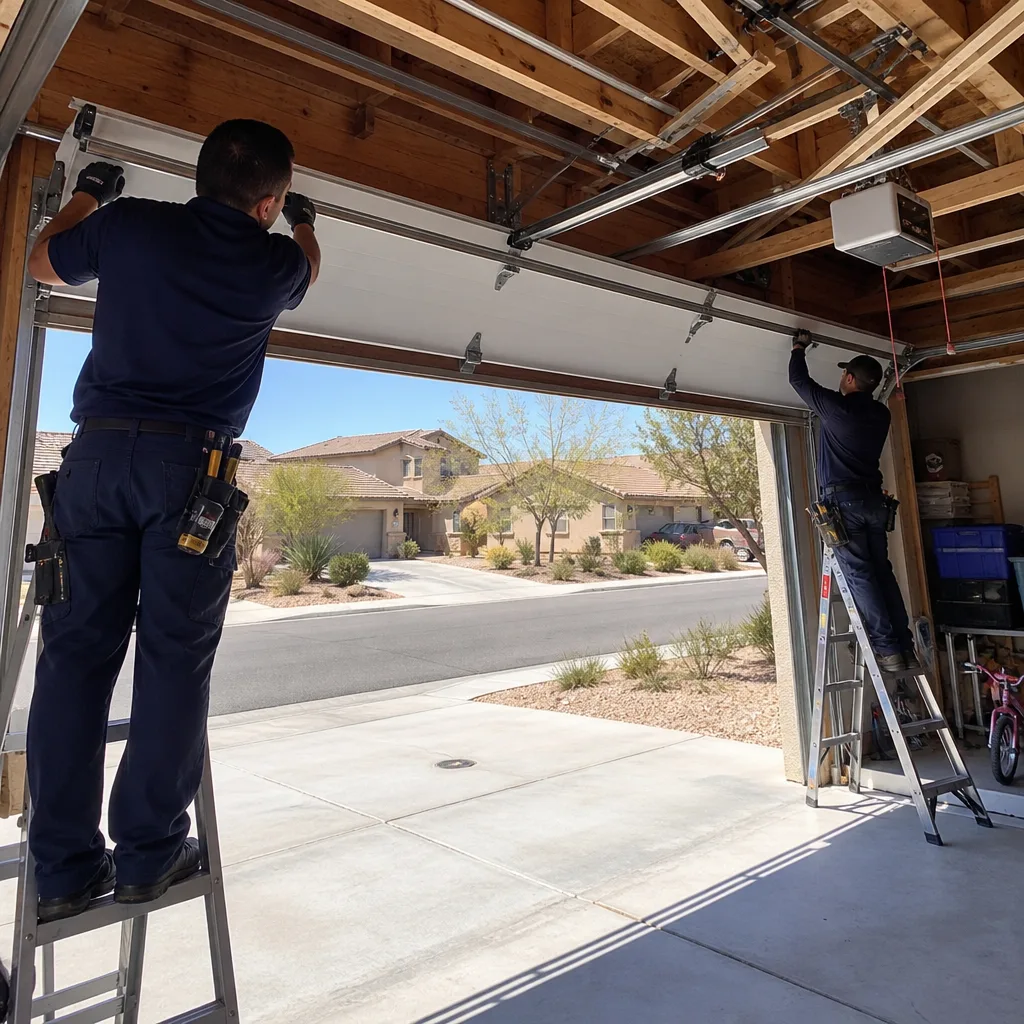
The two annual tasks that prevent most emergencies are a spring cycle count (with a visual check of the coil) and a professional cable inspection. Quarterly, add the balance test, safety reversal test, lubrication, and a hardware torque check. In Summerlin, schedule the annual visit in fall, before the cool-weather window when most failures actually happen.
The door starting to feel heavier to lift by hand than it did a year ago. That’s spring fatigue showing up before a break. The second sign is a visible rust bloom on the wire. A clean break with a gap in the coil means it’s already failed, and the door should not be cycled. Call (844) 797-3654 if you see any of these.
Because Summerlin’s summer heat expands the door and spring to near-maximum tension, and October’s drop in temperature reverses it. Whatever was marginal in August is what fails in December. A fall visit catches a cable at 80% wear and a spring at the end of its cycle count before the cold-weather contraction puts both under load. Fall maintenance is the highest-value window in this climate.
Yes for the safe tasks: visual spring inspection, lubrication, hardware torque check, balance test, and the 2×4 safety reversal test. Never adjust or replace a torsion spring or re-terminate a lift cable yourself; both hold stored energy that can injure or kill. Those are the exact components the annual inspection exists to catch before they fail.
Yes. The first ten minutes of any emergency visit are diagnostic, and a written log answers the questions (age, model, prior balance issues, last service) that would otherwise be answered on the phone or onsite. It also lets us tell you on the phone whether it’s a five-minute fix or a full spring replacement before we leave. Every Servo visit closes with a documented photo record added to your history.
Once a year, in fall, plus any time you hear a sound change or feel a new heaviness. A 4-cycle-per-day household hits a spring’s design life in roughly seven years, and a professional visit each fall is what keeps a spring replacement on the calendar instead of in the emergency column. Free estimates are available; call (844) 797-3654.
The Bottom Line
A maintenance schedule doesn’t stop failures; it decides which ones happen on your terms. The two annual tasks (spring cycle count and cable inspection) prevent most emergencies. The four quarterly tasks extend component life. In Summerlin, fall is the window that matters most because it puts you ahead of the cool-weather contraction that turns marginal parts into failed ones. Log what you find, never touch the spring or cable yourself, and use a written price before work starts, whether it’s a $200 cable replacement or a full door. That is the whole system. Our team is at Servo Garage Doors Summerlin home for the scheduled visit and for the 11 PM one; call (844) 797-3654 for a free estimate.
Written by the team at Servo Garage Doors Summerlin.