
Last updated November 17, 2026
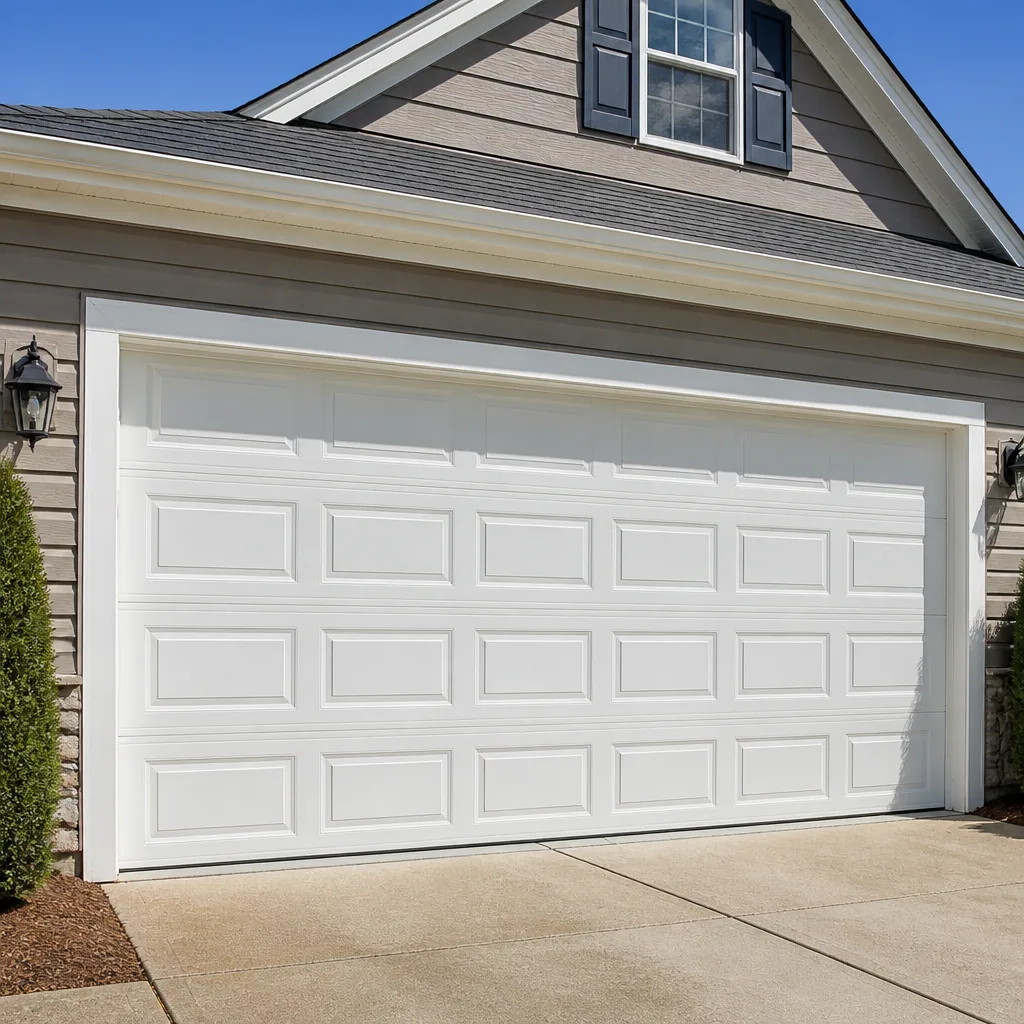 Raised-panel steel
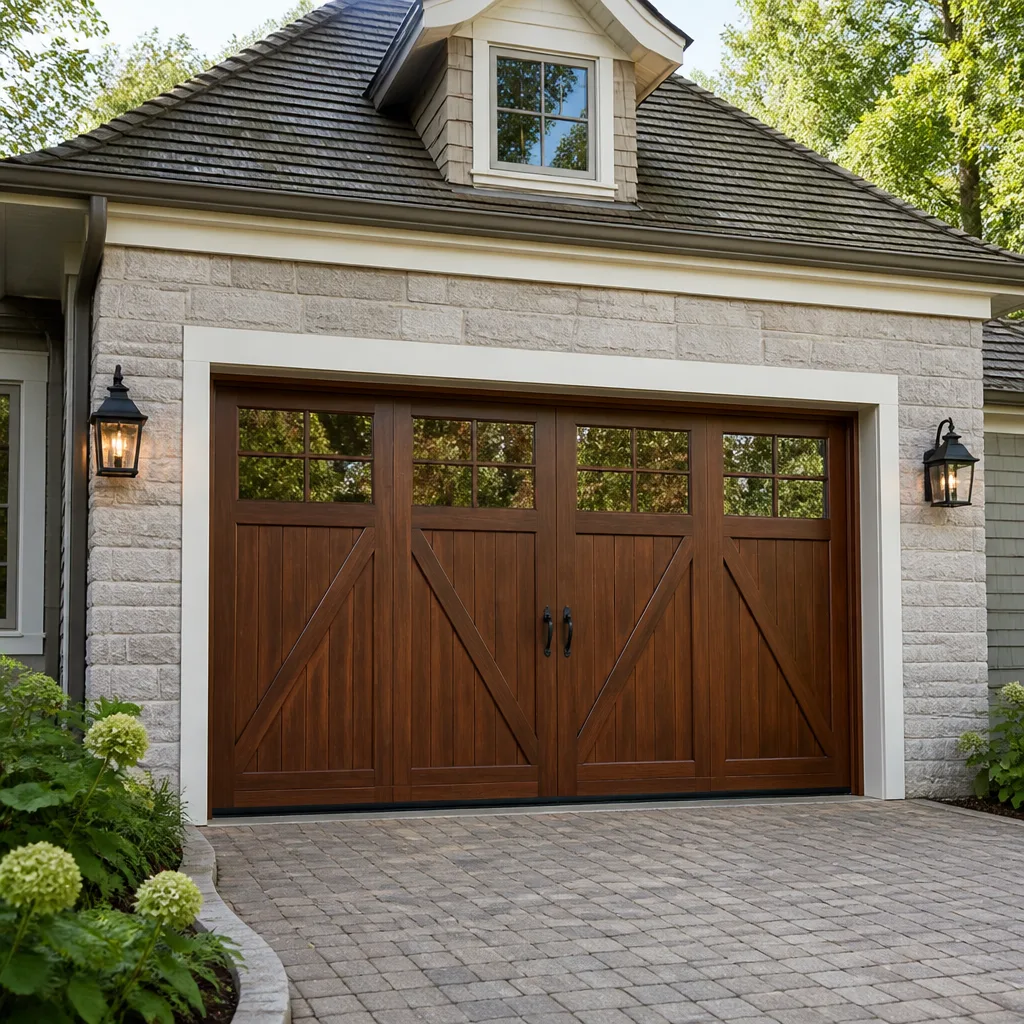 Carriage house
 Modern flush
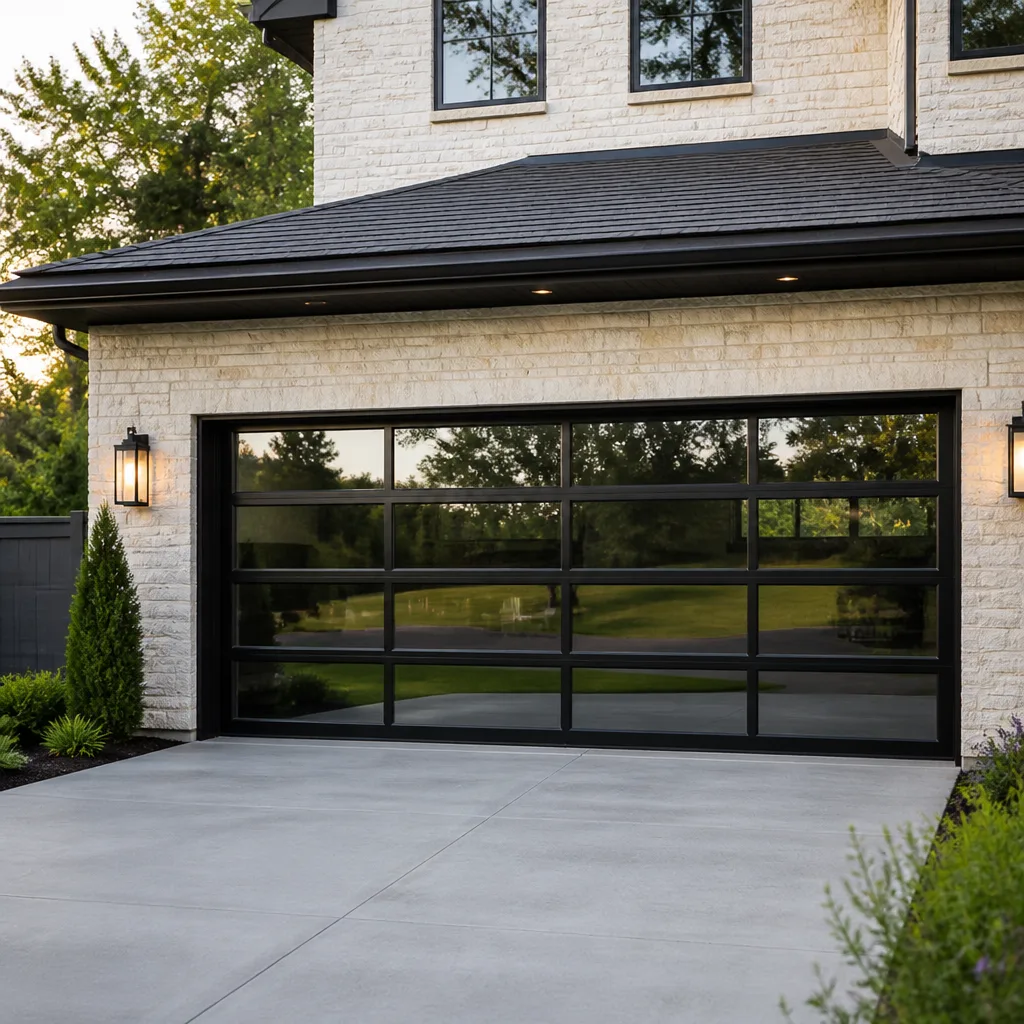 Full-view glass
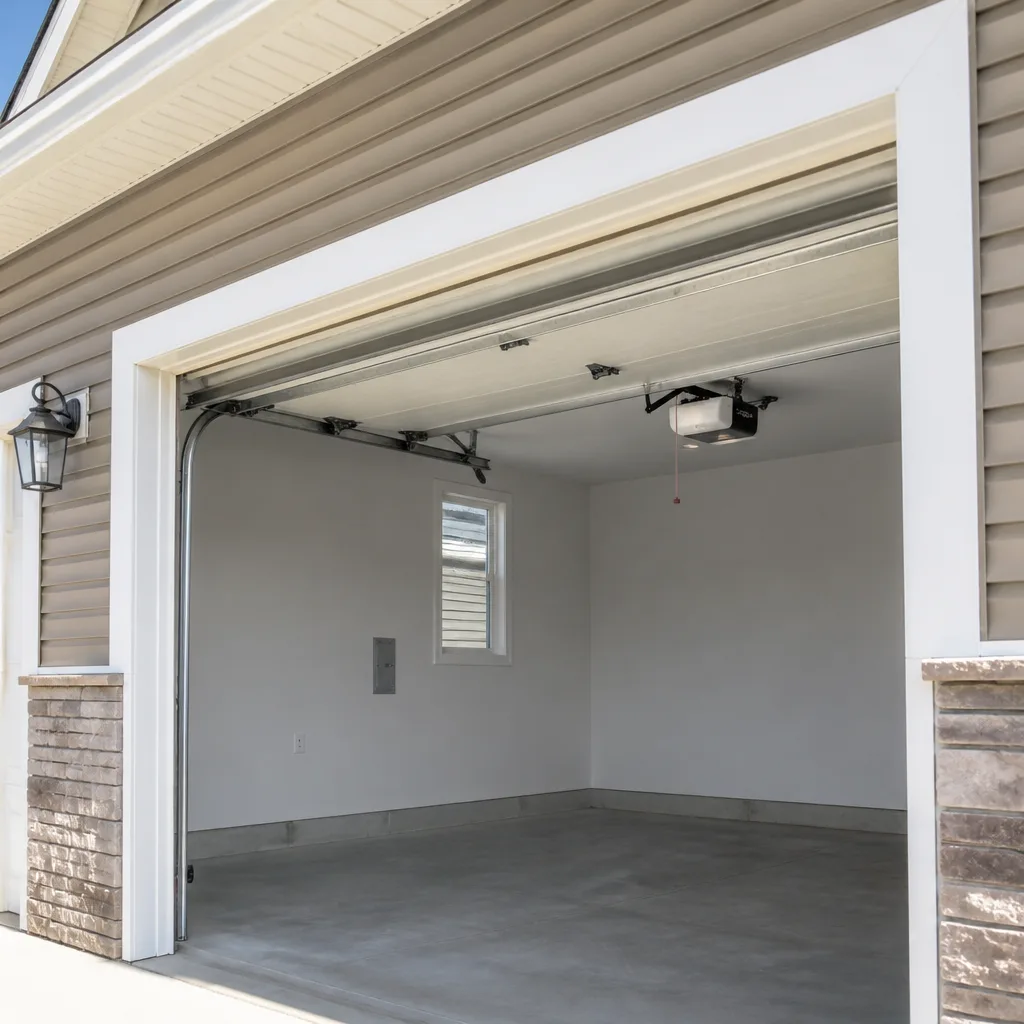 LiftMaster openers
 Chamberlain openers
Full 25-point door and opener safety check with every visit - springs, cables, rollers, tracks, and your LiftMaster or Chamberlain opener included
You get a price before we start. It does not change when the pro arrives.
Get your free estimateGarage Door Parts Warning Signs Every Homeowner Should Know
A garage door that hesitates for two seconds before moving is not “getting old.” It’s almost always a logic board or a photo-eye misalignment, and both have a known fix at a known price. The problem with most warning-sign advice is that it stops at the symptom: “does it sound weird?” That gets you nowhere. A grinding noise near the floor means something different than a grinding noise that quits at the top of travel, and the part that’s failing is different again. This guide connects the symptom to the specific component, so you can tell a worn roller from a failing spring before you pick up the phone. Homeowners across Summerlin deal with the same dry-air wear we see on every street, and knowing which part is talking to you is the difference between a small repair and a stranded car.
Quick Answer
The warning signs that matter most are: a door that hesitates or reverses before it moves, grinding or squealing at a specific point in travel, a visible gap or sag when the door is halfway down, frayed cable strands, and a manual balance test that won’t hold. Each one points to a specific part – logic board, photo-eye, rollers, cable, or torsion spring – and each has a price range you should be quoted in writing before anyone touches the door. A warning sign is a diagnostic clue, not an automatic emergency. The trick is knowing which clues can wait a week and which ones mean the door shouldn’t complete another cycle.
Styles & brands we work with
- Raised-panel steel
- Carriage house
- Modern flush
- Full-view glass
- LiftMaster openers
- Chamberlain openers
Table of Contents
- The Symptom-to-Part Matrix: What Your Door Is Telling You
- Warning Sign vs. Emergency Sign: What Can Wait a Week
- The Manual Balance Test and What It Tells You About Spring Tension
- Visual Wear Indicators by Material: Rollers and Cables Up Close
- Opener and Logic Board Warning Signs
- Document the Symptom Before You Call
- Why the Summerlin Climate Accelerates Certain Failures
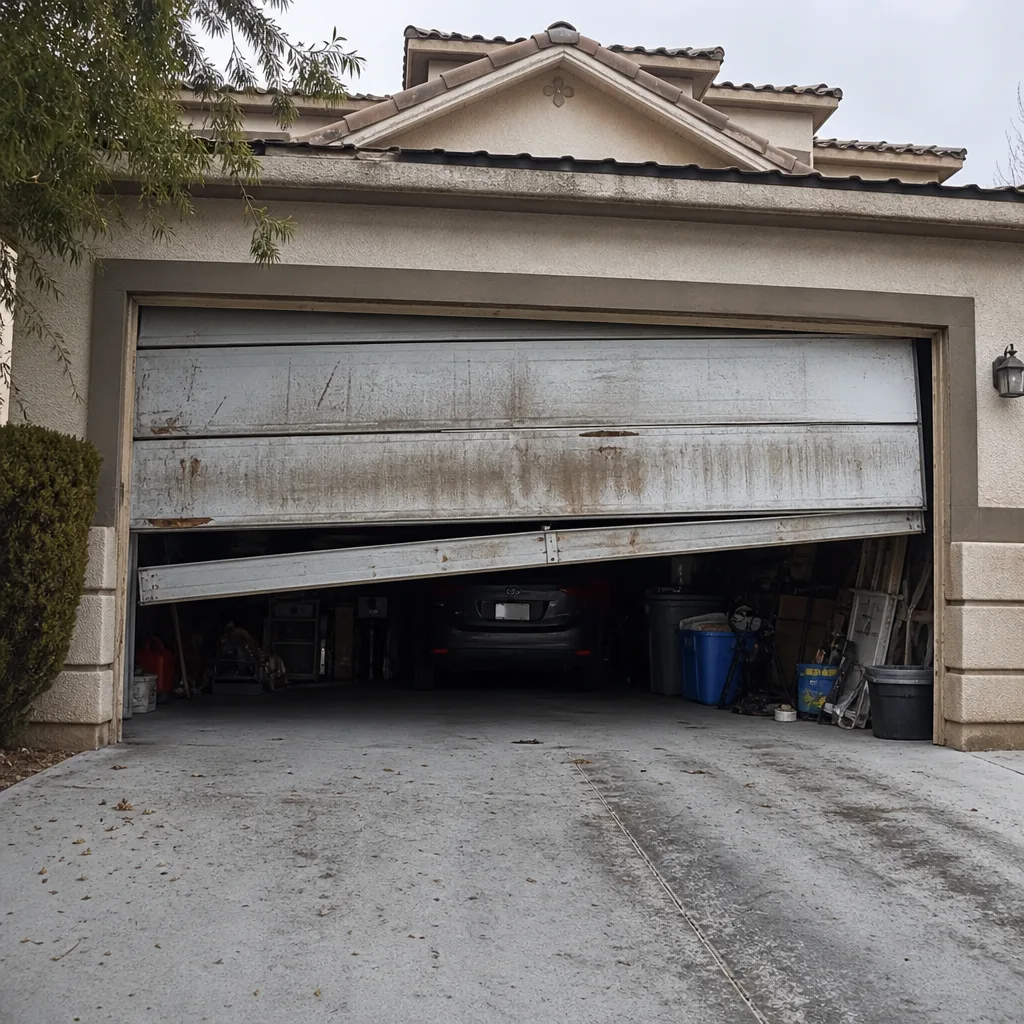 Before
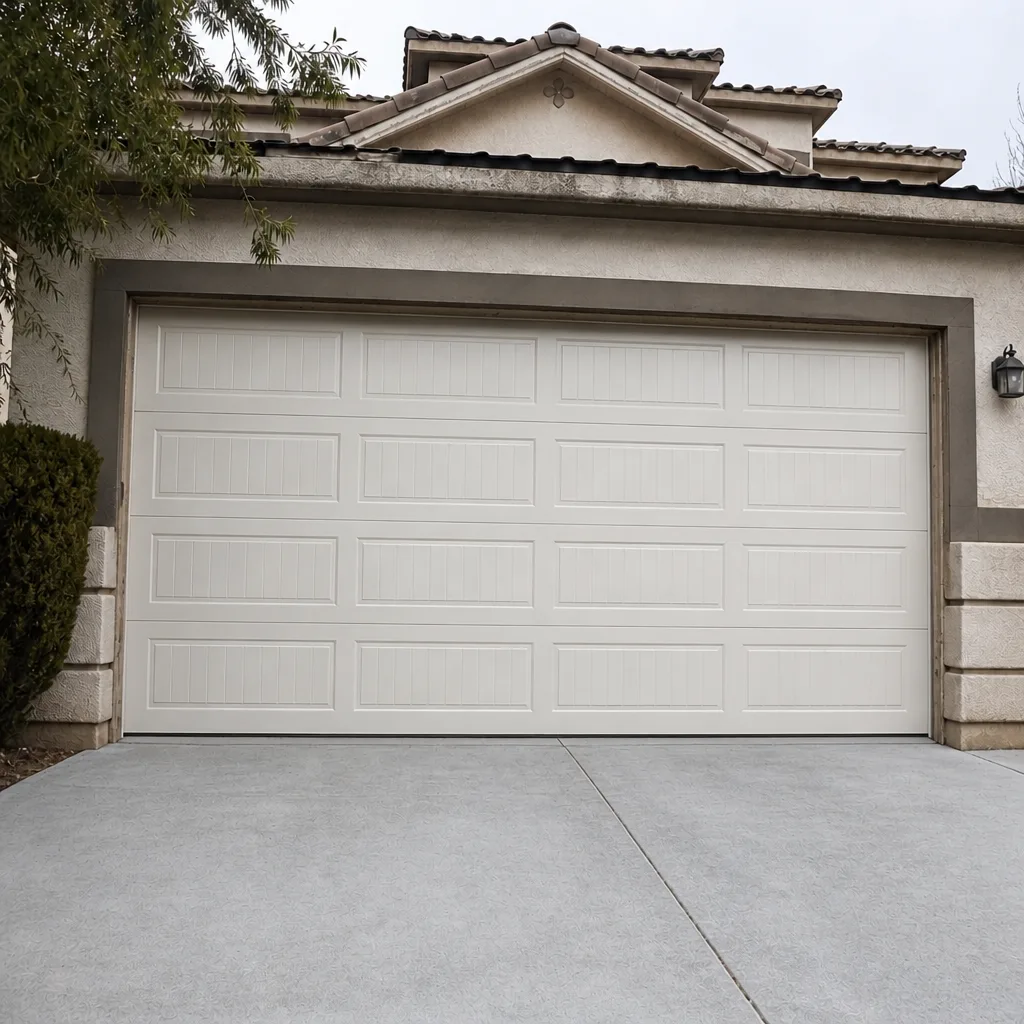 After
The Symptom-to-Part Matrix: What Your Door Is Telling You
Every sound and movement a garage door makes maps to a component. The mistake is treating all noise as “the door needs service.” A trained technician hears where in the cycle a noise happens and knows which part lives at that point. Here’s the matrix we use, and the one that should guide your own listen.
- Grinding low, near the floor on the way up: usually rollers or hinges, sometimes a bent track at the bottom bracket. If it stops once the door clears four feet, it’s almost always a roller binding in the curved track section.
- Grinding that continues the whole travel: worn steel rollers, dry hinges, or a torsion spring that’s lost tension and is dragging the door. The sound follows the door rather than a single point.
- Squealing at one spot: a nylon roller that has worn through to the steel stem, or a bearing plate that’s dry. Nylon rollers fail quietly and then squeal once the bushing is gone.
- Grinding at the top of travel, then a hard stop: the opener’s limit switch is set past the door’s actual travel, or the trolley carriage is binding on the rail. The motor is fighting a stop it can’t see.
- A thud or lurch, then the door reverses: photo-eye misalignment or an obstruction the safety reverse is reading. On a LiftMaster or Chamberlain unit this is frequently the eyes, not the motor.
- A door that moves a few inches and stops: logic board or a force-sensitivity setting that’s tripped. A Craftsman unit from the 2010s is a common offender when its board begins to fail.
What makes this useful is that it tells you the likelihood of a cheap fix versus a bigger one before anyone arrives. A roller or hinge is a small part. A logic board is a board swap. A dragging torsion spring is a spring job. None of those should be guessed at, and none should be quoted without seeing the failed component. Clause 4 of The Haven Standard exists because of exactly this: the technician photographs the failed part before quoting a replacement. If a company quotes you over the phone without a photo, you’re being sold a guess.
If you want a second read on a symptom you’ve already noted, our Garage Door Repair in Summerlin page covers how a diagnostic visit works and what the technician will photograph.
Warning Sign vs. Emergency Sign: What Can Wait a Week
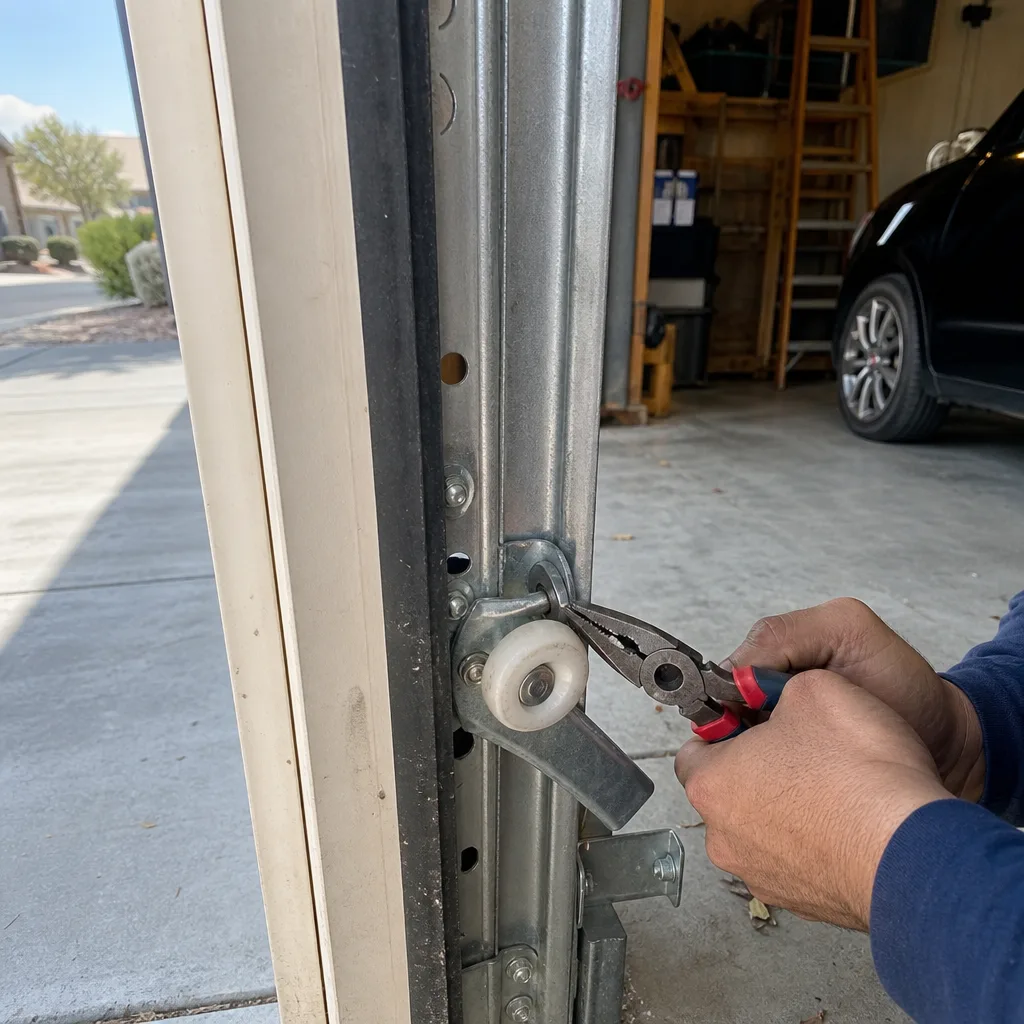
Most warning signs are not emergencies. A noisy door is annoying; a door that can drop is dangerous. The line between the two is whether the door can still hold itself up under normal load, and whether the safety reverse still works. If both are true, you have time to schedule. If either is false, the door should stay down until a technician sees it.
These can typically wait a week:
- Squeaking or grinding that doesn’t change the door’s movement
- A single nylon roller that’s worn or flat-spotted
- A remote that works inconsistently but the wall button is fine
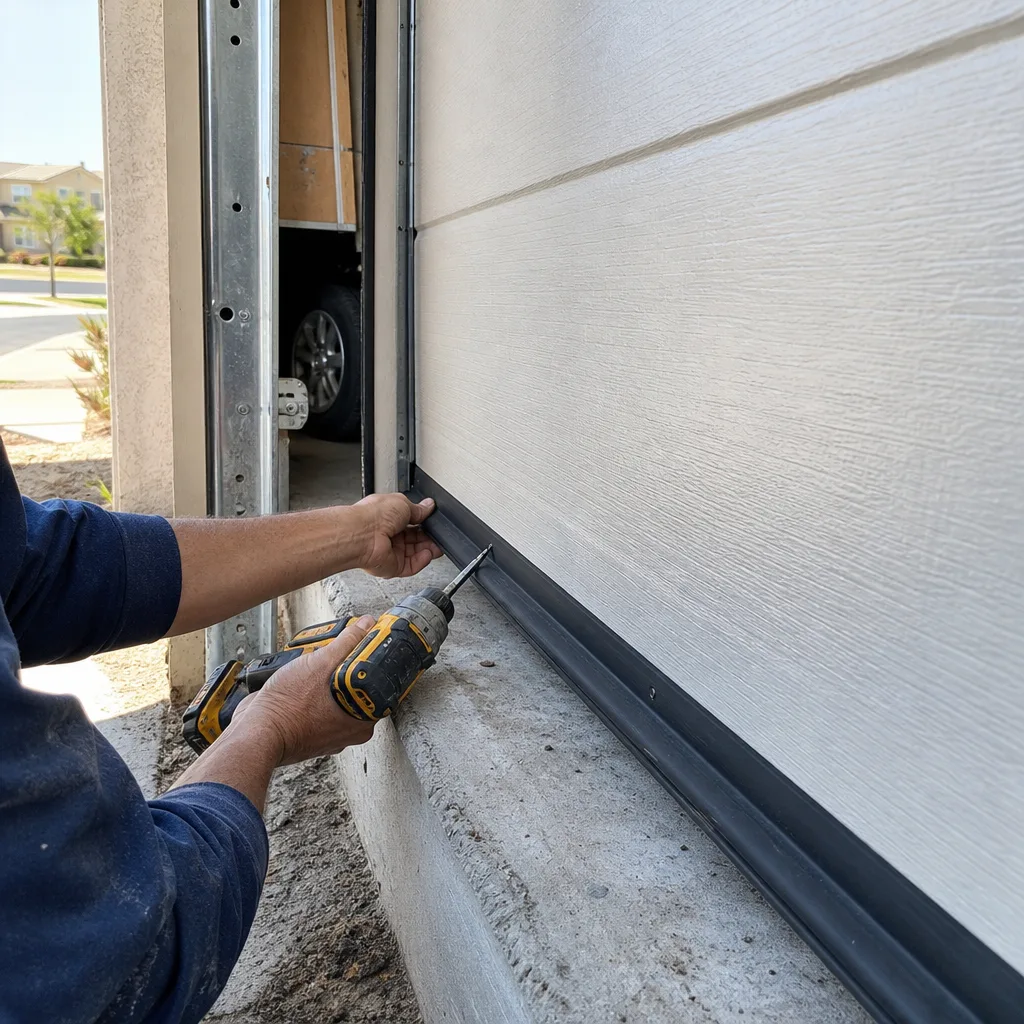
- Weather seal that’s cracked or pulling away from the bottom edge
- Cosmetic dents or a panel that’s lost paint
These are emergency signs; don’t let the door complete another cycle:
- A visible gap in the torsion spring coil (a clean break at the coil is a failed spring, full stop)
- A cable with any broken strand – even one frayed wire means the cable is compromised
- A door that is crooked, sagging on one side, or won’t stay down
- The door reversing on contact with the smallest obstruction, or failing to reverse at all
- Any grinding combined with the door dropping faster than it should on the way down
High-tension torsion springs and cables are under load that can injure a person badly if handled wrong. We won’t walk you through adjusting either. What you can do safely is observe, photograph, and stop using the door until someone trained looks at it. That’s the honest line, and it’s the one we hold to on every call.
The Manual Balance Test and What It Tells You About Spring Tension
The balance test is the single most useful thing a homeowner can do to check spring health, and it takes about thirty seconds. It tells you whether the door’s weight is being carried by the springs the way it should be. An out-of-balance door isn’t just harder on the opener – it’s a signal the springs are losing tension or one has failed.
- With the door closed, pull the manual release cord to disconnect the opener. The door should be fully disengaged from the motor.
- Lift the door by hand to about halfway open, roughly waist height, and let go.
- Watch what it does. A balanced door stays where you put it. It should hold at the halfway point without drifting.
- If it sinks to the floor, the springs are under-tensioned – the door is heavier than the springs can hold. If it rises on its own, they’re over-tensioned.
- Reconnect the opener afterward. Don’t run the door repeatedly to test it – one clean check is enough.
A door that sinks or rises on its own during this test is out of spec. That’s not a door you “live with.” An under-tensioned spring means the opener is lifting the extra weight on every cycle, which shortens the opener’s life and can overheat the motor. Over-tension pushes the same weight the other way. Either result is a spring-tension problem, and spring tension is not a homeowner adjustment.
What we can tell you is what the measurement means. When a technician opens the door, they’ll measure the wire diameter (a common torsion spring sits around 0.25-inch, and the coil count and wire diameter together set the tension), photograph the spring, and quote the replacement in writing. That documentation is the whole point – it’s what makes the price defensible instead of negotiable. Our Garage Door Opener Repair & Installation in Summerlin page covers what an out-of-balance door does to the opener over time.
Visual Wear Indicators by Material: Rollers and Cables Up Close
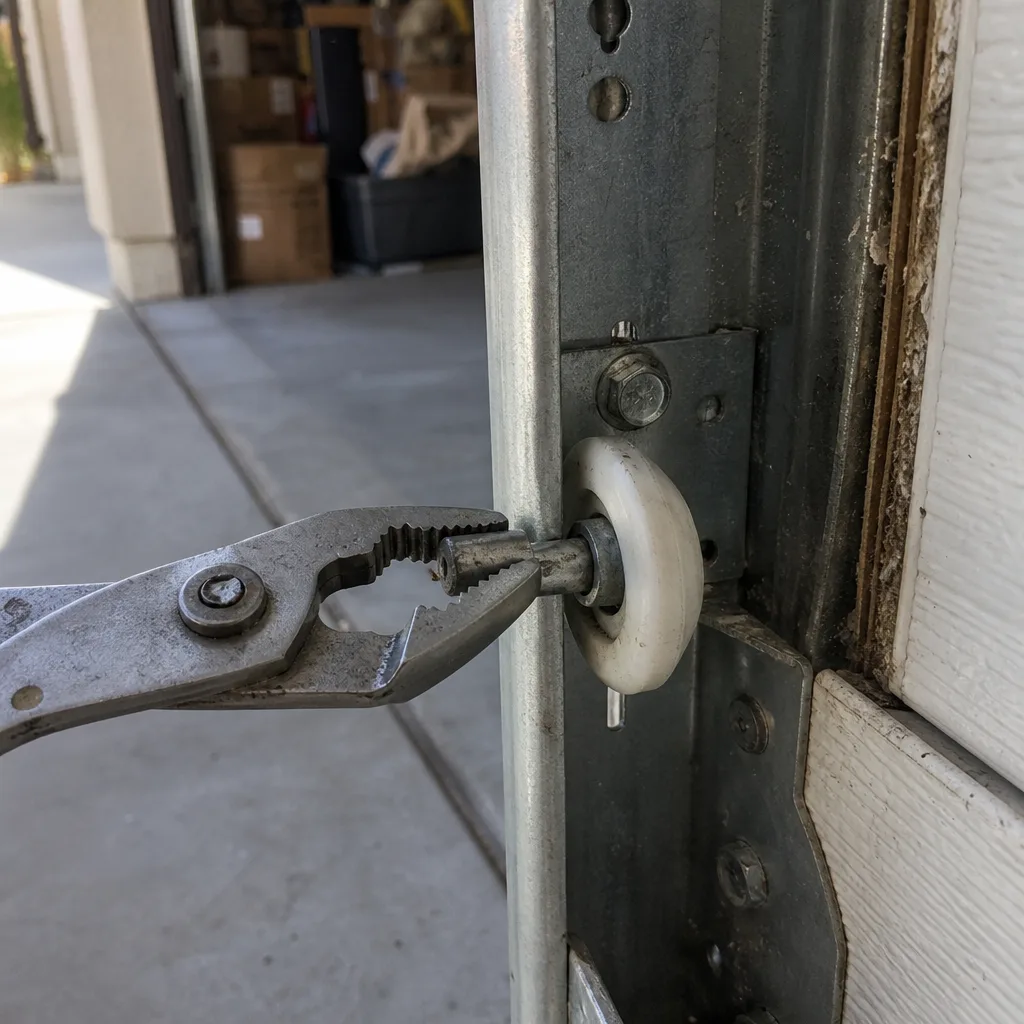
You don’t need a tool to spot the two most common failing parts. You need to know what worn looks like on each material, because nylon and steel fail differently and cables fail in a way that’s easy to miss if you don’t know the tell.
Nylon rollers
A fresh nylon roller has a smooth, slightly glossy surface and rotates freely in its bracket. A worn one has a flat spot where it stopped turning, a rough or chalky texture where the surface has broken down, and it may wobble on its stem. If you can see the roller and it looks scored or has a visible flat edge, it’s done. Nylon fails quietly – often no noise until the bushing is gone and the steel stem starts grinding.
Steel rollers
Steel rollers wear the opposite way: they develop a groove where the track rides, and they get loud before they fail. A worn steel roller looks polished in a line down its center, sometimes with visible metal shavings or dark grease around the bracket. Steel rollers last longer but announce their wear with noise, which is often the grinding homeowners hear first.
Lift cables
A cable is made of many small strands wound together. Under normal wear, the outer strands can fray. Frayed cable looks like a fuzzy, “hairy” patch where individual wires have broken and stick out from the braid. Even one broken strand means the cable has lost strength, and it should be replaced as a pair. Don’t touch a frayed cable under tension – photograph it and call. A cable that’s begun to fail can snap without warning, and it holds the door’s weight on one side.
In Summerlin, the dry air and the daily thermal swing between cool nights and hot afternoons work on these parts in a specific way. Lubricant dries out faster here than in humid climates, so hinges and rollers run dry and wear sooner. Metal expands and contracts with the afternoon heat, which is why a door that’s quiet in the morning can grind by three in the afternoon. We see that pattern on doors all through The Ridges and Red Rock Country Club, and it’s usually rollers and dry hinges, not the opener.
Opener and Logic Board Warning Signs
The opener is where hesitation and reversal usually originate, and the specific symptom narrows the part. A LiftMaster or Chamberlain unit that hesitates two seconds before moving is frequently a logic board that’s slow to hand off the command, or a photo-eye that’s sending a weak signal the board keeps re-checking. The two look similar and are diagnosed differently.
- Hesitation before movement, wall button fine, remote fine: logic board or photo-eye alignment. The eyes are the cheaper check and should be ruled out first.
- Wall button works, remote doesn’t (or the reverse): usually the remote battery, the receiver, or a travel-limit issue, not the board.
- Door reverses immediately after closing: safety reverse reading an obstruction, or force-sensitivity set too low. This is a safety function and shouldn’t be bypassed.
- Motor runs but the door doesn’t move: trolley carriage disconnected or the drive gear stripped. On an older Craftsman this is often the gear.
- Grinding from the opener head itself: gear or sprocket wear inside the unit, not the door. Different repair entirely.
When the board is the diagnosis, you should see the board photographed and the part number named before a price is quoted. A logic board is a specific component, not a vague “opener problem,” and a fair quote names it. Our Garage Door Installation in Summerlin page explains when a failing opener on an otherwise sound door is worth repairing versus replacing.
Document the Symptom Before You Call
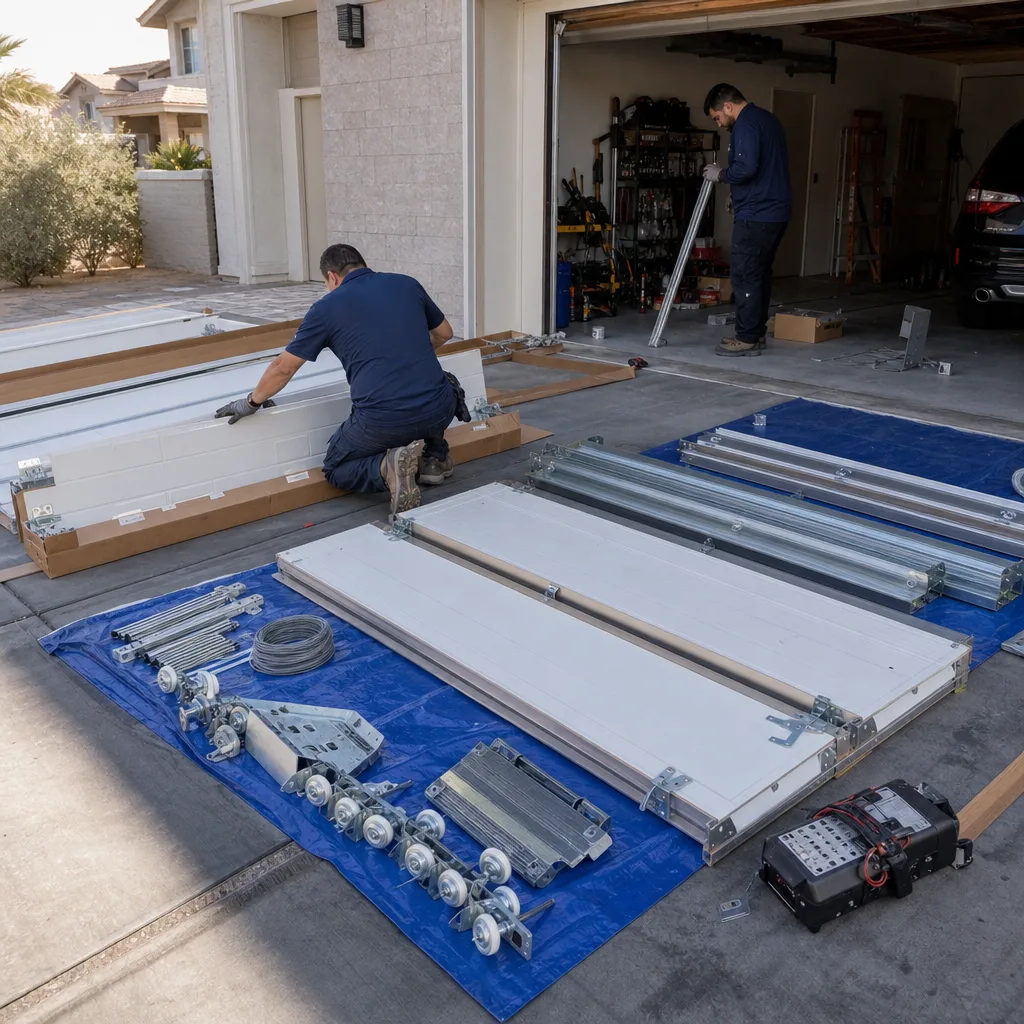
This is the single habit that saves the most time and prevents the most disputes: photograph or film the symptom before you call anyone. A ten-second video of the hesitation, or a close-up of the frayed cable, does more than a paragraph of description. It also means the technician arrives knowing which part to inspect, which shortens the visit and makes the quote tighter.
- Film the door through one full cycle from a safe distance – open, then close. Capture any hesitation or reversal.
- Take a close, well-lit photo of any part you can see: rollers, hinges, the torsion spring, the cable at both ends, the photo-eyes near the floor.
- Note the exact point in travel where the symptom happens (near the floor, halfway, at the top).
- Write down the opener brand and model if it’s printed on the unit – LiftMaster, Chamberlain, Genie, and Raynor all label the head.
- Keep the footage. If a quote later doesn’t match what you filmed, you have a record.
The reason this matters is that it turns a conversation into evidence. Clause 1 of The Haven Standard requires a flat, written price and written scope before any work starts – and a customer who arrives with a video makes that scope more accurate from the first minute. We hand every customer a documented photo record of what was found and what was done, and matching that record against your own footage is exactly the check that keeps a repair honest. It’s also why “call for a quote” isn’t how we work. The price range belongs on the page and in writing, not on a callback.
Why the Summerlin Climate Accelerates Certain Failures
Part wear isn’t uniform across the country, and Summerlin’s climate pushes specific components harder. The desert air is dry, which dries out lubricant on hinges and rollers faster than in coastal climates. The daily swing from cool mornings to hot afternoons means metal parts expand and contract every day, loosening bolts and stressing spring coils over time. And the summer heat pushes the opener motor harder on every cycle, which is part of why logic boards and gears on older units show up in our diagnostics more than you’d expect.
Practically, that means a Summerlin door needs its moving parts looked at and lubricated on a schedule, because the climate won’t do it for you. The neighborhoods built between 2015 and 2025 – the newer sections around Red Rock Country Club and The Ridges – are now at the age where original nylon rollers and factory hinges are reaching the end of their life. Doors in those homes often need a roller and hinge refresh before they need a spring, and the symptom (grinding through the travel) tells you which.
The other Summerlin-specific factor is the code and permitting side. Replacing an opener or a door in Summerlin generally requires a permit and a safety-reverse check to current standards; a repair of an existing component usually doesn’t. Knowing which side of that line your job falls on affects both the timeline and the written scope. We don’t schedule installs or replacements on a same-day promise – that work is measured, ordered, and quoted in writing first. Repairs are a different conversation, and same-day repair is often possible when you call early. Our Servo Garage Doors Summerlin home page lays out how the written-price-first process works start to finish.
Common Mistakes to Avoid
- Treating all noise as one problem. A grind at the floor and a grind at the top are different parts. Note where in the cycle it happens before you call, or you’ll describe it wrong and get the wrong quote.
- Assuming hesitation means “old opener, replace it.” Hesitation is often photo-eye alignment or a logic board, both cheaper than a new unit. Don’t replace before the part is named.
- Accepting a phone quote with no photo. A price with no documented failed part isn’t a quote, it’s a guess. Clause 4 is why the technician photographs before quoting.
- Adjusting spring tension or cables yourself. High-tension springs and cables are dangerous under load. Observe, photograph, and stop using the door – don’t attempt the adjustment.
- Ignoring a single frayed cable strand. One broken strand means the cable is compromised. In Summerlin’s dry air, cables and lubricant age faster, so a fray is a replace-now, not a watch-it.
- Letting the door grind through a full cycle to “see if it stops.” Every cycle on a dragging door adds wear to the opener and the track. Film it once and leave it down until you know the part.
- Skipping the balance test. A 30-second manual test catches spring problems before they strand you. Most homeowners never run it until the door fails outright.
See the difference
BeforeAfter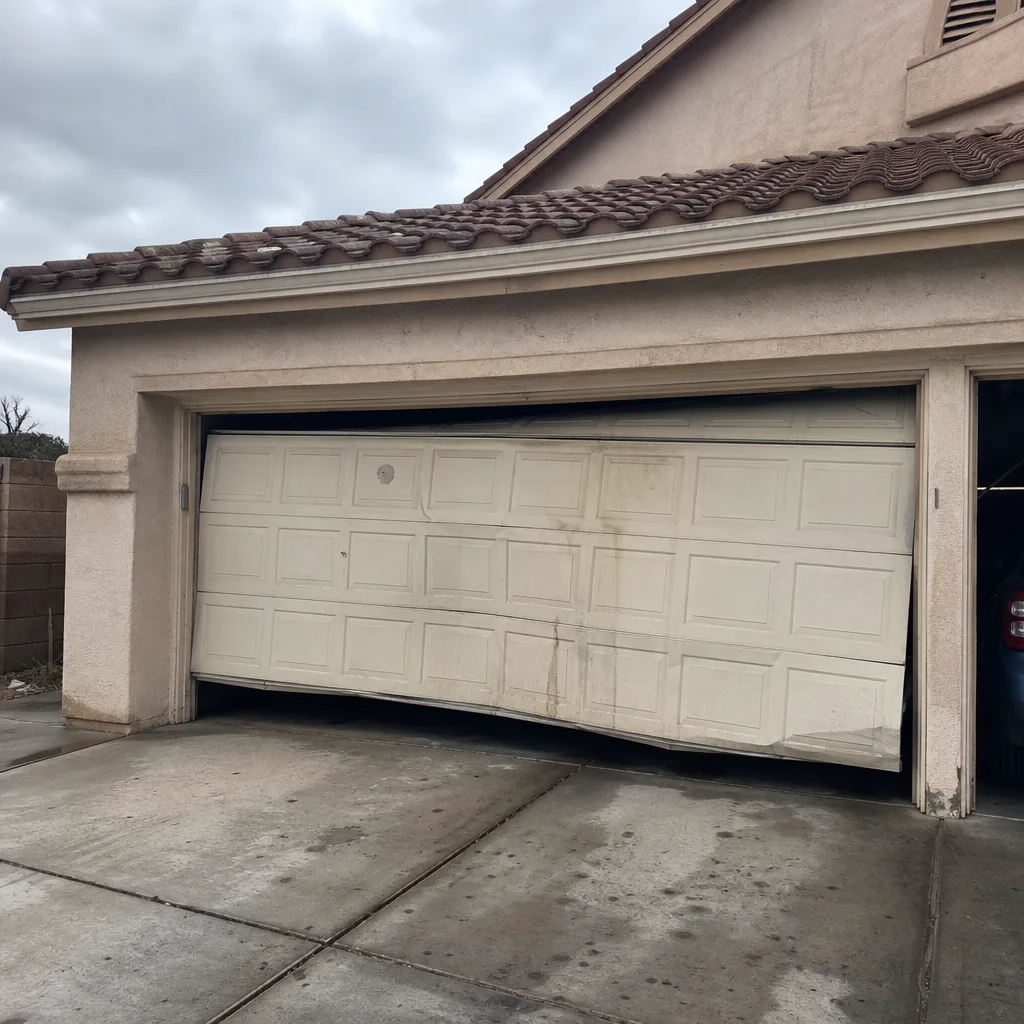 Before
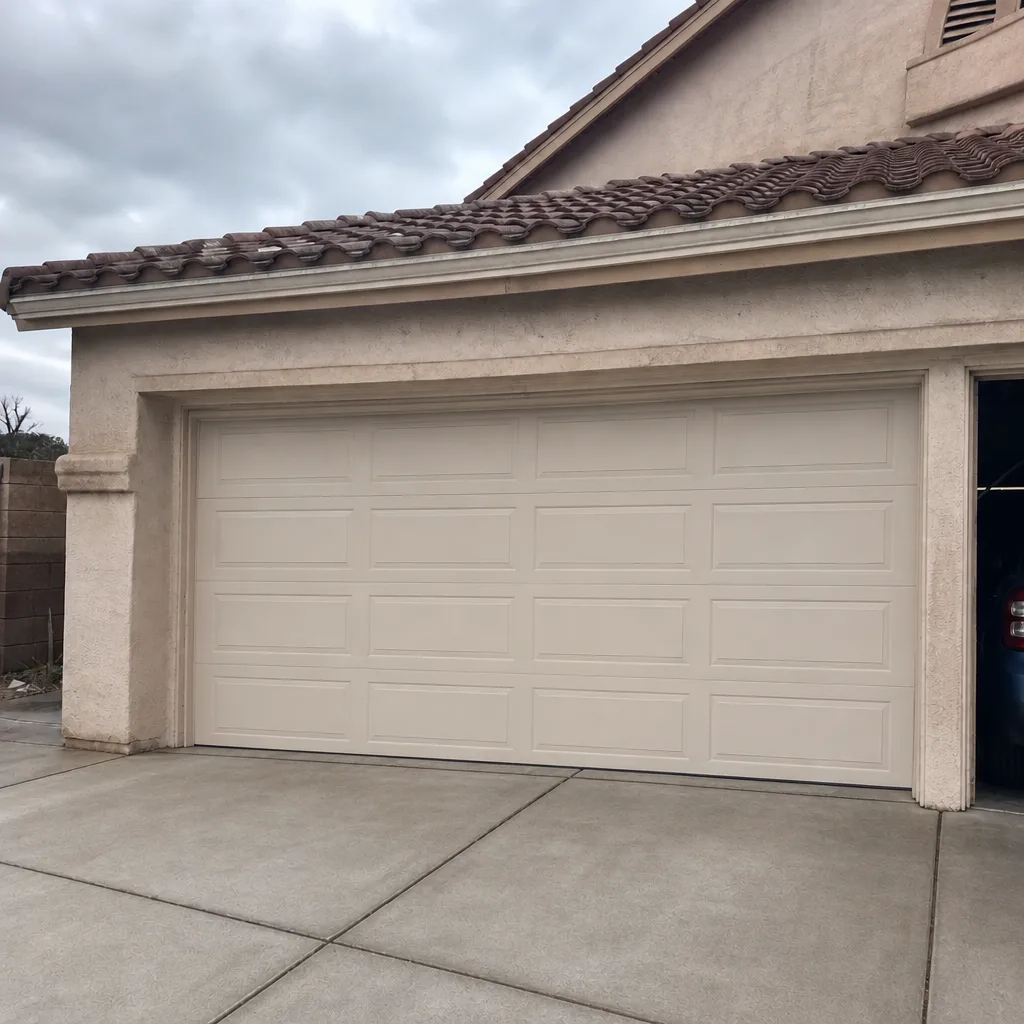 After
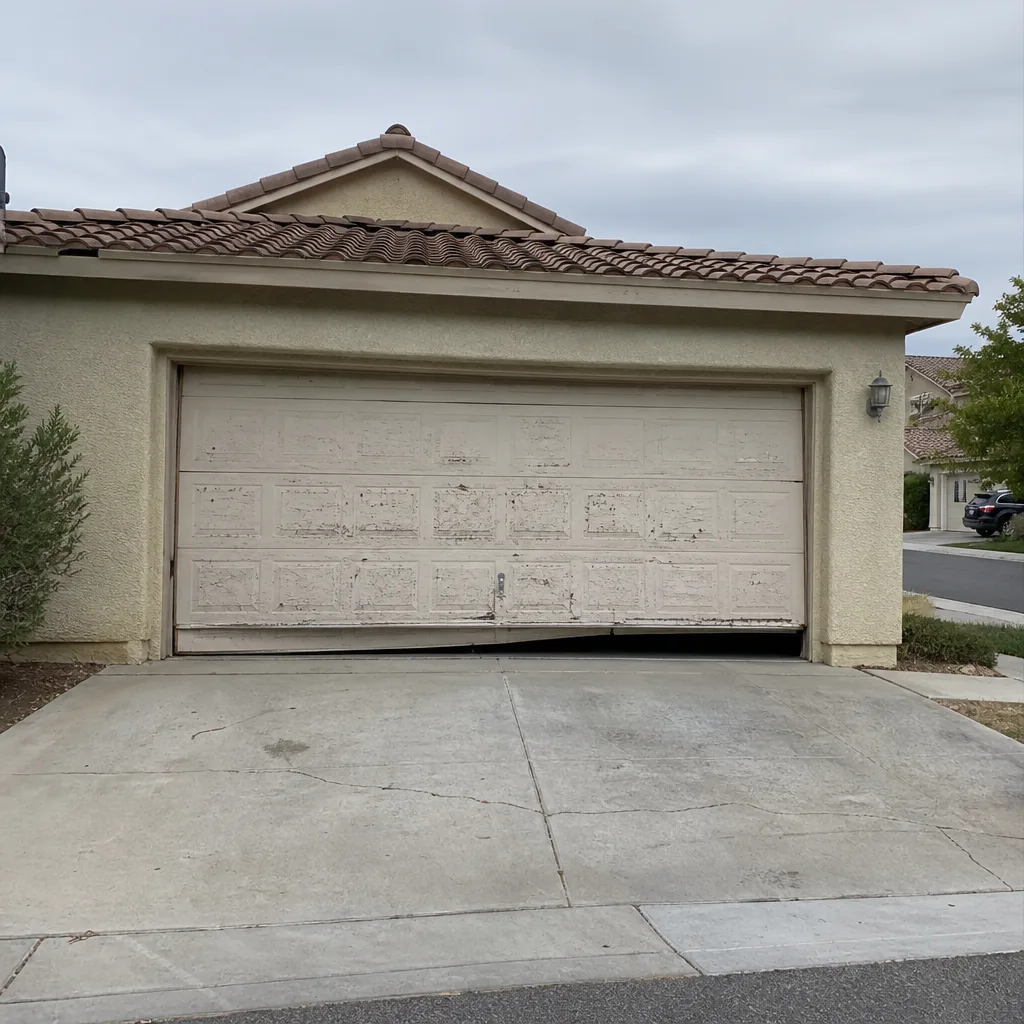 Before
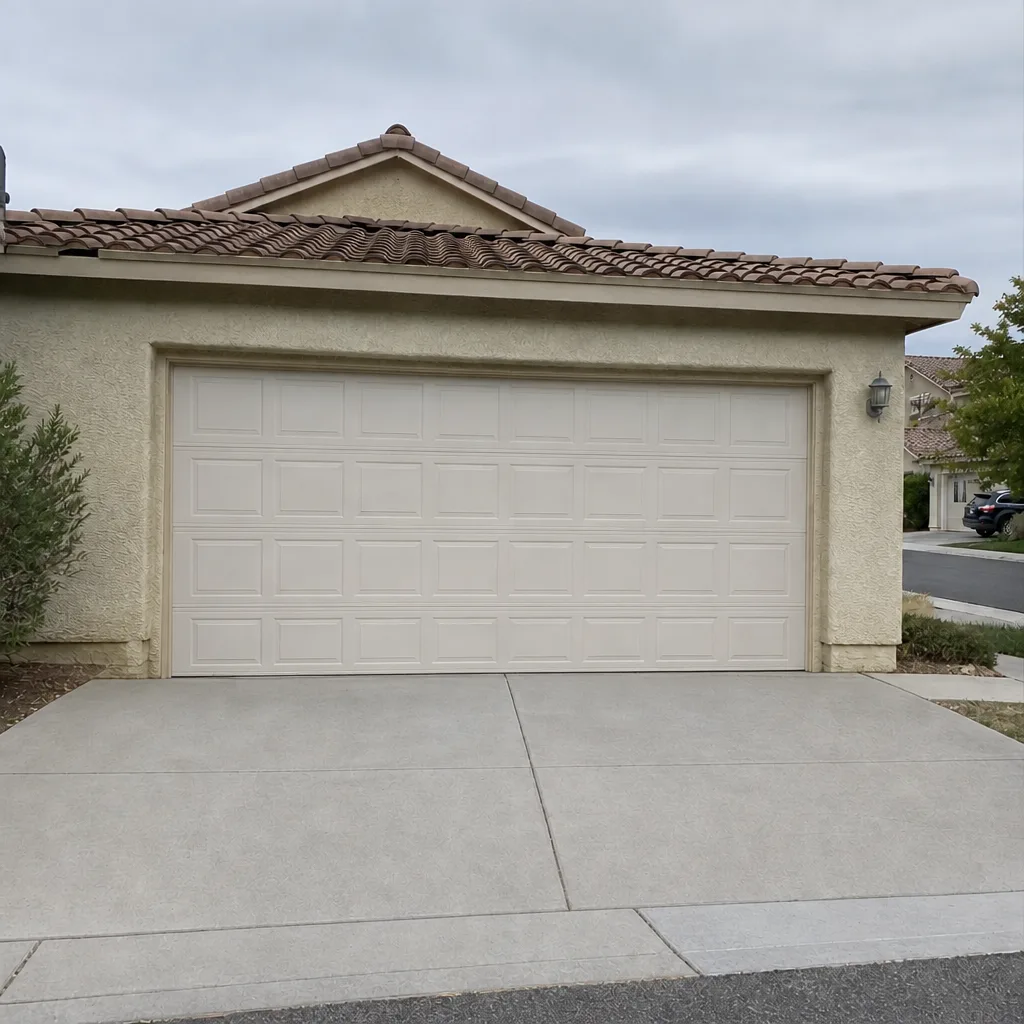 After
When to Call a Professional
Call a professional when the symptom points to a high-tension part you can’t safely inspect – a torsion spring with a visible break, a frayed or snapped cable, a door that’s sagging or crooked, or a safety reverse that’s failing. Call when the balance test shows the door won’t hold at halfway. Call when grinding continues the full travel and the door is getting harder to move. And call when you want the failed part named and photographed before a price is quoted, not after. Servo Garage Doors Summerlin offers free estimates in Summerlin – call (844) 797-3654 and a live person answers, day or night, including emergency calls. We’ll tell you what the symptom most likely means, quote a flat written price before any work starts, and hand you a documented photo record when we leave. Bring a written estimate from another company and we’ll give you a free second opinion on it.
Frequently Asked Questions
Torsion spring replacement in Summerlin typically runs in the range of a few hundred dollars, and the exact price depends on the wire diameter, the number of springs, and whether the job needs a single or paired replacement. You should get a flat written price with the failed spring photographed before any work starts – if you’re quoted over the phone without a photo, that’s a guess, not a quote. Call (844) 797-3654 for an exact price; estimates are free.
Often yes for repairs. Grinding that points to rollers, hinges, or a dry track is a repair we can frequently schedule same day when you call early, and emergency calls are answered by a live person around the clock. Hesitation or reversal that points to a logic board or photo-eye is also a repair. Installation and full replacement are measured and scheduled, not same-day, because parts are ordered to the door. Call (844) 797-3654 to find out what today looks like.
No. The price is quoted and agreed in writing before any work starts, per Clause 1 of The Haven Standard. If the technician finds a second failed part during the visit, they photograph it and bring you a new written scope before touching it – you approve before the price changes. That’s the whole system: no surprise invoice, because the scope is settled up front.
Yes. Servo Garage Doors is independently owned and operated under The Haven Standard, holds its own license and insurance, and the license number is on the page, not buried in fine print. Technicians are background-checked and uniformed on every job, and our technicians have up to 11 years of experience with the major brands – LiftMaster, Chamberlain, Genie, Clopay, Amarr, Wayne Dalton, Craftsman, and Raynor.
The clearest sign is a visible gap in the torsion spring coil – a clean break at the coil is a failed spring, and the door should not complete another cycle. In Summerlin’s dry air, springs also lose tension gradually before they break, so the manual balance test (lifting the door to halfway by hand and letting go) will show a door that sinks or rises on its own. If either happens, stop using the door and call (844) 797-3654 for a documented diagnosis.
Film one full open-and-close cycle, then take close, well-lit photos of the torsion spring, both cable ends, the rollers and hinges, and the photo-eyes near the floor. Note the opener brand and model printed on the head unit, and the exact point in travel where the noise or hesitation happens. That footage lets the technician arrive knowing which part to inspect, which tightens the written scope and speeds the visit. Then call (844) 797-3654 with the video in hand.
The Bottom Line
Warning signs are only useful when they connect to a part. A hesitation is usually a logic board or photo-eye. A grind at the floor is rollers or a bent track; a grind the full travel is a dragging spring or dry hinges. A single frayed cable strand means replace, not watch. Run the manual balance test once and you’ll know whether the springs are holding the door’s weight. Photograph the symptom before you call, because evidence tightens the quote and prevents disputes. Know which signs can wait a week and which mean the door stays down. When the answer points to a high-tension part, stop and call a professional – that’s not a DIY adjustment. Servo Garage Doors Summerlin quotes a flat written price before any work starts, photographs the failed part first, and hands you the record when the job is done. Call (844) 797-3654 for a free estimate.
Written by the team at Servo Garage Doors Summerlin.